

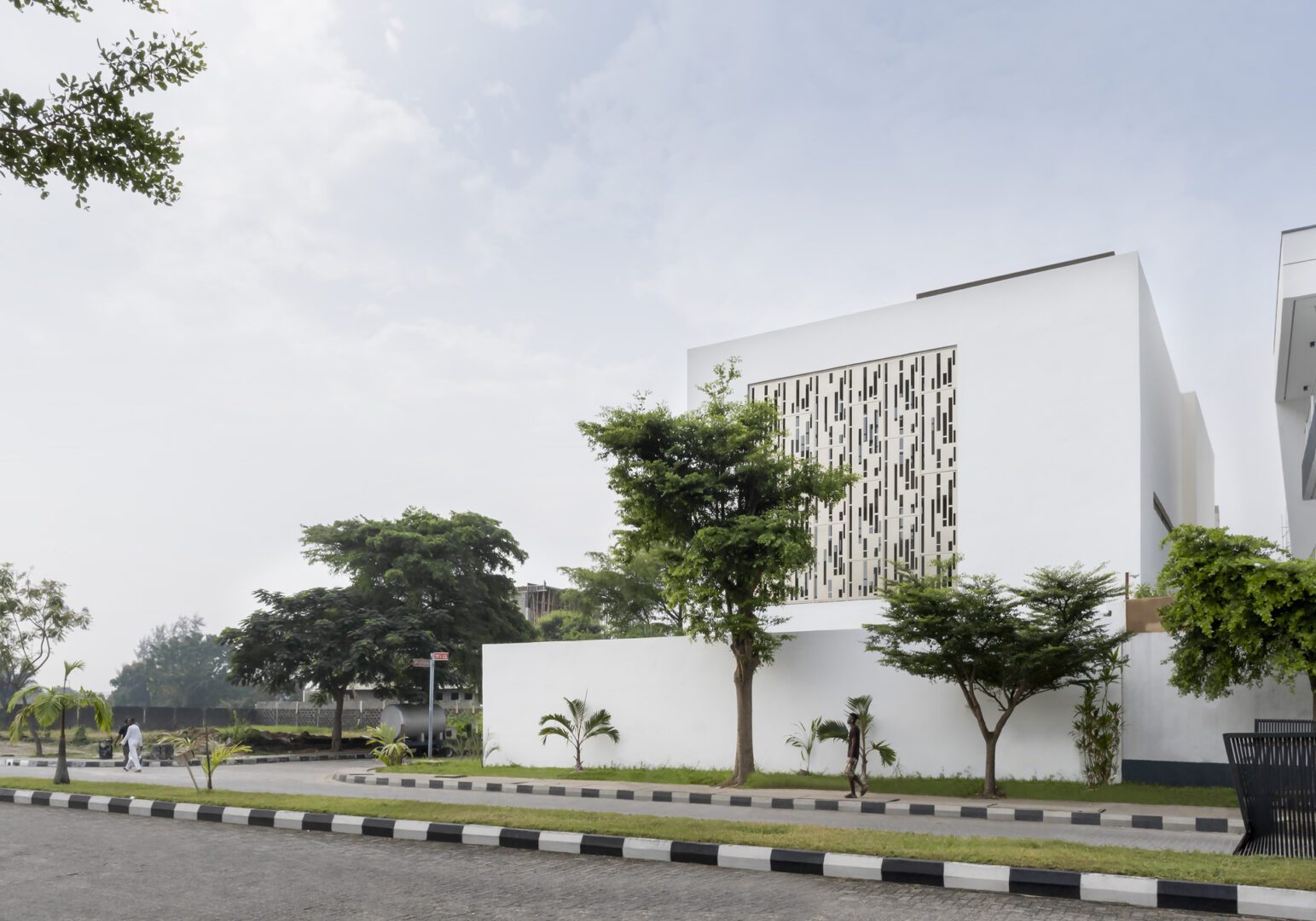
Who gets to define the future of design, and whose histories are recognised as having shaped it? At London’s Design Museum, The Nue Black Aesthetic challenges the hierarchies that determine which objects enter the canon, which traditions are considered contemporary and whose creativity shapes the discipline. Bringing together 16 designers working across fashion, architecture, furniture, product design and sculpture, the exhibition proposes a more expansive account of Black design, attentive to the ways culture, memory and lived experience inform creative practice. Guest-curated by Charlene Prempeh, with Tiya Dahyabhai as project curator, it asks a question that extends beyond representation: what might design history look like if its established categories were no longer taken for granted?
Black designers have too often been presented through the narrow lenses of heritage, identity or social commentary, as though cultural experience was a subject to illustrate not a perspective from which to reshape a discipline. This framing risks positioning Black creativity as a specialist concern with an ostensibly universal design history. However, the idea of a universal aesthetic becomes difficult to sustain when the histories informing it are examined intently. From 6 November 2026 to 8 August 2027, The Nue Black Aesthetic addresses this contradiction without attempting to establish a single alternative canon. Its premise is arduous: Black design encompasses distinct practices and histories that cannot be reduced to a common visual language, even as they expose the exclusions embedded within existing accounts of design.
Prempeh articulates the problem directly. “The idea that Black design is not monolithic should not be surprising or controversial,” she observes, pointing to the limited interrogation of contemporary Black designers’ influences and the experience of creating within predominantly white spaces. The latter is quite significant, shifting attention from the representation of Black designers to the conditions under which their work is made and received. Visibility alone cannot dismantle institutional assumptions if the criteria through which creative achievement is recognised remain unchanged. A designer may be invited into a museum while their work is still interpreted primarily through the lens of identity, not considered on its formal, technical or conceptual terms. The exhibition’s critical potential lies in confronting this imbalance, asking how cultural specificity might inform design criticism without becoming a limit on its interpretation.
History provides an essential starting point. Towards a Nue Black Aesthetic, the opening section, traces developments in Black design over seven decades, while contributions from more than 20 additional designers, including Althea McNish and Yinka Ilori, broaden the historical context. The exhibition’s title recalls the Black Aesthetic movements of the 1960s and the New Black Aesthetic of the 1980s, proposing a contemporary iteration defined by nuance rather than prescription. This lineage matters because creative innovation rarely emerges in isolation, even when established histories privilege individual breakthroughs over collective influence. Recovering overlooked practitioners changes how contemporary work can be understood, revealing connections that might otherwise remain invisible. The curatorial challenge is not simply to add missing names to an existing narrative, but to reconsider the narrative itself.
Material offers a more intimate way into these questions. In Identity as Inspiration, Bianca Saunders examines the conventions of menswear through a practice that challenges hypermasculine stereotypes. A suit designed for Usher and worn at the 2023 Met Gala brings this enquiry into the highly visible arena of celebrity and public image. Tailoring is never merely functional: its silhouettes, proportions and codes of presentation help establish ideas about masculinity that can appear natural precisely because they are so familiar. Saunders works within this vocabulary while questioning its assumptions, demonstrating how established forms can be reinterpreted without losing their formal precision. Her body of work suggests that design’s capacity for undergoing transformation is not always dependant on inventing something that is entirely new; sometimes it begins by making the familiar appear less inevitable.
Taiba Akhuetie approaches identity through a material associated with the body rather than the wardrobe. Her furniture, including a chair and a lampshade made using synthetic hair, draws on experiences of growing up in Britain amid beauty standards that often marginalise Black hair. By bringing this material into domestic space, Akhuetie unsettles the boundaries between personal adornment, sculpture and functional design. Hair becomes a carrier of cultural memory and communal practice, while its transformation into furniture challenges assumptions about which materials belong within the language of design. The work also invites a reconsideration of the relationship between beauty and utility: an object need not abandon function to carry cultural significance. Akhuetie’s intervention is a rather compelling one because it emerges through the material itself, allowing for an everyday substance to be able to question the conventions that are governing both domestic taste and artistic classification.
The social life of objects takes another form in Community Building, where LABRUM’s partnership with adidas on Arsenal’s 2024/25 away kit connects football culture with Pan-African symbolism. Its black, red and green palette draws on a political and cultural tradition that resonates across the African diaspora. Football shirts already function as markers of allegiance, turning spectatorship into a shared visual language through which communities recognise themselves. That familiar function intersects with histories beyond the pitch, showing how garments participate in cultural expression without ceasing to be a commercial product. This intersection complicates the assumption that cultural significance diminishes when an object enters the marketplace. It also raises a question: how can designers work in commercial systems while retaining meaningful connections to the communities and histories informing their practice?
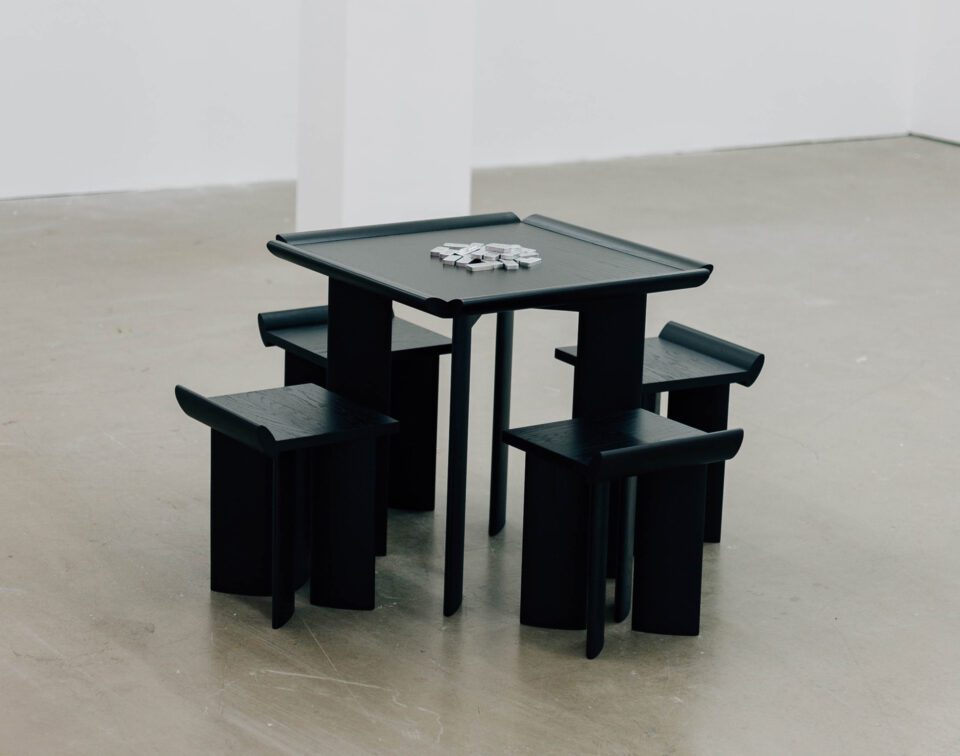
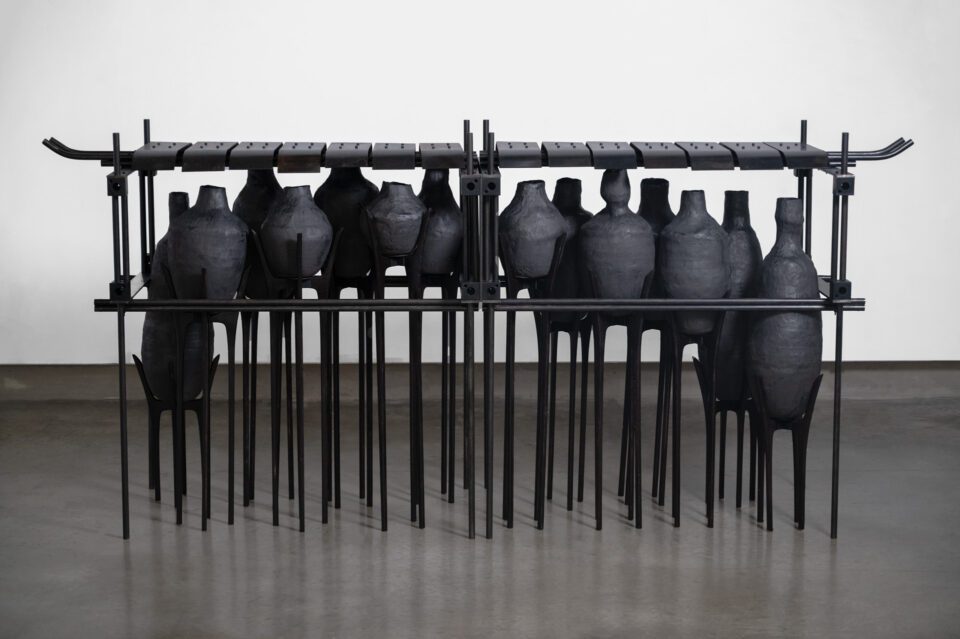
These questions become institutional in Rethinking the System. Museums and design histories have often organised objects through distinctions between fine art and applied practice, contemporary innovation and inherited craft, or universal principles and culturally specific traditions. Such classifications influence what is collected, how objects are displayed and which practitioners become central to the accepted canon. Architect Giles Tettey Nartey addresses these hierarchies through a contemporary interpretation of the balafon, a West African xylophone. His work challenges the tendency to treat traditional African design as a historical inheritance rather than a source of continuing experimentation. The distinction is entirely consequential: when a form is understood only through its origins, its capacity to evolve can be overlooked. Nartey’s approach instead presents cultural knowledge as an active resource, capable of generating new possibilities without having to severe its historical connection to the past.
The wider implication is not that Western design history should be discarded, but that its claims to universality deserve closer scrutiny. Non-Western practices have often been interpreted through frameworks that emphasise cultural origin over contemporary development, while Western modernism has frequently been positioned as a principal measure of innovation. These patterns are not uniform across every institution, but they have shaped the categories through which design is taught, exhibited and valued. A more expansive history must therefore do more than recover overlooked objects; it must examine why certain forms of knowledge have been recognised as innovative while others have been associated primarily with preservation. Nor should African design be treated as a single tradition in opposition to the West. The exhibition’s emphasis on distinct practitioners and diasporic experiences offers a way to acknowledge different histories without collapsing them into another simplified binary.
Process and encounter extend this argument beyond the individual object. A new film, Black by Design, directed by Samona Olanipekun, follows participating designers through studio visits, interviews and personal reflections, bringing their motivations and working methods into view. This attention to process offers a counterpoint to the authority of the finished object, revealing the decisions and circumstances that shape creative practice. The exhibition culminates in Mfon, a site-specific chandelier by Nigerian American designer Ini Archibong, made from hand-blown Murano glass. Named after a word meaning grace in Nigeria’s Ibibio language, the work will be presented with an ambient soundtrack intended to encourage reflection. Its scale and material delicacy brings individual expression and cultural reference, offering a concluding encounter with design as a means of holding different experiences within a shared space.
What The Nue Black Aesthetic places under scrutiny is not simply the absence of Black designers from established histories, but the assumptions that have shaped those histories in the first place. Its strength lies in bringing different practices into dialogue without insisting that they resolve into a single aesthetic, allowing questions of gender, material culture, community and historical knowledge to retain their distinct significance. Saunders, Akhuetie and Nartey demonstrate different ways in which design can question inherited conventions, while LABRUM’s collaboration with adidas reveals how cultural meaning circulates through everyday objects. The longer-term test will be whether this expanded perspective informs collecting, scholarship, education and the institutional structures through which creative work acquires recognition. Inclusion is a necessary beginning, but it cannot be the final measure of change. If design history is to reflect the complexity of the world it seeks to describe, it must be willing to reconsider not only whom it includes, but also the principles by which it decides what matters.
The Nue Black Aesthetic is at The Design Museum, London, from 6 November – 8 August.
Words: Anna Muller
Image Credits:
1. Lantern House, 2022, lead architect Tosin Oshinowo. Photo credit Tolu Sanusi.
2. Strange Notes, 2025, by Giles Tettey Nartey. Courtesy of Giles Tettey Nartey.
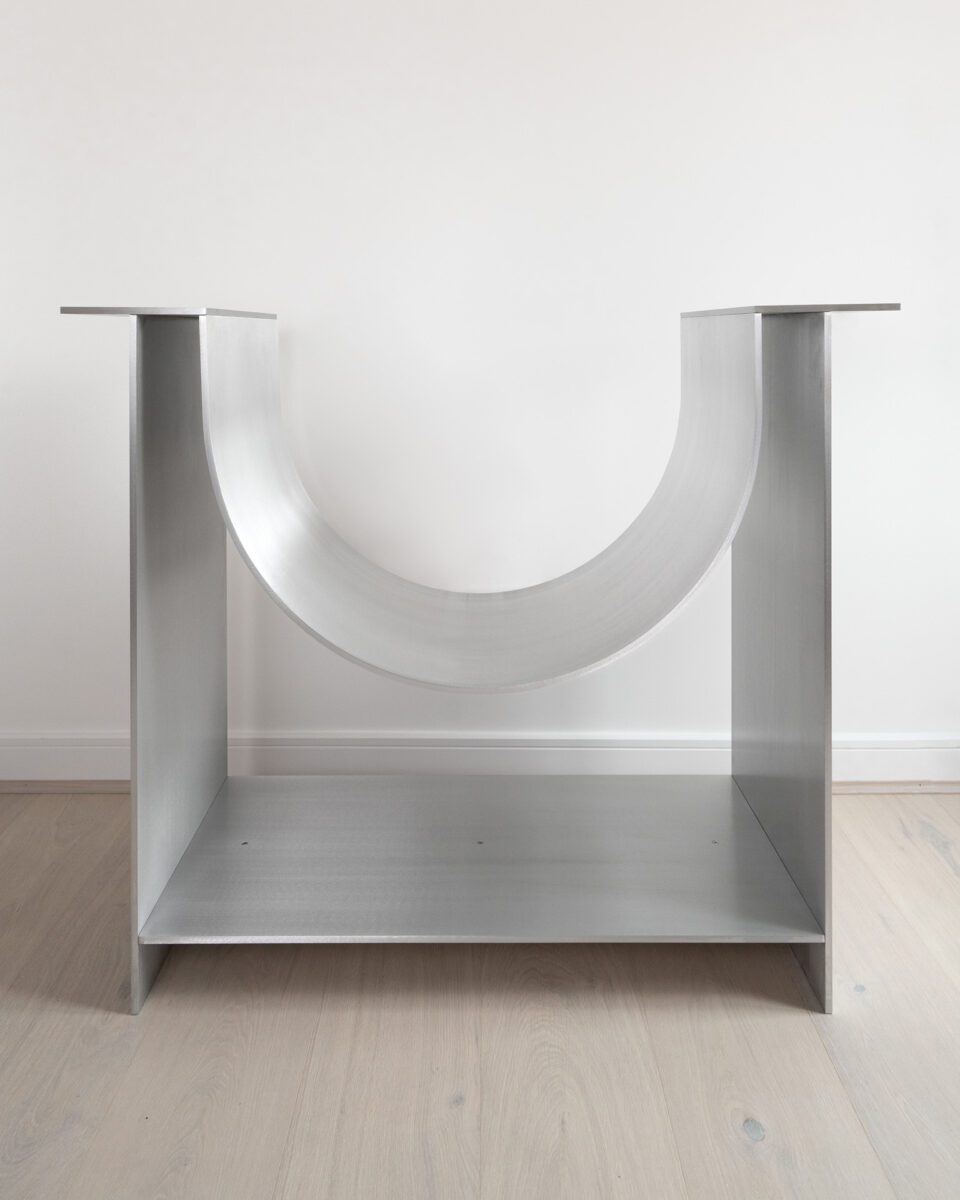
3. Àgbalàgbà (Elderly) Chair, 2022, by Tejumola Butler Adenuga. Photo credit Daniel Riley. Courtesy of Tejumola Butler Adenuga.
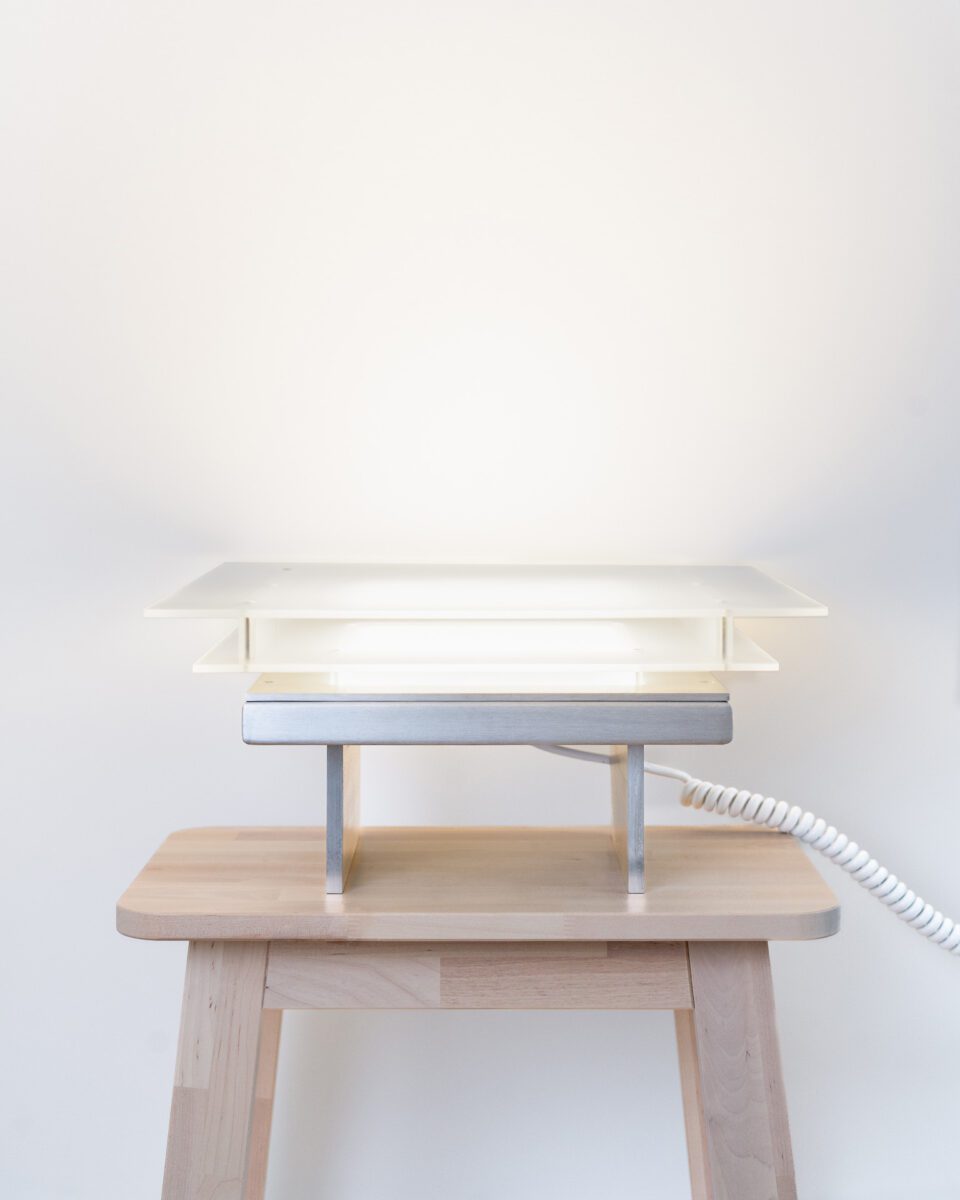
4. Saharan Sunset Lamp, 2022, by Tejumola Butler Adenuga. Photo credit Daniel Riley. Courtesy of Tejumola Butler Adenuga.
5. Open Code, 2023, by Mac Collins. Photo credit Megan Jepson.
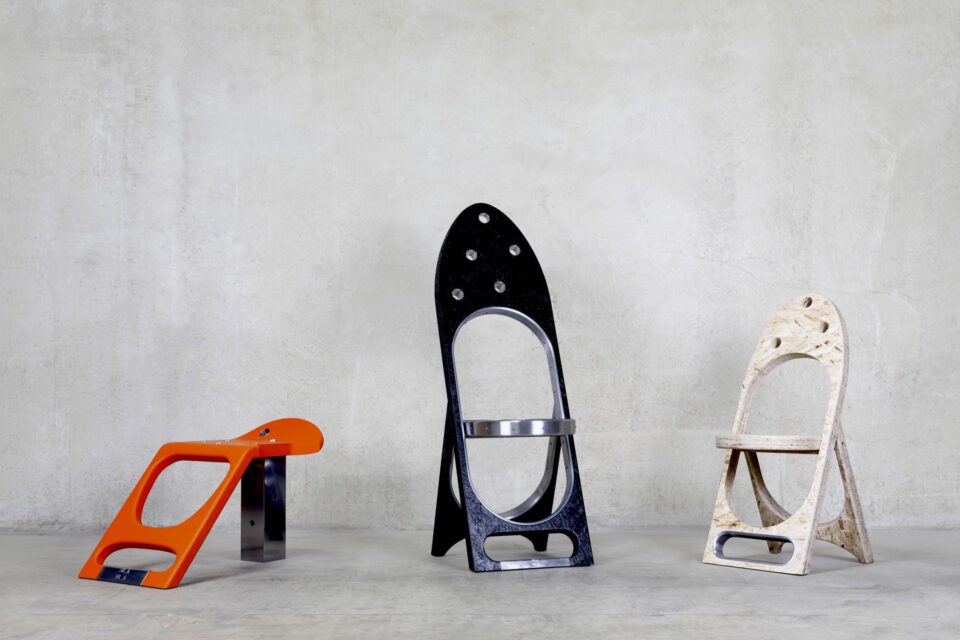
6. (Left to right) SIGNAL – 3, TRAUMA CHAIR, RECOVERY CHAIR by Samuel Ross. Courtesy of Friedman Benda and Samuel Ross. Photo credit Daniel Kukla.


