In a moment that signals a broader shift in the cultural landscape of the UK, The Box in Plymouth has been named Art Fund Museum of the Year 2026, receiving the £120,000 award – the largest museum prize in the world. Announced on 25 June aboard the Cutty Sark at Royal Museums Greenwich, the accolade recognises an institution that has rapidly redefined what a civic museum can be, but more significantly, it underscores a structural reorientation in British cultural life. What is at stake here is not simply the recognition of one institution, but the consolidation of a post-London cultural geography in which authority, innovation and institutional confidence are increasingly distributed across regional centres. The Box becomes legible within this moment as both outcome and driver of that shift.
Victoria Pomery OBE, Chief Executive of The Box, accepted the prize from broadcaster and judging panel member June Sarpong OBE. The award acknowledges not only a remarkable five years since the museum opened in 2020, but also a wider transformation taking place across Britain’s museum sector – one in which regional institutions are increasingly setting the national agenda. The narrative has become one of decentralisation, where the assumption that cultural leadership flows outward from London is no longer structurally persuasive. Instead, museums in cities such as Plymouth are producing frameworks of engagement that larger institutions are now learning from, rather than defining in advance.
Established by Art Fund, Museum of the Year is regarded as the UK’s most prestigious museum honour. More than an annual prize, it has become a barometer of how museums are rethinking their function within civic life, rewarding institutions that move beyond display-led models towards socially embedded practice. The criteria now implicitly privilege museums that operate as infrastructures of education, wellbeing and public participation. In this sense, the award reflects a broader cultural condition in which museums are no longer understood primarily as repositories of objects, but as active participants in shaping civic experience. The Box’s recognition sits squarely within this redefinition.
The recent winners of the award illustrate how decisively this shift has taken hold across the UK. Beamish, The Living Museum of the North (2025) reconfigured historical narrative as immersive civic experience rooted in labour and landscape. Young V&A (2024) repositioned design and creativity as tools for childhood agency rather than passive learning. The Burrell Collection in Glasgow (2023) demonstrated how architectural renewal can reanimate civic ownership of collections. Horniman Museum and Gardens (2022) foregrounded ecological interdependence as a curatorial principle. Firstsite in Colchester (2021) reimagined the gallery as a social space structured as much by encounter as by exhibition. Across these institutions, what emerges is not stylistic coherence but a shared dismantling of the museum as neutral container. Instead, the museum is a site where civic identity is produced, contested and renegotiated.
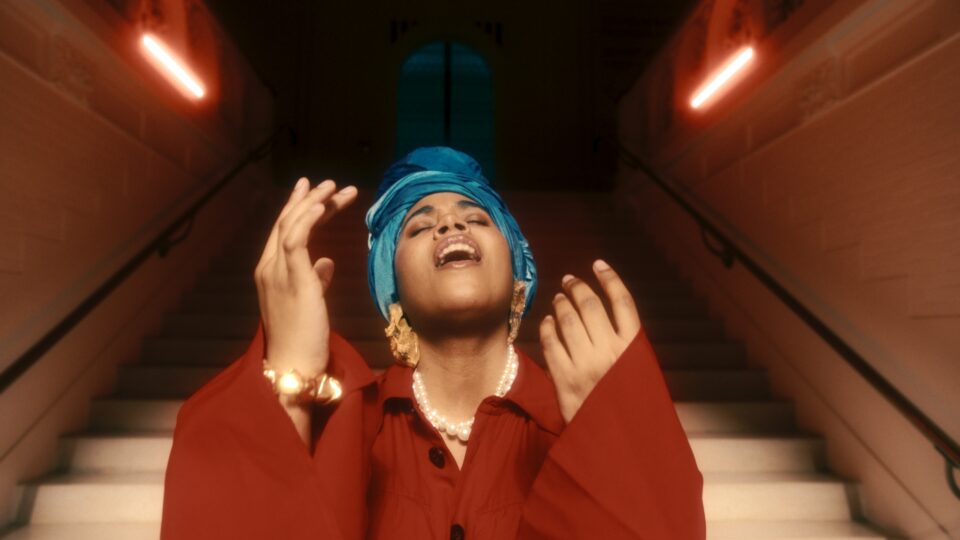
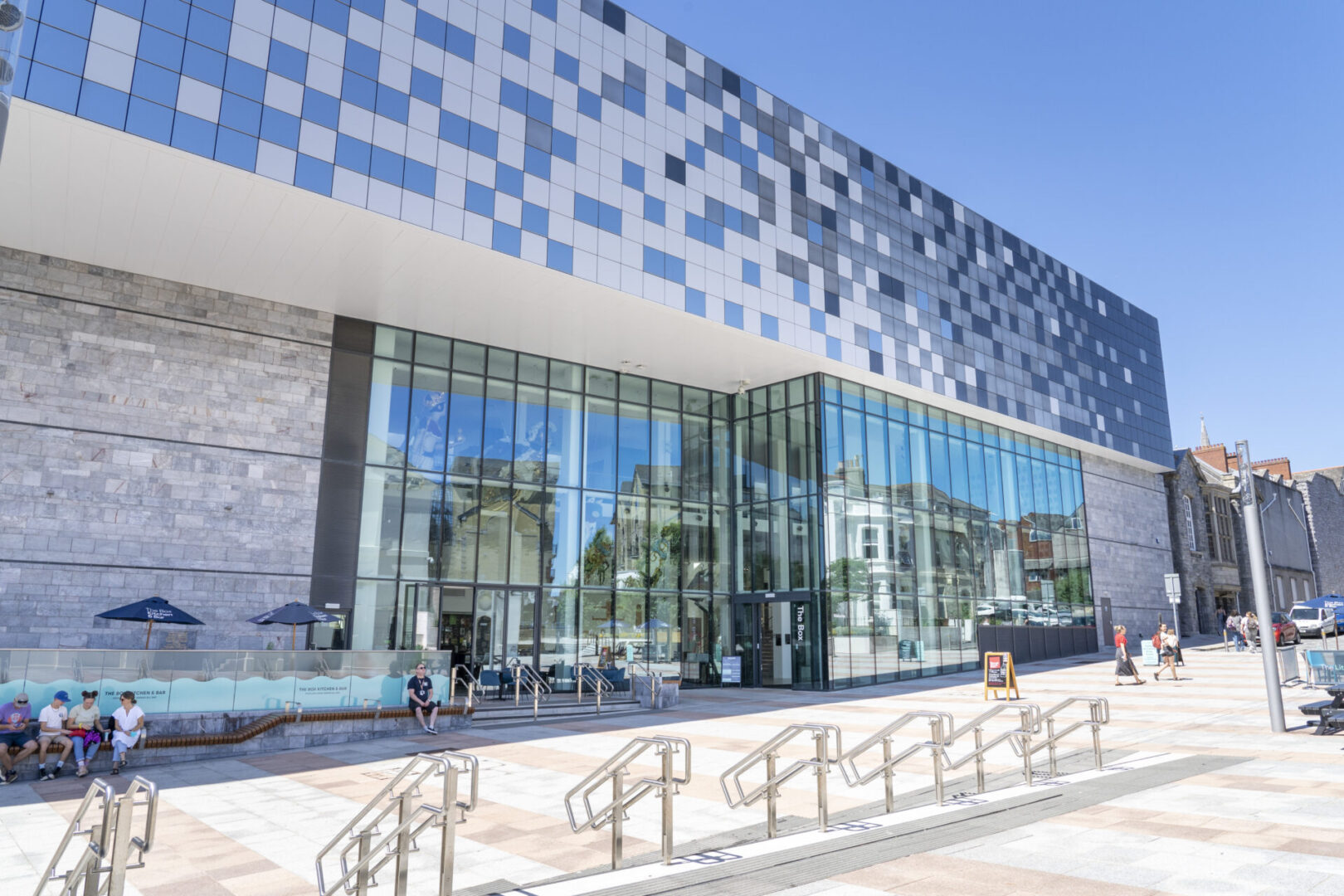
Within this evolving field, The Box operates with particular clarity. Housing more than two million artworks, objects, specimens and archival materials, it brings together museum, gallery and archive within a single civic framework in Plymouth. Since opening in September 2020 following a £48 million capital investment, it has welcomed more than 1.3 million visitors. However, its significance lies not in aggregation but in activation. The institution treats its collections not as inherited authority but as unstable material through which the city’s histories are continuously re-read. This is a crucial distinction: the museum does not stabilise meaning, but generates conditions for its ongoing reinterpretation.
The implications of this model extend beyond culture into civic policy, where museums are increasingly evaluated as components of social infrastructure. A Social and Economic Impact Report published for The Box’s fifth anniversary identified more than £100 million in health and wellbeing benefits, alongside a £244 million contribution to Plymouth’s economy and engagement with 89% of the city’s schools. While such figures are often instrumentalised as proof of value, their deeper significance lies in how they reflect a shift in expectations. Cultural institutions are now expected to function across multiple systems simultaneously – educational, economic, therapeutic – rather than within a narrowly defined cultural remit. The museum becomes less a specialist space than a distributed civic mechanism.
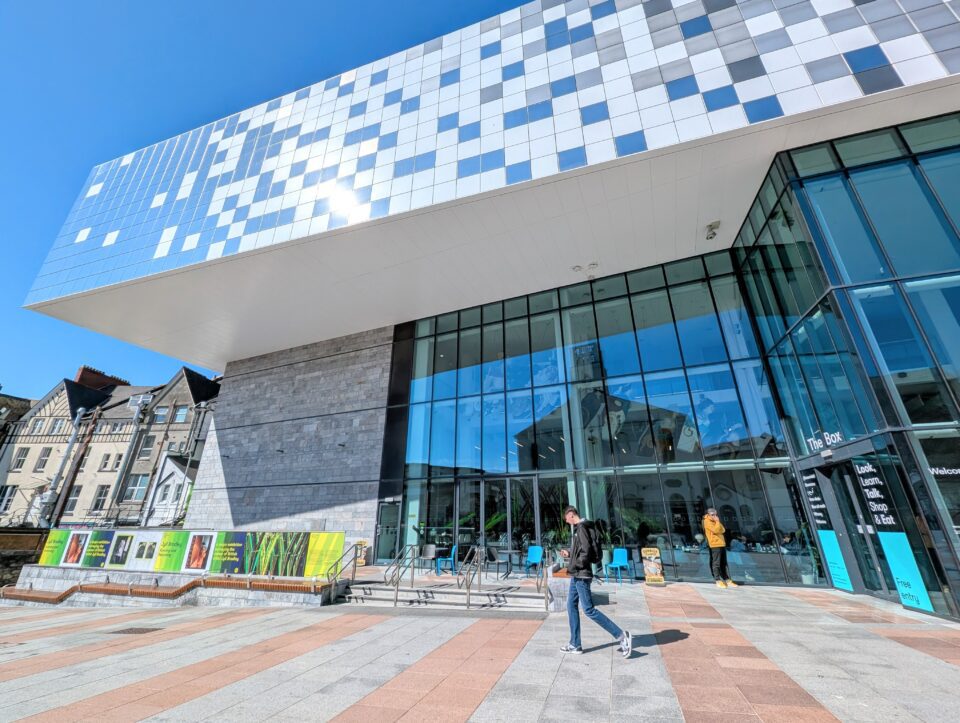
For Jenny Waldman, Director of Art Fund and chair of the judging panel, The Box represents a particularly concentrated version of this shift. “The Box is a revelation in so many ways – a true jewel in the crown of the South West,” she said, noting its capacity to extend beyond institutional boundaries into schools, public space and everyday civic environments. What is notable in this framing is not simply reach, but permeability. The museum is no longer contained by its architecture; it is defined by its circulation through the city. In this sense, The Box functions less as destination than as infrastructure for cultural presence.
That infrastructure is most visible in its curatorial strategy, which consistently positions contemporary artistic practice in dialogue with the archive. Osman Yousefzada’s When Will We Be Good Enough? (2024–2025) intervened directly in colonial histories embedded within the collection, refusing the separation of past and present that often stabilises institutional narratives. Jyll Bradley’s Running and Returning (2025) reframed archival material as experiential memory, where institutional record and personal geography intersect without resolution. Jeremy Deller’s Hello Sailor!, developed as part of The Triumph of Art, dissolves the boundary between museum and city and insisting on art’s presence within everyday civic life.
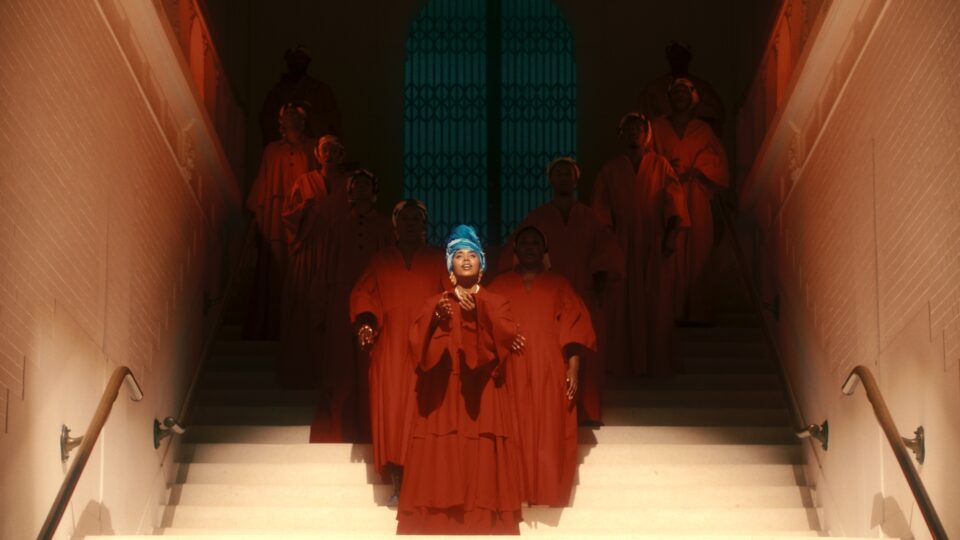
This summer’s programme extends that proposition at national scale. Echoes of Us, drawn from the Government Art Collection, and Gillian Ayres: A Life in Colour, spanning seven decades of abstract practice, position Plymouth within narratives of British art history without subordinating it to them. Instead, these exhibitions demonstrate how national collections acquire different valences when displaced from capital institutions. Meaning is not simply transferred but transformed through context. The Box is participating in redistribution of culture, where significance is produced through movement rather than centralisation.
The deeper implication of this model is that the post-London cultural landscape is no longer emergent but established. What once might have been described as a regional “turn” is now a structural condition of British cultural life. Institutions outside the capital are not compensating for absence but generating alternative modes of institutional intelligence, shaped by proximity to specific publics and embedded within local systems of knowledge. The Box exemplifies this condition not because it is exceptional, but because it is increasingly typical of a new institutional logic.
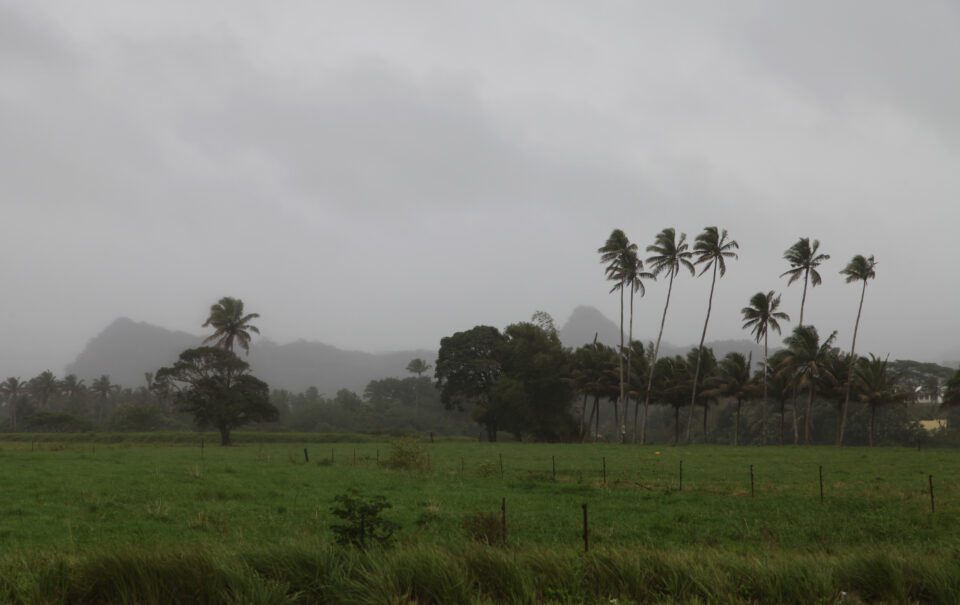
As June Sarpong observed, the museum’s significance lies in the sense of connection it generates across diverse communities within Plymouth. That connection is not ancillary to its programme but constitutive of it. The Box operates on the premise that value is produced through participation rather than reception, and that museums are most meaningful when they are lived within rather than visited. This reorientation reflects a broader transformation in how cultural institutions understand their own authority.
The awarding of Museum of the Year 2026 therefore functions as a marker of consolidation. The Box is not arriving into a pre-existing hierarchy; it is evidence that the hierarchy itself has shifted. In the redistribution of cultural power away from London, museums like The Box are not occupying a gap but articulating a new centre of gravity altogether – one defined not by geography, but by civic entanglement, institutional permeability and the capacity to make culture structurally present within everyday life.
Find out more about The Box, Plymouth: theboxplymouth.com
Words: Anna Müller
Image Credits:
1. The Box, Plymouth, Museum of the Year, Shortlisted, 2026. Photo_ Summer 2025. Image by One Plymouth.
2. Steve McQueen, Grenfell, 2019. Still courtesy the artist.
3. Julianknxx, Still from Shifting Spirit Time, BURO Stedelijk, 2025, © Studioknxx.
4. The Box, Plymouth, Museum of the Year, Shortlisted, 2026. Photo_ Summer 2025. Image by One Plymouth.
5. Julianknxx, Still from Shifting Spirit Time, BURO Stedelijk, 2025, © Studioknxx.
6. Mohini Chandra, film still from Kikau Street, 2016. Courtesy of the artist.