

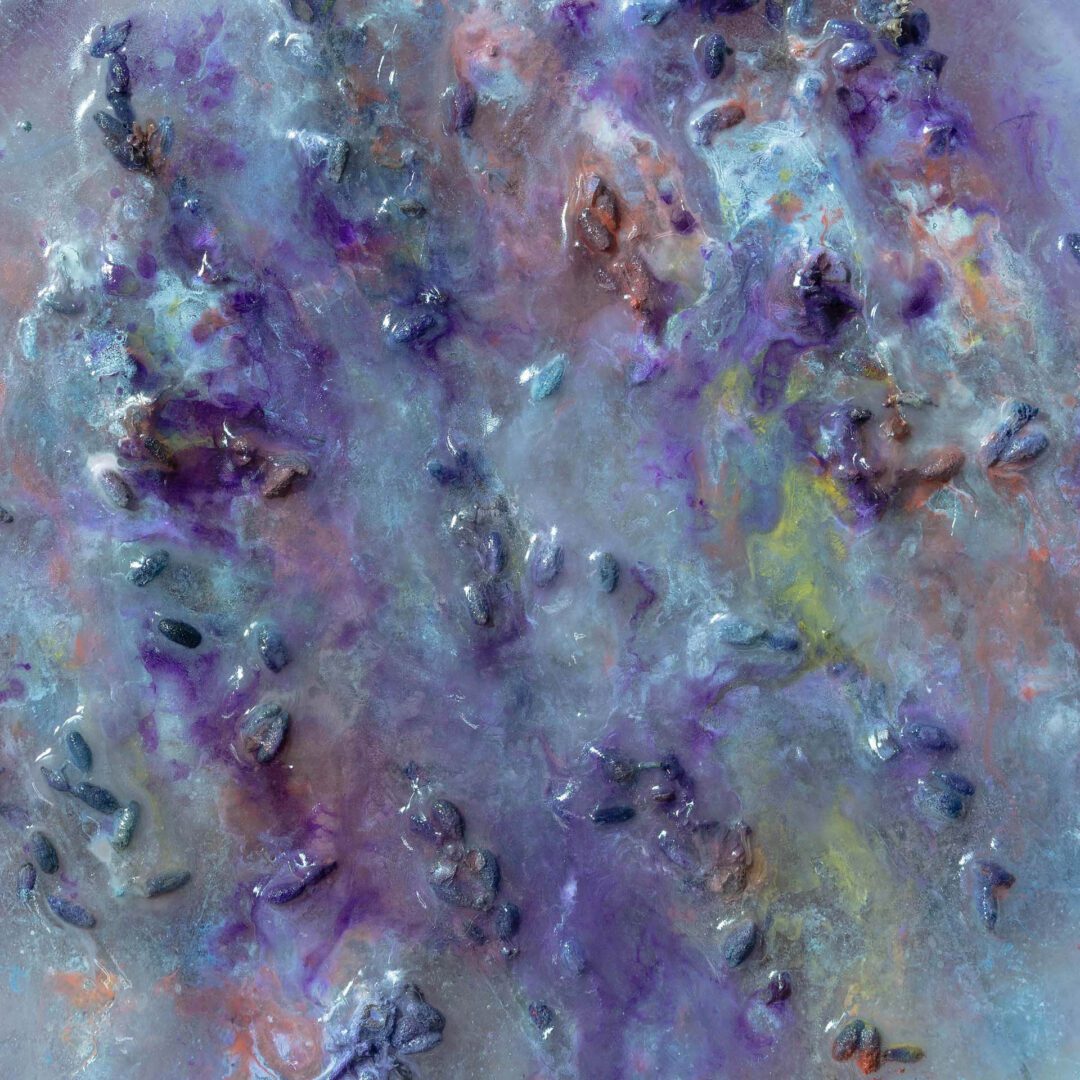
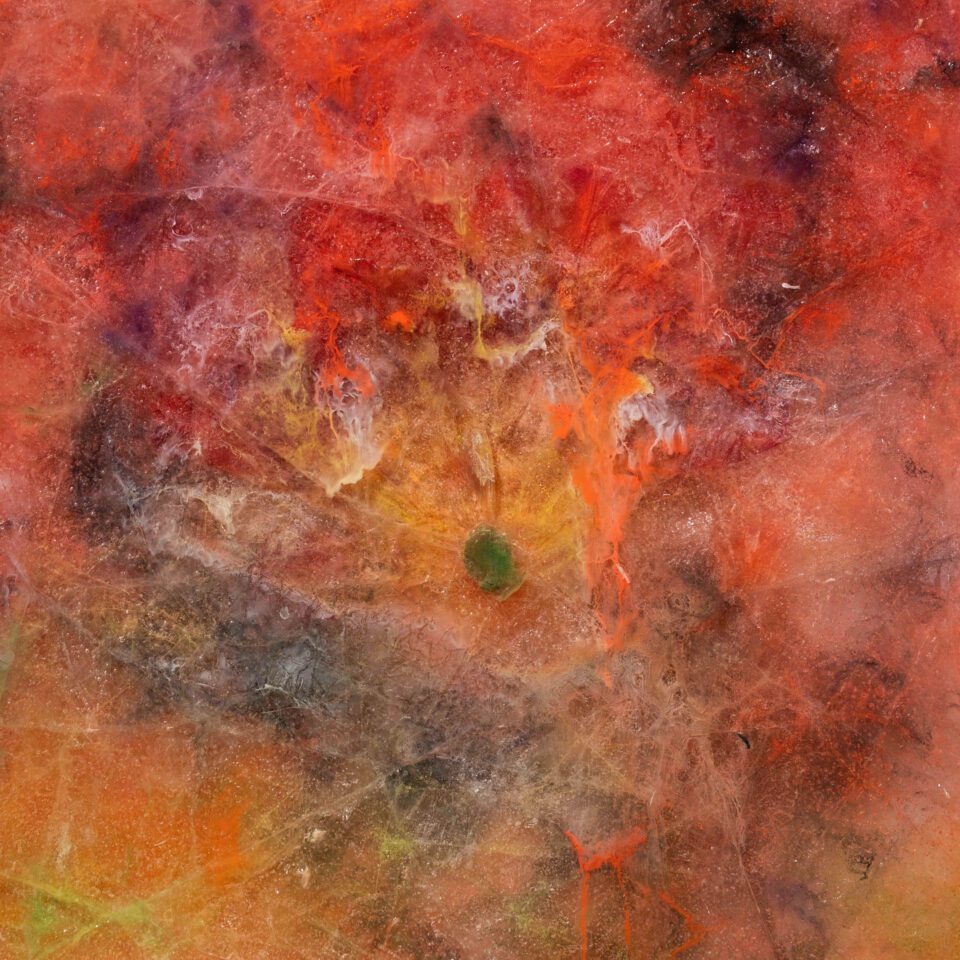
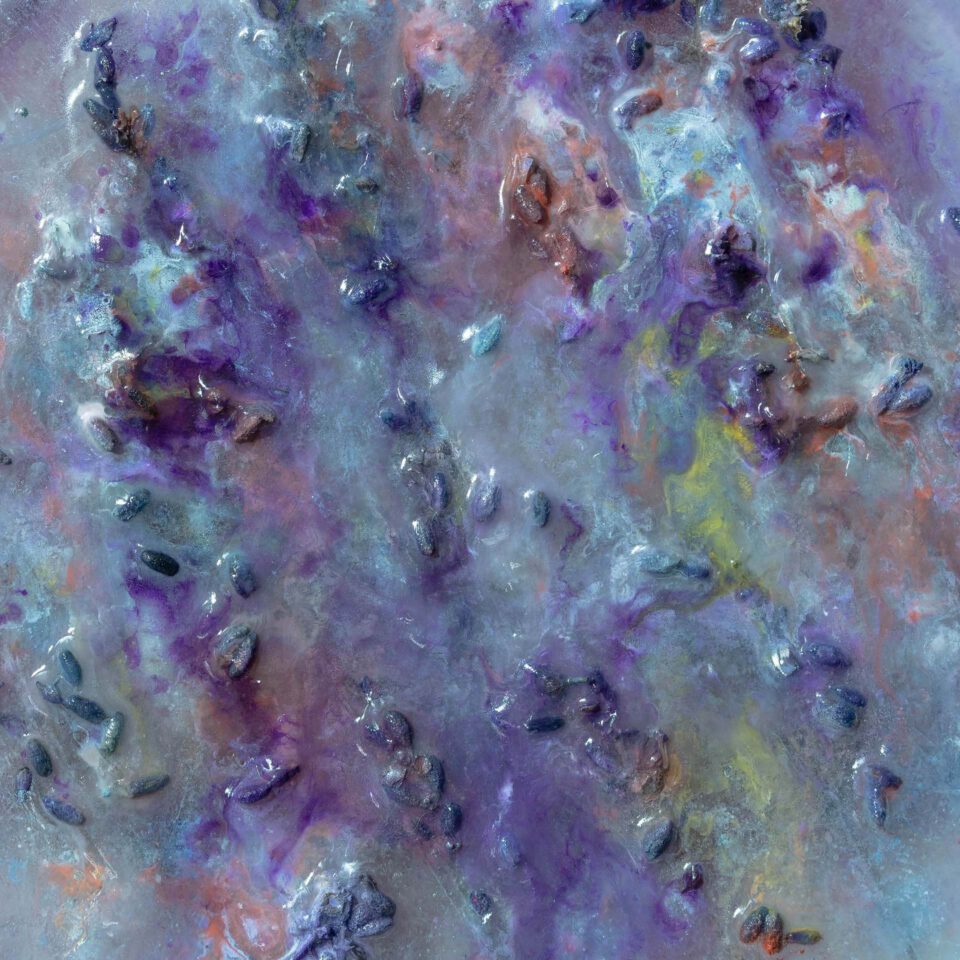
The process of sublimation is the direct transformation of ice into gas without becoming liquid. Artist Kate Hrynko captures this process in both domestic freezers and natural settings. Faded Ice is a series of ephemeral artworks made by placing paint onto ice, and then documenting what remains after sublimation. The work was shortlisted for the Aesthetica Emerging Art Prize 2025 These experiments explore how melting alters environmental conditions, referencing albedo loss – a decrease in surface reflectivity that leads to more solar radiation being absorbed rather than reflected, intensifying global warming. Hrynko’s vivid images merge photography and painting, creating abstract compositions that emphasise impermanence. The work operates as both scientific study and poetic reflection on climate change. Aesthetica caught up with Kate about what it meant to be part of the Art Prize.
A: What initially sparked your interest in sublimation?
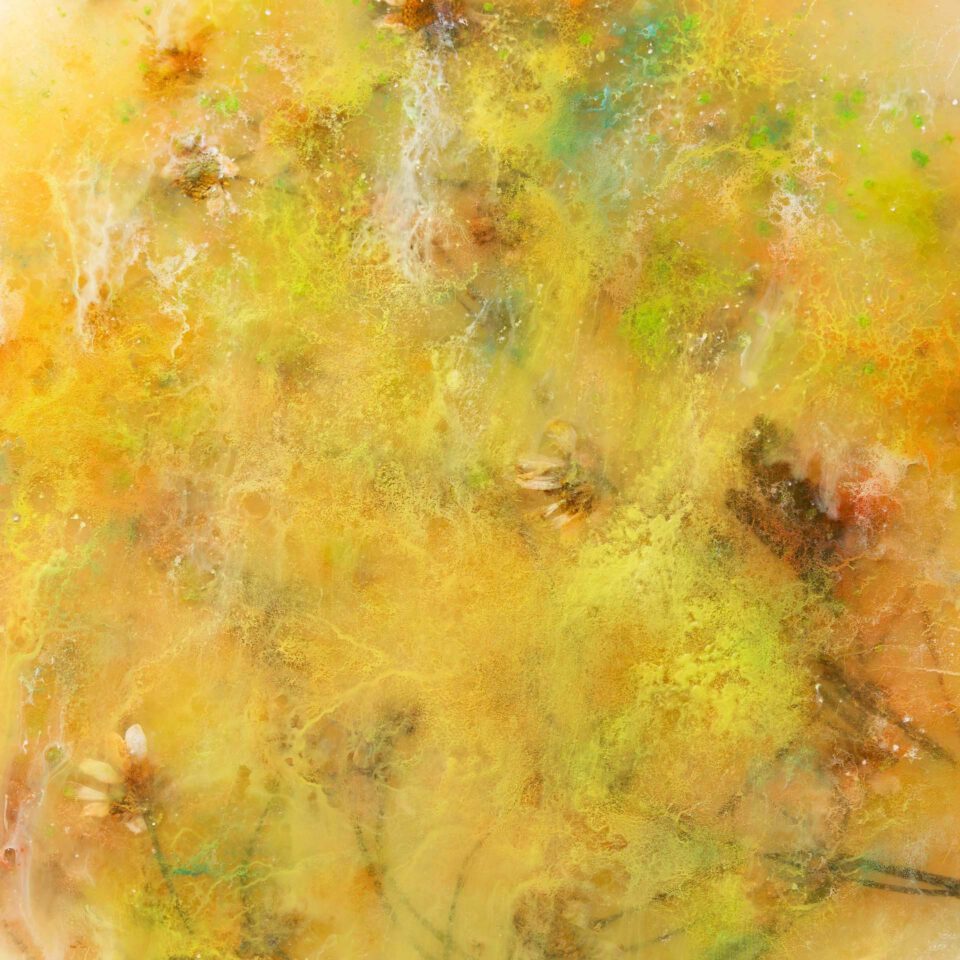
KH: At first, it was a search for an affordable material that I could work with over a long period of time and use for artistic experiments. I like to combine seemingly incompatible things. Water and the ice derived from it became the basic material for my research. There were unsuccessful experiments, such as freezing water with buckwheat flour added. One successful experiment was adding paint to melted ice. One day, my experiments stopped for a couple of months, and when I returned to them, I saw that the ice from the silicone mold had disappeared, but the paint remained on the surface. I began to investigate the reasons for this and discovered that, according to the technical specifications, my freezer is a frost-free type, which prevents ice from forming on its walls. After reading more about this process, I learned that my freezer undergoes ice sublimation – meaning the ice evaporates, just as it does in nature. This inspired me to explore the phenomenon and create ephemeral ice sculptures, which I then photographed.
A: Talk us through your creative process. How do you go about getting the right image?
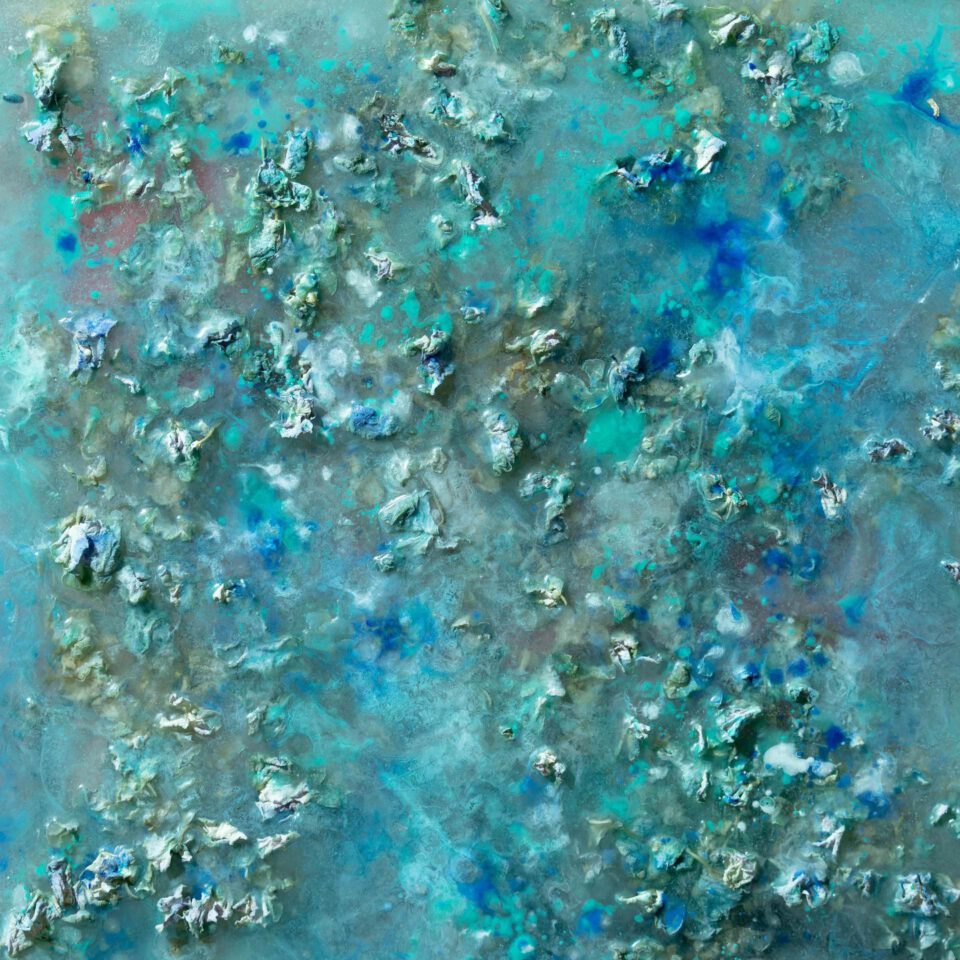
KH: The process of creating abstract photographs is highly experimental and sometimes uncontrollable. However, with experience, I have learned how to work with ice, which melts very quickly. The effect of multi-layering and three-dimensionality is achieved through numerous manipulations – such as repeated thawing and freezing with added paint, smoothing the surface, and using various tools like knives, hammers, or simply an ice pick. When it comes to color schemes, I find inspiration in paintings by renowned artists in museums or books. These may include color combinations from Van Gogh’s late works or the art of Maria Lassnig, Helen Frankenthaler and Cy Twombly. I am also inspired by images from the NASA Hubble Space Telescope, which is why some of my works appear somewhat cosmic. When I see that the image has become complex and detailed enough, I photograph the surface of the ice. If I like the result, I stop; if not, I view the photo on a large scale to see what else I might want to add. It’s a matter of taste and an intuitive process. I love to look at the results of my work for a long time and discover something new in the image each time. My photos should be filled with many details – as if they were small, unique universes.
A: How does your work speak to wider, global issues like climate change?
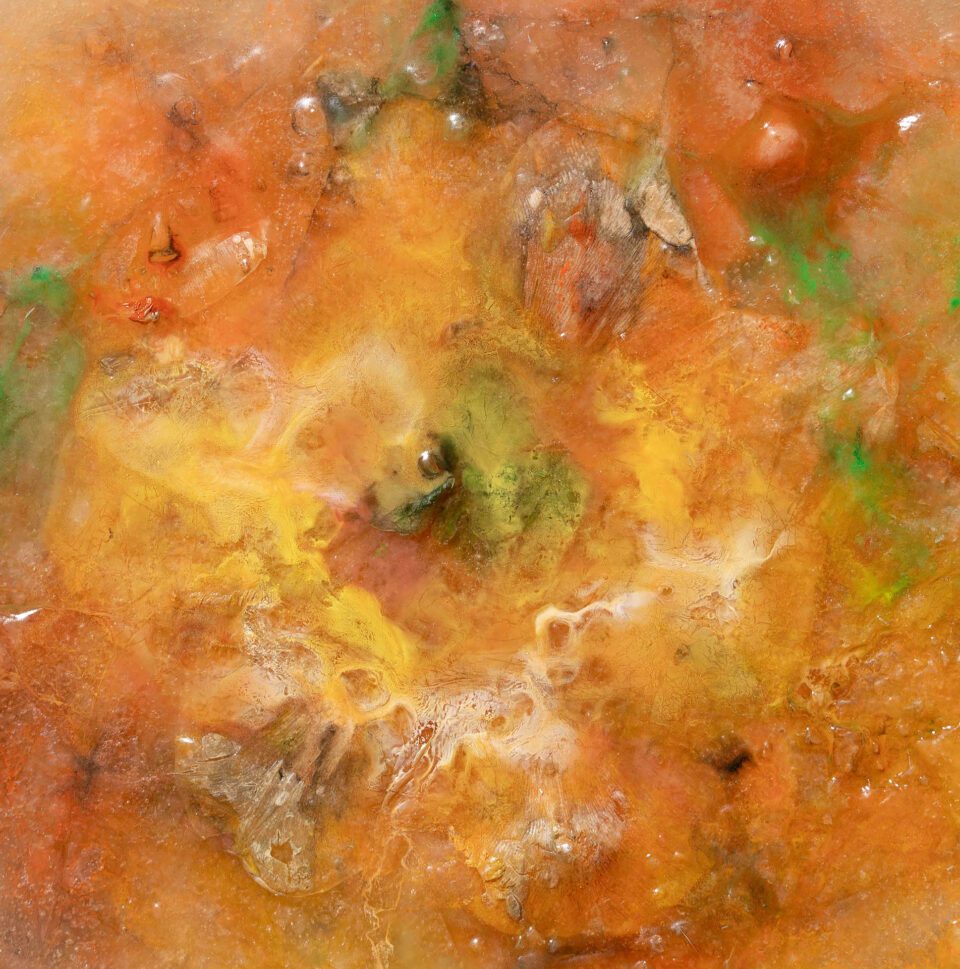
KH: The series is called Faded Ice. When choosing the title, I wanted it not only to reflect the story of my experiments but also to refer to the process of sublimation in nature on a global scale. I am currently studying the processes of the climate crisis – in particular, the geography of sublimation, the interconnections between our actions at the personal, community and global levels, and their impact on climate change. My images are created on a small scale in a laboratory, yet on a global scale, we are already witnessing the melting of glaciers. This results from the planet’s rising temperature, and here too, the ice is disappearing – just as it does in my freezer. However, in nature, along with the glaciers, we are also losing the Earth’s high albedo – its ability to reflect sunlight. As temperatures rise, the sublimation process can accelerate even further. Overall, this is a vast and complex subject, and I believe that, with time, I will be able to convey it to the viewer – once I have gathered enough knowledge and can express it visually.
A: How do you balance the scientific accuracy of the sublimation process with the artistic abstraction?
KH: I feel that it is not simply a matter of balancing between a visually appealing image and accurate scientific research. When research is conducted, photography serves to document changes in processes and objects by combining images into sequences – almost like a mini-film. In my series, I focus on the final visual abstraction, aiming to capture the viewer’s attention through aesthetics. I tell a story and convey an important theme. Nevertheless, the process of creating these works is based on a scientific approach – that is, within a frost-free freezer, where the process of sublimation occurs and, in turn, influences the appearance of the image. I wonder whether I will be able to create something visually similar in the field if I begin collecting scientific data empirically in nature. Perhaps I will be able to test this by visiting a place where the sublimation of ice and snow occurs naturally.
A: How do you hope audiences respond to the series?
KH: Firstly, I hope that viewers will linger on the works and find visual pleasure in them. If I can capture their attention through the images, I also hope they will become interested in the topic of climate change, which I am exploring. Secondly, I hope that this series will attract the attention not only of viewers but also of institutions, communities and individuals with whom I can continue my research, collaborate and create. Whatever the audience’s response may be, I will continue to produce my work.
The Aesthetica Art Prize is Open for Applications. Win £10,000 and Exhibition. Submit Here.
The Aesthetica Art Prize Exhibition 2025 is at York Art Gallery until 25 January.
katehrynko.com | yorkartgallery.org.uk
Words: Emma Jacob & Kate Hrynko.
Image Credits:
All images courtesy of Kate Hrynko.


