

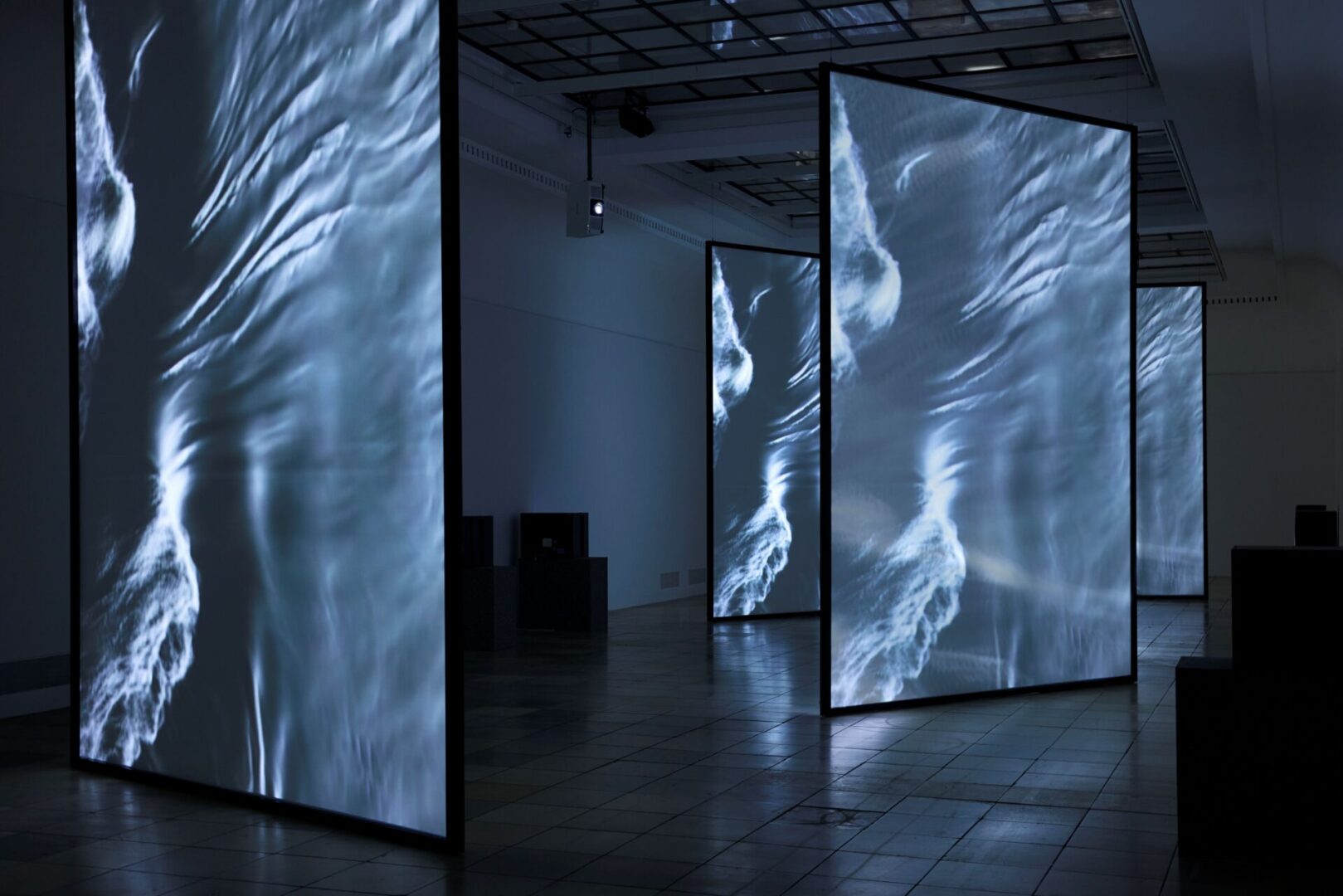
In the 1960s, video art began to emerge as a new form of artistic expression. It was a period of rapid technological advancement. One in three households had a TV set in 1956, but just over a decade later, in the 1970s, that had risen to 93% of homes. Consumer video equipment became more readily available, and artists seized upon this moment to create something entirely new. Nam June Paik, largely regarded as the founder of video art, placed magnets on TVs to warp and twist electronic images, whilst pioneering figures like Andy Warhol turned to the medium to push the boundaries of contemporary art. One such practitioner was Steina, whose work is considered foundational to the history of video of art, yet is often overlooked by the canon. Steiner: Playback, at Haus der Kunst, traces more than five decades of work by the artist, recognising her as a foundational and still-generative figure in the history of moving image.
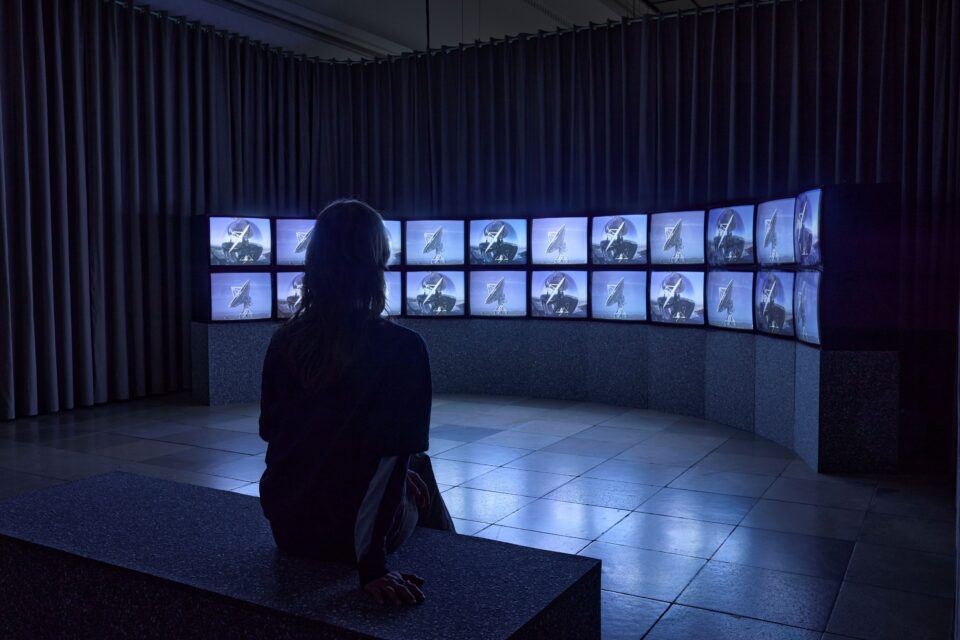
A classically trained violinist, Steina took up the medium of video in 1970, approaching the camera as a musical instrument guided by what she called the “majestic flow of time.” This unique combination of the worlds of music and art saw the artist bring qualities of play and performance to her sense of composition. In 1971, she co-founded The Kitchen in New York with her life partner Woody Vasulka, a venue designed for expanded forms of image, sound and live practice It grew out of informal gatherings in their 14th Street apartment, becoming a shared working environment for an emerging community of video makers, visual artists and experimental composers. Among them were Joan Jonas, La Monte Young and Alvin Lucier, whose practice held performance, sound and music in close relation.
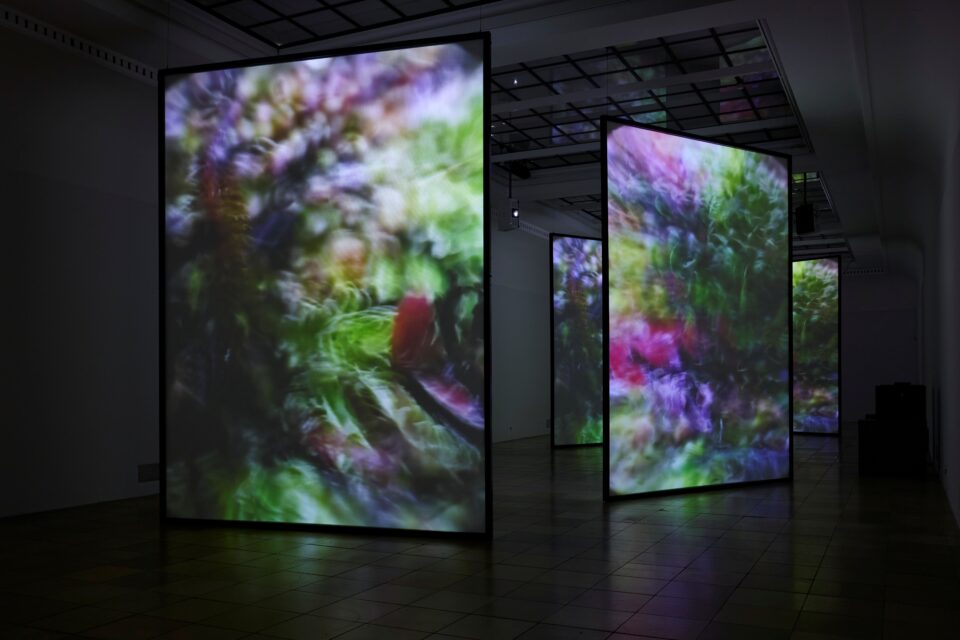
At Haus der Kunst, the exhibition unfolds as an orbit through Steina’s cosmos. Playback, repetition and the looped temporalities of the medium have long structured the artist’s practice, and in this show her invented tools and projected environments take centre stage. Images turn, re-enter and recirculate across time, carried by the circular motion, rotation, feedback and return that recur throughout her practice. The exhibition spans 21 works, ranging from early documentary experiments from the late 1970s to large-scale projected environments. It also includes Outer Cosmos (2026), Steina’s most recent work, completed and presented for the first time. The piece extends Orbital Obsessions (1975-77) by returning to that footage decades later. But the real heart of the show is a self-portrait recorded in Steina’s Buffalo studio, in which multiple camera views are layered, fed back and multiplied. Haus der Kunst places it at the centre of a wide, spherical space, with the original source material recirculated around it.
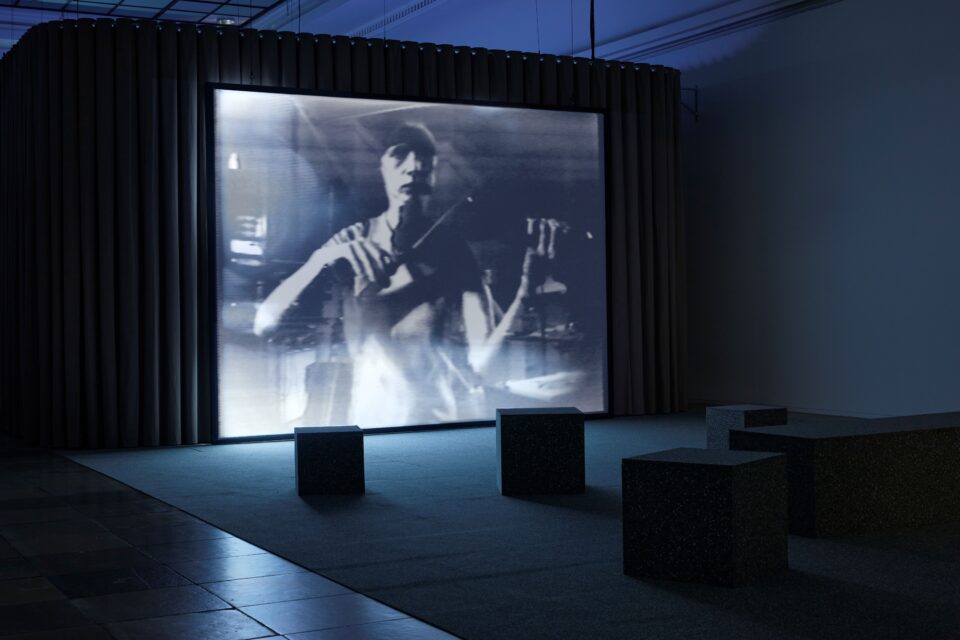
Despite the presence of Steina’s works in major museum collections across the US and Europe, her practice remains underrepresented within wider narratives of the visual arts. Steina: Playback recognises her as a major figure, placing her rightfully back into the dominant canon, spotlighting the artist as someone whose work continues to resonate today. More than this, the exhibition also continues Haus der Kunst’s focus on women artists whose practices have reshaped the fields of image, sound, performance and exhibition-making, following shows dedicated to Joan Jonas, Fujiko Nakaya, Katalin Ladik, Shu Lea Cheang, Meredith Monk, Rebecca Horn and Liliane Lijn. Within the 2026 programme, it stands between ECHOES. Skin Contact, which explored the interplay between the body and mediated reality, and Diane Severin Nguyen’s forthcoming exhibition, in which she experiments with photography as an expanded field of image production, moving between still and moving image, sound and installation. Together, these projects reflect Haus der Kunst’s sustained interest in how images are produced, mediated and encountered today.
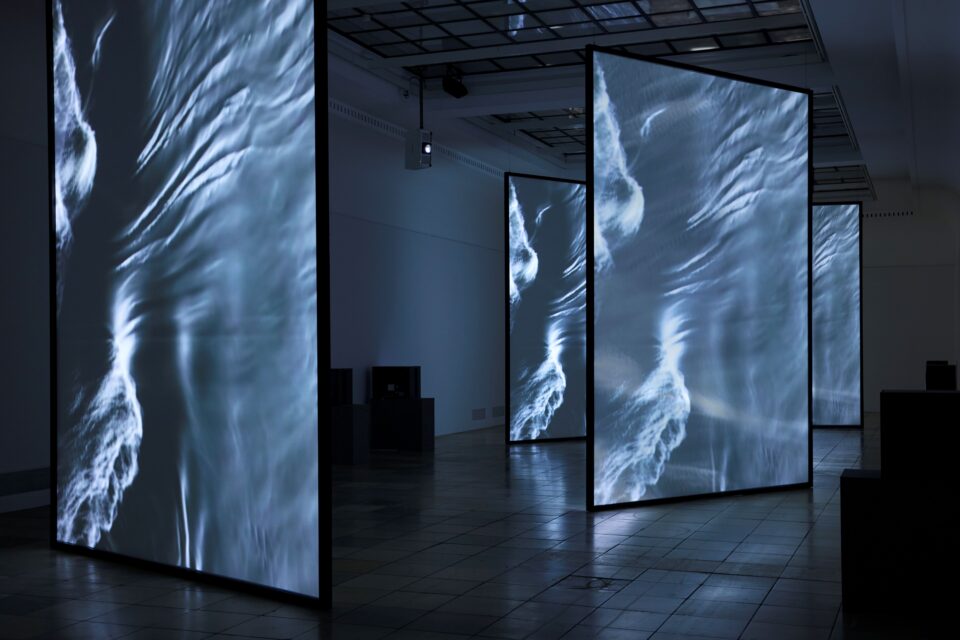
There are few artists who have continued to be at the forefront of contemporary innovation for five decades. It is an accolade saved for the truly impressive, those who have fundamentally shaped the face of 20th and 21stcentury art. Steina is one such figure. Haus der Kunst’s exhibition gives audiences the rare opportunity to trace her entire career, spotlighting her influence on today’s artists and appreciating the genuine innovation that has defined the past fifty years of Steina’s life.
Steina: Playback is at Haus der Kunst, Munich until 7 December: hausderkunst.de
Words: Emma Jacob
Image Credits:
1&5. Steina: Playback, Borealis, 1993. Exhibition view: Haus der Kunst München, 2026. Photo: Milena Wojhan. Courtesy of the Artist and BERG Contemporary.
2. Steina: Playback, The West, 1983;. Exhibition view: Haus der Kunst München, 2026. Photo: Milena Wojhan. Collection San Francisco Museum of Modern Art, Accessions Committee Fund purchase, gift of Mimi and Peter Haas, Susan and Robert Green, Mr. and Mrs. Brooks Walker Jr., and Thomas Weisel.
3. Steina: Playback, Borealis, 1993. Exhibition view: Haus der Kunst München, 2026. Photo: Milena Wojhan. Courtesy of the Artist and BERG Contemporary.
4. Steina: Playback, Violin Power, 1970–78. Exhibition view Haus der Kunst München, 2026. Photo: Milena Wojhan. Courtesy of ZKM | Zentrum für Kunst und Medien.


