How do we face worsening ecological change with anything other than despair? This is the question at the heart of Vancouver Art Gallery’s latest exhibition. Future Geographies: Art in the Century of Climate Change is the first major show in Canada to examine the intersection of contemporary art and climate change on a global scale. As Curator at Large Eva Respini says: “Artists are not scientists, nor are they journalists, but they have a role to play in asking questions about our future on this planet. In this century shaped by climate change, that act of imagining is both a necessity and a form of resistance.” Research by the World Health Organisation shows that 3.6 billion people already live in areas highly susceptible to climate breakdown, with an estimated 250,000 additional yearly death by 2030. It is clear that none of us will be exempt from the effects of global warming, and in taking on an international perspective, Vancouver Art Gallery underscores the urgency and relevance of sustainable collective action.
The show is organised into four key thematic sections, bringing artists from around the world into dialogue. Future Geographies opens with the chapter Living Knowledge, where visitors are welcomed by Teresita Fernández’s Island Universe 2 (2023) – a monumental charcoal installation evoking the Earth’s geological past, when the continent formed a single supercontinent – presented in Canada for the first time. In this section, works by Andrea Bowers draw on the long history of environmental activism in Northern California, whist Gabrielle L’Hirondelle Hill presents a delicate flag composed entirely of tobacco leaves. Visitors also encounter Firelei Báez’s Unbound (one way ashore, a thousand channels) – from her ongoing series of map paintings – and Carolina Caycedo’s intricate hanging sculptures, fashioned from fishing nets gathered from communities whose waterways have disappeared due to damming projects.
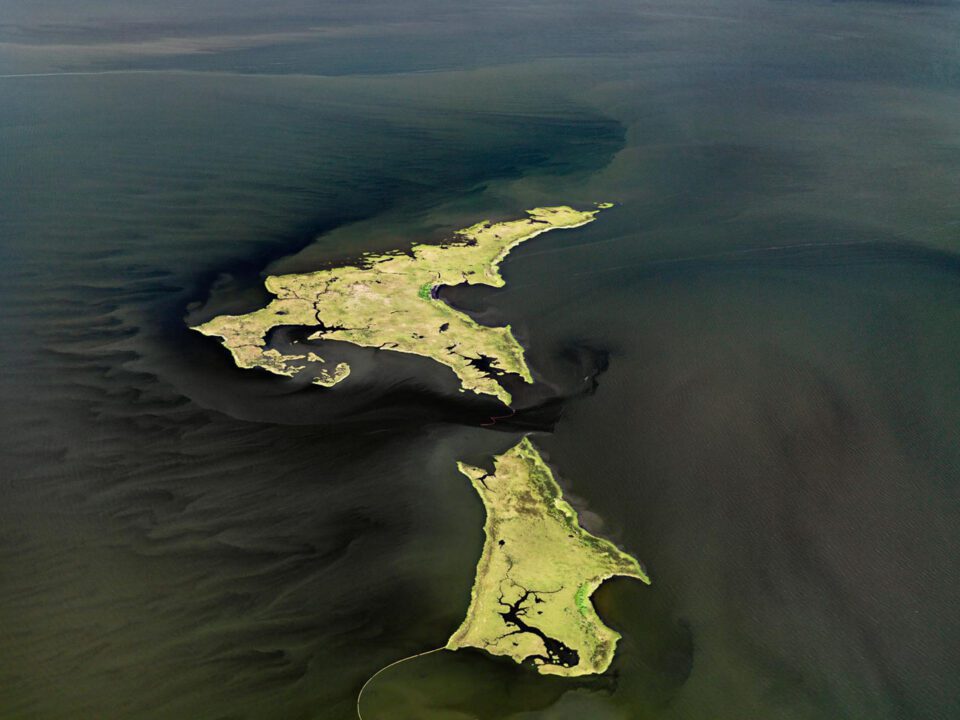
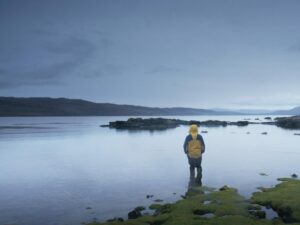
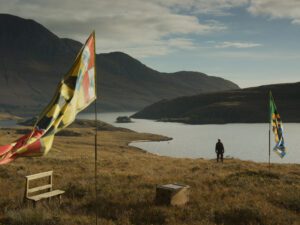
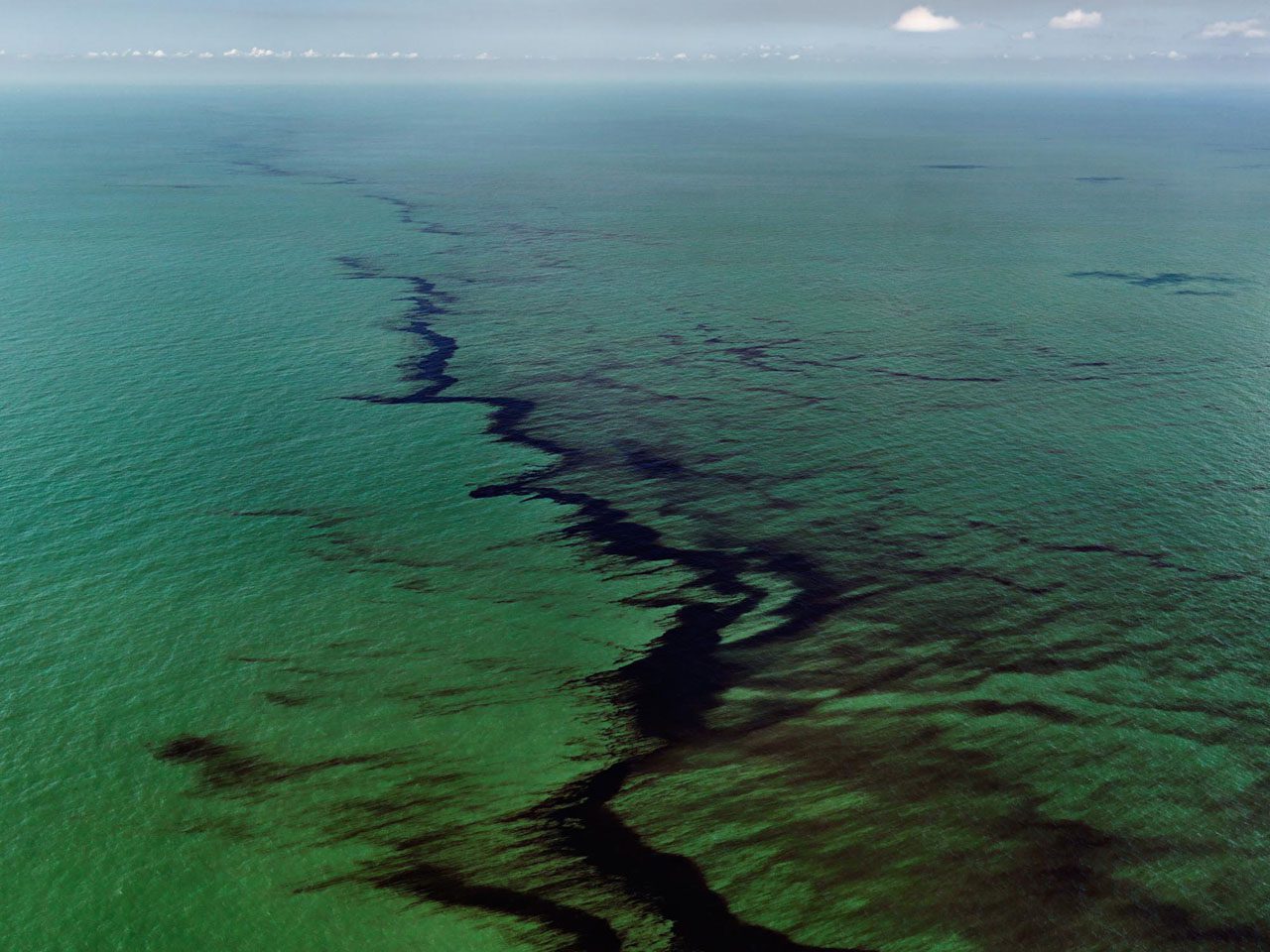
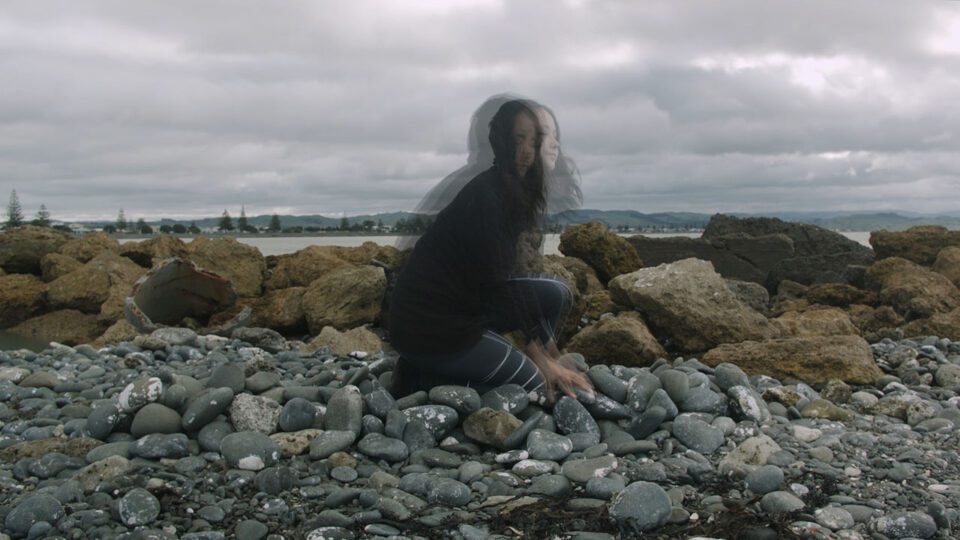
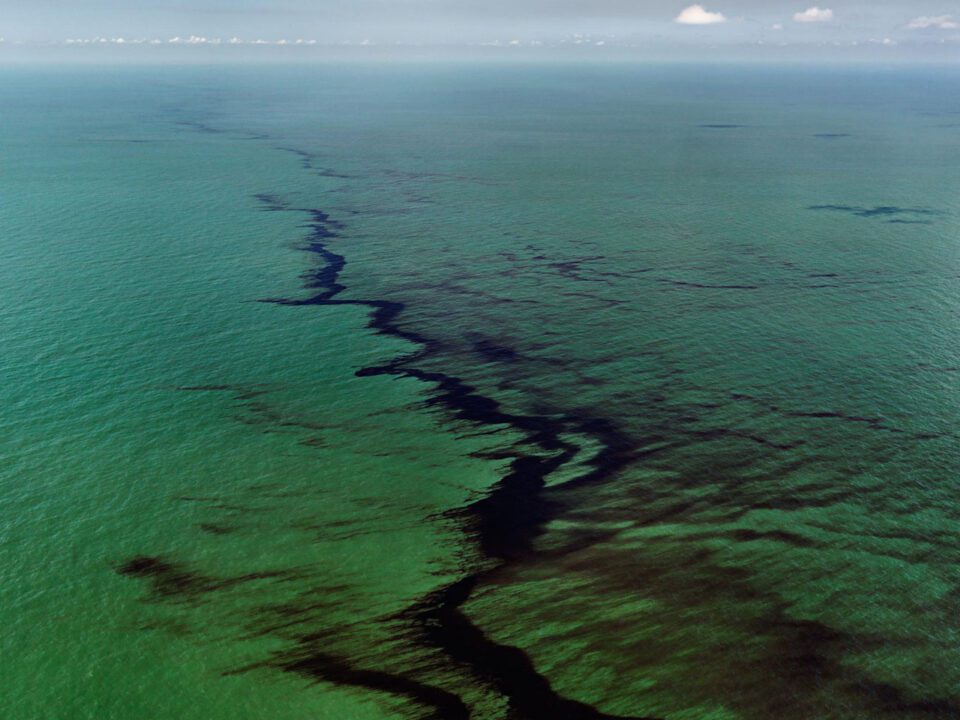
Consumed Earth examines responses to histories of extraction and the threat of extinction. John Akomfrah’s widely acclaimed Vertigo Sea (2015) – an epic three-channel video installation that montages archival and new footage into a meditation on humanity’s interdependence with the ocean – makes its Vancouver debut. Lawrence Paul Yuxweluptun Lets’lo:tseltun’s vivid depiction of British Columbia wildfires stands as a history painting for our time, whilst Act III of LaToya Ruby Frazier’s Flint Is Family In Three Acts (2022) documents the crisis of contaminated drinking water in Flint, Michigan with portraits and stories of those activists who advocated for clean water. A particular highlight is Edward Burtynsky’s aerial photographs of ocean oil spills, confronting the impact of human activity on the planet. Meanwhile, Judy Chicago’s series The End: A Meditation on Death and Extinction takes on human mortality.
Audiences them move into the Speculative Worlds section, the most ambitious part of the exhibition. Here, Vaancouver Art Museum introduces artists who have made works about imagined worlds, incorporating notions of science fiction. These include Josh Kline, whose video installations project a not-too-distant future changed by rising tides. Figurative sculptures by Huma Bhabha, Cannupa Hanska Luger and Rose B. Simpson imagine a post-human setting, whilst Abbas Akhavan uses natural elements, presented against a green screen, to reveal a reality where the environment is encountered through mediated experience.
The exhibition concludes with Material Memory, centred on artworks fashioned from recycled and found materials, and those that focus on ideas of healing and recuperation. Brian Jungen’s Cetology (2002) – an 8.50-metre-long whale skeleton constructed from white plastic patio chairs – critiques environments destruction, consumer waste and the institutional conventions of natural history museums. Visitors are invited to contemplate Jean Shin’s Huddled Masses (2020), composed entirely of obsolete cell phones and electronics, which exposes tensions between nature and technology. Also featured is YOU LIBERATE MY ANGER MY DESIRE MY LOVE (2026), a sculpture by Jeffrey Gibson created for the exhibition.
Future Geographies is wildly ambitious, in both scale and message. Each piece works in perfect harmony to address our current moment, looking the climate crisis directly in the eye without giving in to the creeping sense of hoplessness that many experience. Each artist presents a way of resisting, denying that climate change is inevitable and moving towards a better society. This show is not to be missed.
Future Geographies: Art in the Century of Climate Change is at Vancouver Art Gallery until 10 January: vanartgallery.bc.ca
Words: Emma Jacob
Image Credits:
1&5. Edward Burtynsky, Oil Spill #10, Oil Slick, Gulf of Mexico, June 24, 2010, chromogenic print, Collection of the Vancouver Art Gallery, Gift of the Artist.
2. Installation view of John Akomfrah, Vertigo Sea, 2015 (still), 3 channel high-definition video, Collection of the National Gallery of Canada, Purchased 2016, 46951, © John Akomfrah, Photo: Courtesy of Smoking Dogs Films and Lisson Gallery.
3. Edward Burtynsky, Oil Spill #14, Marsh Islands, Gulf of Mexico, June 24, 2010, chromogenic print, Collection of the Vancouver Art Gallery, Gift of the Artist.
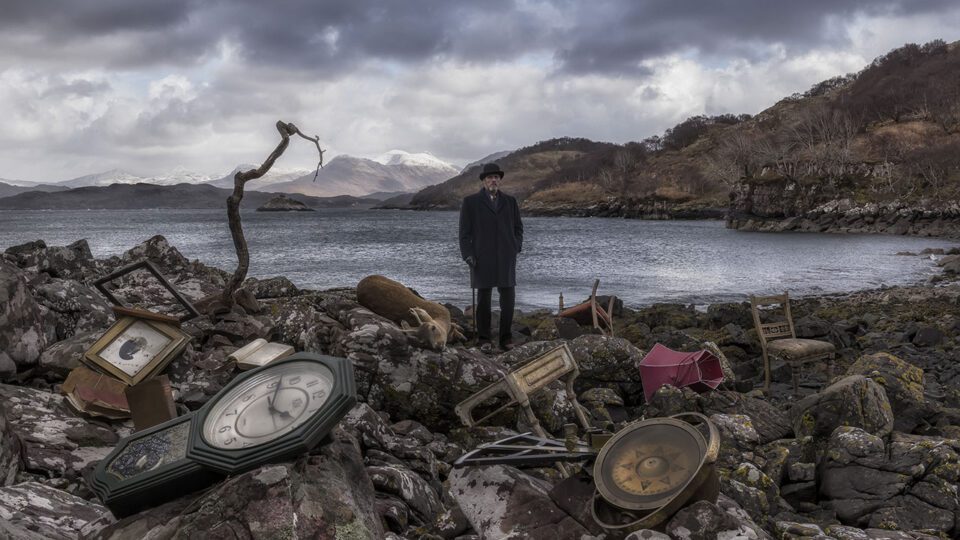
4. asinnajaq, Rock Piece (Ahuriri Edition), 2018 (still), digital video, Collection of Hydro-Québec, Photo: Courtesy of the Artist.