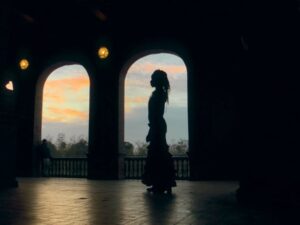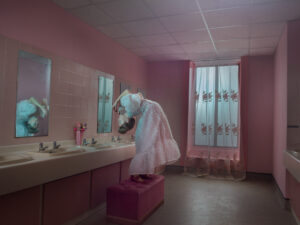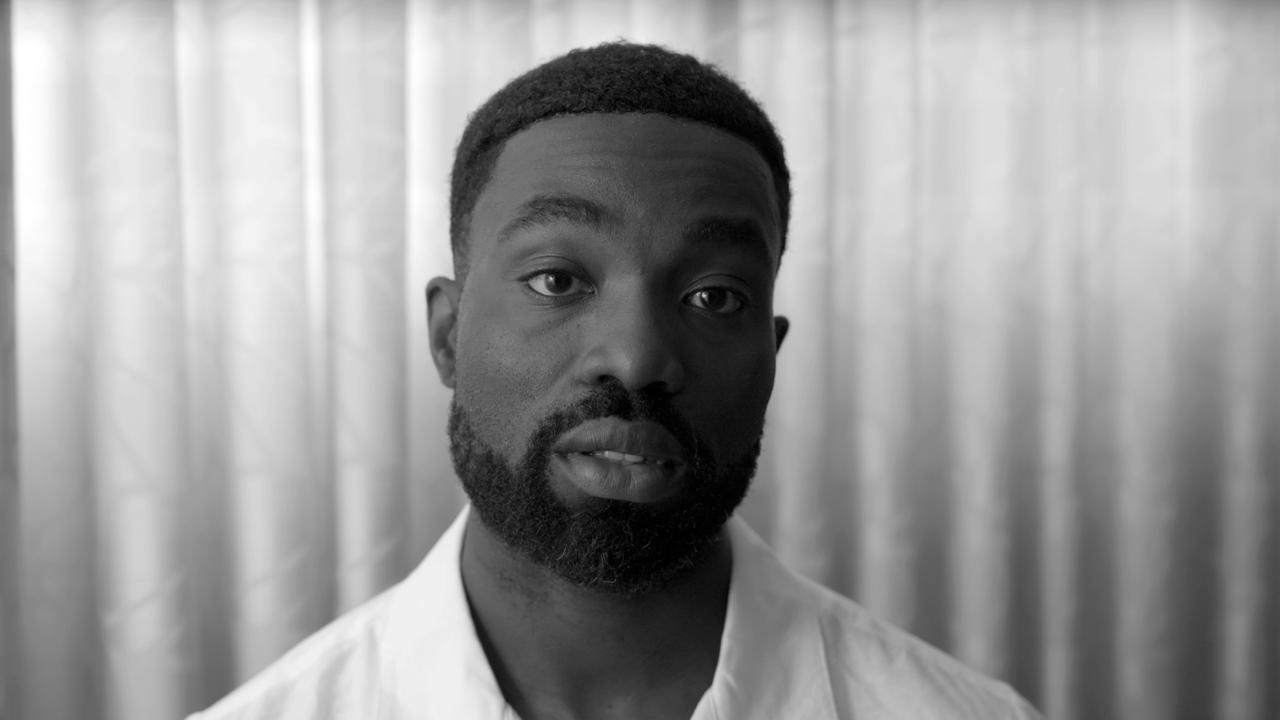
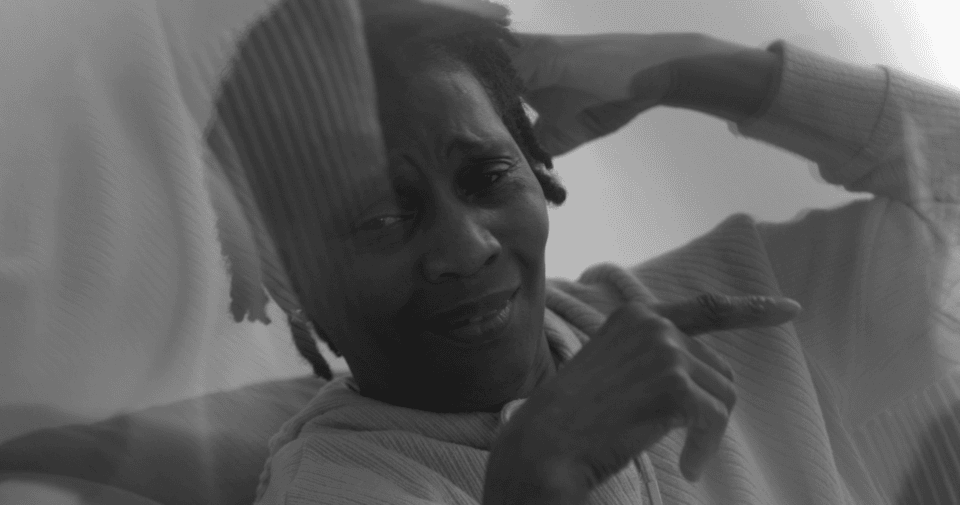
Memory is shaped through the images, institutions and stories that a society carries forward, creating a shared sense of who and what forms part of its history. Contemporary British artists have increasingly explored these processes through archives, moving image and emerging technologies, bringing personal and collective histories into new forms of visibility. Baff Akoto’s COLLATERAL ECHOES, opening at Derby QUAD on 26 September, draws on XR, moving-image, archival material, first-person testimony, performance and immersive sound to explore memory, identity and remembrance. At its centre are the lives of Black and immigrant Britons who have died following police contact since 1969, with the work attending to their personalities, relationships, aspirations and the communities that continue to hold their stories. In doing so, Akoto considers how art can create space for lives to be remembered in their full complexity, extending the ways in which personal experience becomes part of the wider cultural record.
That distinction matters because public memory can flatten people into events. A headline, case file or statistic can establish that someone existed without conveying who they were, what they imagined for themselves or the relationships that gave their lives meaning. COLLATERAL ECHOES moves against that compression, bringing together voices, images and performance to restore a sense of personality and possibility. Spoken prose by Paapa Essiedu and poetry by the late Benjamin Zephaniah sit within an environment where grief is accompanied by care, communion, joy and survival. Rather than asking audiences simply to witness loss, Akoto creates space to consider the cultural practices through which communities continue to remember people as more than the way they died.
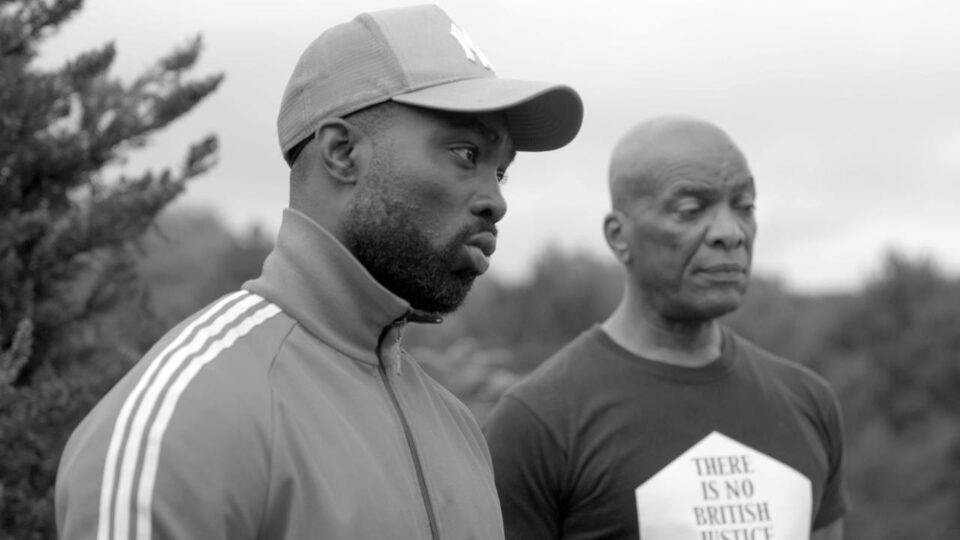
Britain’s contested histories provide the intellectual ground for this enquiry. Paul Gilroy’s writing on diaspora challenged fixed ideas of national identity, while Stuart Hall described identity as continually produced through history, representation and difference. Akoto’s British-Ghanaian perspective – shaped by being raised between London and Accra – gives these questions a contemporary, transnational dimension. The work considers what happens when histories of migration, empire and policing meet a culture in which memory is increasingly mediated through screens, platforms and digital archives. Technology, in this context, becomes part of the question of how Britain might see and remember itself.
A particularly significant thread runs from Hall to John Akomfrah and then to Akoto. Akomfrah is not simply a useful precedent: he has been an artistic mentor to Akoto, whose earlier career in documentary and drama developed into a visual-art practice concerned with movement, technology and collective memory. The Unfinished Conversation, Akomfrah’s three-screen meditation on Hall, uses television appearances, interviews, music and archival footage to make a single life intersect with the social and political transformations of post-war Britain. Its title offers a useful way of thinking about Akoto’s practice too. History remains unfinished because the archive does not provide a final version of the past.
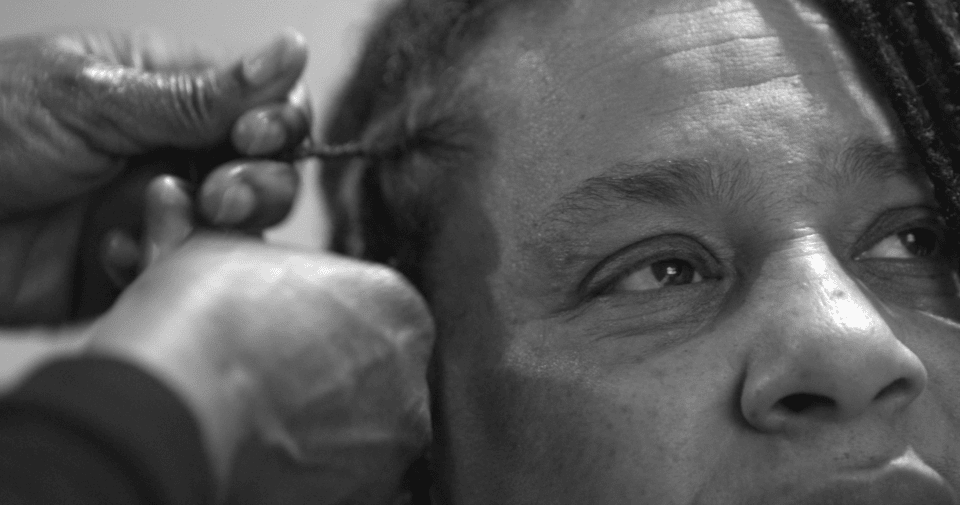
That approach has become a defining feature of much contemporary moving-image practice. Archives are no longer treated simply as repositories of facts, but as places where omissions, silences and structures of power can be made visible. Larry Achiampong’s Relic Traveller takes this idea into speculative territory, imagining future figures returning to recover traces of histories shaped by colonialism, migration and global inequality. His work demonstrates how an archive can operate forwards as well as backwards, turning remembrance into an imaginative act. Akoto’s use of XR similarly unsettles the conventional memorial, creating an environment through which audiences encounter testimony, image and sound.
Questions of visibility become particularly charged when the technologies involved have their own histories of surveillance. Rhea Storr’s Uncommon Observations: The Ground that Moves Us is an illuminating parallel. Using obsolete Aerochrome film associated with military surveillance, Storr photographed Black bodies in London and questioned who is looking, who is visible and who controls the image. The work transforms a technology associated with monitoring into one capable of play, movement and self-determination. That reversal has a clear resonance with Akoto’s project: both artists recognise that technologies of seeing are never neutral, and both ask whether the apparatus that has historically watched and categorised Black subjects can be repurposed as a means of witnessing life on different terms.
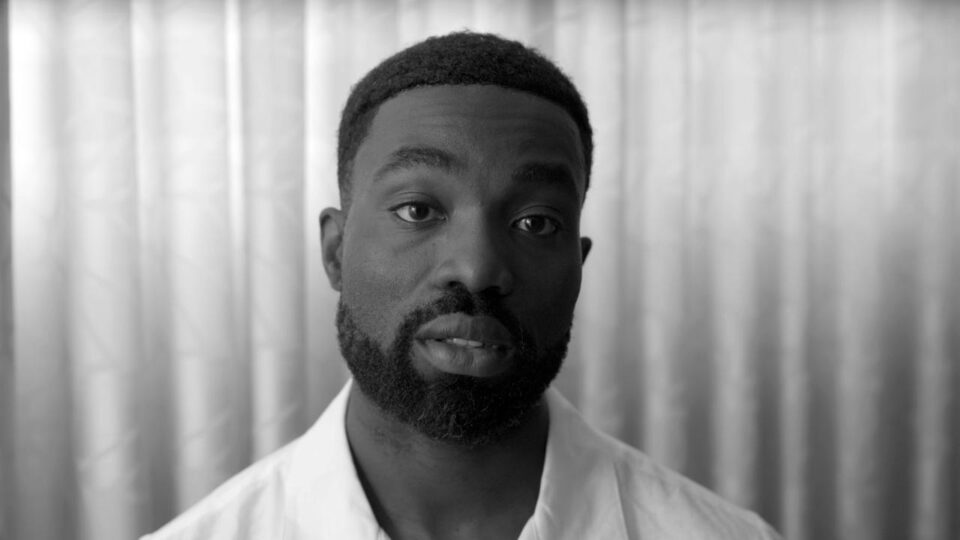
A wider history of Black British art makes this enquiry still richer. Lubaina Himid has repeatedly brought overlooked Black histories and figures into the field of representation, while Sonia Boyce has explored how race, gender and cultural identity are produced through images and social encounters. Their practices demonstrate that recovering an absent history is not simply a matter of adding more subjects to an existing narrative. The narrative itself must be reconsidered – including the assumptions that determine what qualifies as history, whose testimony is credible and which forms of cultural memory receive institutional attention. Akoto inherits this challenge while introducing another layer: what happens when the archive is no longer only a collection of physical objects, but a digital, immersive and participatory environment?
Curatorial context becomes important at this point because the location of an artwork shapes the histories that surround it. QUAD’s presentation of COLLATERAL ECHOES places the project within a programme that combines exhibition, film and public events, creating opportunities for the work to extend beyond the gallery itself. The project has already evolved through different contexts, including its 2025 presentation at Site Gallery as part of Sheffield DocFest’s Alternate Realities programme. Its move into Derby and subsequently towards other UK institutions means that the work itself becomes a kind of travelling archive, encountering different audiences with their own histories of migration, race and belonging.
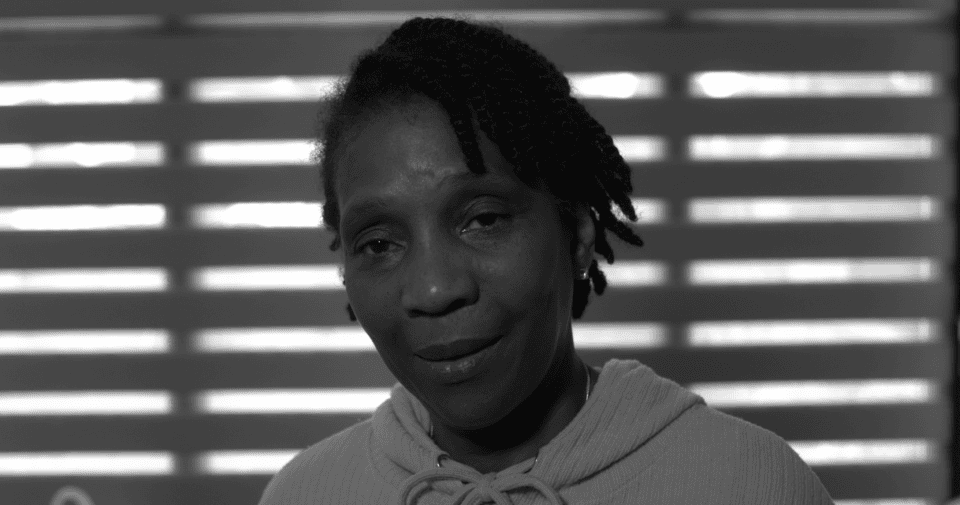
That movement is particularly appropriate to Akoto’s subject. Memory changes when it travels; a story encountered in Sheffield does not necessarily resonate in the same way in Derby, Cardiff, Southampton or Birmingham. The forthcoming institutional trajectory allows COLLATERAL ECHOES to accumulate rather than simply repeat meaning, with each context contributing another layer to the work. Curators are therefore not merely presenting a finished object but participating in its unfolding. For an artwork concerned with collective remembrance, the institutional network becomes part of the form: different communities encounter the same histories from different positions.
Akoto’s own trajectory gives this moment added significance. In 2022 he became the Main Prize Winner of the Aesthetica Art Prize for Leave The Edges, an immersive film exploring African diasporic cultural expression through movement, ritual, music and image. The work subsequently appeared at Whitechapel Gallery and won the Grand Prix at the Bamako Biennial, marking an important transition into an increasingly interdisciplinary visual-art practice. That earlier work is useful to revisit now because it reveals continuities beneath the apparent shift in subject matter: questions of ancestry, movement, cultural memory and the possibilities of cinematic language have remained central. What has changed is the scale and urgency with which those concerns are now being brought into contact with British history.
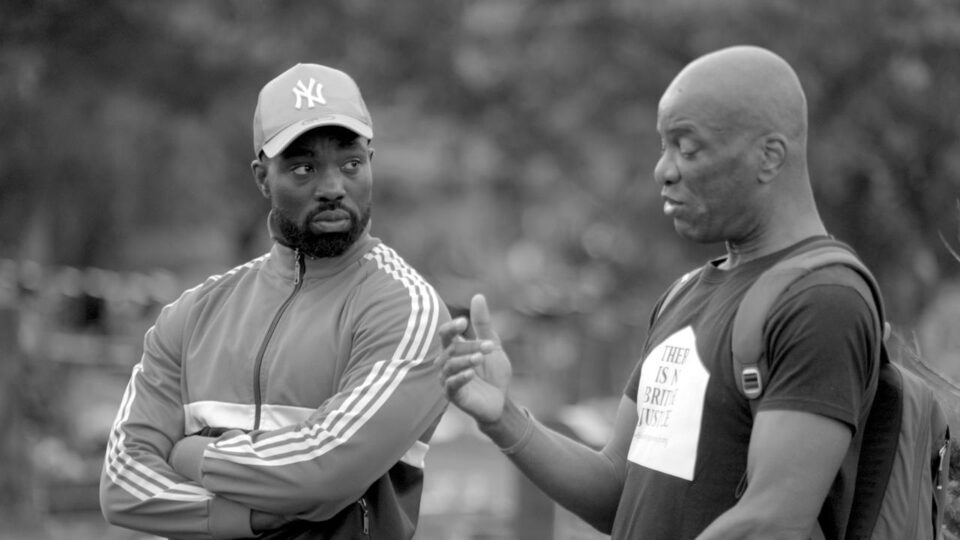
His development also sits within a broader rethinking of what moving image can be. Film no longer needs to remain confined to a screen, while documentary need not be restricted to the conventions of observation and testimony. XR, sound, performance and installation can create different relationships between viewer and subject – although they also introduce difficult questions of mediation. Immersion can generate proximity, but it can also risk turning another person’s history into an experience consumed by the viewer. Akoto’s decision to surround testimony with poetry, sound, movement and archival fragments is therefore significant because it resists a straightforward simulation of events. The work does not ask an audience to inhabit another person’s experience; it asks them to encounter the traces that remain.
This distinction is important within wider debates around representation. Histories of racialised violence can become trapped within a familiar visual vocabulary: the photograph of the victim, the protest, the newspaper headline, the institutional document. Such images have political force, but repeated representation can also narrow the imaginative space around a life. Akoto’s inclusion of joy, care, music and cultural continuity pushes against that narrowing. COLLATERAL ECHOES recognises violence without allowing violence to become the defining characteristic of the people it commemorates.
That may be the project’s most significant contribution to the conversation around British memory. A national history is produced not only through museums, monuments and textbooks, but through the stories families tell, the images artists preserve and the cultural spaces in which communities recognise themselves. Akomfrah, Achiampong, Storr, Himid and Boyce have different strategies for questioning what enters that field of visibility. Akoto extends the conversation into an era of immersive media, where the archive can be spatial, sonic and unstable – something audiences move through rather than simply observe.
As COLLATERAL ECHOES moves through British institutions, its own history will continue to develop. That trajectory mirrors the work’s central proposition: memory is not static, but something continually revised through the places, technologies and people that carry it forward. For Akoto, the journey from Aesthetica Art Prize winner to an artist now developing a major, evolving institutional project suggests a practice entering a significant new phase. His achievement is not to provide a definitive account of Britain, but to create the conditions in which its stories can be examined again – with greater complexity, greater attention and, crucially, with room for those who have too often been left outside the frame.
COLLATERAL ECHOES is at Derby QUAD from 26 September – 10 January: derbyquad.co.uk
Words: Shirley Stevenson
Image Credits:
All images: COLLATERAL ECHOES, courtesy of Baff Akoto.