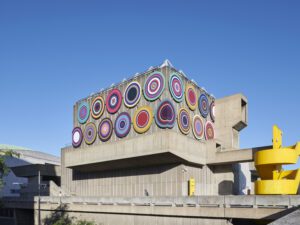
For decades, the work of Bharti Kher has had a clear and sustained impact within contemporary art, shaping how viewers encounter hybridity, mythology and material transformation. Her practice moves through sculpture, painting and installation without settling into any single register, allowing forms to remain deliberately unstable. Objects within her work rarely resolve into fixed meaning, instead accumulating tension through material friction. Across this evolving language, transformation functions as method, and each work appears to test how far meaning can stretch before it shifts into something else.
Born in the London in 1969, Kher trained at Middlesex Polytechnic and Newcastle Polytechnic before relocating to New Delhi in the early 1990s, where she has remained since. This movement between geographies is not incidental but foundational, shaping a practice that resists singular cultural positioning. Rather than presenting identity as subject matter, her work operates through displacement, assembling references that never fully stabilise. Materials, symbols and bodies are continually reconfigured into hybrid formations that resist closure. The result is a practice that feels constructed through.
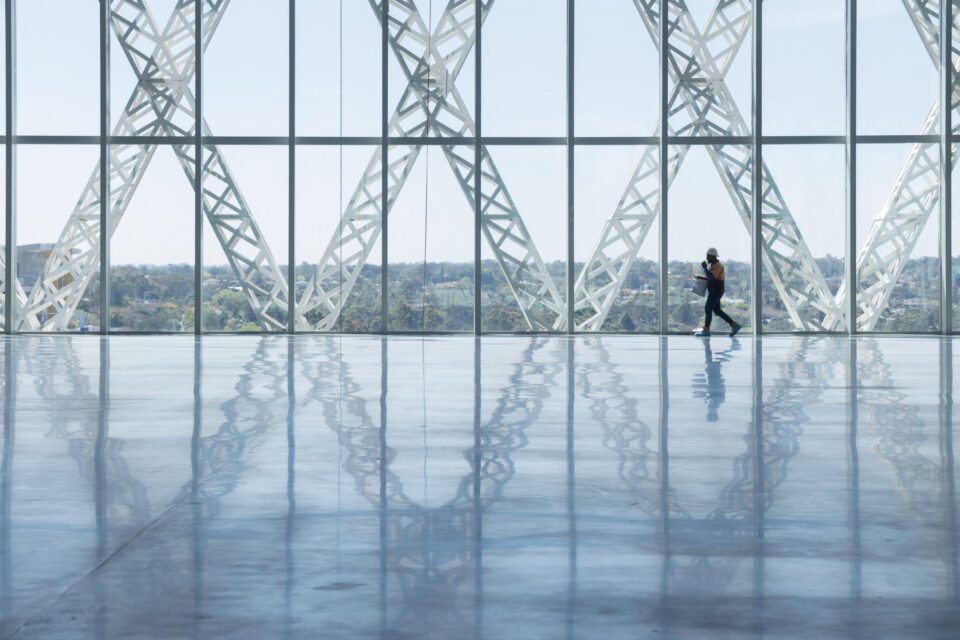
Animism and surrealist logic underpin much of Kher’s sculptural and installation work, though neither is deployed in a literal sense. Readymade objects are incorporated with an awareness of their prior histories, which are then disrupted through unexpected adjacency or scale. Figures often appear fragmented or multiplied, dissolving into configurations that hover between the mythological and the corporeal. This instability has defined her international presence, with major exhibitions spanning institutions including Tate St Ives, Yorkshire Sculpture Park and the Irish Museum of Modern Art. Recognition has followed not through stylistic repetition, but through an evolving refusal to settle.
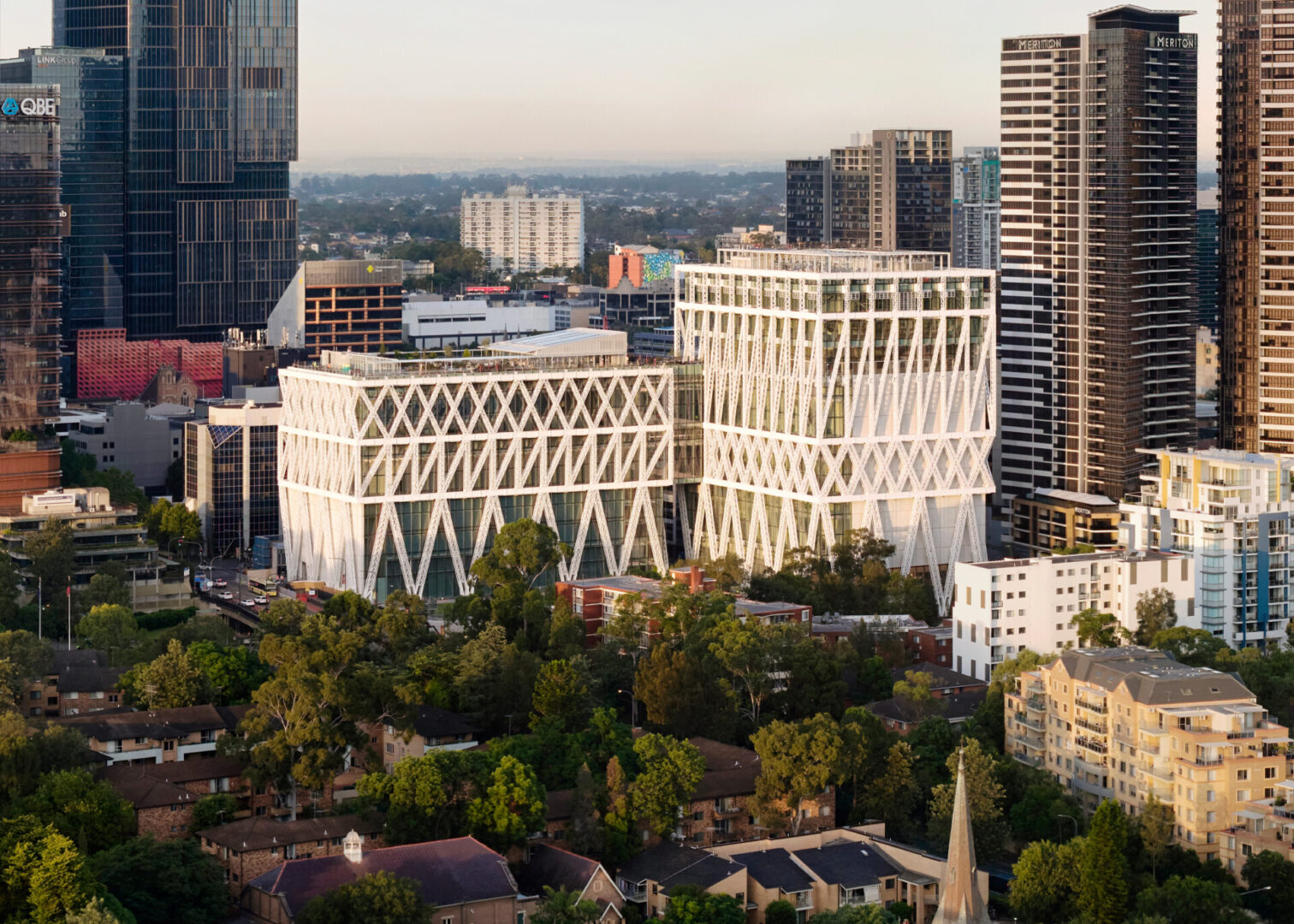
A new context for this language emerges through her commission for Powerhouse Parramatta, part of one of the most significant cultural infrastructure projects currently underway in Australia. As institutions globally reopen and reconfigure their public roles, museums have begun shifting away from static models of display towards more porous civic frameworks. The question is no longer simply what a museum shows, but how it behaves in public space – how it structures access, labour and encounter. In this sense, Parramatta is not an isolated development but part of a wider recalibration of cultural infrastructure. The museum becomes less object-bound and more socially embedded.
Recent museum openings across Europe and North America signal this shift with unusual clarity, suggesting a broader transformation in institutional logic rather than isolated architectural renewal. In London, V&A East has extended the Victoria & Albert Museum into the Queen Elizabeth Olympic Park with a model centred on access, process and proximity to collections. Its Storehouse, designed by Diller Scofidio + Renfro, reframes storage as public experience, allowing visitors to move through racks of objects rather than only curated displays. As curator Jacqueline Springer has stated in relation to its ethos, “Everyone is welcome at V&A East,” a line that reflects a structural rethinking of who museums are for. The emphasis sits less on reverence and more on visibility, where cultural production is partially demystified.
This logic is echoed elsewhere in Europe, where institutions are increasingly foregrounding infrastructure as experience. In Rotterdam, the Depot Boijmans Van Beuningen has already transformed storage into exhibition, making conservation visible as part of the visitor journey rather than hidden behind institutional walls. In Dublin, the planned Centre for the Image signals a parallel shift towards interrogating how visual culture is archived, circulated and reactivated in an era defined by image saturation. BRUSK in Bruges adds another layer to this reconfiguration, situating contemporary practice within a historically dense city while refusing to treat heritage as fixed backdrop. In New York, the Aperture Foundation’s new building extends this conversation into photography, framing the image as both artefact and evolving discursive form shaped by exhibition, publishing and public exchange. Across these developments, the museum increasingly operates as a system of relations rather than a closed container.
What links these projects is not simply architectural innovation but a recalibration of audience expectation. Public engagement with contemporary art now tends towards institutions that reveal rather than conceal their own mechanisms, where curatorial and operational processes are partially exposed rather than fully mediated. Visitors are drawn to spaces that acknowledge their own constructedness, whether through open storage, visible conservation work or expanded participatory programming. This is less a rejection of institutional authority than a demand for proximity to it. The museum, in this configuration, becomes an active environment rather than a passive frame.
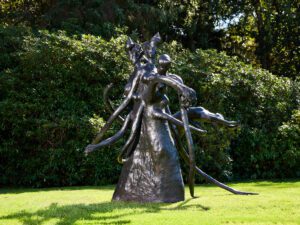
Within this wider global context, Kher’s Tree of Life for Powerhouse Parramatta enters as both artwork and civic proposition. The seven-metre bronze sculpture draws on the sacred tree from Indian mythology, reconfigured as a vertical accumulation of ancestral heads that form a layered totemic structure. Installed at the museum’s entry plaza, it functions as threshold rather than image, positioning encounter as immediate and unavoidable. Kher describes it as “a spirit work,” and its material presence reinforces that framing through density, scale and symbolic layering. Meaning is not illustrated but held in suspension.
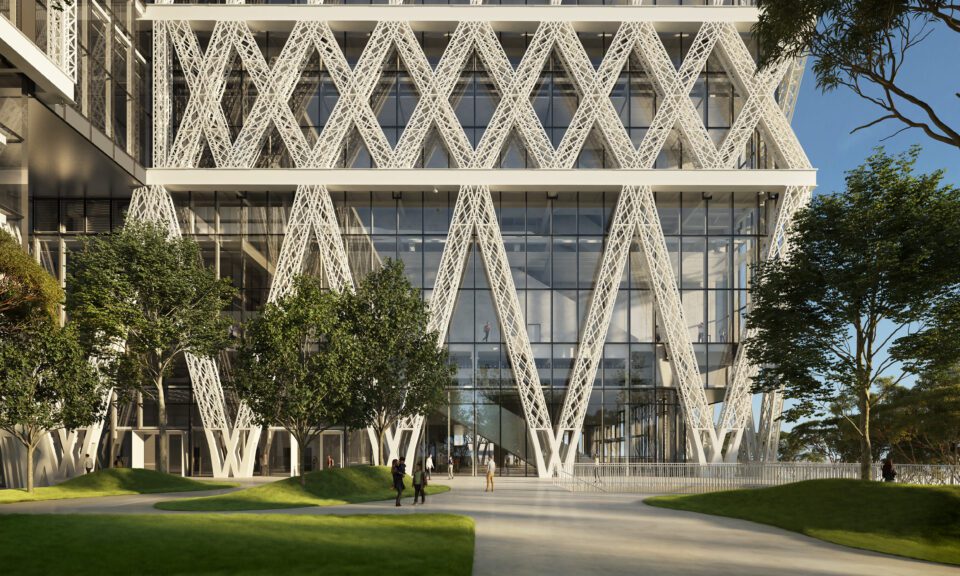
“Just as Powerhouse Parramatta serves first and foremost as a meeting place – both harkening to the site’s past where the mountain and coastal people communed and also as a modern-day cultural hub for Sydneysiders of all backgrounds – Tree of Life embodies an artistic message of commonality and an ode to nature.” In this statement, Kher situates the work within a civic and historical continuum, where gathering is both inherited and newly constructed. The sculpture does not resolve difference but places it in proximity, allowing layered identities to coexist within a single vertical form. Its monumentality is therefore not declarative but relational, shaped through accumulation rather than hierarchy.
Lisa Havilah, Chief Executive of Powerhouse, reinforces this framing, noting: “This work will serve as welcome to the visitors of Powerhouse Parramatta, representing the diverse cultures that make up Western Sydney. As we open our doors later this year, our hope is that people see themselves reflected in the face of this sculpture.” Reflection here becomes both literal and institutional, positioning the sculpture as a site of recognition within public space. The museum entrance is therefore configured not as boundary but as interface. Encounter is built into the architecture of arrival.
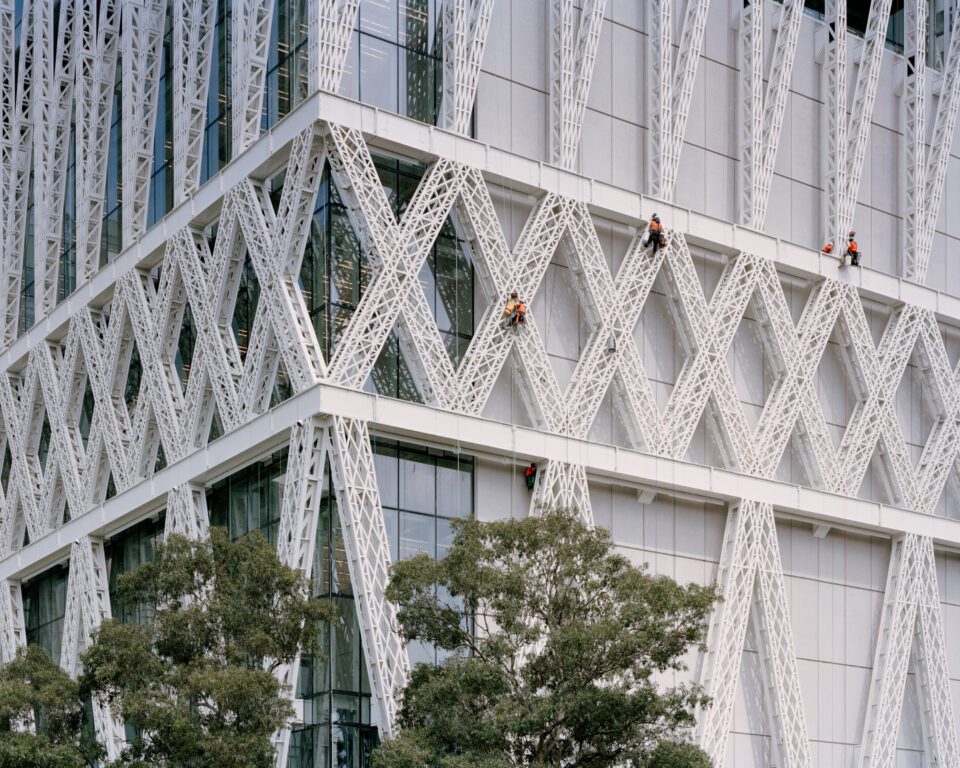
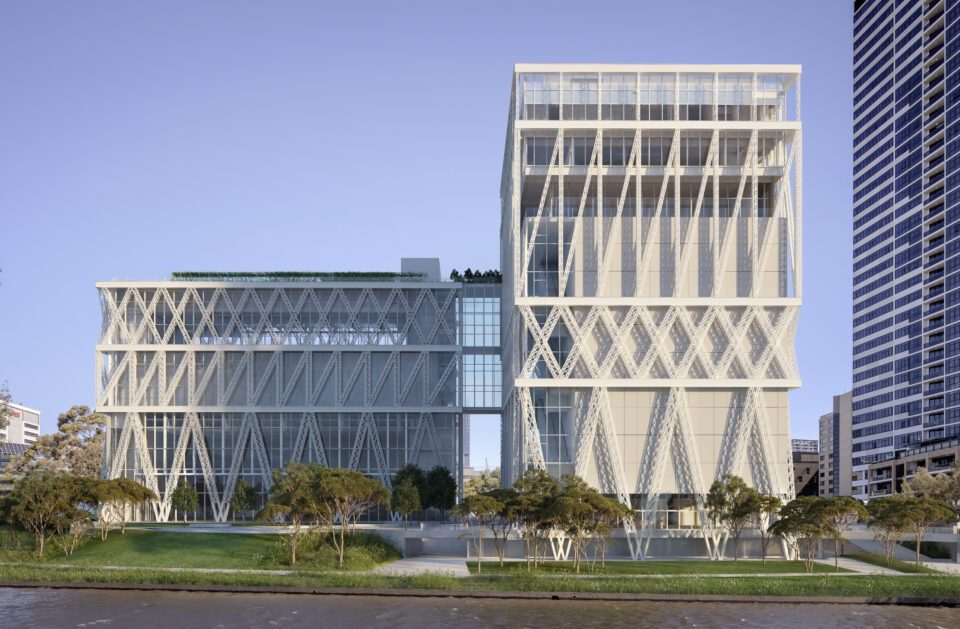
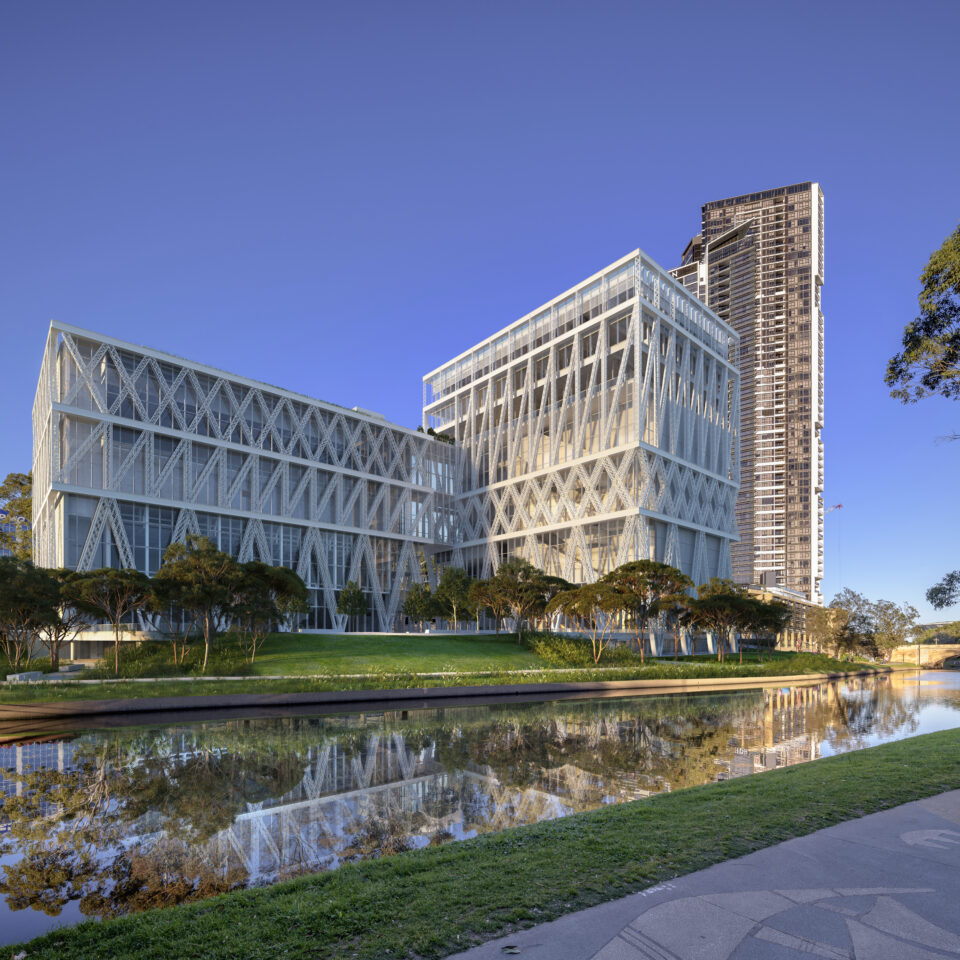
The broader Powerhouse Parramatta development, located on Dharug land in Western Sydney, forms part of Australia’s most significant cultural infrastructure investment since the Sydney Opera House. Its positioning outside traditional metropolitan centres reflects a wider redistribution of cultural authority towards regions defined by diversity. This decentralisation mirrors international patterns in which institutions are no longer anchored solely to historic cores but embedded within expanding civic geographies. Parramatta becomes part of a global shift towards distributed cultural networks.
Against this backdrop, Tree of Life operates as both specific commission and broader statement about monumentality in the present. Its references to Indian mythology function less as narrative illustration than as structural logic, shaping how ancestry, time and presence are organised within form. The sacred tree becomes a system of relation, allowing multiple temporalities to coexist within a single vertical axis. Installed at the threshold of a new museum shaped by contemporary institutional thinking, the work holds open the question of how publics gather, recognise and situate themselves within cultural space.
Powerhouse Parramatta will open in Western Sydney in Late 2026: powerhouse.com.au
Words: Shirley Stevenson
Image Credits:
All images courtesy of Powerhouse Parramatta.