
The promise of progress is often measured by what an economy produces, rather than what it leaves behind. Across regions shaped by industrial expansion, the consequences of extraction persist long after the industries themselves begin to disappear. Depleted resources, abandoned infrastructure and fractured communities expose the limitations of an economic model founded on perpetual growth, raising questions about the relationship between prosperity, environmental responsibility and collective identity. For contemporary artists, these sites offer a means of examining the cultural and ecological legacies of modernity, bringing overlooked histories into conversation with an increasingly uncertain future. Doug Aitken’s HOWL examines what happens when the foundations of an entire community begin to erode.
Presented at 303 Gallery in New York, and running until 19 December, HOWL centres on a remote desert settlement whose principal industry is oil drilling. Established in the early 20th century, the town now bears the physical evidence of industrial contraction, with boarded-up buildings and deserted storefronts interrupting its main street. Aitken’s attention extends beyond the familiar imagery of abandoned America, considering how economic systems shape collective identity and determine the possibilities available to those living within them. The settlement is a lens through which to examine the relationship between industrial ambition, environmental consequence and the uncertain prospect of social transformation.
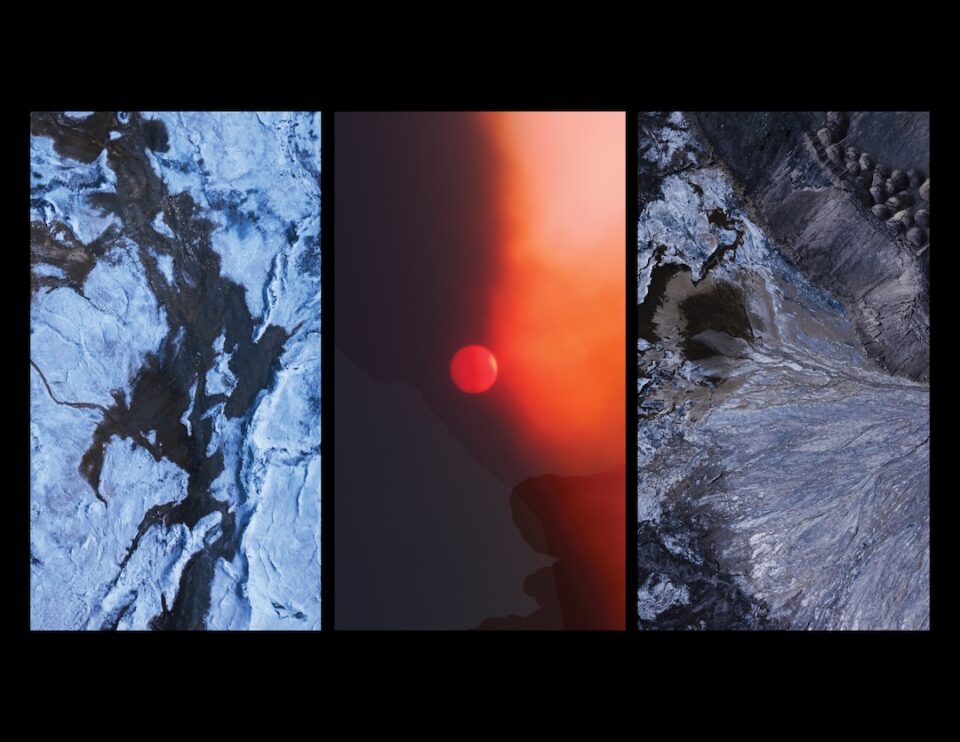
Residents’ testimonies provide the film with a human dimension. Moving between documentary observation and cinematic abstraction, Aitken records inhabitants speaking openly about their circumstances, expectations and visions of utopia. Their accounts resist reducing dustrial communities to symbols of economic failure, revealing the emotional attachments and contradictions that persist when an industry becomes inseparable from local identity. Instead of imposing a singular narrative of decline, the artist allows individual voices to accumulate, creating a portrait in which personal experience intersects with wider structural change. The town consequently operates as a microcosm, its history reflecting questions about labour, belonging and the social consequences of an economy in transition.
Industrial machinery is a persistent visual and sonic presence throughout the film. Drilling equipment punctuates the arid terrain, its repetitive movements establishing a mechanical rhythm that gradually merges with the voices of the inhabitants. Speech, machinery and the sounds of nature are components of an evolving composition, blurring distinctions between the organic and the manufactured. This formal decision suggests that industrialisation has become embedded within the physical and psychological fabric of the settlement, altering the relationship between human activity and geological time. The desert exists in a state of tension, shaped by natural processes yet repeatedly interrupted by the rhythms of extraction.
Aitken has long explored the relationship between human experience, technology and the environments people inhabit. Working across film, photography, sculpture, sound and architectural intervention, his practice challenges linear storytelling and conventional spectatorship. Earlier projects, including electric earth (1999) and Sleepwalkers (2007), investigated the psychological dimensions of contemporary environments through fragmented narratives, multiple screens and interconnected cinematic experiences. In electric earth, the relationship between human consciousness and technological systems became a central concern, while Sleepwalkers extended moving image into the architectural fabric of New York, presenting the city through overlapping lives and activities. HOWL develops these interests through a more explicitly ecological and socially grounded investigation, introducing testimony, industrial landscapes and discarded materials to complicate his established language of immersive cinema.
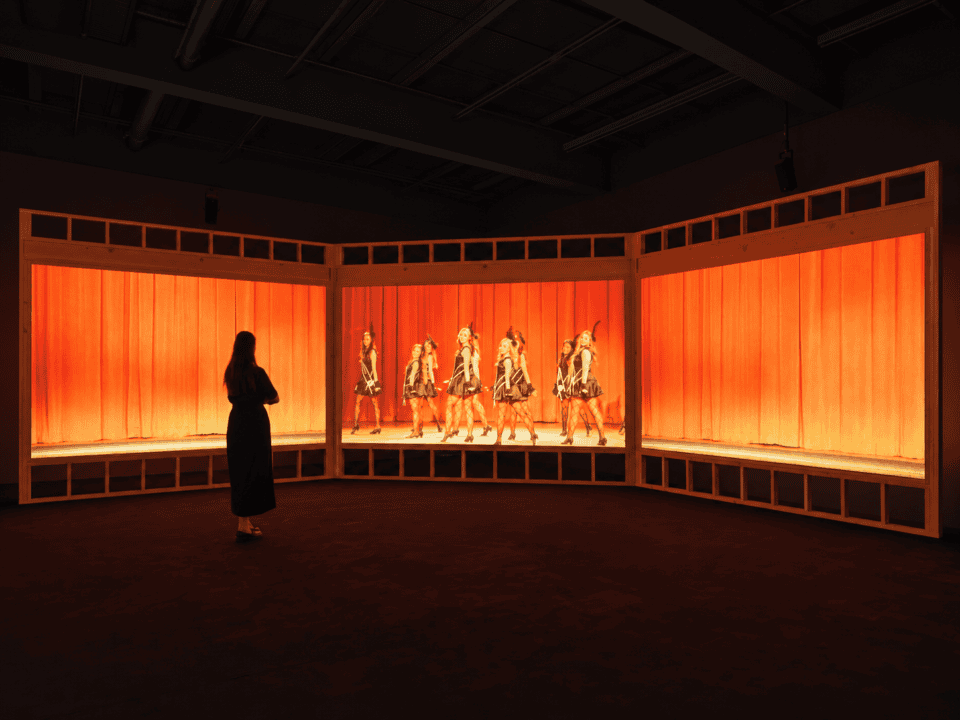
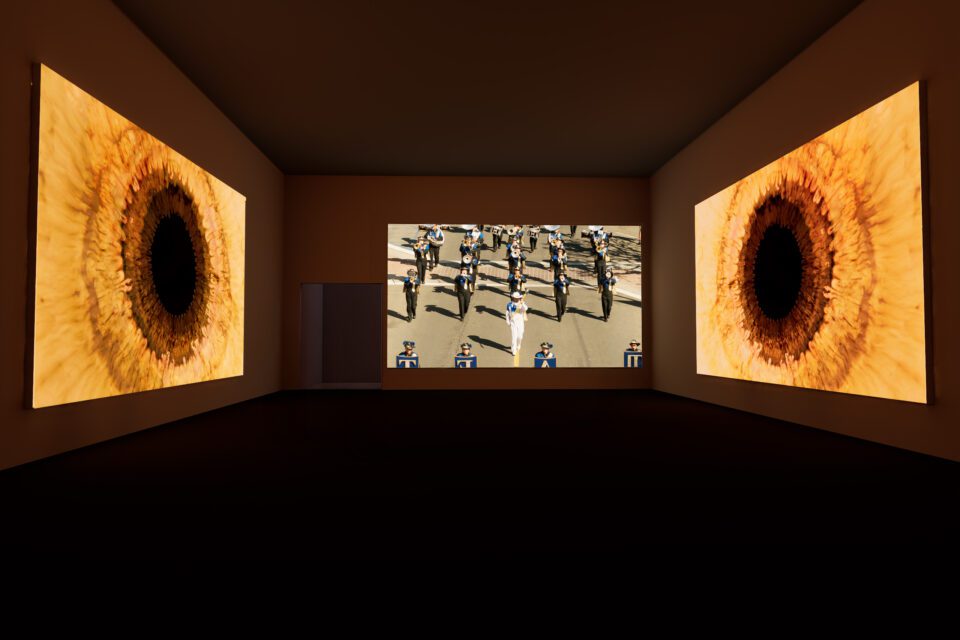
The exhibition’s architecture extends this investigation into the physical environment. Visitors enter a darkened room where images are projected across skeletal wooden structures clad in screens, producing an arrangement that unsettles the conventional relationship between artwork and audience. A sculptural bus stop occupies the space, functioning as an independent object and a viewing environment for the film. Associated with waiting, departure and public infrastructure, it introduces a resonant image within a narrative concerned with communities whose futures remain uncertain. Spectators encounter a shifting environment of images, sounds and architectural references, making the act of viewing an embodied experience rather than a detached observation.
Immersion, however, carries its own critical complications. Large-scale projections and multisensory environments have become increasingly familiar within contemporary exhibition-making, prompting questions about whether spectacle can accommodate the complexity of the subjects it represents. Ecological devastation is particularly vulnerable to aestheticisation, with damaged environments frequently transformed into visually compelling images that risk distancing audiences from the conditions they depict. Aitken’s fragmented cinematic language introduces uncertainty into this relationship, resisting the coherence of a conventional documentary narrative. Overlapping voices, mechanical sounds and shifting projections complicate the viewer’s position, creating a tension between sensory experience and the social realities underpinning the images.
Materiality provides another means of examining the consequences of industrial culture. Alongside the film, sculptural works constructed from materials foraged in the urban environment introduce a vocabulary of consumption, disposal and transformation. Microplastics washed ashore, discarded motorway rubber, repurposed tyres, composted seeds and condensed organic matter are brought into new configurations, retaining traces of the systems from which they originated. These materials complicate the distinction between resource and waste, suggesting that objects discarded by industrial culture continue to participate in wider ecological processes. Their transformation into sculptural forms makes visible the environmental histories concealed within everyday commodities, drawing attention to the material consequences of contemporary consumption.
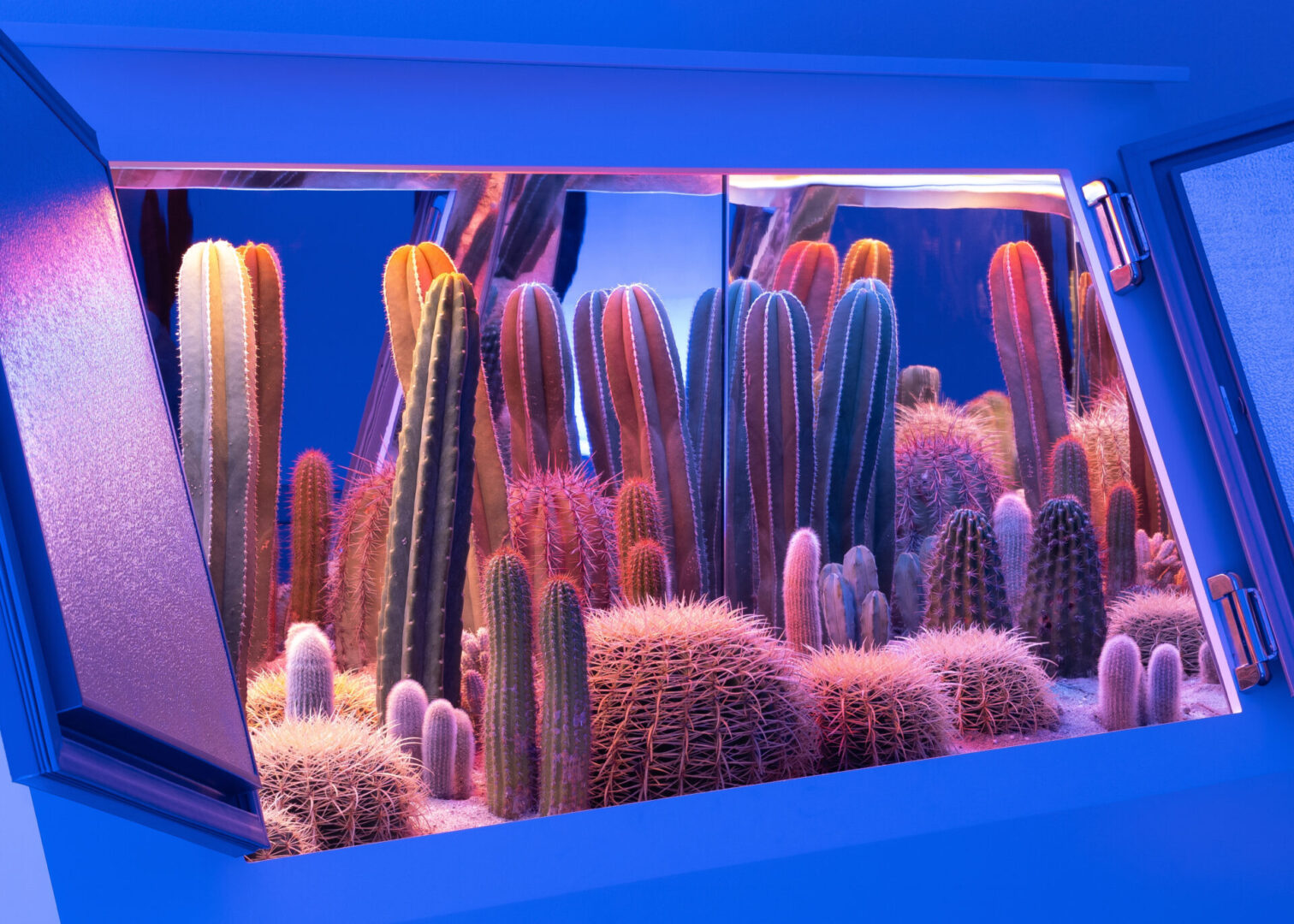
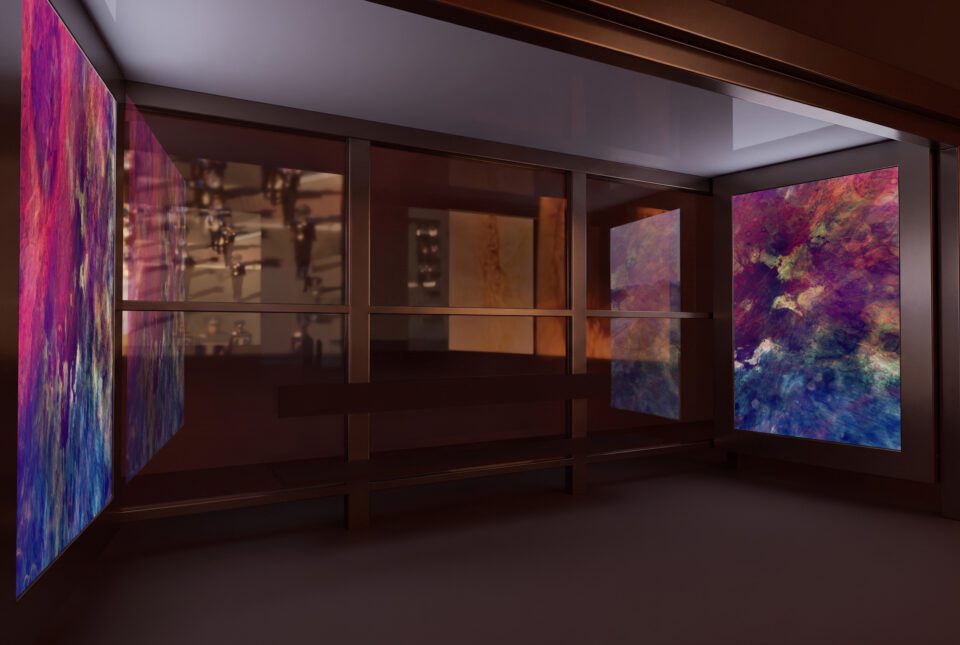
An ice machine containing a living ecosystem of cactus introduces an especially compelling contradiction. An appliance designed to regulate temperature becomes a habitat for a plant adapted to arid conditions, bringing technological intervention into contact with natural resilience. The juxtaposition raises questions about the relationship between artificial environments and ecological adaptation, without resolving the tension between them. Elsewhere, the bus stop shifts between sculpture, architectural reference and cinematic viewing structure, demonstrating how familiar objects acquire new meanings when removed from their functional contexts. These transformations recall the history of assemblage and found-object sculpture, where discarded materials have challenged established distinctions between artistic production and everyday life. Here, the emphasis falls on the environmental and cultural histories carried by matter, foregrounding the afterlife of objects within systems of production and disposal.
The exhibition’s spatial organisation brings these different registers into conversation without establishing a rigid hierarchy between them. Moving image, sculptural assemblage and architectural intervention operate as interdependent forms of inquiry, each offering a different perspective on the same subject. The darkened environment establishes continuity between the projected desert and the physical materials occupying the gallery, while the placement of the bus stop creates a point of encounter between the two. This arrangement allows the exhibition to move between the intimate scale of individual testimony and the broader implications of environmental change. The sculptural works extend the film’s concerns into the gallery, making the exhibition’s argument spatial as well as cinematic.
Aitken’s engagement with industrial environments also enters a longer history of artistic investigation into humanity’s relationship with the natural world. Land Art transformed geographical scale and geological processes into subjects of artistic inquiry, challenging the boundaries of the gallery and the autonomy of the art object. Subsequent ecological practices have increasingly addressed the consequences of human intervention, from resource extraction and pollution to the unequal distribution of environmental risk. Discussions of the Anthropocene have further complicated the idea of nature as something separate from human activity, foregrounding the extent to which industrial systems have altered the conditions of life on a planetary scale. Yet environmental change cannot be understood through universal narratives alone: its consequences are experienced unevenly, with communities dependent on extractive industries frequently caught between economic necessity and ecological damage.
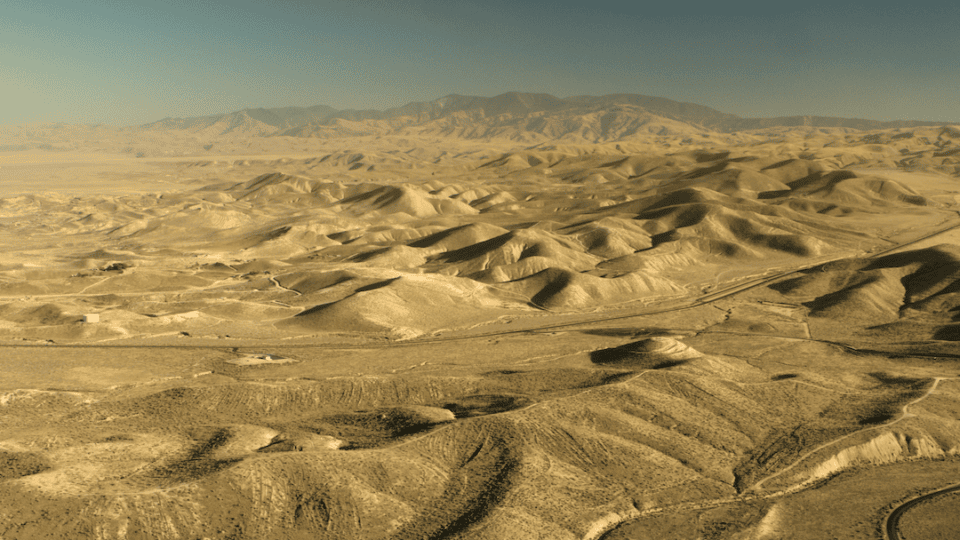
The representation of these communities raises important questions about the aesthetics of industrial decline. Abandoned factories, deserted settlements and decaying infrastructure have become familiar images within contemporary visual culture, often functioning as shorthand for the failures of modernity. Their visual appeal, however, can obscure the social realities of those who continue to inhabit these environments. Industrial ruins risk becoming objects of contemplation, detached from the histories of labour, economic dependency and political decision-making that produced them. Aitken complicates this tradition by incorporating residents’ voices into the cinematic structure, allowing their aspirations and uncertainties to interrupt the familiar spectacle of abandonment. Attention shifts from the appearance of decline towards the lived experience of economic transformation.
The transition away from fossil fuels introduces further complications. Discussions of energy reform frequently prioritise technological innovation, investment and sustainable development, while the cultural consequences of industrial contraction receive comparatively less attention. Generations of employment, local knowledge and collective identity cannot be replaced through changes in energy infrastructure alone. The residents’ testimonies expose the difficulty of separating individual lives from the economic structures that sustain them, revealing how industrial dependency extends beyond employment into the organisation of everyday experience. Their visions of utopia therefore carry an ambiguity, expressing both the desire for renewal and the uncertainty of what might replace familiar systems. Environmental responsibility must also account for the communities expected to navigate the consequences of economic change.
Repetition provides a connection between the film’s formal structure and its wider political concerns. Drilling machines return to the same movements, images recur and the community remains suspended between memories of prosperity and uncertain expectations. These cycles suggest a system that continues to operate through established patterns even as the conditions supporting it begin to deteriorate. The mechanical rhythms of extraction become a metaphor for a culture organised around acceleration, consumption and perpetual production. Yet repetition also creates the possibility of recognition: once a pattern becomes visible, its continuation can be questioned. The tension between inherited systems and the capacity to disrupt them gives the film its restless energy.
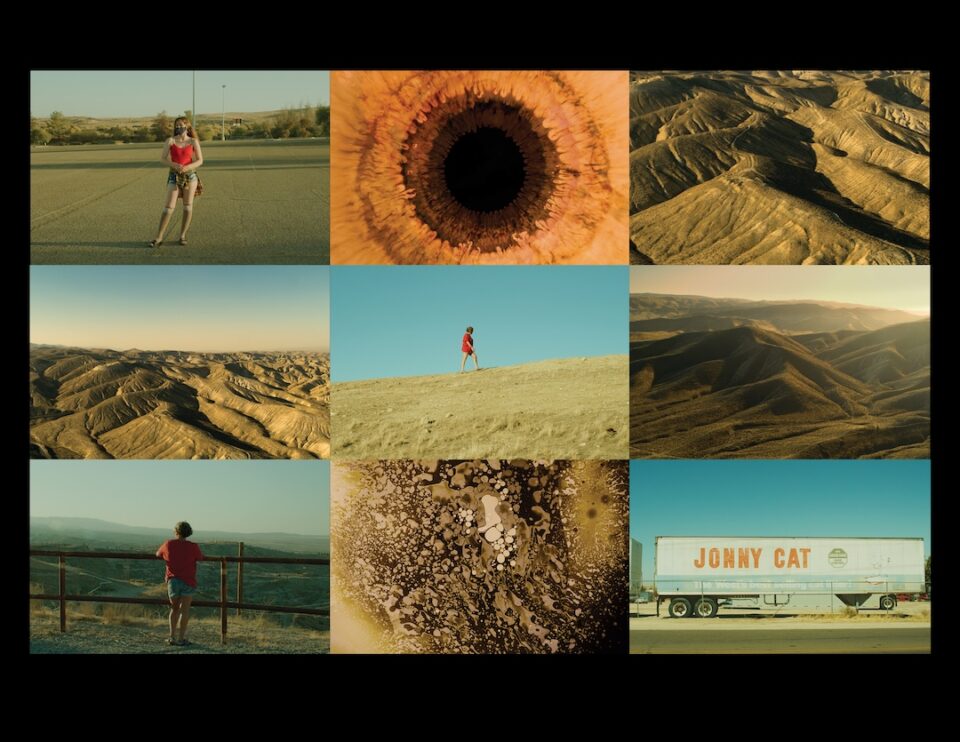
Describing HOWL as a postmodern poem and an electric haiku, Aitken’s exhibition text points towards a compressed, sensory approach to meaning. Rather than presenting a comprehensive account of industrial decline, the work brings together fragmented testimony, recurring sounds and rapidly shifting images to create a portrait of contemporary life. Its restless movement reflects a world in which technological acceleration and environmental degradation increasingly occupy the same frame. The poetic register allows the film to move beyond documentary explanation while retaining the specificity of its subject. Yet the relationship between aesthetic experience and social reality remains unresolved, raising questions about how visual culture can represent ecological crisis without turning destruction into spectacle.
What happens when the economic structures that once sustained a community become the very forces responsible for its decline? HOWL approaches this question through a convergence of cinematic, sculptural and architectural languages, bringing the material afterlife of extraction into contact with the memories and aspirations of those who inhabit its consequences. Its desert setting holds the contradictions of industrial modernity in visible tension: a settlement shaped by economic dependency, an environment transformed by human ambition and a future that remains difficult to articulate. Aitken’s project insists that ecological questions cannot be separated from social histories. The challenge extends beyond finding new uses for abandoned infrastructure or imagining alternative energy systems; it concerns who gets to define progress, whose histories are preserved and who is included in determining what comes next.
Doug Aitken: HOWL is at 303 Gallery, New York, until 19 December.
Words: Anna Müller
Image Credits:
1. Doug Aitken, Microcosmos (Ice Machine), 2026, Courtesy the artist.
2. Doug Aitken, HOWL (film still) (2026). Courtesy the artist and 303 Gallery, New York.
3. Doug Aitken, HOWL (installation view) (2026). Courtesy the artist and 303 Gallery, New York.
4. Doug Aitken, Stay Lost (Bus Stop), 2026, Courtesy the artist and 303 Gallery, New York.
5. Doug Aitken, HOWL (installation view) (2026). Courtesy the artist and 303 Gallery, New York.
6. Doug Aitken, HOWL (film still) (2026). Courtesy the artist and 303 Gallery, New York.
7. Doug Aitken, HOWL (film still) (2026). Courtesy the artist and 303 Gallery, New York.


