African Modernism is being revisited through a growing network of artists, curators, writers, galleries and institutions working across the continent and its diasporas. Its histories are being researched, exhibited and reinterpreted alongside contemporary practices concerned with material, photography, ecology, identity and cultural memory, creating new connections between generations and geographies. In London, the 14th edition of 1-54 Contemporary African Art Fair, taking place at Somerset House from 15 – 18 October 2026, forms one part of this wider exchange, arriving during a month when the UK art calendar turns towards the international art world. At the heart of the fair is West Wind, a presentation of African Modernism curated by Johannesburg-born art historian and researcher Nancy Dantas, bringing together artists whose work emerged from the complex cultural and political transformations of the mid-20th century. Seen within the wider landscape of African art today, the presentation offers an opportunity to reconsider how these histories connect with contemporary practice, and how artists across generations have shaped the visual languages through which modern African experience has been articulated.
West Wind brings together artists whose work reflects the cultural and political changes shaping Africa in the mid-20th century. Curated by Dantas, the presentation brings together Alexander “Skunder” Boghossian, Bertina Lopes, Gerard Sekoto, Kofi Antubam, Sam Joseph Ntiro, Papa Ibra Tall and Uzo Egonu, alongside Baya, Rafik El Kamel and Ibrahim El-Salahi. Their work emerged across a continent undergoing profound political and cultural change, as artists engaged with independence, urbanisation, intellectual exchange and the question of how modernity might be articulated through locally grounded visual languages. Painting, sculpture, abstraction and figuration become different means of negotiating these questions, revealing the diversity of modernist practices that developed across Africa during the period. As 1-54 founder Touria El Glaoui observes, placing artists “within the histories they helped to shape” allows their work to be understood through the intellectual and cultural contexts that informed it, whilst also recognising the connections between those histories and the practices that followed.
Such a framework also opens the geography of modernism. Ibrahim El-Salahi’s practice, for instance, demonstrates how abstraction could emerge through encounters between Arabic calligraphy, African visual traditions and international modernist thought, while the inclusion of artists such as Boghossian and Lopes expands the story across Ethiopia, Mozambique and beyond. Loeve&Co’s presentation adds another set of connections through Aubrey Williams, Twins Seven Seven, Guido Llinás, Frédérique Devaux Yahi, Roland Dorcély and Roberto Altmann, bringing Caribbean and Latin American trajectories into the conversation. Modern African art consequently appears as a constellation of movements, ideas and exchanges, with artists developing sophisticated responses to the worlds around them. The historical picture becomes richer precisely because its routes of influence are not one but multiple.
Material offers another way into this expanded history. Borderlands Art’s Our Canvas Grows From The Soil connects Uganda and Ghana through barkcloth, bringing a much valued ancestral knowledge into conversation with sculpture, textiles, photography and installation. Gloria Kiconco and Piloya Irene work with lubugo and kyenkyen through sculptural zines and textiles, while Othello De’Souza-Hartley uses barkcloth as a surface for photographic printing and textured painting. The project connects forest knowledge and contemporary social practice with questions around trade, environmental responsibility and cultural continuity. Material proceeds to become an active carrier of history, giving the work a physical relationship to place that extends well beyond questions of surface or technique.
A wider lineage can be traced through artists including El Anatsui, Ibrahim Mahama and Yinka Shonibare, whose practices have made materials central to discussions around movement, labour and cultural exchange. Anatsui’s monumental assemblages transform discarded bottle tops associated with global commerce into shimmering, textile-like surfaces, while Mahama’s jute sacks retain the traces of commodities and labour networks through which they have travelled. Shonibare’s textile-based practice has similarly opened sustained questions around identity, nationality and the movement of cultural forms between Africa and Europe. De’Souza-Hartley’s barkcloth photographs belong to this broader material discourse while maintaining a distinctive relationship with East African cultural knowledge and image-making. Across these practices, material becomes a means of thinking through history.
Questions of value move from the forest to the marketplace through Commodity / Couture, presented by Accra’s Midunu Institute. Founded by artist, author and cultural thinker Selassie Atadika, the project traces Ghanaian cocoa from cultivation to finished product, drawing attention to the value that disappears in-between. A £4 chocolate bar, the project notes, returns about 6p to the farmer who grew its cocoa, turning a familiar luxury into an enquiry into global systems of labour and exchange. Visitors encounter cocoa through scent, field recordings, structures made from cocoa sacks and a brass cocoa pod produced in Kumasi using the lost-wax method. The sensory quality of the installation makes an economic argument tangible, allowing questions of extraction and value to enter the fair through smell, sound, craft and space.
Circulation becomes physical again in Martin Wöllenstein’s Flowing Upstream, developed with Romeo Addai-Boateng Akoto of Ghana’s Supreme Masqueraders Society and Perve Galeria. Discarded Ankos costumes, projection mapping, sound, moving image and performance come together in Somerset House’s Edmond J. Safra Fountain Courtyard, where 54 modular panels evoke the shape of the African continent. Materials associated with collective celebration are placed in a historic European architectural setting, creating a dialogue around textile waste, production and cultural exchange. The installation’s movement from Ghana to London gives its ecological concerns a wider political dimension, while its title suggests other routes through which materials and ideas might travel. Here, contemporary installation becomes a meeting point between environmental thinking, cultural memory and the afterlives of colonial circulation.
Photography provides another vital route through this changing landscape. Senegal has developed one of Africa’s most influential photographic traditions, from the studio portraiture of Mama Casset and Malick Sidibé to the constructed historical narratives of Omar Victor Diop and the urban explorations of Boubacar Touré Mandémory. Diop’s staged portraits combine fashion, performance and historical reconstruction, while Mandémory’s work explores Dakar through an intensely personal grasp of contemporary urban life. Ghana and Nigeria have likewise produced generations of photographers who have expanded the medium through portraiture, documentary practice, archival research and conceptual image-making. A new generation continues this drive, moving between Dakar, Accra, Lagos, London and other diasporic centres while using photography to examine identity, modernity and the politics of looking.
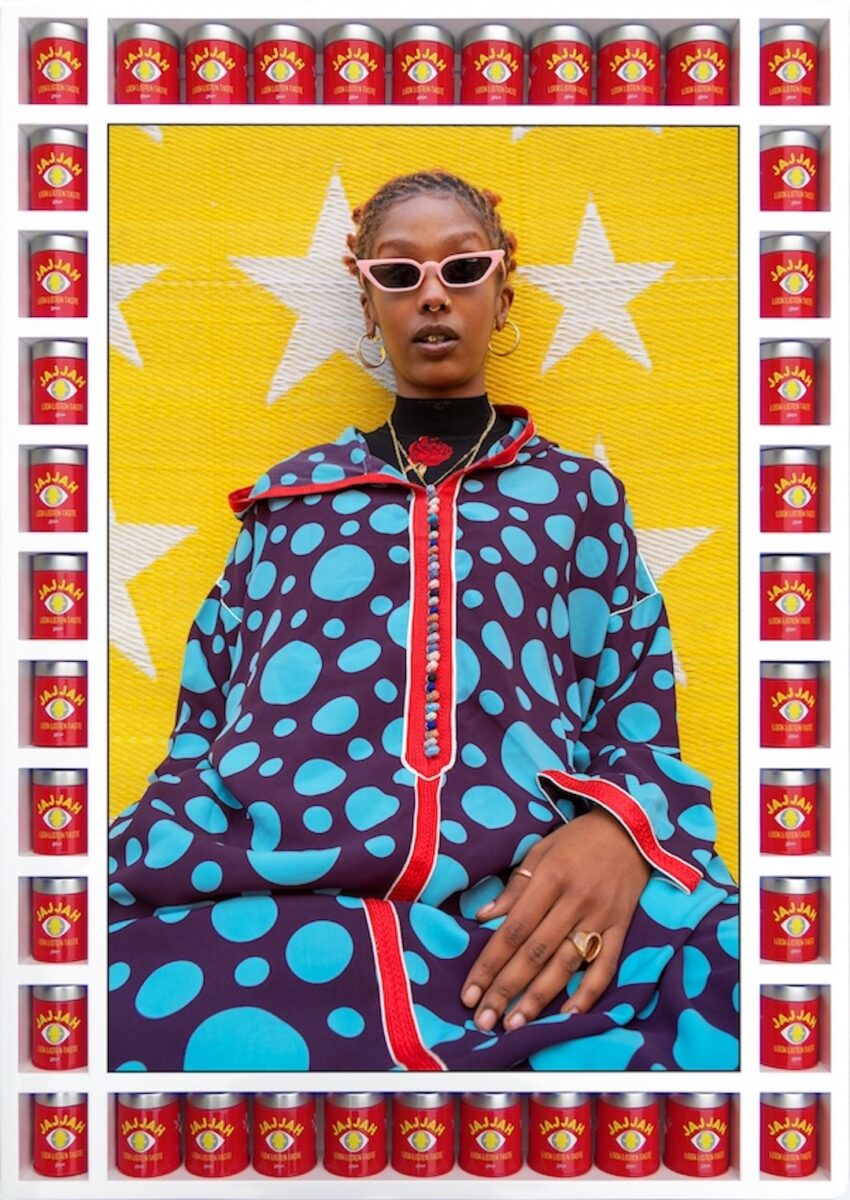
That history of image-making finds a contemporary London counterpart in Hassan Hajjaj’s My London Rockstars. The Moroccan-born, London-raised artist photographs a new generation of artists, musicians and designers, including Central Cee, Slawn and Jorja Smith, combining North African street culture with pop imagery, fashion and African studio portraiture. His portraits demonstrate the continuing power of the studio as a space for self-fashioning, while their saturated visual language reflects the hybrid cultural landscape of contemporary London. Hajjaj’s practice can be placed alongside Diop’s constructed portraiture and the West African studio traditions that made clothing, pose, backdrop and gesture central to photographic identity. Across generations, the camera becomes a means through which subjects have the opportunity to participate in the construction of their own public narratives.
Belonging provides another connective thread through the presentation supported by Nando’s and Spier Arts Trust, bringing together Blessing Ntsikelelo Blaai, Lionel Tazvitya Mbayiwa and Mellaney Roberts. Their work has developed through the Spier Arts Trust ecosystem, with Nando’s support contributing to professional opportunities and global exhibition. The presentation considers belonging as both a human need and a creative act, giving the artists a framework through which community, identity and connection can be explored. Within Southern African art, these questions intersect with complex histories of movement, social transformation and place. Here, the project extends the fair’s interest in networks from the level of material and image to the structures that enable artists themselves to develop and circulate.
Women artists have a substantial position within this year’s programme, adding another dimension to the historical reassessment underway. Gallery Brulhart, Gillian Jason Gallery and Galleria Anna Marra are among the galleries presenting female-led selections, while individual presentations foreground artists including Kimathi Mafafo, Ekene Emeka-Maduka, Souad Abdelrasoul and Larissa de Souza. Gallery Misr’s presentation of Abdelrasoul alongside Gamal Elkheshen extends the programme towards Egypt, while galleries across London, Lagos, Johannesburg and elsewhere bring together practices shaped by different generations and geographies. Their presence contributes to a broader understanding of the ways women have shaped African modern and contemporary art. The historical recovery taking place around West Wind therefore finds a contemporary continuation across the fair’s wider programme.
London’s position in this story is inseparable from the timing of the fair. October brings Frieze and its surrounding network of exhibitions, museums, galleries, collectors, talks, auctions and cultural events into intense concentration, creating one of the year’s most significant periods for global art exchange. 1-54 enters this landscape with a growing established network of its own, connecting galleries and artists across Africa and the diaspora with audiences, institutions and collectors in London. Meanwhile, the cultural infrastructure on the continent continues to develop its own centres of gravity. FNB Art Joburg’s 19th edition ran from 4 – 6 September, accompanied by Open City, a programme that activates Johannesburg with exhibitions, installations, performance, music, food and fashion over more than two weeks.
Cape Town and Lagos continue to extend that network further. Investec Cape Town Art Fair has developed an international platform around the city’s galleries, institutions and creative communities, while FNB Art Joburg’s programming places particular emphasis on photography, critical writing and cultural institutions, including a dedicated GIF section for photographers and a series of conversations around image-making. ART X Lagos, meanwhile, returns from 5 – 8 November 2026, with Lagos Art Week extending the fair into a city-wide programme of exhibitions, open studios and cultural projects. Its ART X ICON programme also brings historical legacy into conversation with emerging practice, with the 2026 edition placing its focus on Ladi Kwali and other encouraging artists across photography, film, textiles, sculpture, ceramics and installation to embark on the development of new approaches to her distinguished legacy.
This proliferation of platforms changes the geography through which African art is encountered globally. Artists are arriving in London with networks of galleries, curators, writers, collectors and institutions already supporting their practices across the continent and its diaspora. 1-54’s own expanding gallery roster reflects this movement, with first-time participants including 16/16, ELLEPHANT, Fabienne Levy, Maya Art Space and Tribe Gallery alongside long-standing exhibitors. The talks programme extends the fair’s intellectual aspect through discussions of African Modernism, collecting, institutional visibility and the writing of African art history. Within the concentrated atmosphere of Frieze Week, these talks position the fair as part of a much larger cultural network whose points of exchange extend in multiple directions.
Writing becomes part of that infrastructure through ReCasting the Canon, the research-led initiative by Folasade Ologundudu. Its Critical Writing Labs invite audiences to respond to artworks through close looking, historical enquiry and reflection, building a living archive that gives multiple voices a role in constructing cultural memory. This premise resonates alongside West Wind, where research recovers connections between artists, places and intellectual histories. Scholarship, criticism and exhibition-making operate alongside collecting as forms of cultural production. The question of who writes African art history becomes inseparable from the question of which artists and movements are remembered.
Across Somerset House, the 2026 edition brings these strands into a shared field of enquiry. Modernist histories meet contemporary experimentation; photography links studio traditions with diasporic identities; barkcloth, cocoa and reclaimed textiles carry histories of labour, ecology and exchange. The growing network of fairs in Johannesburg, Cape Town and Lagos places London in a wider geography of production and circulation, while the timing of 1-54 during Frieze Week creates a particularly visible meeting point between worlds. Emerging is a layered account of African art history, where the modern and contemporary exist as interconnected fields instead of isolated chapters. For 1-54, that historical depth gives the London edition its focus: the fair is a place where artists, ideas and materials across Africa and its diaspora enter the global discourse with histories already behind them and new directions ahead.
1-54 Contemporary African Art Fair at Somerset House, London from 15 – 18 October 2026
Words: Anna Muller
Image Credits:
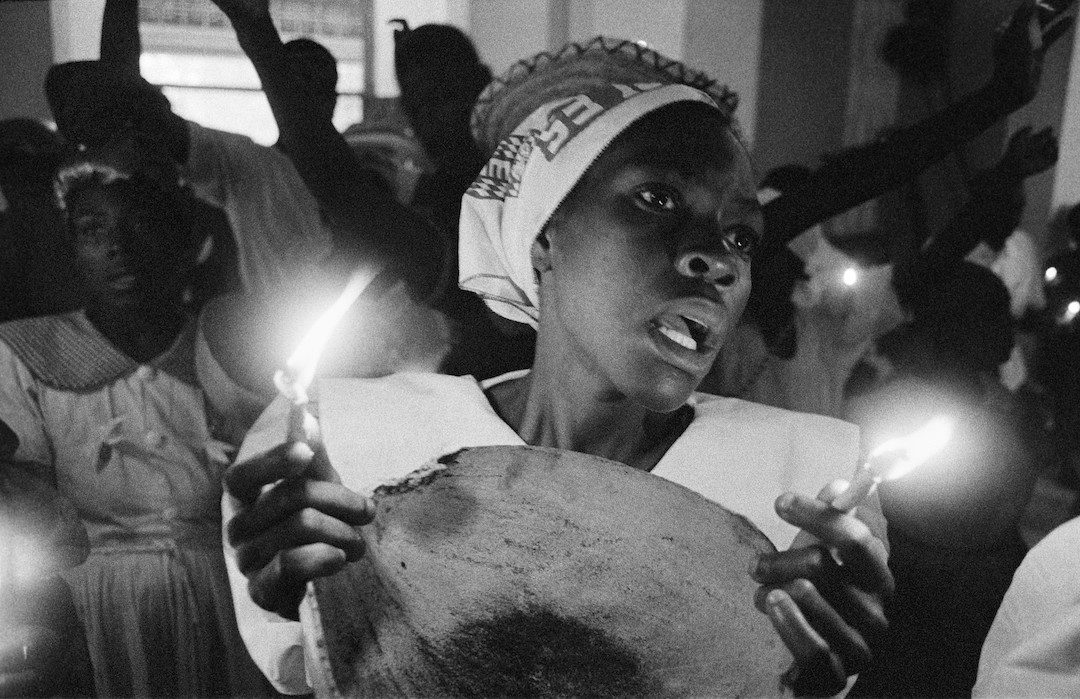
1. DAVID DAMOISON 18-65-31, Vodun Voyage, Saut D’Eau, Haïti, 1992-1999. Photography 24 x 30 cm. Courtesy The Southern Art Hub.
2. Othello De’Souza Hartley, Within 2, 2026, Photographic print on lubugo barkcloth with mixed media textures._80x80cm (variable) Courtesy of Othello De’Souza Hartley.
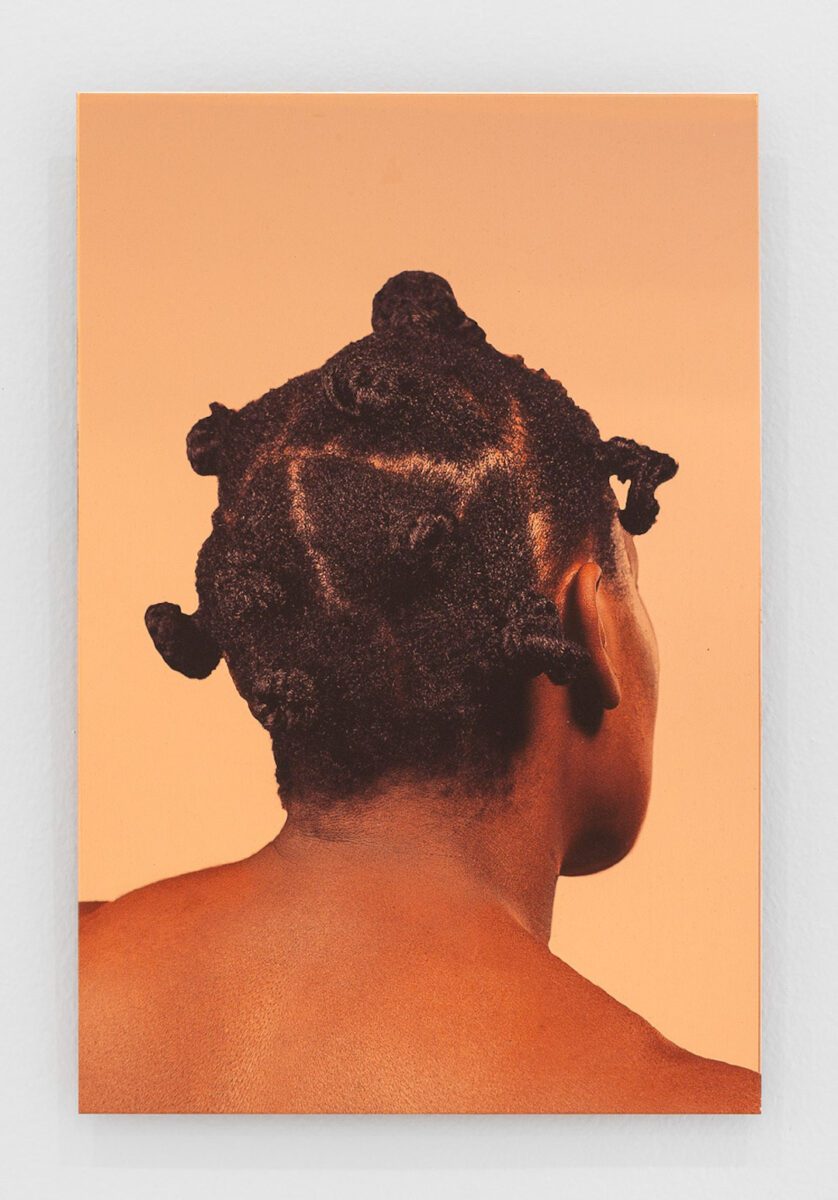
3. Alice Marcelino, Kindumba, 2015, Photograph printed on copper plate, 50 x 40 cm, One-off piece. Image courtesy of the gallery and artist.
4. Hassan Hajjaj, Shaolinwavy Ghadz, 2024/ 1445. Metallic Lambda on 3mm dibond, 40 x Mini Jajjah tea red body with silver top. 65.6 x 92.7 cm. 25 7/8 x 36 1/2 inches.
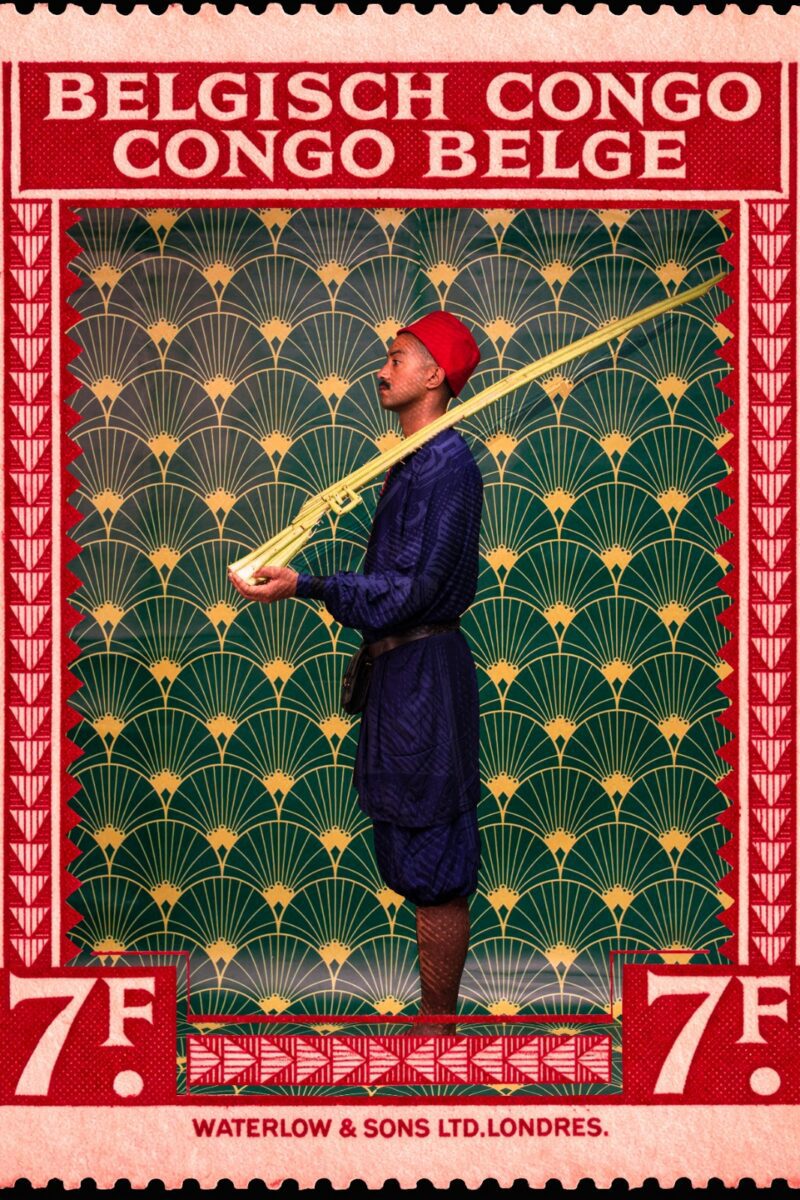
5. Emmanuel Koto Kongogbi, Soda Askari, 2026, Photography and collage. Image courtesy of the gallery and artist.
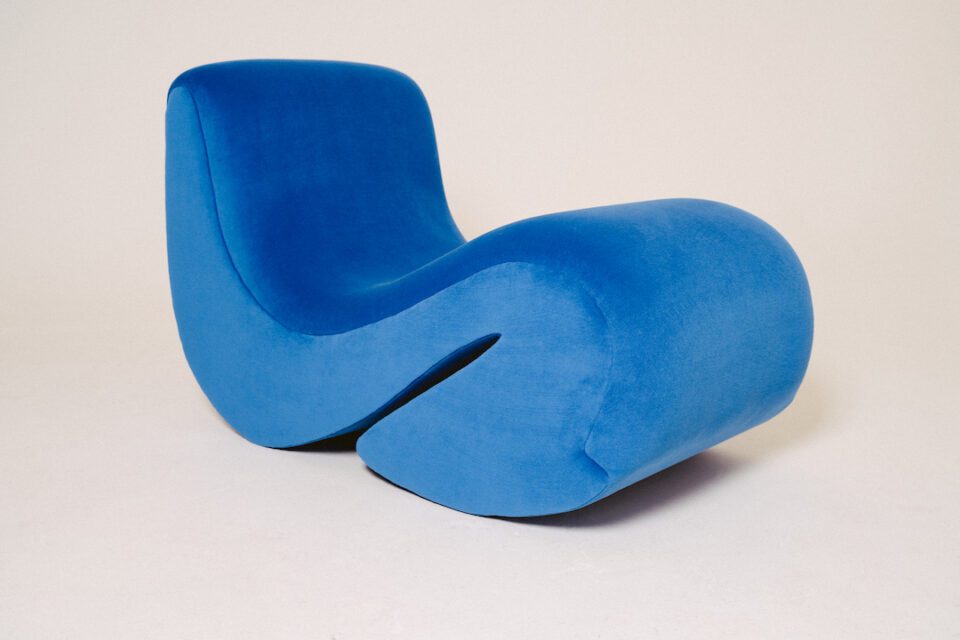
6. Holly Rollins, Aura Chair, 2021, Upholstered Design, 130 x 75 x 95 cm. Open Edition. Courtesy of the Artist.