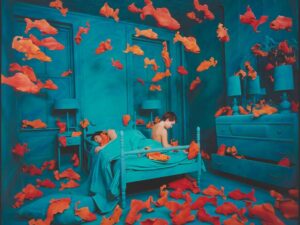
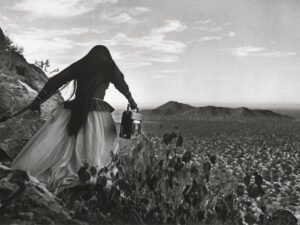
In 1955, Yves Saint-Laurent began his career as assistant to the renowned couturier Christian Dior. Two years later, Dior died suddenly at the age of fifty-two. Laurent was appointed as his successor, taking on the role of artistic director for House of Dior. In the years that followed, he established himself as one of the most celebrated designers in the world. His fashion house challenged conventional gender norms and reshaped the modern wardrobe, introducing pieces such as the women’s tuxedo suit, safari jackets and ready-to-wear collections that combined traditional couture craftsmanship with more practical styles. Now, the International Center of Photography, New York, explores how the photographic image became central to the making of the house of Yves Saint Laurent over four decades.
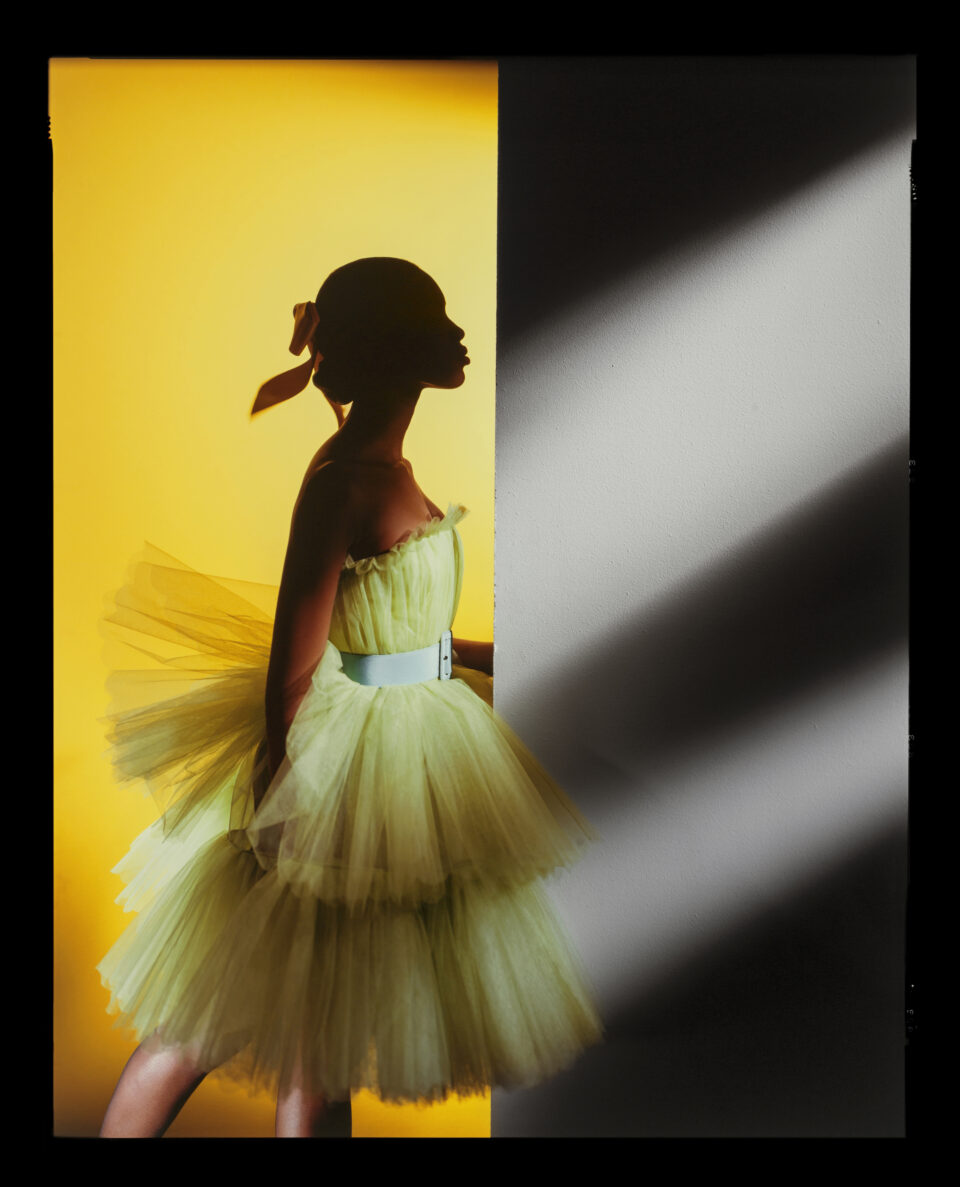
The exhibition brings together over 300 objects including photographs by Andy Warhol, Annie Leibovitz, Cecil Beaton, David Seidner, Duane Michals, Guy Bourdin, Helmut Newton, Horst P. Horst, Irving Penn, Richard Avedon, Robert Doisneau, Steve Meisel and William Klein. Yves Saint Laurent and Photography considers the myriad of ways that photographic images can shape the world around us, whether as art, marketing, documentation or the substance of memory. It’s a difficult feat to present a show that offers a new perspective on a household name, but ICP takes perceptions of YSL in new and exciting directions. There’s a harmony between the man and the brand, outlining how photography shaped the creative trajectory of both. The medium was not used just for promotion, but as a vital element in shaping identity.
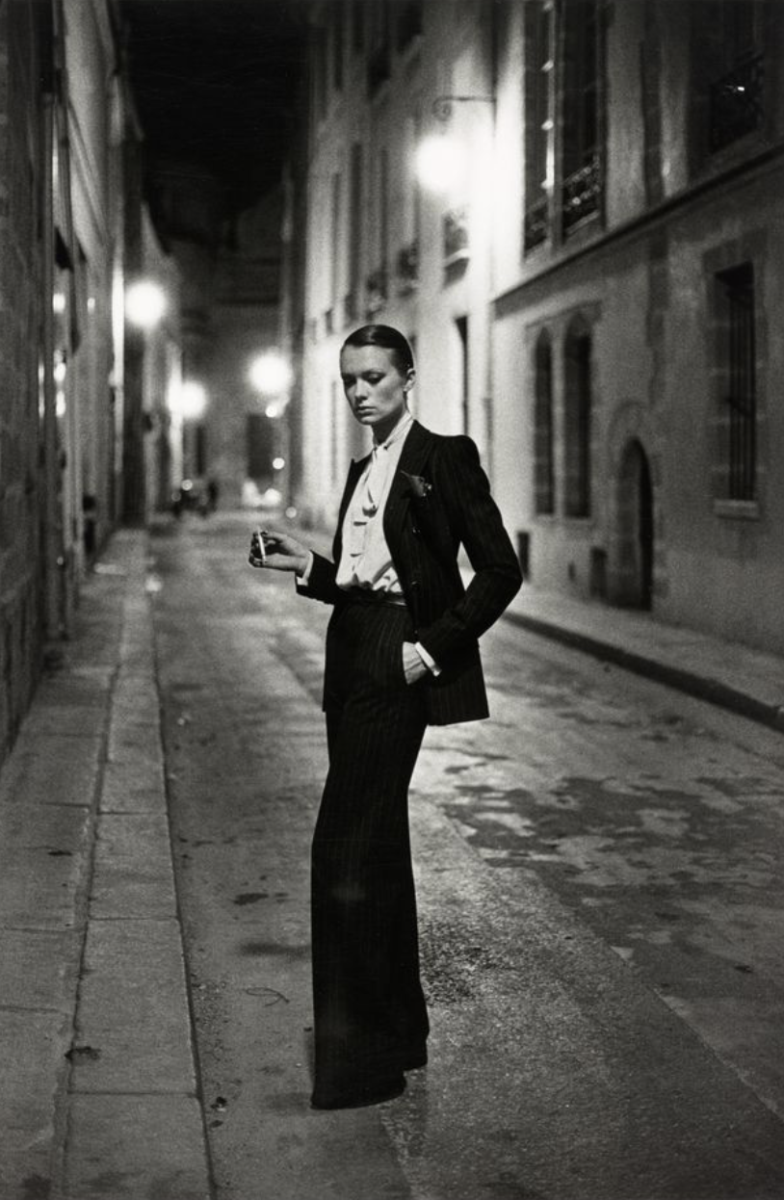
Yves Saint Laurent himself maintained an active relationship with countless photographers, viewing the medium as a way to take risks in the formation of his identity. The camera was also a method of pushing the boundaries of what was deemed acceptable or relevant, specifically in terms of gender roles and expectations. This inquiry is an extension of ICP’s longstanding mission to investigate how photography circulates in the world and to look at the history of the art form to better understand how it can continue to impact contemporary life in urgent and democratic ways.
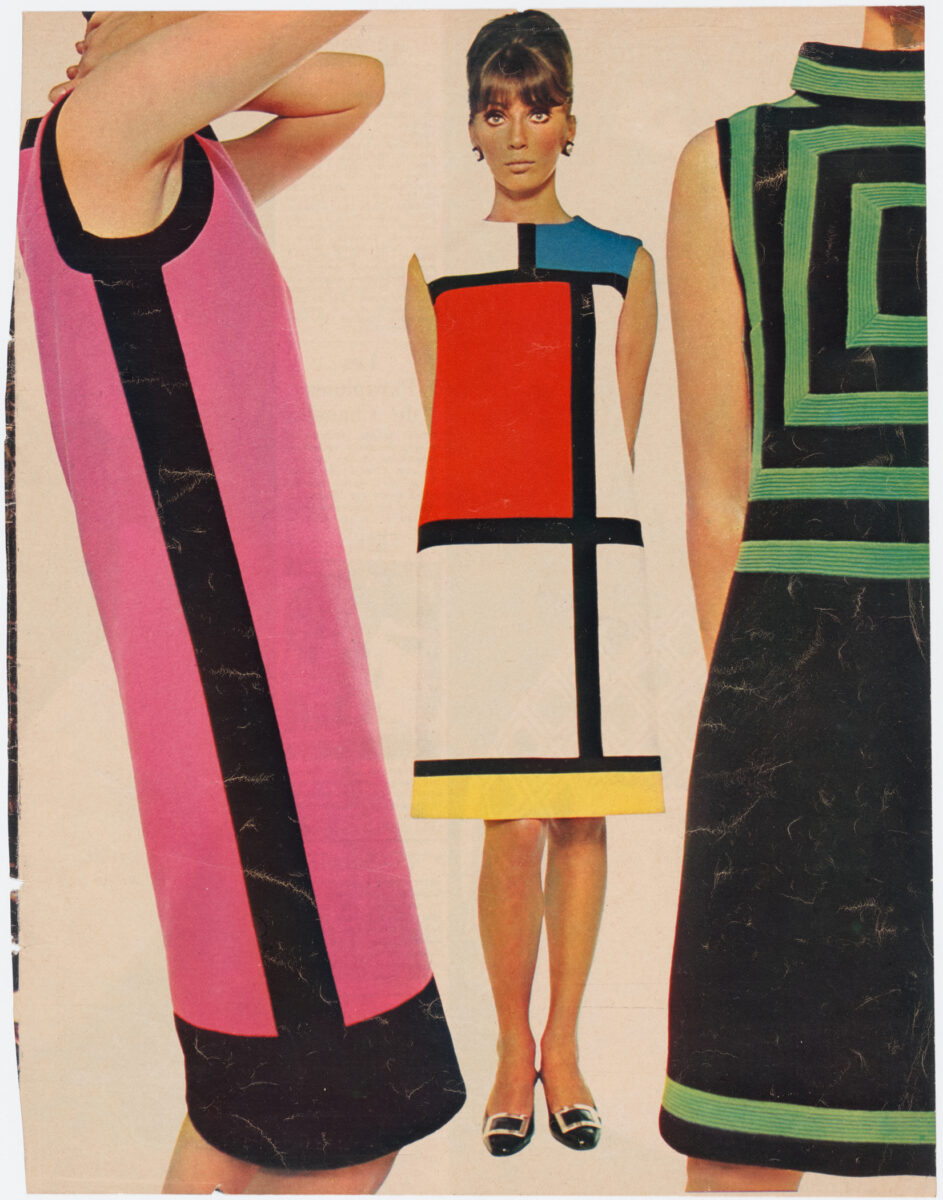
ICP splits the show into two key sections. The first brings together portraits and fashion photographs that chronologically trace the evolution of Yves Saint Laurent’s creations and emblematic images of the courtuier. From striking portrait by Irving Penn in 1957 to that of Patrick Demarchelier in 2004, from experimental images by William Klein in 1962 to those taken by Bettina Rheims backstage at runway shows in the 1980s, each images bears witness to an era. Together, these works contributed to Yves Saint Laurent’s worldwide renown and have left a lasting impression on the collective imagination.
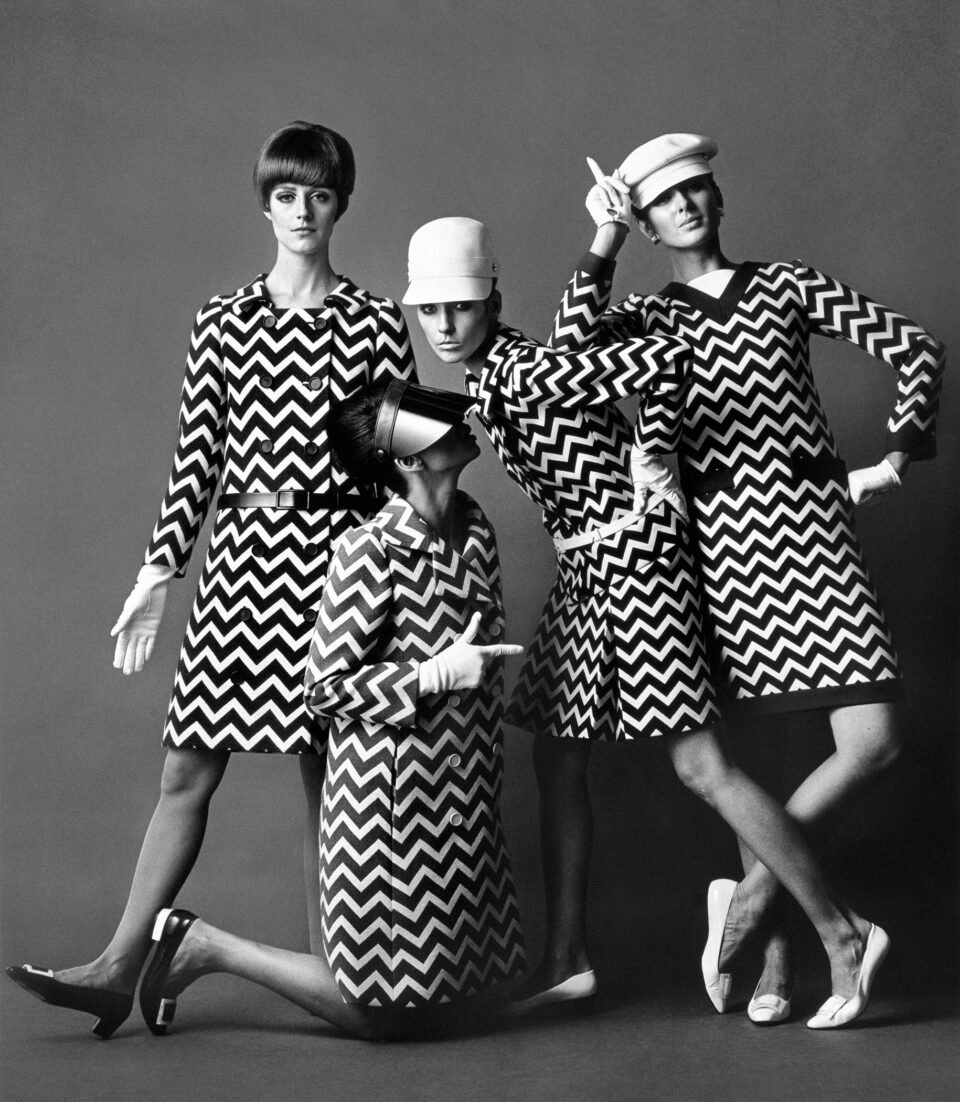
The second section retraces these same years through the presentation of more than 200 objects from the archive of the Musée Yves Saint Laurent Paris – contact sheets, advertising notebooks and campaign catalogues, press clippings, magazines and personal photographs – which reveal the central role that photography played in the life of the couturier and the history of his fashion. Yves Saint Laurent understood the documentary power of photography as a tool to preserve something that might otherwise be ephemeral and its ability to elevate that which it documented. The inclusion of print materials is particularly interesting, adding a unique dimension to the show and highlighting that fashion is distributed in more than just clothes. It becomes part of our culture through images, magazines, posters and books.
Ultimately, Yves Saint Laurent and Photography succeeds because it reframes a familiar story through an unexpected lens. The exhibition demonstrates how images actively constructed the mythology of Yves Saint Laurent, shaping public perceptions of both the designer and his work. This is a celebration of the power of photography to create, preserve and transform cultural narratives.
Yves Saint Laurent and Photography is at the International Center of Photography, New York until 28 September: icp.org
Words: Emma Jacob
Image Credits:
1&5. James Moore, Models from the Spring/Summer 1966 haute couture collection. Published in Harper’s Bazaar,March 1966 © James Moore © Yves Saint Laurent.
2. Gian Paolo Barbieri, Creations from the Spring/Summer 1988 SAINT LAURENT rive gauche collection worn by Christy Turlington and Naomi Campbell. Images used for the catalog of the collection © Gian Paolo Barbieri, Courtesy Fondazione Gian Paolo Barbieri © Yves Saint Laurent.
3. Helmut Newton, Rue Aubriot, Pantsuit worn by Vibeke Knudsen, Fall/Winter 1975 haute couture collection. Published in Vogue Paris, September 1975 © Helmut Newton Foundation, courtesy Helmut Newton Foundation and Fondation Pierre Bergé –Yves Saint Laurent.
4. Peter Knapp, Cocktail dress from the Fall/Winter 1965 haute couture collection, also known as the “Tribute to Piet Mondrian.” Published in ELLE, September 1965© Peter Knapp / ELLE France © Yves Saint Laurent © Jeanne Lanvin-Castillo.