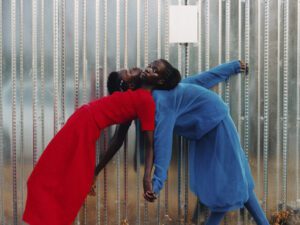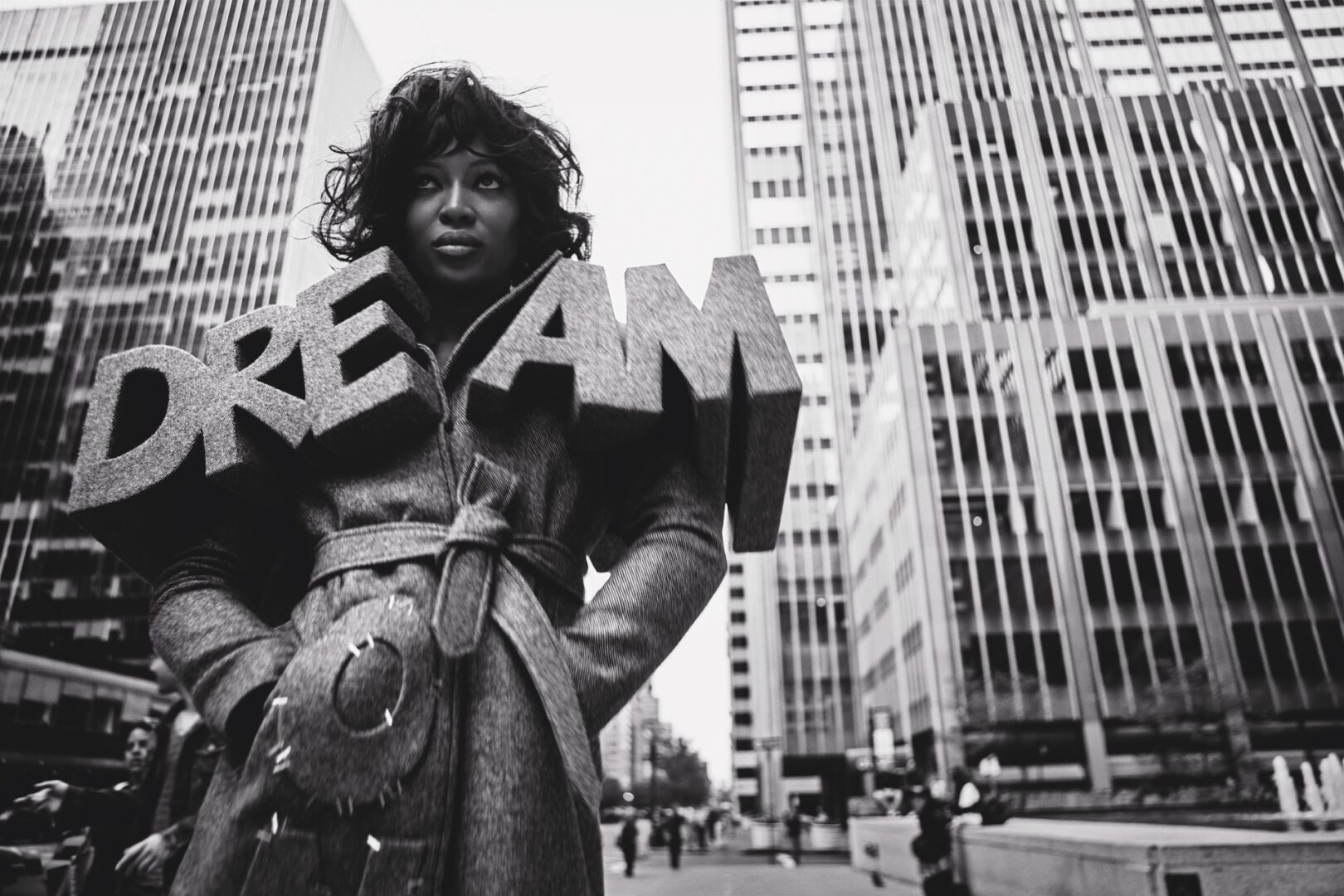
There is a particular urgency to Viktor & Rolf. Fashion Statements at the High Museum of Art, an exhibition that arrived with quiet confidence rather than overt spectacle. Now well underway, it has become one of those cultural moments that circulate through recommendation, drawing visitors through reputation and critical acclaim. With its run extending into early February, it feels less like a temporary display and more like a sustained proposition about the power of fashion within the museum space. The exhibition does not ask to be rushed, instead encouraging careful looking and prolonged engagement. In doing so, it asserts fashion’s capacity to function as a rigorous and imaginative art form.
Over recent years, the High Museum has refined a distinctive curatorial approach to fashion, one that avoids both nostalgia and spectacle for spectacle’s sake. Its exhibitions consistently position clothing within wider artistic and cultural conversations, framing dress as a medium capable of expressing ideas about history, identity, performance and labour. This approach has allowed fashion to sit comfortably alongside painting, sculpture and installation rather than occupying a separate, decorative category. Fashion Statements feels like a natural extension of this philosophy, revealing a museum confident in its ability to handle conceptual complexity. The High’s curators trust their audience and allow ideas to unfold without excessive mediation. That confidence underpins the exhibition from the first gallery onwards.
Rather than presenting a chronological retrospective, the exhibition unfolds across eight thematic chapters that reflect Viktor Horsting and Rolf Snoeren’s recurring preoccupations. This structure mirrors the designers’ own practice, which has always resisted linear narratives in favour of repetition and self-reference. Themes such as authorship, abstraction, theatricality and sustainability recur across decades of work, allowing garments from different periods to enter into dialogue. The result is a reading of Viktor & Rolf’s career that feels fluid rather than fixed. Visitors are encouraged to draw connections across time, recognising how ideas evolve rather than disappear. This curatorial decision reinforces the sense of fashion as an ongoing conversation rather than a sequence of isolated moments.
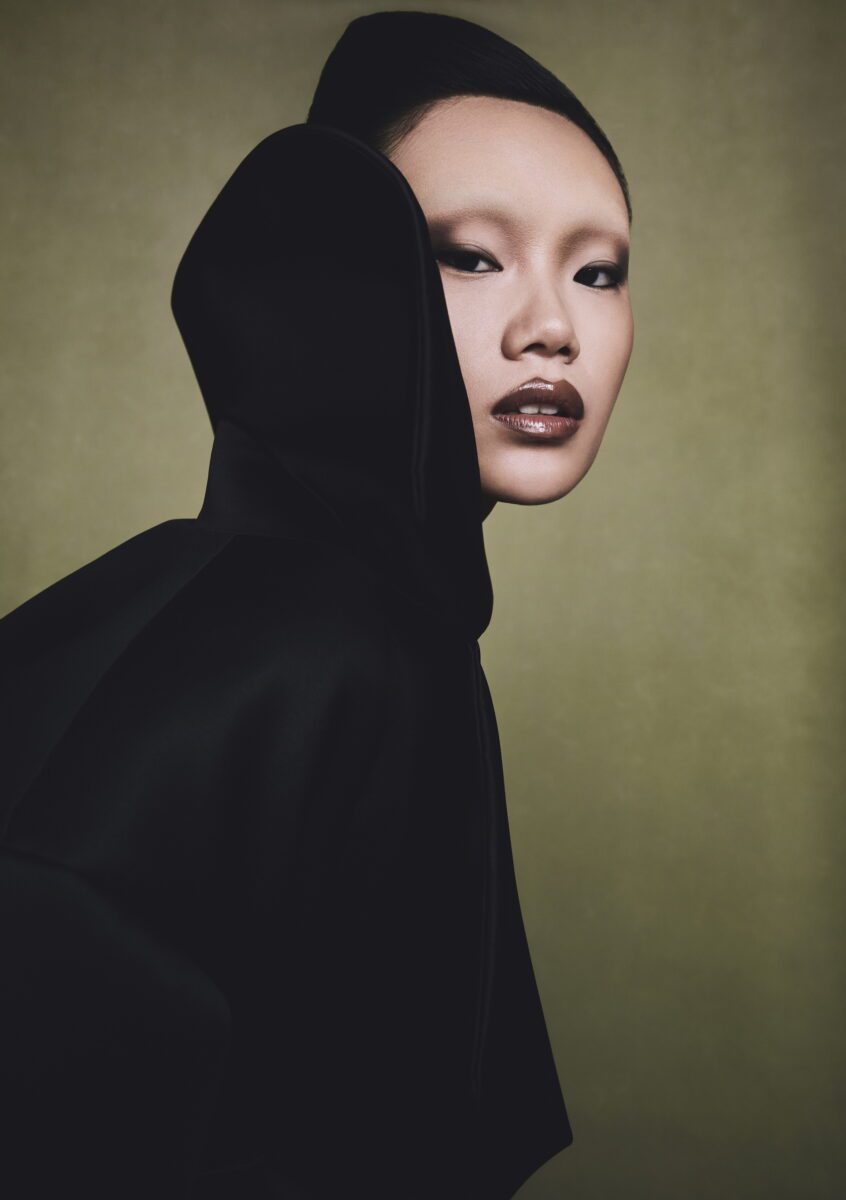
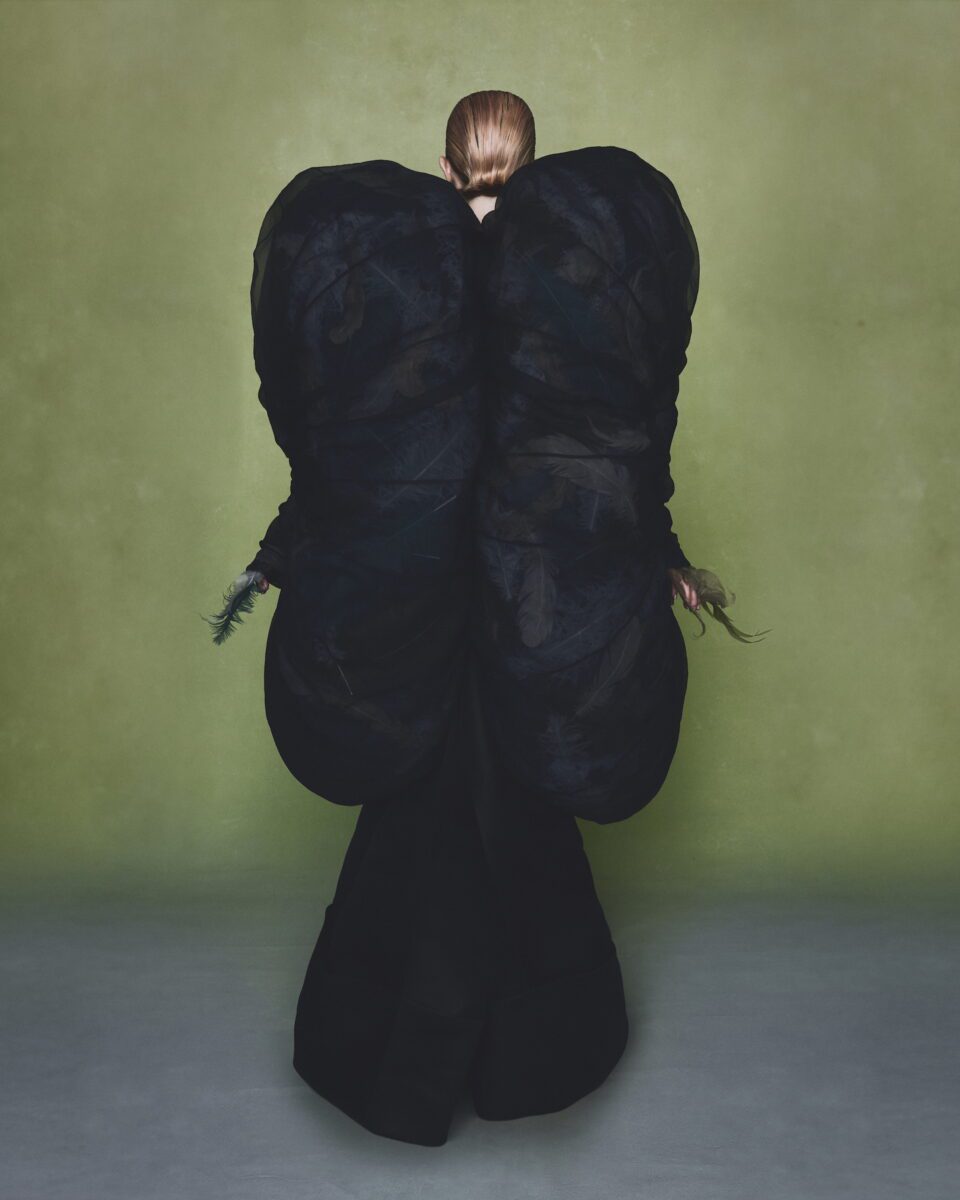
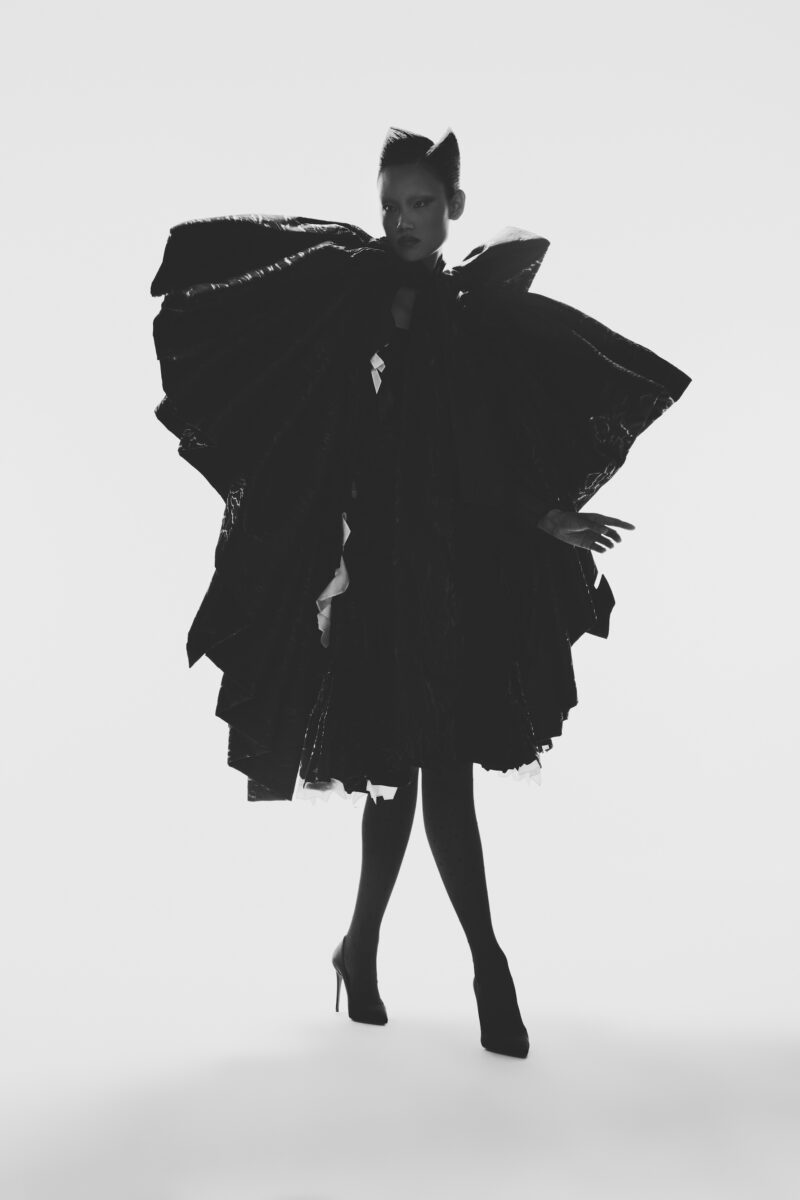
Installation plays a crucial role in shaping this experience and in maintaining coherence across the exhibition. Garments are displayed with sculptural clarity, often isolated to emphasise form, volume and construction. Animated projections by visual effects studio Rodeo FX introduce movement and illusion, subtly extending Viktor & Rolf’s long-standing engagement with performance. Importantly, these elements never overwhelm the clothes themselves but operate in service of them. The balance between immersion and restraint is carefully judged, creating a space that feels theatrical without becoming distracting. It is a testament to the High’s ability to combine innovation with curatorial discipline.
This approach reflects the museum’s broader philosophy regarding fashion. As Director Rand Suffolk has observed: “Just like other important fashion exhibitions presented at the High, ‘Fashion Statements,’ featuring the stunning work of Viktor & Rolf, demonstrates how wearable art is among the most provocative and inventive forms of contemporary design.” The exhibition consistently reinforces this idea, positioning couture as a site of intellectual enquiry rather than mere adornment. Clothing here is not presented as trend-driven or seasonal but as a medium capable of sustaining complex ideas. This framing elevates the garments without removing them from their material reality. It also situates Viktor & Rolf firmly within a lineage of designers who treat fashion as cultural critique.
Since founding their house in the early 1990s, Viktor & Rolf have cultivated a practice defined by contradiction and tension. Their garments consistently stage encounters between romance and severity, excess and control, historical reference and conceptual abstraction. Fashion, for them, functions less as a response to trends and more as a platform for ideas. Each collection begins with an abstract concept that is then developed through meticulous craft and calculated presentation. This commitment to concept places their work in dialogue with designers who have fundamentally reshaped fashion’s expressive possibilities. It also explains the enduring relevance of their practice within both fashion and art contexts.
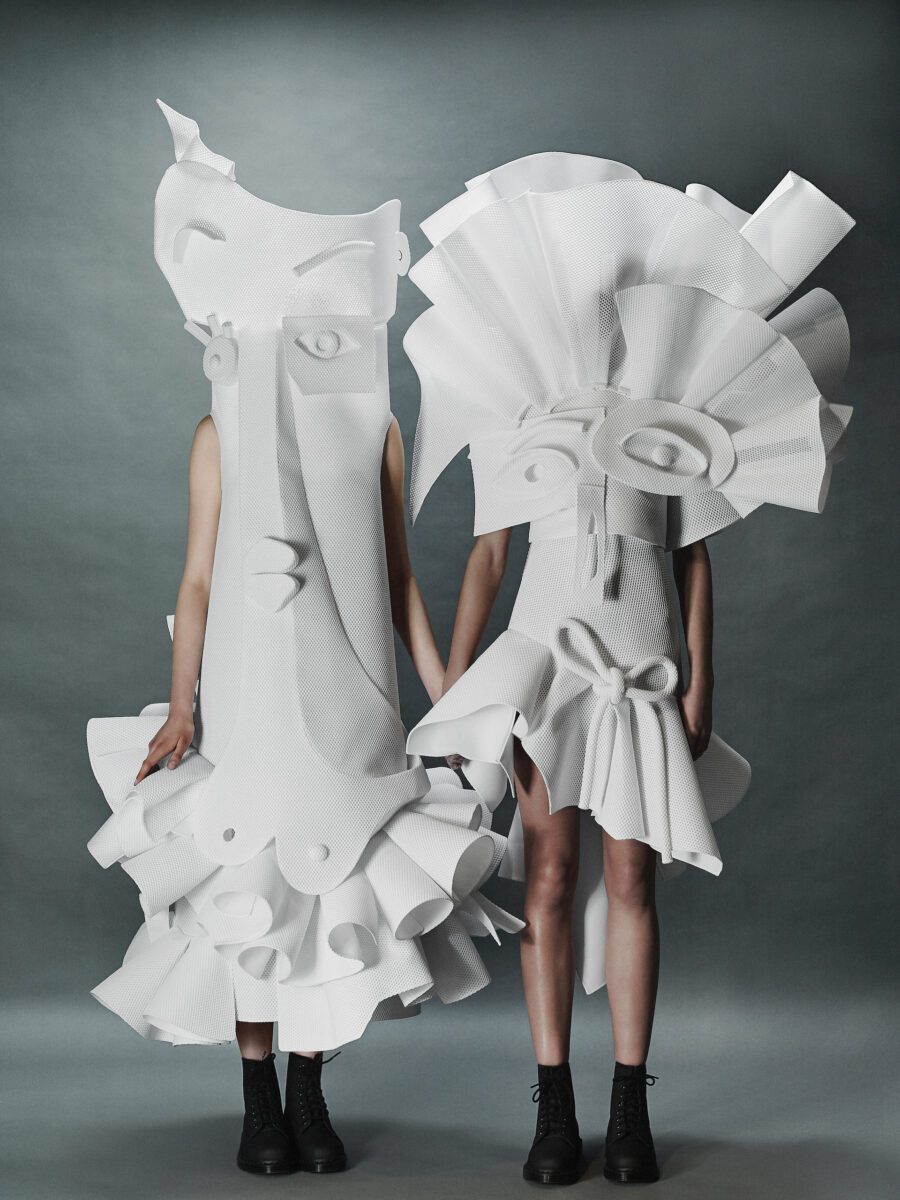
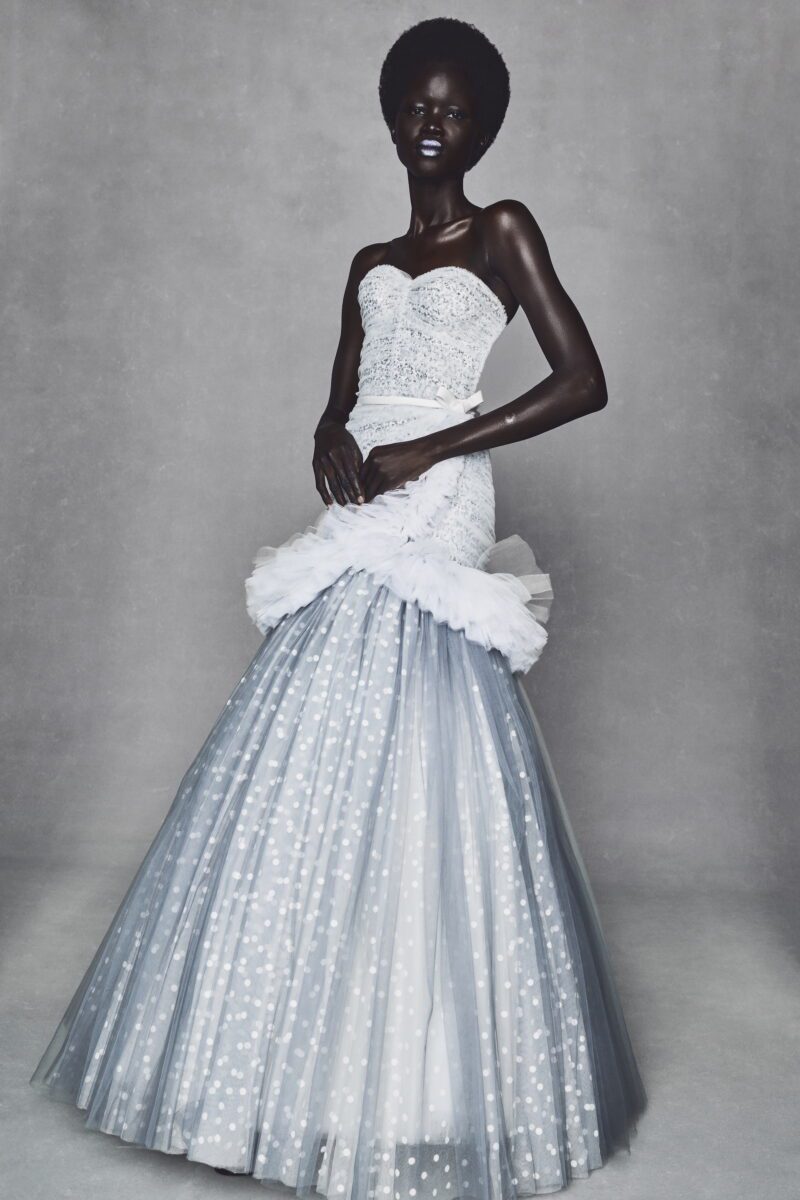
Their manipulation of silhouette and proportion invites comparison with Rei Kawakubo’s radical rethinking of the dressed body. Like Kawakubo, Viktor & Rolf use distortion and exaggeration to challenge conventional notions of beauty and wearability. However, where Kawakubo often favours austerity and restraint, Viktor & Rolf embrace theatrical excess and visual humour. This difference in tone is significant, marking their work as simultaneously critical and playful. The body becomes a site of experimentation rather than conformity. Their designs resist easy consumption and demand active interpretation.
The performative dimension of Viktor & Rolf’s work further aligns them with designers who have transformed the fashion show into an artistic event. Their runway presentations are carefully constructed performances in which narrative, gesture and staging are integral to meaning. This approach recalls the legacy of Alexander McQueen, whose shows operated as immersive, emotionally charged experiences. Viktor & Rolf, however, often turn the focus back onto fashion itself, interrogating its rituals and hierarchies. Their performances are frequently self-referential, exposing the mechanics of spectacle. The exhibition captures this sensibility through its emphasis on presentation as part of the work.
There is also a persistent attention to craft and process that runs throughout the exhibition. This emphasis recalls Martin Margiela’s interrogation of authorship, labour and materiality. Viktor & Rolf’s upcycled couture in particular engages with similar questions, transforming existing garments into new forms that challenge ideas of originality and value. Construction is never hidden but celebrated, drawing attention to seams, layers and techniques. This anchors the work in material reality, counterbalancing its conceptual ambition. It also underscores the designers’ respect for couture as a discipline rooted in skill and time.
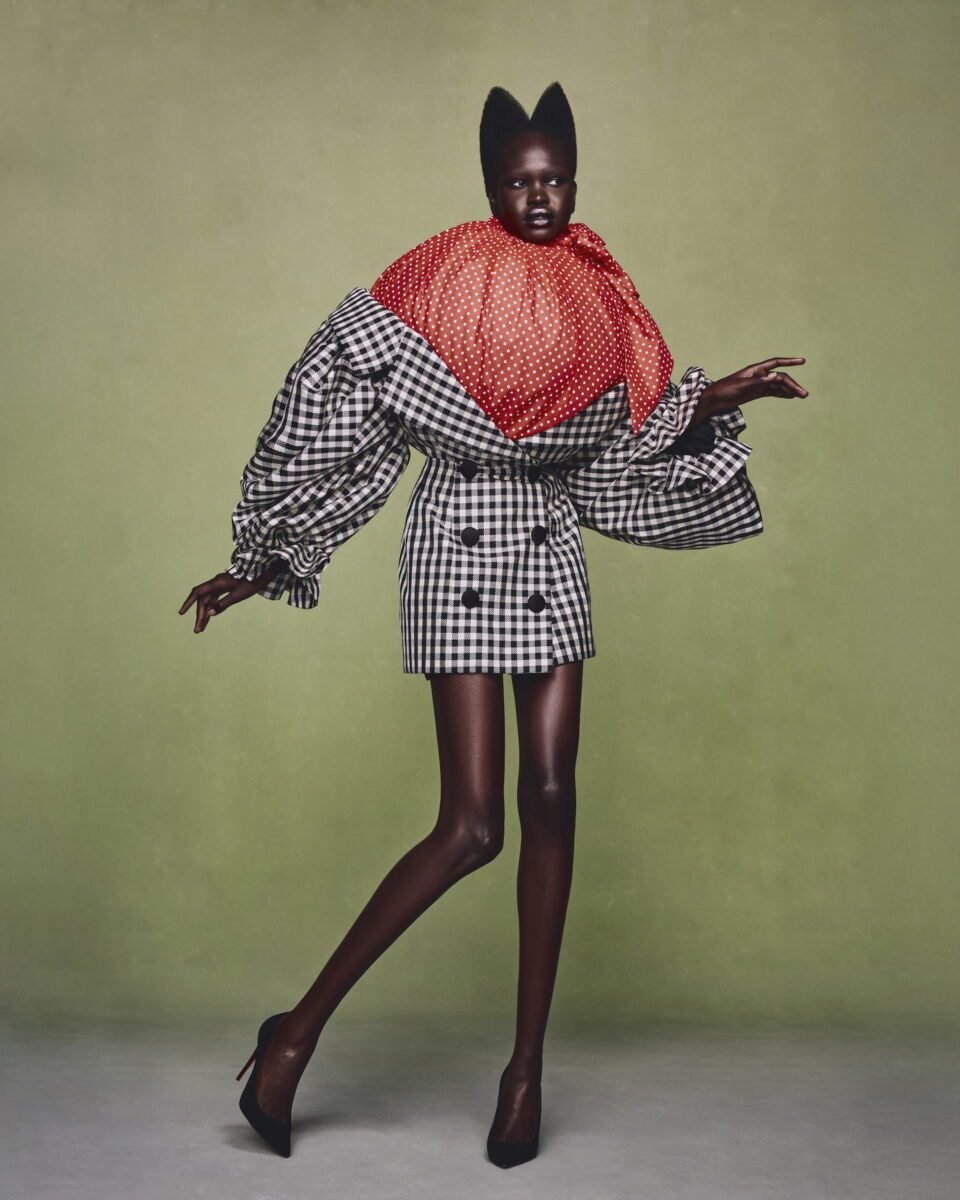
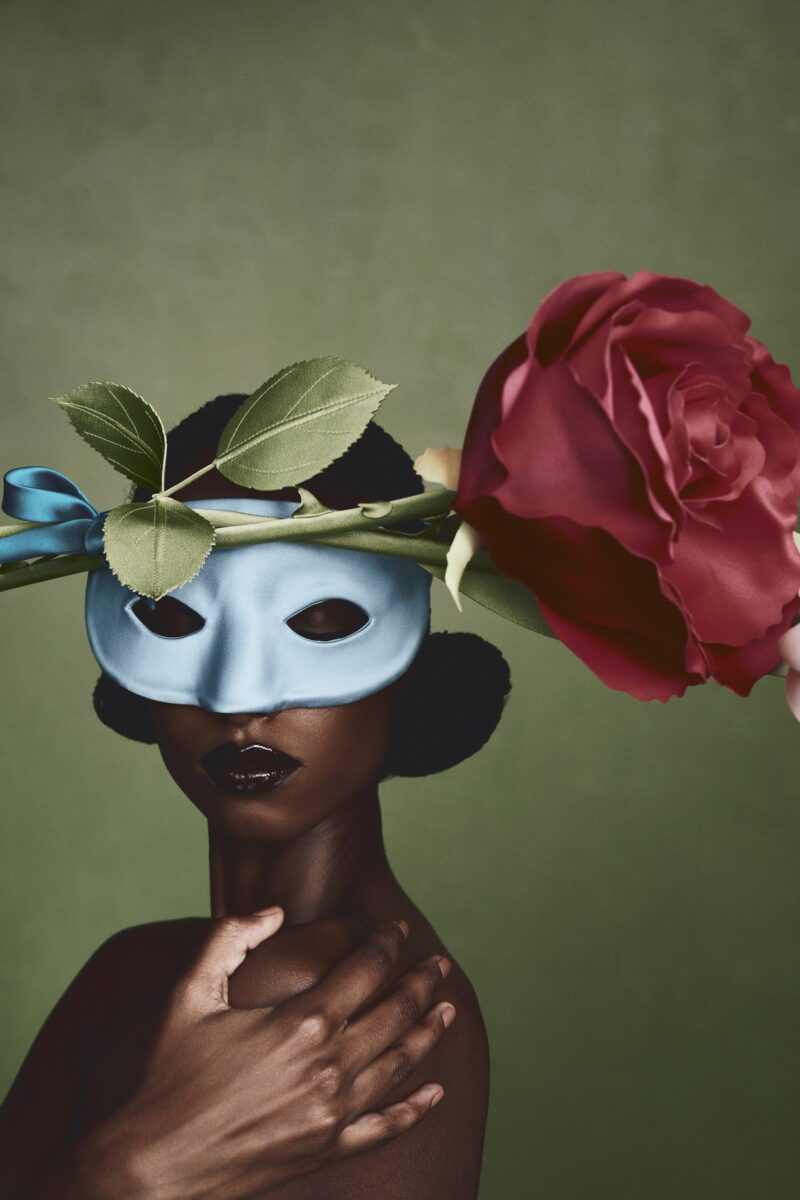
This attention to process is made especially tangible through the inclusion of the designers’ works-in-progress dolls. Inspired by antique porcelain figures and dressed in miniature couture garments, these objects offer an intimate view of Viktor & Rolf’s working methods. They function as studies in scale, precision and repetition, revealing the labour that underpins even the most theatrical pieces. The dolls also introduce a sense of intimacy into the exhibition, contrasting with the monumentality of full-scale garments. In doing so, they reinforce the idea that spectacle and craft are not opposing forces but interdependent. The smallest details carry as much conceptual weight as the grandest silhouettes.
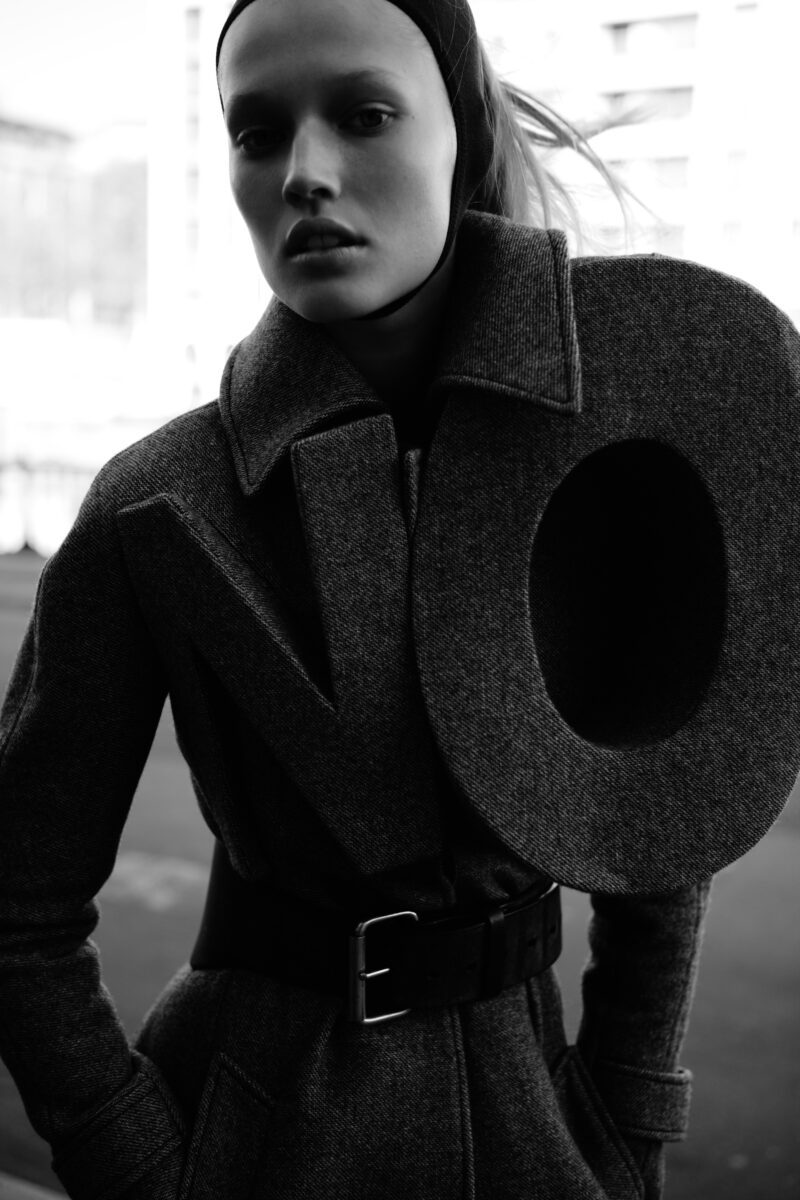
One of the exhibition’s most resonant sections focuses on the Spring Summer 2019 Fashion Statements collection. Here, Viktor & Rolf translate the language of social media into couture form, rendering slogans in layers of laser-cut tulle. These phrases oscillate between sincerity and irony, capturing the designers’ acute awareness of contemporary modes of communication. By transforming fleeting digital language into painstakingly crafted garments, they question the value and permanence of words. The collection exemplifies their ability to engage critically with the present without sacrificing visual impact. It also demonstrates how fashion can operate as social commentary without becoming didactic.
Curator Thierry-Maxime Loriot encapsulates this sensibility when he notes: “The singular and enchanted vision of Viktor & Rolf’s work offers a unique dialogue between art and fashion.” That dialogue is the exhibition’s guiding principle, unfolding across galleries as an experiential rather than theoretical exchange. Garments operate simultaneously as clothing, sculpture and performance, resisting singular interpretation. The exhibition invites viewers to move between these registers, recognising fashion’s multiplicity. Loriot’s thematic structure allows this complexity to emerge organically rather than being imposed. The result is an exhibition that feels intellectually generous as well as visually compelling.
Beyond the gallery, the exhibition highlights Viktor & Rolf’s collaborations with theatre, dance and opera. Their has always existed between disciplines, refusing to be contained by a single medium. Fashion becomes one element within a broader artistic ecology, capable of responding to sound, movement and space. This interdisciplinary impulse feels particularly resonant in a contemporary cultural landscape defined by hybridity. It also reinforces the designers’ belief in fashion as a performative and spatial art. The exhibition integrates these collaborations seamlessly, extending its scope without losing focus.
As Viktor & Rolf. Fashion Statements continues its run, what distinguishes it is its sense of openness. The designers have spoken about the importance of museum exhibitions as democratic spaces, noting that they allow ideas to unfold over time and reach audiences beyond the exclusivity of the runway. That belief is palpable in the High Museum’s presentation, which prioritises access and engagement. This is not an exhibition designed solely for fashion insiders but one that invites reflection from a wide audience. In situating Viktor & Rolf’s work within such a thoughtful curatorial framework, the High affirms both the designers’ enduring influence and its own role as a serious site for fashion discourse.
Viktor&Rolf. Fashion Statements is at High Museum of Art, Atlanta, until 8 February 2026.
Words: Anna Müller
Image Credits:
1. Mario Sorrenti, Naomi Campbell, NO ready-to-wear collection, A/W 2008–09, V Magazine, 2008. © Mario Sorrenti / Art Partner.
2. AB+DM, Beans S., Paris, 2025, pigmented inkjet print, Scissorhands, Haute Couture collection, Spring/Summer 2024. Commissioned by the High Museum of Art, Gift of Lauren Amos.
3. AB+DM, Alyse Clayton, Paris, 2025, pigmented inkjet print, Angry Birds, Haute Couture collection, Autumn/Winter 2025/26. Commissioned by the High Museum of Art, Gift of Lauren Amos.
4. Philip Riches, Performance of Sculptures, Haute Couture collection, Spring/Summer 2016, polyester and nylon. © Philip Riches.
5. AB+DM, Anyiel Piok Majok, Paris, 2025, pigmented inkjet print, Late Stage Capitalism Waltz, Haute Couture collection, Spring/Summer 2023. Commissioned by the High Museum of Art, Gift of Lauren Amos.
6. AB+DM, Nyibol Dok Jok, Paris, 2025, pigmented inkjet print, Haute Abstraction, Autumn/Winter 2024/25. Commissioned by the High Museum of Art, Gift of Lauren Amos.
7. AB+DM, Zahara B., Paris, 2025, pigmented inkjet print, Surreal Satin, Haute Couture collection, Autumn/Winter 2018/19. Commissioned by the High Museum of Art, Gift of Lauren Amos.
8. AB+DM, Beans S., Paris, 2025, pigmented inkjet print, Scissorhands, Haute Couture collection, Spring/Summer 2024. Commissioned by the High Museum of Art, Gift of Lauren Amos.
9. Claudia Knoepfel & Stefan Indlekofer, Toni, Garrn, 2008, inkjet print on Hahnemühle Photo RagÒ Baryta paper, NO ready-to-wear collection, Autumn/Winter 2008–09. Vogue Germany, 2008. © Claudia Knoepfel & Stefan Indlekofer.