When Ulay died in Ljubljana in 2020, he left behind a practice that had fundamentally challenged the boundaries between photography, performance and lived experience. However, his work on conceptual art remains closely linked to his 12-year collaboration with Marina Abramović. Opening at Berlin’s Neue Nationalgalerie on the 50th anniversary of one of his most provocative actions, Ulay, Ulay & Abramović revisits his independent practice beside the performances that made the pair globally renowned. At its centre lies a question that continues to trouble cultural institutions: who decides where art belongs, and who has the right to engage it? By returning Ulay’s work to the museum he once challenged, the exhibition examines both his artistic legacy and the uneasy relationship between institutional authority and dissent.
On 12 December 1976, Ulay, born Frank Uwe Laysiepen, removed Carl Spitzweg’s The Poor Poet (1839) from the Neue Nationalgalerie and moved it to the home of a Turkish guest worker family in Kreuzberg. Documented in the film Irritation – There is a Criminal Touch to Art, the action took a celebrated painting of German cultural identity into a domestic space shaped by migration and labour. Spitzweg’s depiction of an impoverished writer, withdrawn from society, acquired a different resonance outside the museum. Ulay questioned the assumptions surrounding cultural ownership, exposing the distance between art presented as a shared inheritance and the communities marginalised by its institutions. The gesture was rather direct, but its implications extended well beyond the temporary removal of a painting.
Half a century later, the intervention speaks to continuing debates about representation, access and the responsibilities of public museums. Institutional critique has become an established part of contemporary art discourse, raising a rather uncomfortable question: what happens when an institution absorbs the very gestures that once challenged its own authority? The Neue Nationalgalerie revisits Ulay’s action alongside a version of The Poor Poet borrowed from the Grohmann Museum in Milwaukee. This juxtaposition brings the original provocation into the present without resolving its contradictions. The museum can acknowledge its history, but commemoration alone does not dismantle the inequalities Ulay exposed. Instead, the exhibition encourages visitors to take under consideration whether the critical force of an artwork can survive once its challenge becomes part of the institutional narrative.
Curated by Klaus Biesenbach, director of Neue Nationalgalerie, with Ricarda Bergmann and Alenka Gregorič, artistic director of Cukrarna Gallery, the exhibition also addresses Ulay’s position within art history. Although internationally recognised for his partnership with Abramović, he remains comparatively unfamiliar to wider audiences in Germany. The decision to begin with two rooms devoted to his independent practice, before turning to their shared work, establishes a more balanced account of his career. His early experiments were not merely a prelude to the collaboration that followed; they developed questions about identity, transformation and representation that would continue throughout his life. This curatorial emphasis is quite important, challenging a familiar tendency to remember artists through their most celebrated associations as opposed to the full complexity of their various bodies of work.
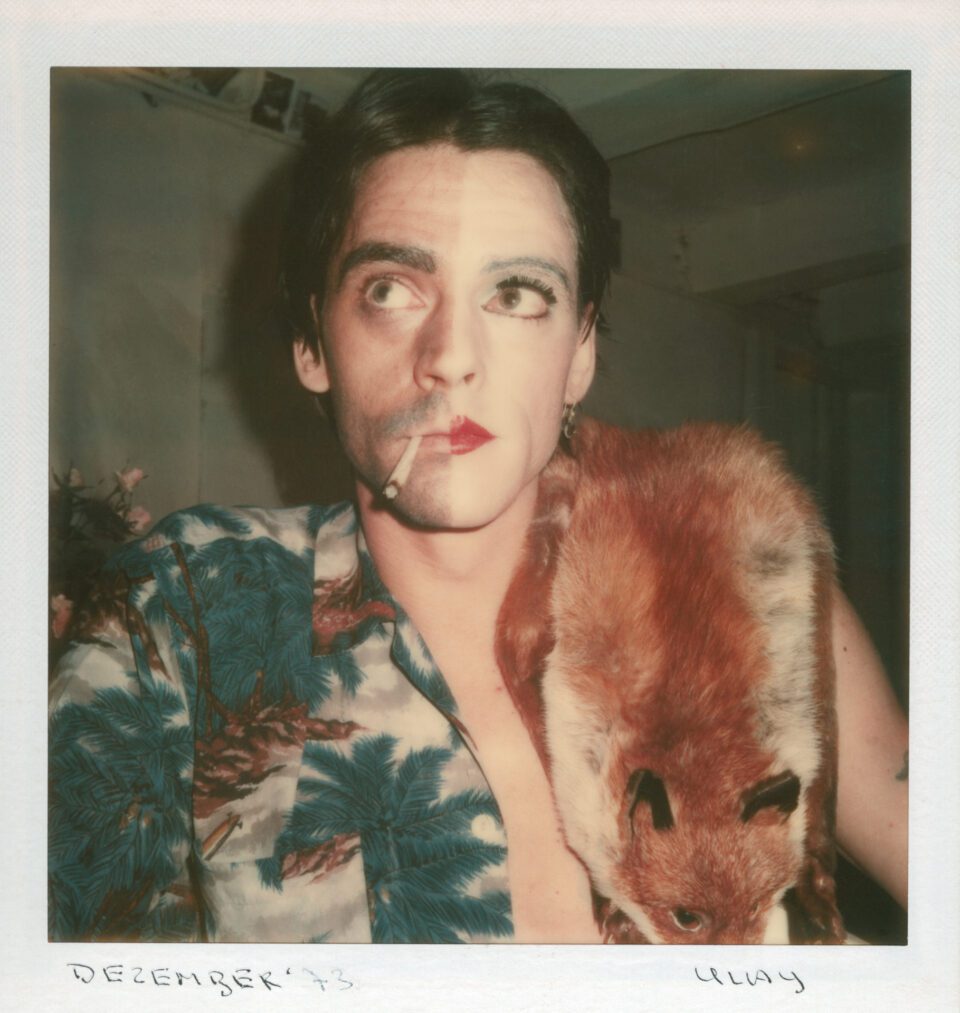
Photography provided Ulay with a means of testing the instability of identity. In S’he (1973–1974), a series of intimate self-portraits, he explores gender and transformation through images that resist any fixed definition of the self. His body becomes a site of experimentation, shaped by gesture and presentation not treated as evidence of an essential identity. These images complicate the assumption that the camera records objective truth, showing how representation depends on choices made by artists and viewers. Self-portraiture becomes an active process in which the boundaries between artist and subject begin to dissolve. His interest in the body as image and instrument would become central to his later performances.
In FOTOTOT (1976), the photograph’s supposed permanence is brought into question through a process of disappearance. The unfixed images gradually fade when exposed to light, making their deterioration an integral part of the work. Rather than preserving a moment, photography becomes a medium through which loss is enacted. The work also anticipates a central problem for performance art: how can an experience be preserved without reducing it to documentation? The exhibition’s combination of photographs, films, drawings, sculptures, letters and preparatory materials offers insight into Ulay’s working processes, while acknowledging the limits of the archive. Documents can establish what happened, but they cannot reproduce the uncertainty or physical presence of an event.
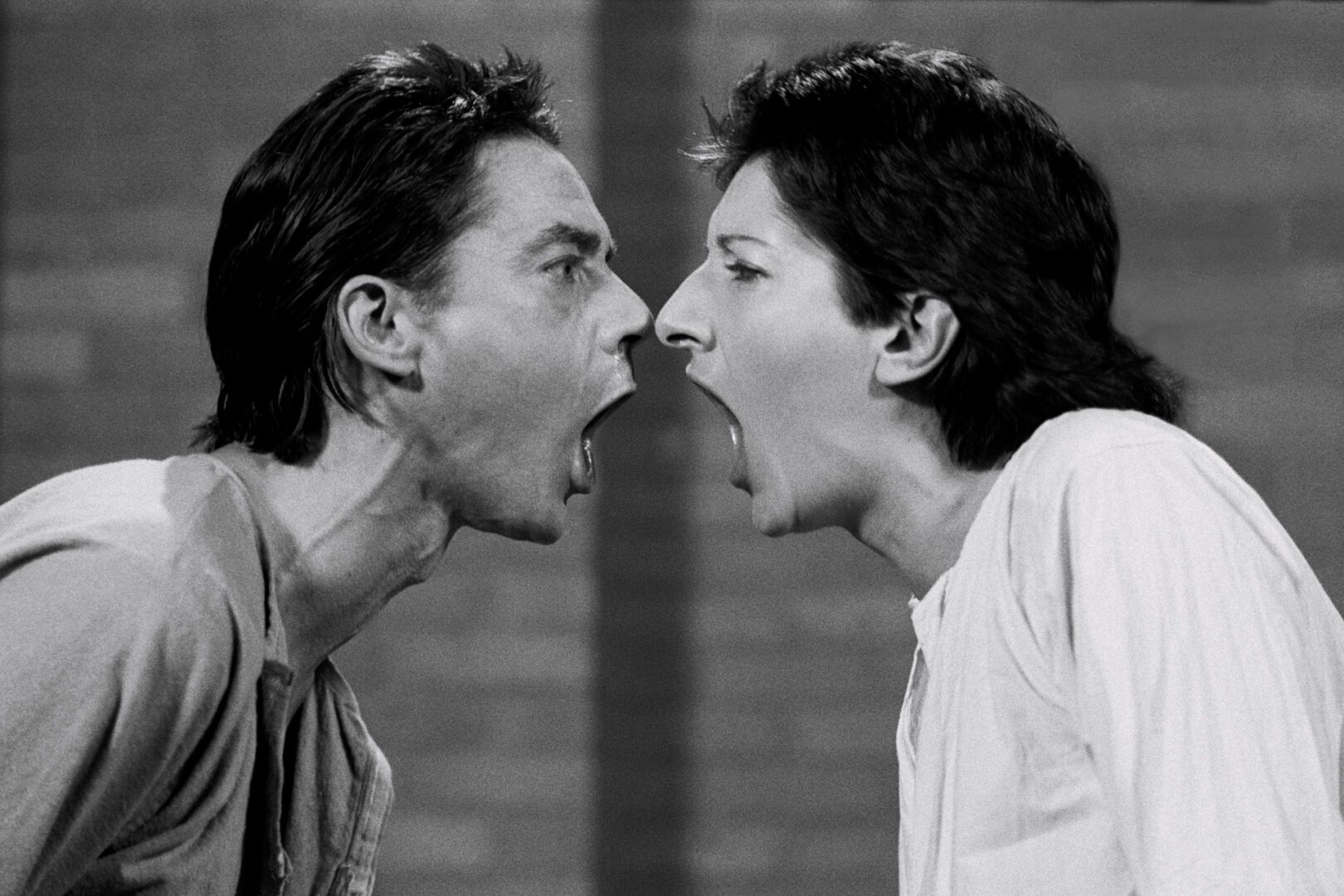
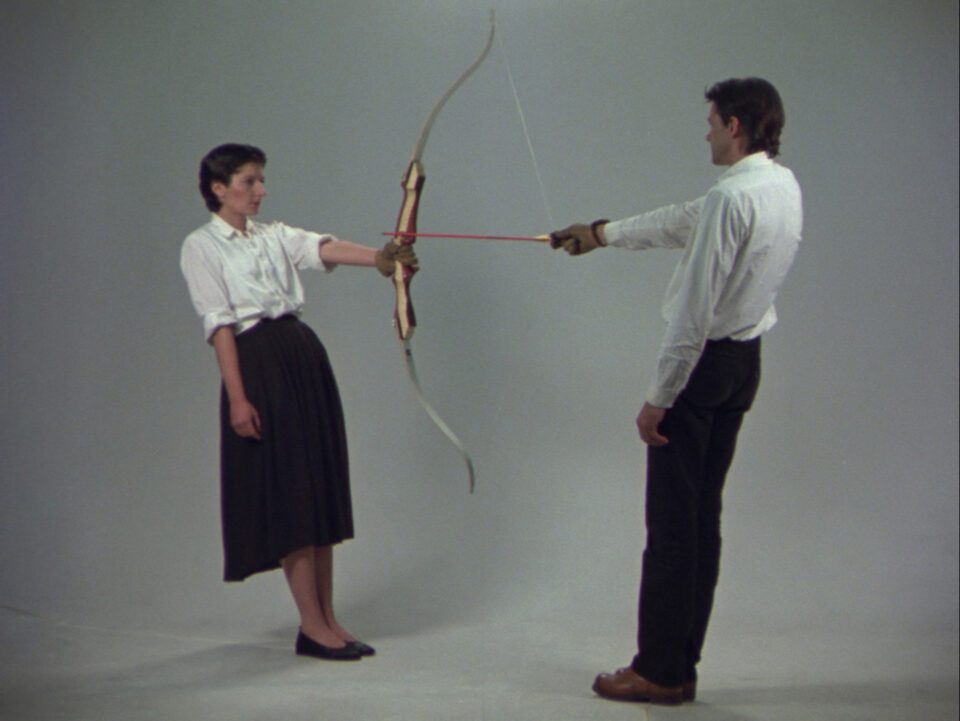
Ulay met Abramović in Amsterdam in 1975, and their artistic pairing soon became one of the defining collaborations in performance art. Between 1976 and 1988, they used their bodies to investigate physical encounter, trust and the limits of individual autonomy. In Relation in Space (1976), presented at the Venice Biennale, the artists repeatedly crossed paths, transforming a simple action into a study of collision and mutual presence. Each repetition altered the encounter, exposing the tension between two bodies that could neither act entirely alone nor merge into one. Partnership became a physical negotiation, with the possibility of injury unified with the production of meaning. Their work challenged the idea of the artist as an autonomous figure, suggesting creative identity could emerge through dependence and friction.
Abramović’s independent practice offers a broader context for these concerns. In Rhythm 0 (1974), she invited audience members to use a selection of objects on her body, exposing how readily spectatorship could become an exercise in power. The performance challenged the distance between artwork and viewer, making the audience responsible for actions that might otherwise remain unexamined. Ulay and Abramović similarly disrupted conventional relationships between performer and spectator, although their collaborative works often placed the artists’ relationship at the centre. Their performances were not simply just a series of theoretical propositions concerning authorship or autonomy; they relied on physical endurance, vulnerability and the unpredictable behaviour of another individual. The body became a medium through which abstract questions acquired an immediate set of consequences.
Few works make the visitor’s position more tangible than Imponderabilia (1977), which will be performed daily during the exhibition. Standing naked on opposite sides of a narrow entrance, Ulay and Abramović require the visitors to pass between them. Entering the gallery becomes a conscious decision, forcing the negotiation of proximity, discomfort and the direction of one’s gaze. The audience is no longer detached from the work but physically implicated in its unfolding. Presented in a major museum, the performance also raises questions about how an artwork designed to disrupt institutional conventions operates in a carefully managed exhibition space. Its significance lies partly in this contradiction: even when visitors understand the work’s historical importance, they must still decide how to respond to the encounter itself.
Their final major collaboration, The Lovers (1988), took the form of a journey along the Great Wall of China. Beginning at opposite ends, Ulay and Abramović intended to meet in the middle, but the undertaking culminated in their separation. The immense physical distance transformed their relationship into a geographical and temporal experience, making separation part of the work rather than merely its conclusion. Reading the journey solely as an allegory for their break-up, however, risks reducing its complexity to biography. The work instead illustrates the particular limits of shared identity, demonstrating that collaboration does not eliminate the differences between individuals. Its inclusion also sharpens the exhibition’s central curatorial concern: how can a partnership be remembered without allowing one artist’s independent achievements to disappear behind the story of the other?
Following their separation in 1988, Ulay continued to develop his own practice, including participatory projects with socially marginalised communities in the United States, Australia, India, Myanmar and Syria. These works extended his interest in identity and representation beyond the intimate relationship, engaging with the social circumstances through which people understand and present themselves. They also resist a retrospective narrative that defines his career primarily through Abramović. Across the different approaches of photography, performance and socially engaged practice, Ulay returned to questions of belonging and the structures that shape individual experience. His work consistently challenged the assumption that identity is fixed or that cultural authority should go unquestioned.
The Neue Nationalgalerie’s anniversary exhibition confronts a contradiction at the heart of Ulay’s legacy. The institution can now preserve the documentation of his intervention, display the painting at its centre and situate the action within the history of conceptual art. Yet the gesture was directed against the authority that now enables its commemoration. By bringing Ulay’s independent work into dialogue with his collaboration with Abramović, the curators offer a broader understanding of an artist whose influence extends beyond their shared performances. His death in 2020 makes this reassessment particularly significant, giving the exhibition the character of a posthumous reconsideration rather than a straightforward anniversary celebration. Fifty years after The Poor Poet left the gallery, its return leaves the initial question unresolved: can an institution preserve the force of a challenge without neutralising it?
Ulay, Ulay & Abramović is at the New National Gallery, Berlin, from 28 November – 2 May.
Words: Anna Muller
Image Credits:
1.Ulay / Marina Abramović, AAA-AAA, Performance for television, 1978, 15′, RTB Television Studio, Liège, Belgium. © Ulay / Marina Abramović, Courtesy of the Marina Abramović Archives, VG Bild-Kunst, Bonn 2026.
2. Ulay, S’HE, Auto-Polaroid, 1973–74. © Ulay. Courtesy Lena Pislak, private collection, VG Bild-Kunst, Bonn 2026.
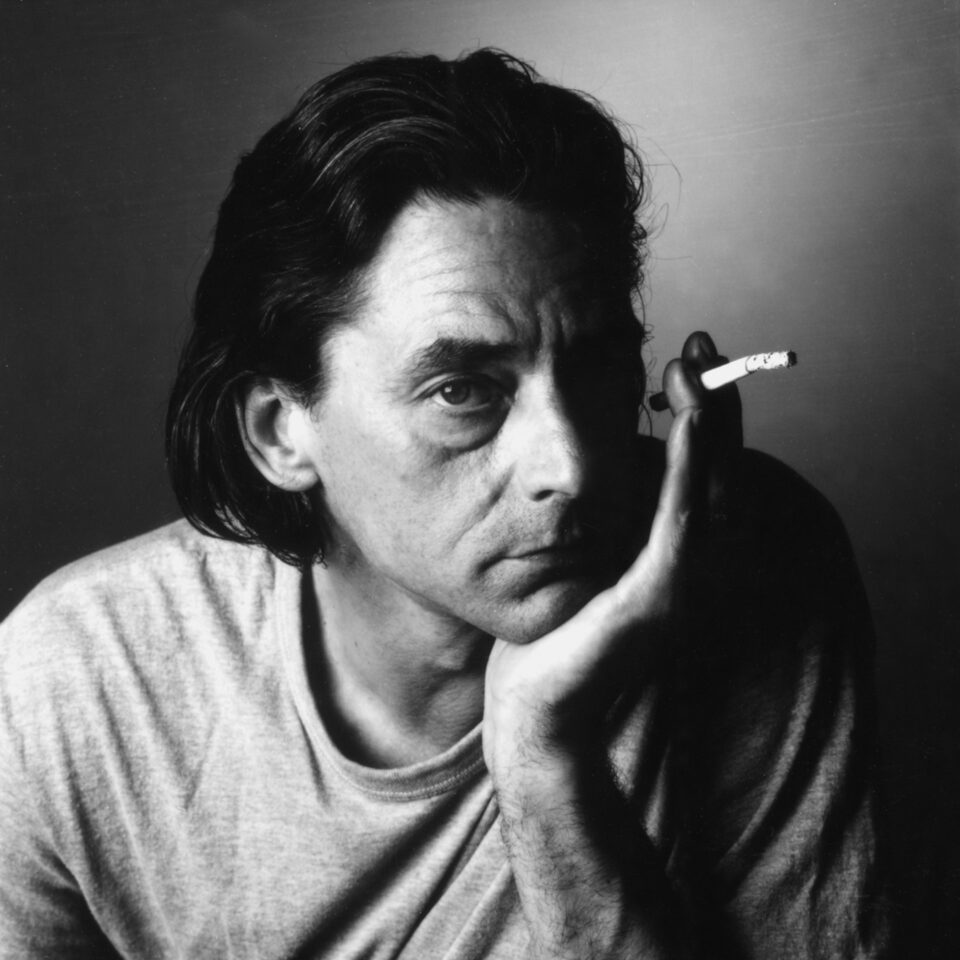
3. Ulay, 1991. © Ulay. Courtesy ULAY Foundation, VG Bild-Kunst, Bonn 2026.
4. Ulay / Marina Abramović, Rest Energy, Performance for Video, 1980, 4 minutes, ROSC’ 80, Dublin © Ulay / Marina Abramović, Courtesy of the Marina Abramović Archives, VG Bild-Kunst, Bonn 2026.