Across Europe’s contemporary photography landscape, festivals have become more than seasonal programming – they now function as pressure systems where image culture, institutional critique and civic imagination collide – enters this field not as another survey exhibition, but as a proposition about what it means to live inside images that no longer simply represent the world, but actively organise it. Under the artistic direction of Mark Sealy, the Triennial of Photography Hamburg frames photography as an ethical encounter – a site where looking is inseparable from questions of power, history, and responsibility. Its thematic constellation, Alliance, Infinity, Love – In the Face of the Other, resists easy sentiment, instead reading as a set of unstable propositions about relation itself. Across Hamburg’s institutions, the camera is repositioned not as witness, but as participant in the making of social reality.
This positioning gains force when set against the wider ecology of global photography festivals, which increasingly operate as both cultural infrastructure and ideological staging ground. At Les Rencontres d’Arles, photography is repeatedly returned to the question of site – how image and ancient architecture mutually intensify each other in the heat of southern France. Paris Photo, staged within the Grand Palais, remains the clearest articulation of photography’s entanglement with market systems, where visibility and value are constantly negotiated. Photo London mirrors this tension in a British context, oscillating between fair logic and curatorial ambition. Photoville in New York takes an entirely different route, dispersing photography into public space through container structures that refuse the authority of the white cube. BredaPhoto in the Netherlands and Copenhagen Photo Festival extend this logic of urban embedding, treating the city not as backdrop but as active surface. LagosPhoto sharpens the stakes further still, insisting on African image cultures as generative rather than supplementary within global visual discourse.
What matters across these festivals is not simply their scale, but their competing definitions of what photography does to a place. In Arles, the city becomes a kind of image-archive under pressure, where history is repeatedly re-photographed through contemporary concerns. In Paris and London, photography is pulled between speculation and critique, objecthood and discourse. In New York, the medium is redistributed into everyday circulation, loosening its institutional frame. And in Lagos, it is re-anchored within histories of representation that refuse to be filtered through European curatorial inheritance. The result is not a unified field, but a friction map – a set of overlapping, sometimes incompatible propositions about visibility. Hamburg enters this network not as synthesis, but as interruption, insisting on relation as an unstable, lived condition rather than a curatorial theme.
It is within this charged field that the work of Jasmina Cibic gains its edge. Jasmina Cibic is a Slovenian artist working across film, installation, photography and sculpture, whose practice consistently dissects how culture is mobilised as a soft technology of governance. Her work has circulated internationally, including representing Slovenia at the Venice Biennale, where questions of national staging and cultural identity sit uncomfortably close to spectacle. She has also been twice shortlisted for the Aesthetica Art Prize, a detail that situates her within a lineage of artists negotiating between conceptual rigor and exhibition visibility. But awards and platforms only partially frame her trajectory – what defines her practice is a sustained interrogation of how cultural meaning is constructed through repetition, choreography, and institutional language. She treats culture less as expression than as infrastructure.
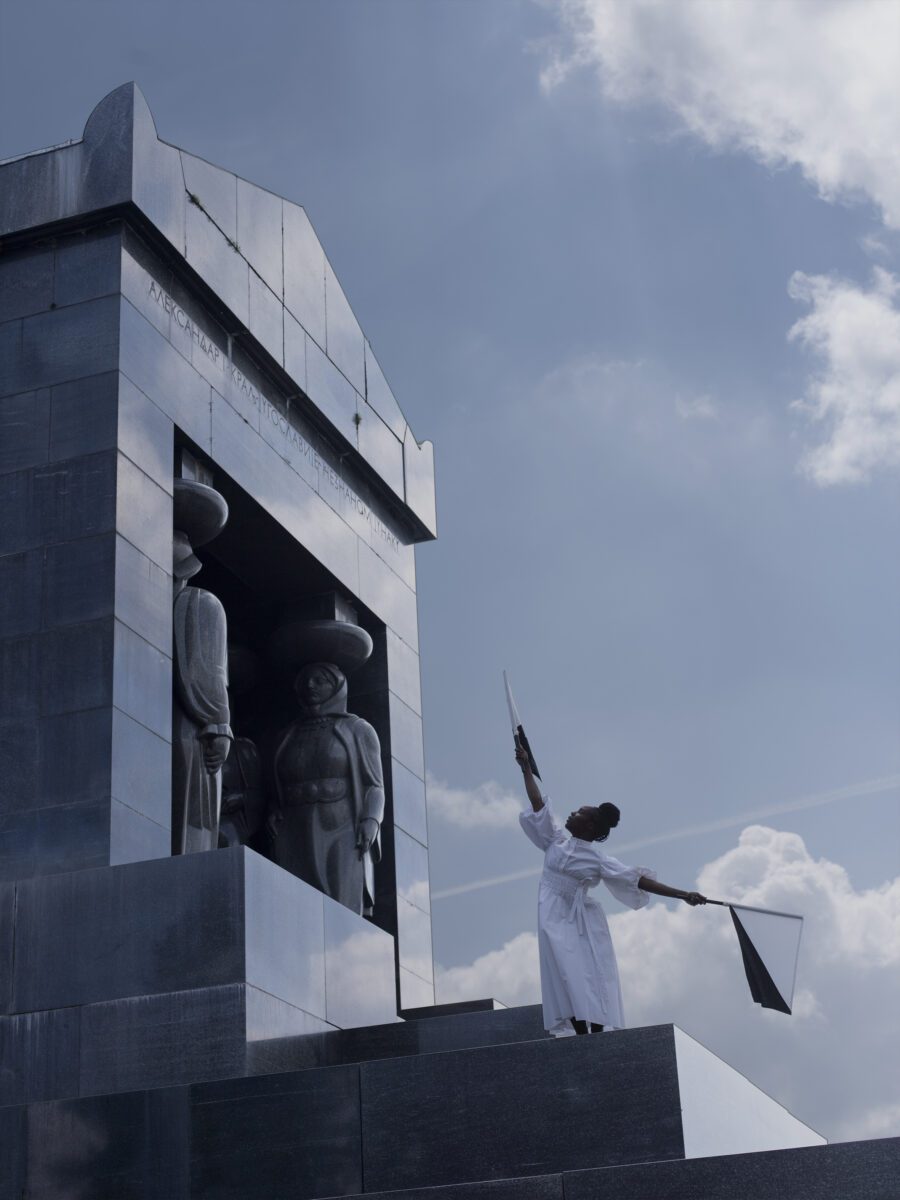
Cibic’s work does not illustrate political ideas; it stages them as unstable rehearsals. Across films and installations, she constructs environments where architecture, voice, and image operate as co-dependent systems of persuasion. Her method draws on archives, diplomatic histories, and cultural policy, but never settles into documentary certainty. Instead, these materials are reassembled into choreographed spaces where ideology becomes visible precisely through its aesthetics — its pacing, its tone, its staging of consensus. The viewer is never positioned outside the work as neutral observer; they are implicated in its unfolding logic. What emerges is a practice that understands representation not as reflection.
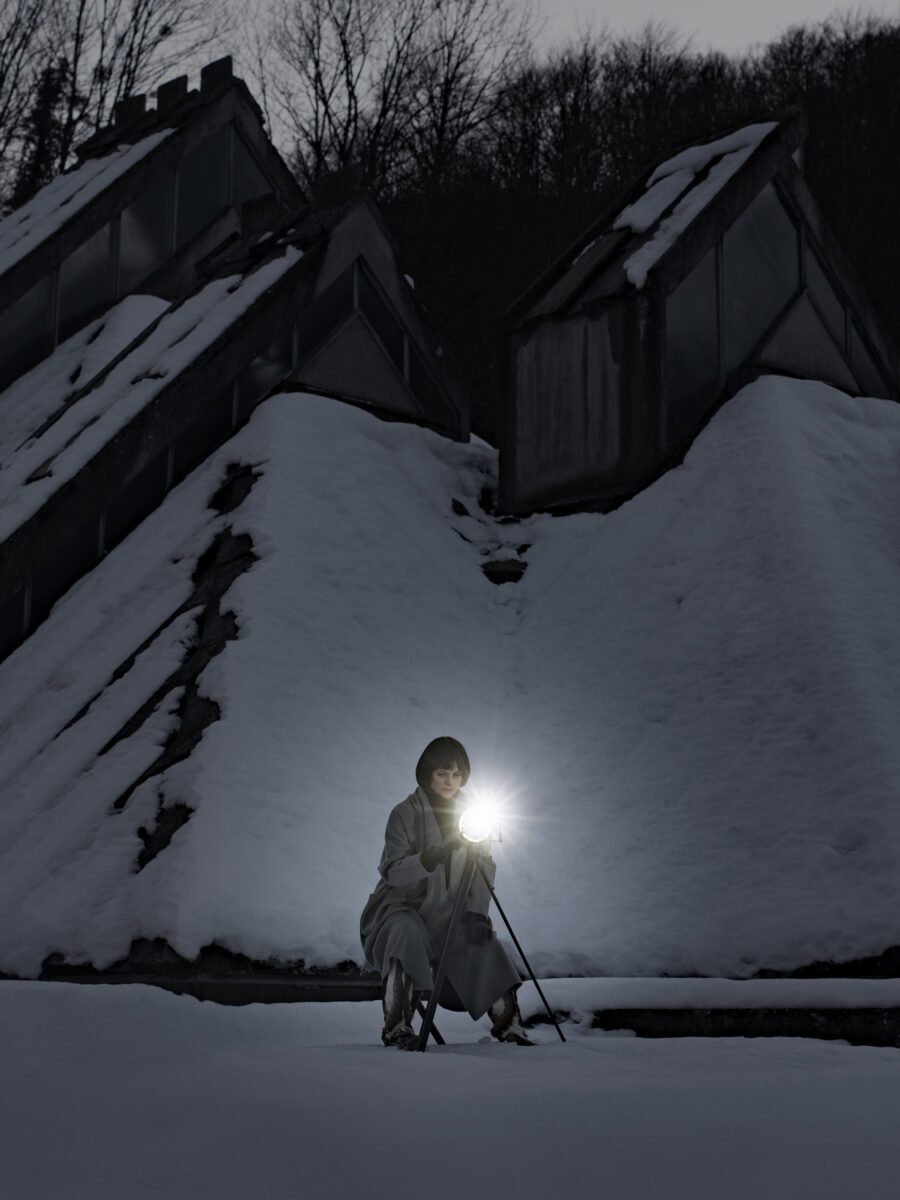
At the Triennial, she presents The Gallery of Non-Aligned and Beacons within Deichtorhallen – a work that feels less like installation than constructed diplomatic environment. The piece draws on histories of the Non-Aligned Movement, not as nostalgia, but as a fractured political language still echoing through contemporary geopolitics. Images circulate here as unstable carriers of affiliation: neither purely archival nor fully fictional, but suspended between evidentiary claim and constructed narrative. The installation resists linear reading, instead unfolding as a spatial argument about how solidarity is visualised, maintained, and eventually dissolved. Within the broader framework of Alliance, Infinity, Love, Cibic refuses resolution – she keeps the terms open, slightly unresolved, as if meaning itself were still under negotiation.
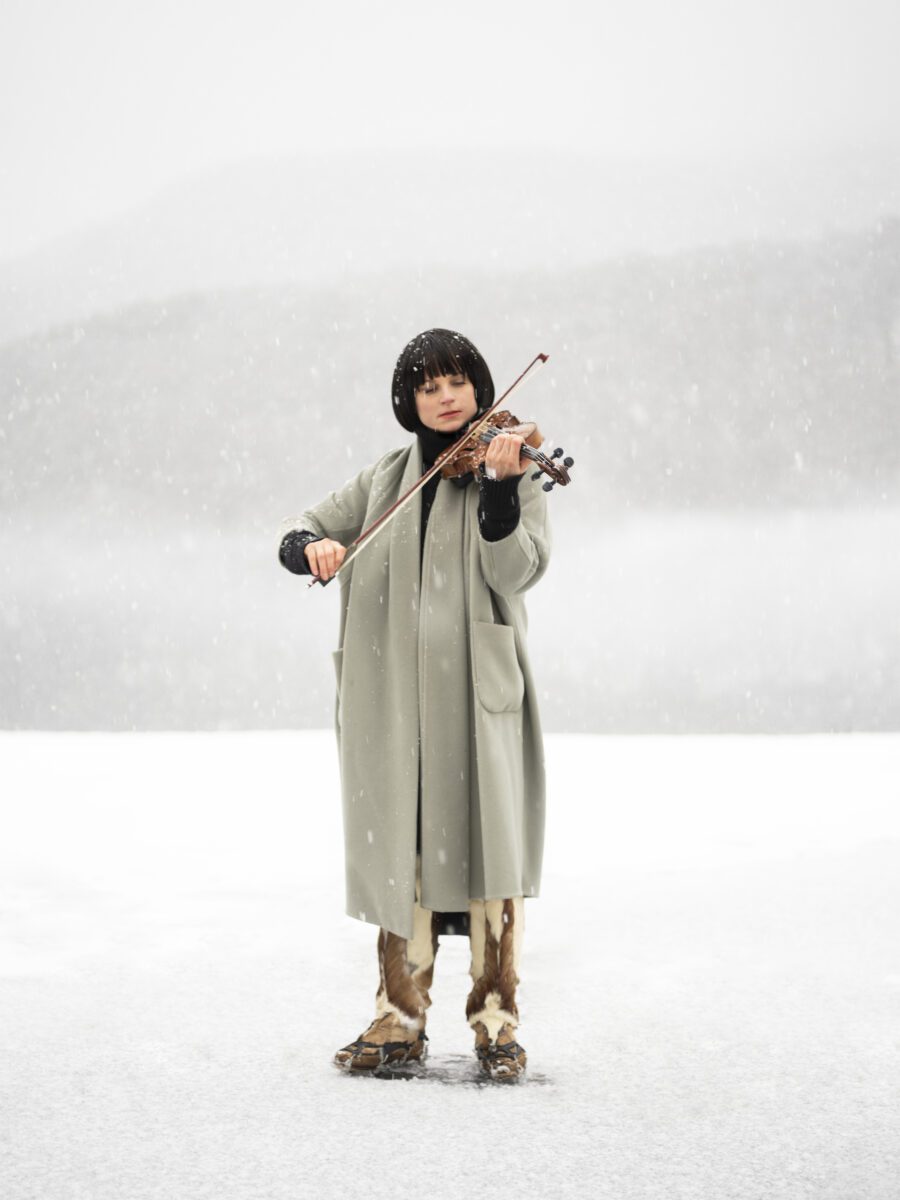
This refusal extends into her contribution to the Triennial’s public programme, where speech becomes another material to be tested. In Hope as a Muscle, hope is stripped of its sentimental framing and repositioned as something trained, conditioned and politically instrumentalised. Cibic draws on collaborative work with human rights practitioners, folding artistic production into proximity with legal testimony and advocacy structures. The result is not illustration but friction – between affect and documentation, between image and institutional language. Hope, in this framing, is not a horizon but a practice that must be repeatedly enacted in order to hold.
A different kind of tension surfaces in Crit Club, where the question “Is the Camera Closer to a Mirror or a Window?” is staged not as enquiry but as performative disagreement. Cibic enters a shifting panel of artists and thinkers who must argue, reverse positions and inhabit contradiction as method. The structure deliberately erodes stability: every claim is provisional, every position reversible. Photography becomes less an object of interpretation than a field of rhetorical instability, where meaning is produced through contest. The camera is neither mirror nor window – it is the space between positions where certainty fails.
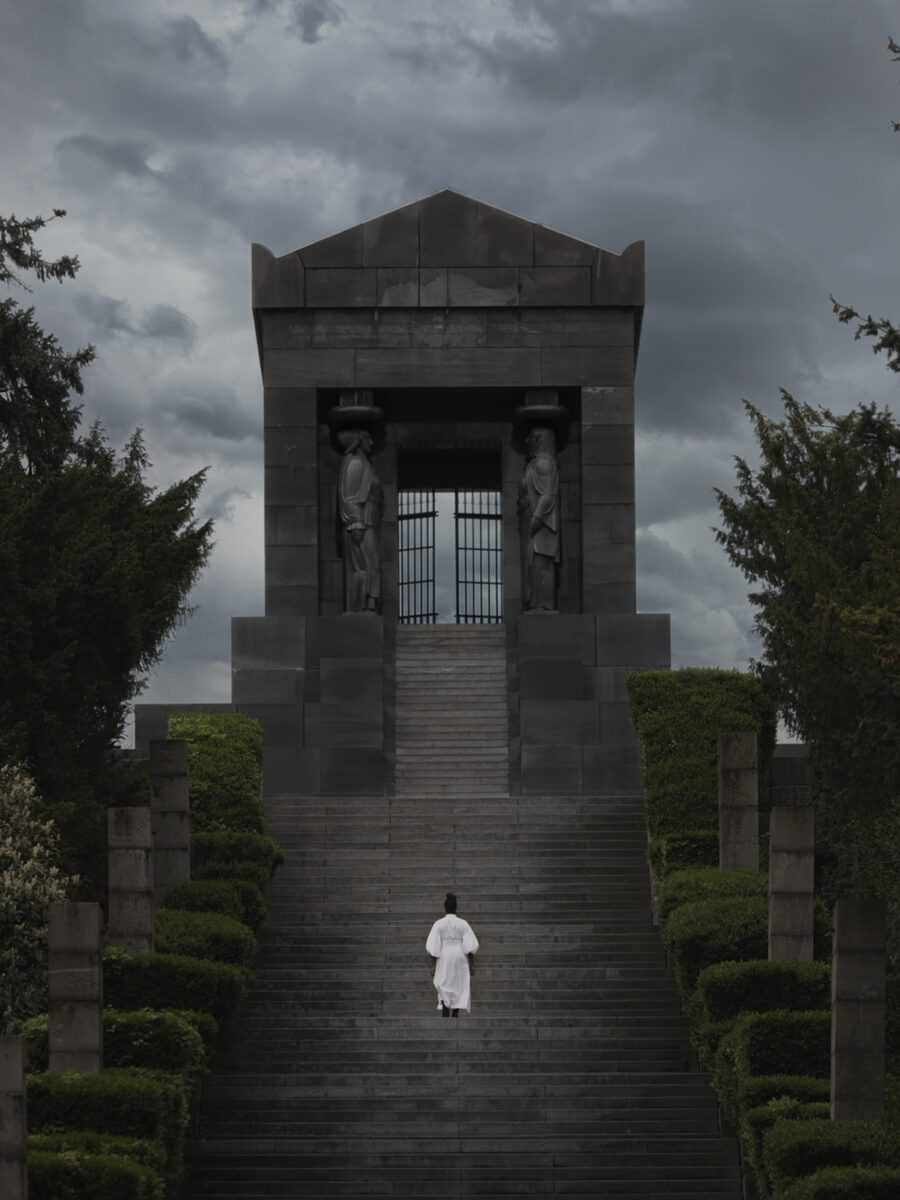
In What Does Justice Look Like?, the Triennial sharpens this inquiry into the relationship between image and legal imagination. Working alongside ECCHR, Cibic contributes to a broader conversation on how photographs operate within juridical and ethical frameworks. Here, images are active agents in the construction of public belief. They shape what can be recognised as harm, what can be narrated as history, and what can be claimed as truth. Justice is a visual regime – one that must be continually interrogated.
Taken together, these strands position Cibic not as illustrative participant but as critical pressure point within the Triennial’s wider structure. Across Hamburg, the Triennial of Photography Hamburg assembles 279 artists into a temporary ecosystem where photography is treated as relational infrastructure rather than static image field. What holds the exhibition together is not consensus, but proximity – the uneasy adjacency of works that agree only on the urgency of asking what images now do. In that sense, Alliance, Infinity, Love does not resolve into theme. And Cibic’s contribution keeps that refusal active – insisting that every image is also a negotiation, and every negotiation is already political.
The 9th Triennial of Photography Hamburg 2026 runs until 22 September: 2026.phototriennale.de
Words: Anna Müller
Image Credits:
All images courtesy of Jasmina Cibic.