Tacita Dean (b. 1965) is passionate about film. In a career that has spanned more than three decades and numerous awards, the Canterbury-born artist, now based between Berlin and Los Angeles, has created nearly 100 works on Super 8, 16mm and 35mm. But it is FILM, the monumental installation first produced for Tate Modern’s Turbine Hall in 2011, that stands as her defining tribute to the medium. Conceived at a time when analogue processes seemed in serious jeopardy of disappearing, Dean’s piece is a rallying cry for the world to take notice of photochemical motion pictures. In our current moment, where generative AI is threatening to reshape the future of cinema, this message takes on a renewed and urgent relevance.
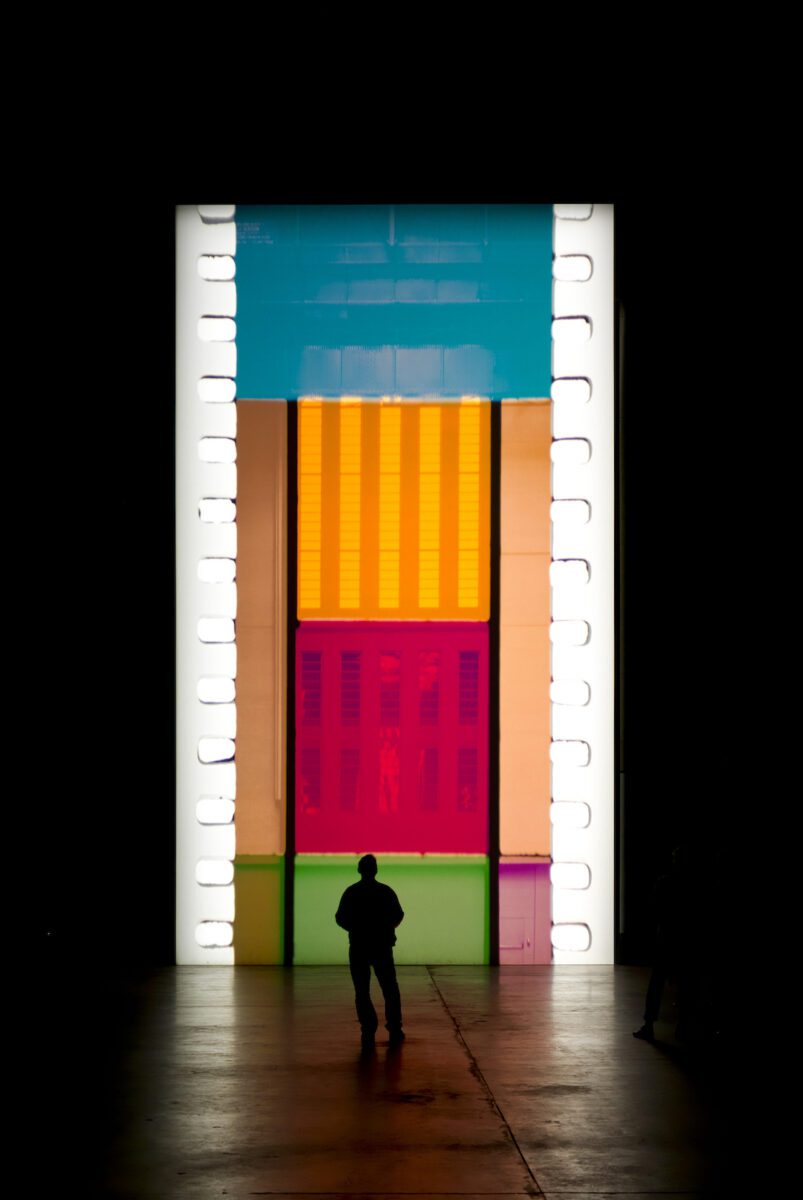
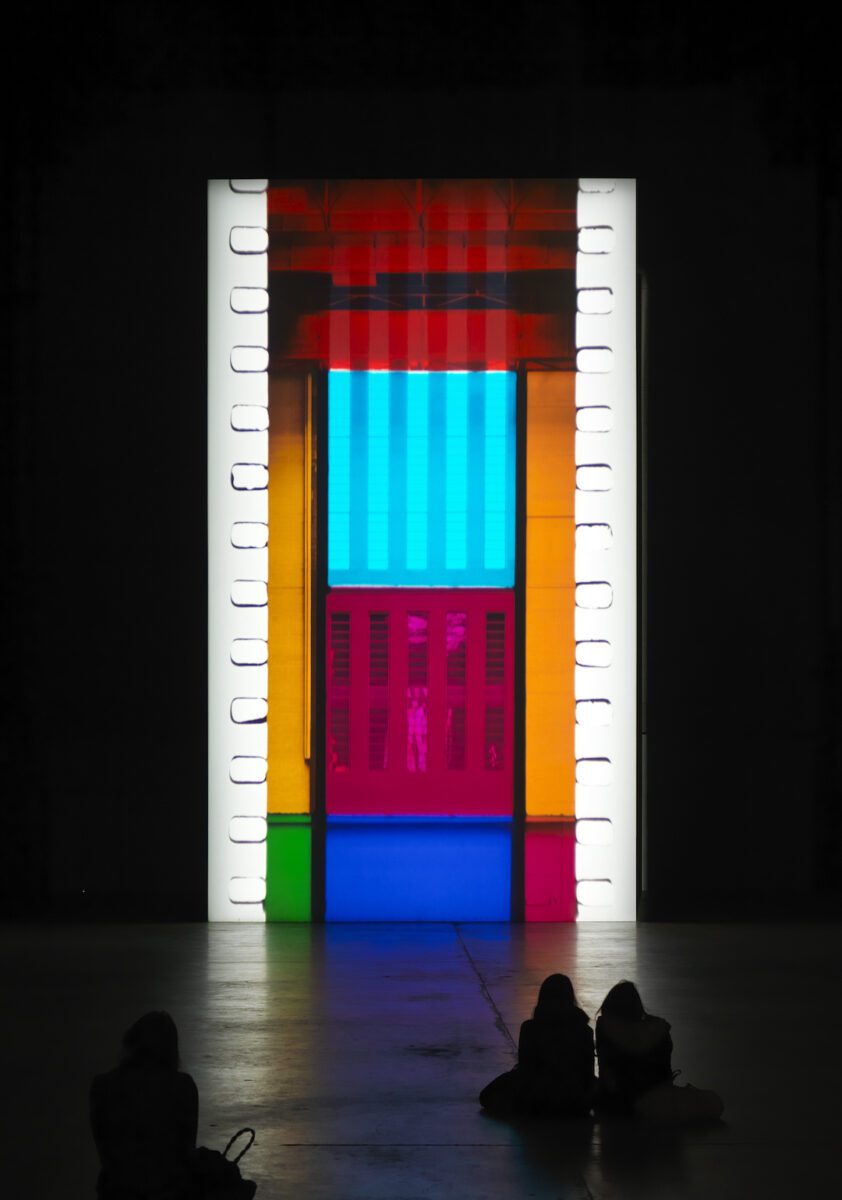
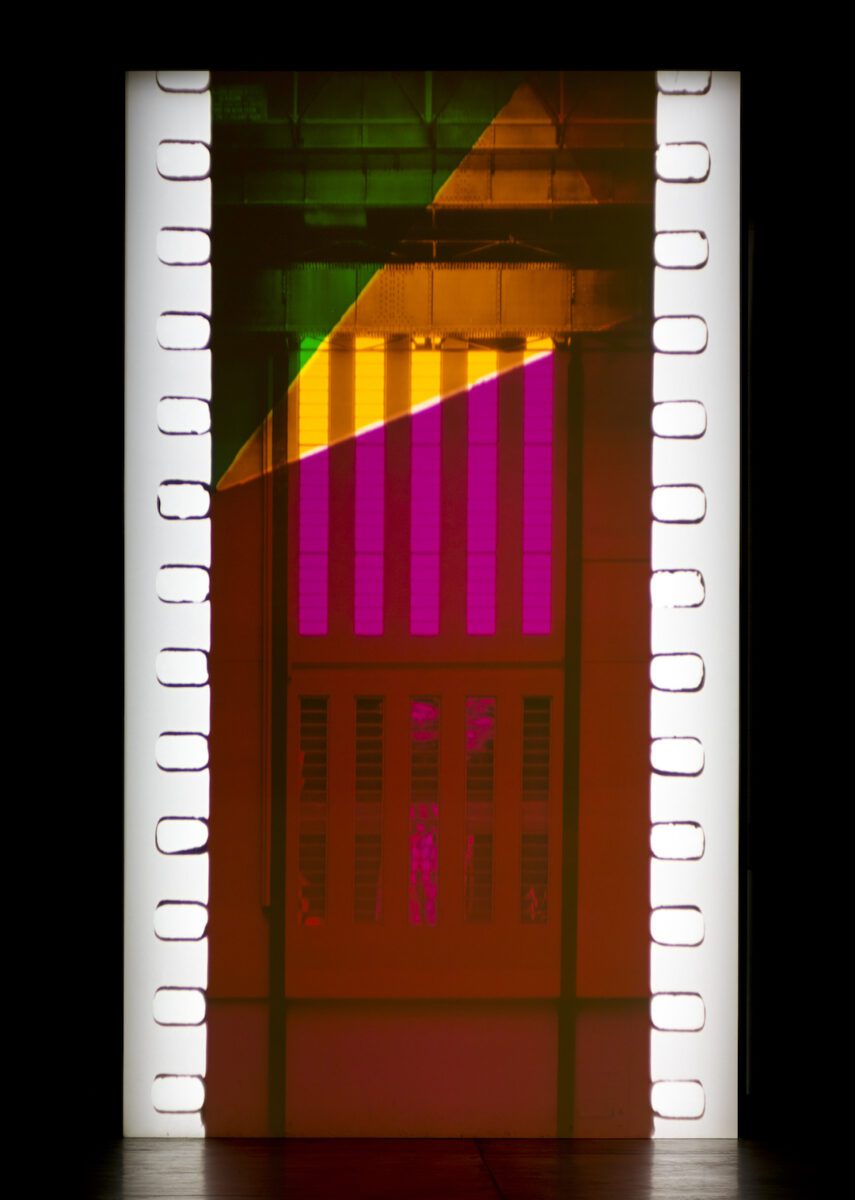
For autumn 2026, Dean’s 11-minute-long, silent 35mm piece is on view at LA’s Marciano Art Foundation (MAF). It marks the first time the work has been exhibited in the USA, where it is once again projected onto a vertical screen reminiscent of the monolith in Stanley Kubrick’s 2001: A Space Odyssey. FILM appears to emerge from the gallery floor: a towering film strip onto which a variety of images are intercut, including a waterfall, a clock, a pine tree, a smokestack, a flickering bulb, a mountain, an eye and an enormous ostrich egg. Viewers will also see colour-filtered shots of Tate Modern’s former industrial architecture, painted in translucent hues of red, blue, orange, pink and green and often arranged in Mondrian-like grids. Each scene is framed by “sprocket holes” – a normally unseen technical detail that propels film through a projector – giving the piece a tactile quality. The effect makes one thing very clear: you are watching analogue.
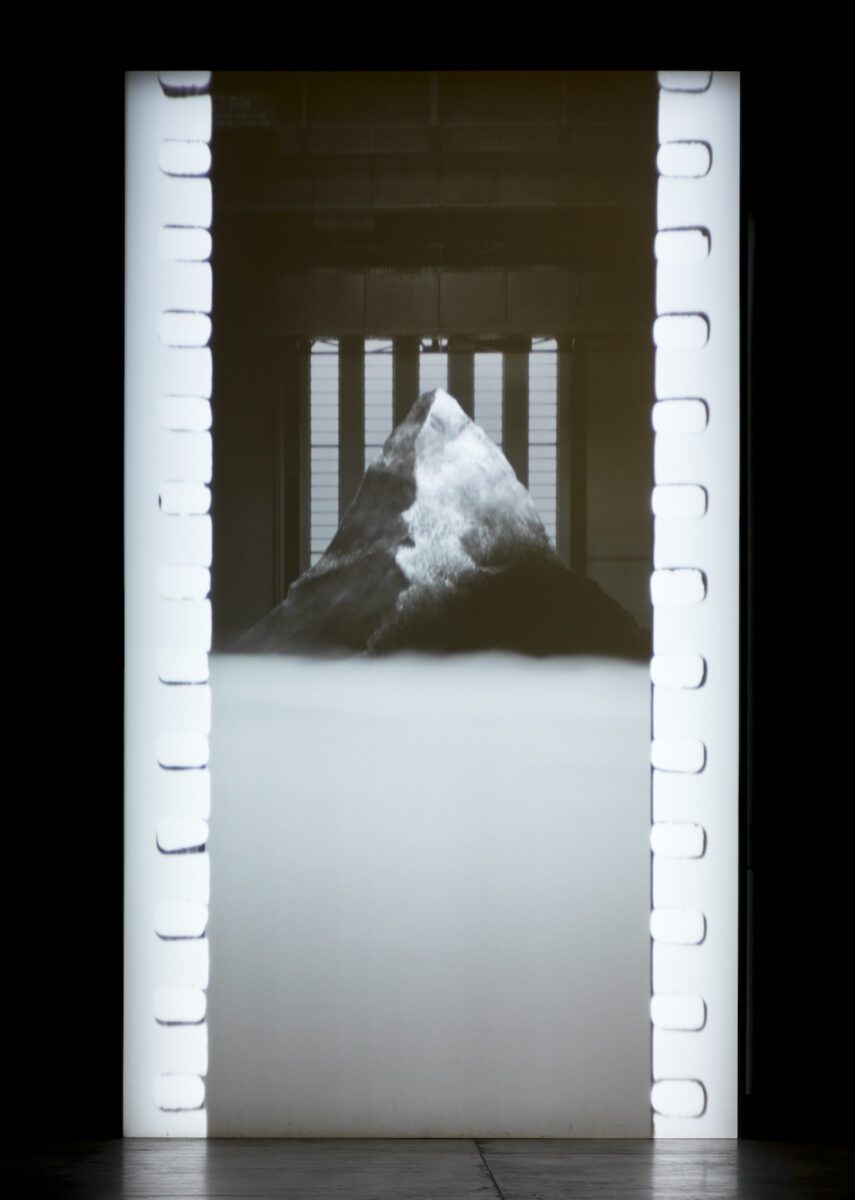
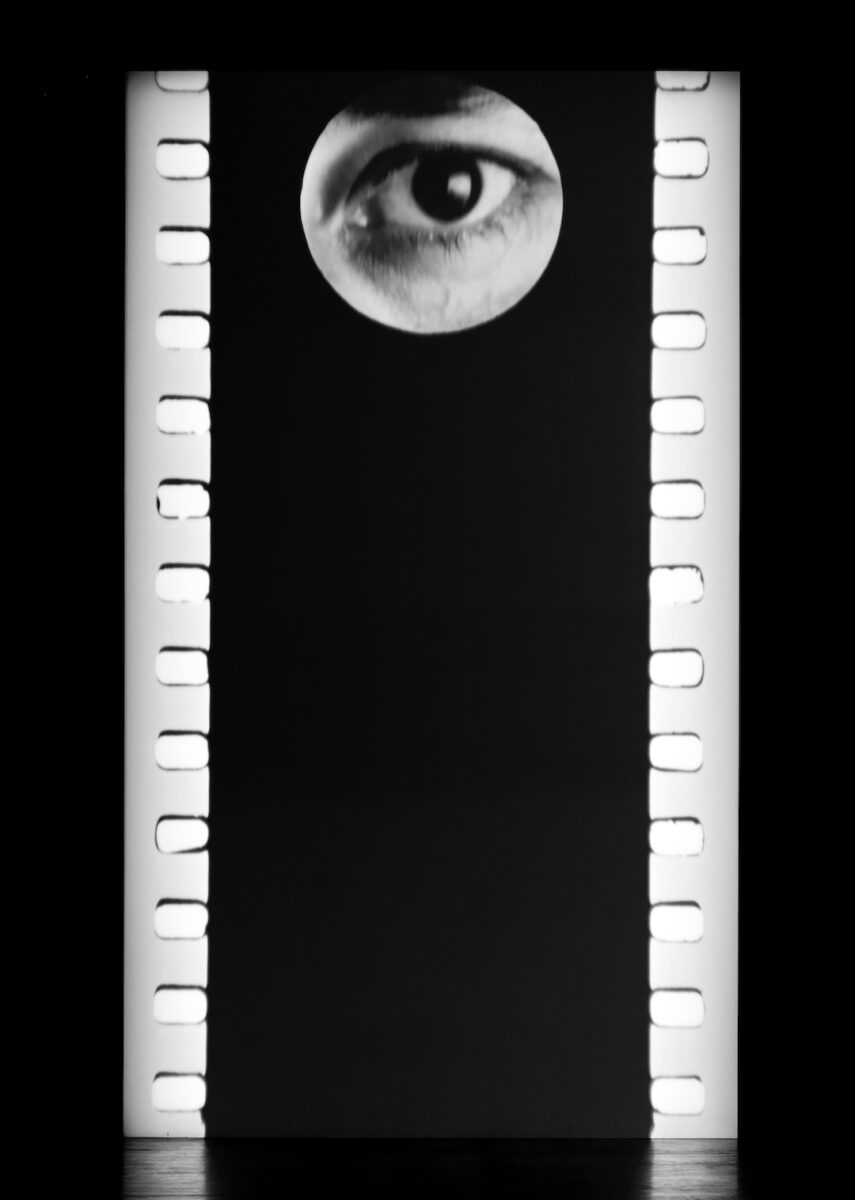
To create this mesmerising work, Dean revived early 20th century techniques from the silent era, such as glass matte painting, gate masking and in-camera superimposition of multiple images. The colossal verticality was achieved by employing an anamorphic lens – used for wide landscape format, but here turned 90 degrees – which doubled the height of the frame. This combination of now largely abandoned processes speaks to Dean’s enthusiasm about the physical qualities of her medium, impossible to emulate digitally. She says: “My relationship to film begins at that moment of shooting and ends in the moment of projection. Along the way, there are several stages of magical transformation that imbue the work with varying layers of intensity. This is why the film image is different from the digital image: it is not only emulsion versus pixels, or light versus electronics, but something deeper – something to do with poetry.”
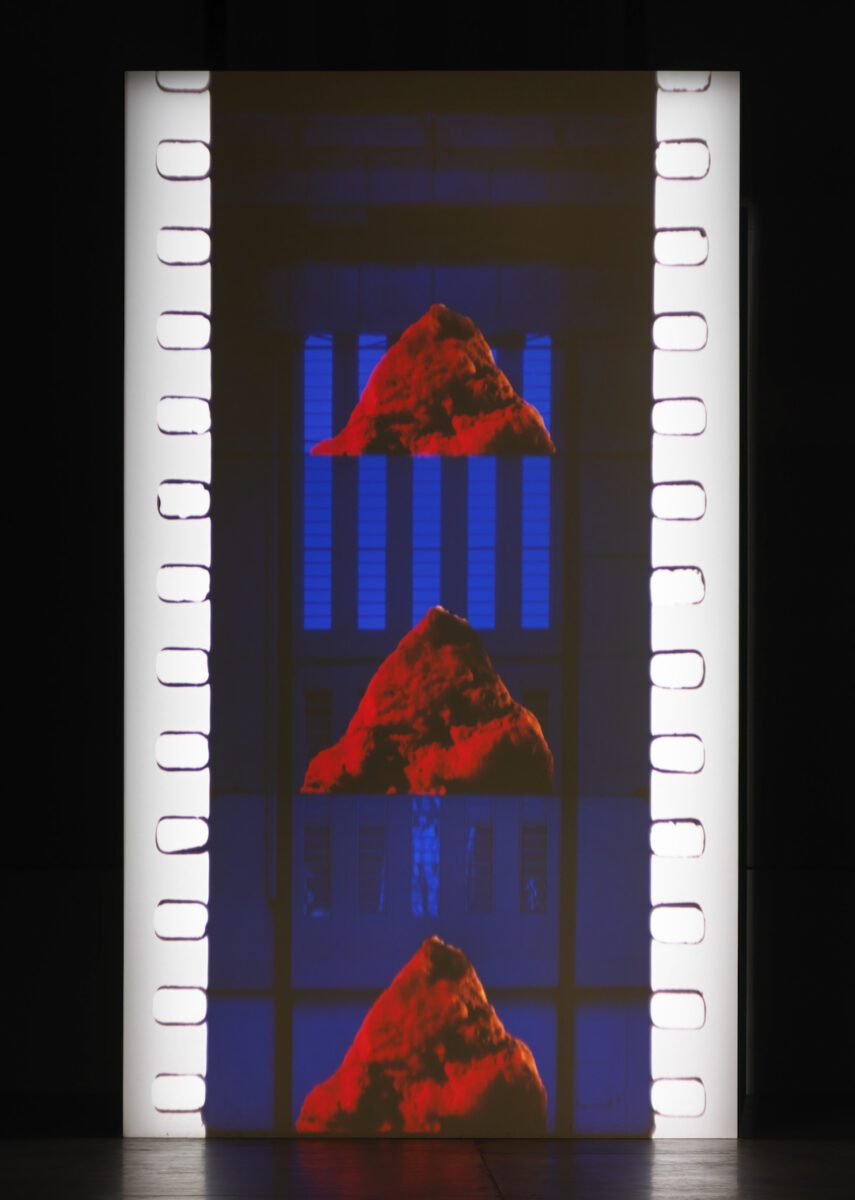
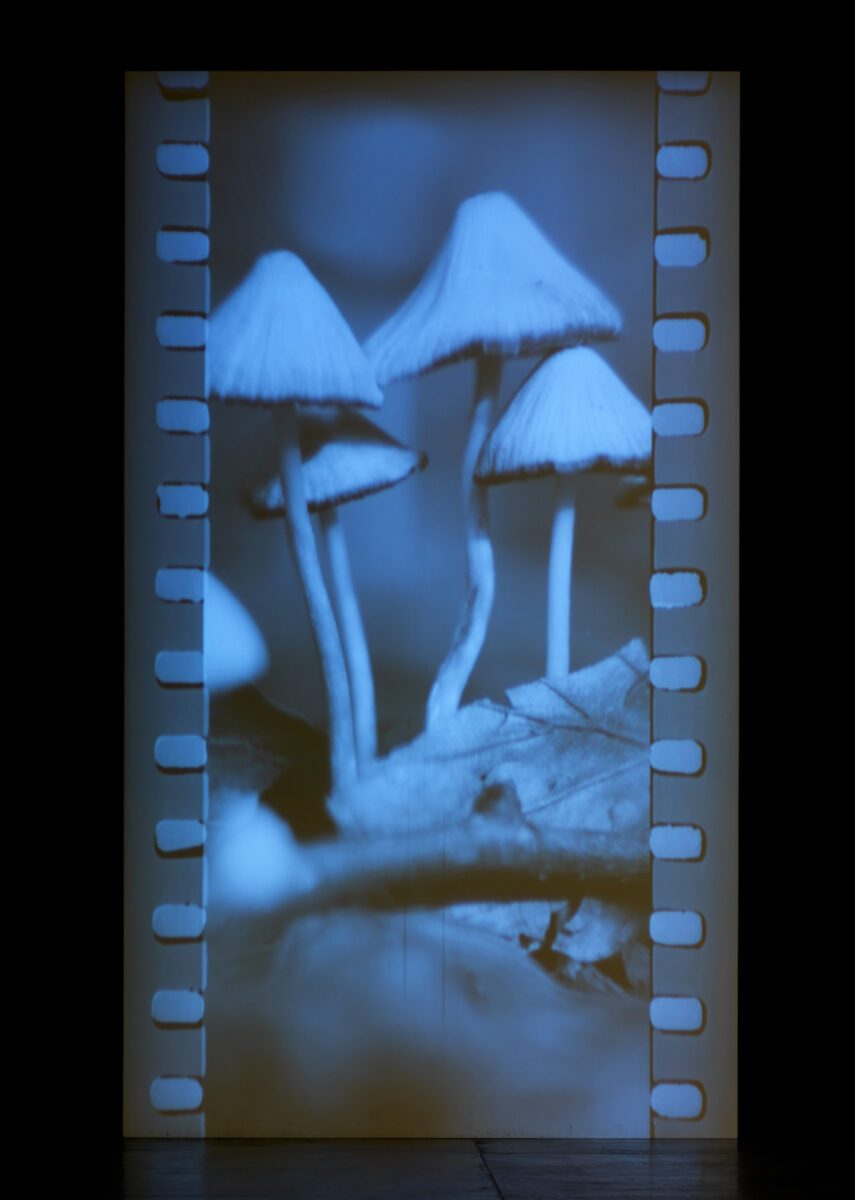
With this project, Dean joins a roster of contemporary artists in a quest to keep traditional printing and development processes alive. Recent examples include Japanese artist Hiroshi Sugimoto (b. 1948), whose Extinction exhibition in Tokyo was dedicated to the preservation of gelatin silver photography. Whilst Sugimoto’s show felt like an elegy, Dean’s piece unfolds as a celebration: a surreal collage that presents audiences with moments of absurdity, humour and surprise. As a variety of large-scale pictures flickers before their eyes, with no discernible narrative, FILM offers a welcome invitation for audiences to reconnect with the magic of cinema as it was when the medium was new, exciting and full of invention. As the gallery notes: “the end result has the effortlessness of an exhilarating magic trick.”
FILM by Tacita Dean is at Marciano Art Foundation, Los Angeles, from 18 September – 2 January.
Words: Eleanor Sutherland
Image Credits: Tacita Dean, FILM, (2011). (Still) 35mm colour and black and white portrait format anamorphic film with hand-tinted sequences, silent, 11 minutes, continuous loop. Large front projection; projection booth; free-standing screen; loop system. Commissioned as part of The Unilever Series for Tate Modern’s Turbine Hall, London, 2011- 2012. Courtesy of the artist, Marian Goodman Gallery, New York / Paris, and Frith Street Gallery, London.