

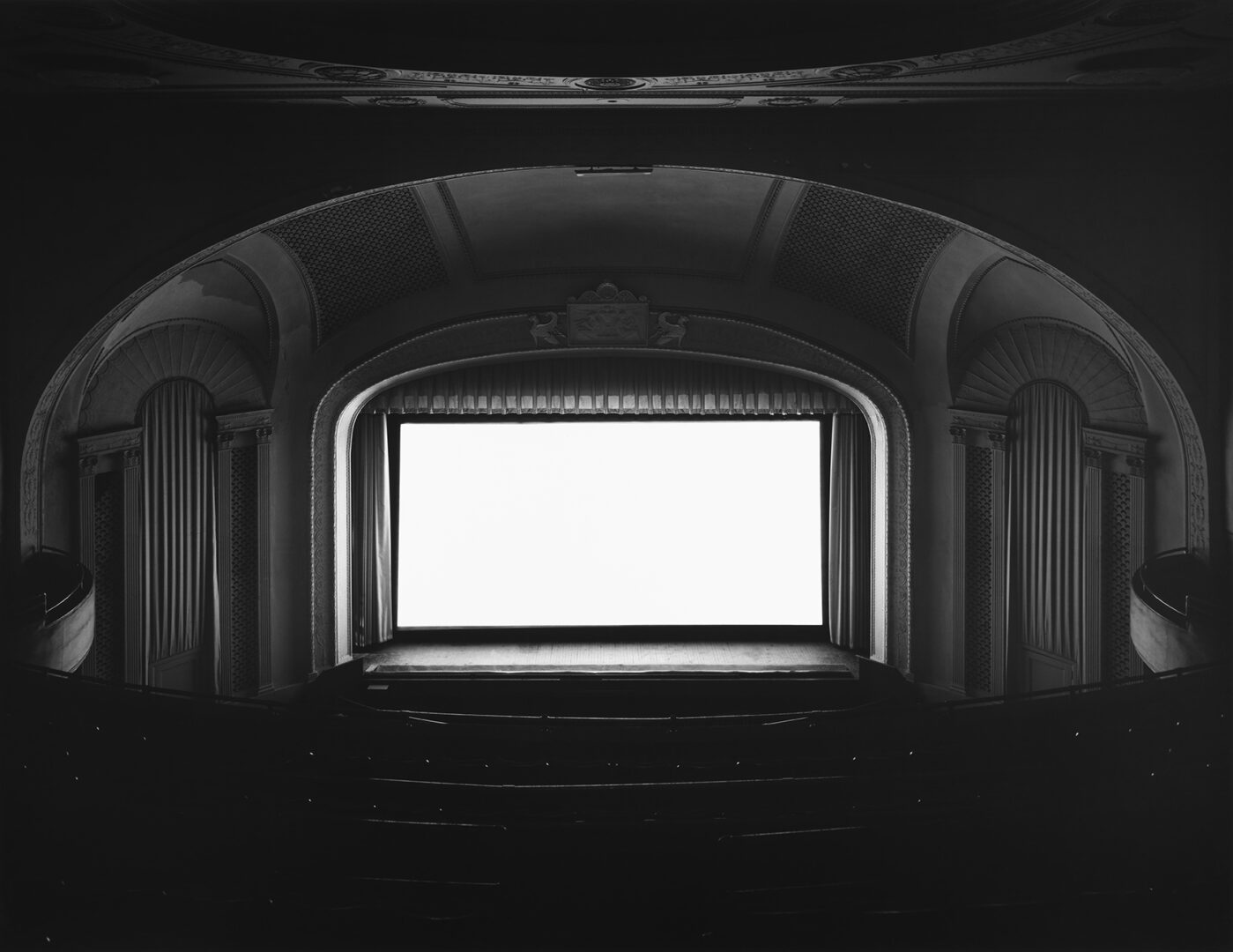
Gelatin silver photography is a traditional black-and-white printing and developing process, introduced in the late 1800s. Today, as digital images dominate and billions of pictures are shared online daily, the technique is considered to be “historical” – although it is being kept alive by a select number of dedicated darkroom artists. Hiroshi Sugimoto (b. 1948) is one such practitioner. The technique is the backbone of his oeuvre, and forms the focus of a major show this summer at The National Museum of Modern Art, Tokyo.
This exhibition features approximately 60 photographs from Sugimoto’s early days in the late 1970s right up to now. It is the largest-scale solo presentation of the artist’s work to be held in Japan since 2005, and its theme is “extinction” – a direct reference to the precarious future of his medium. “When I came into this world, gelatin silver photography was flourishing,” Sugimoto reflects. “Now that I am about to leave this world, the curtain is coming down on it.” However, the retrospective also references other forms of loss – from the closure of cultural institutions to the threats faced by ecosystems due to the climate crisis.
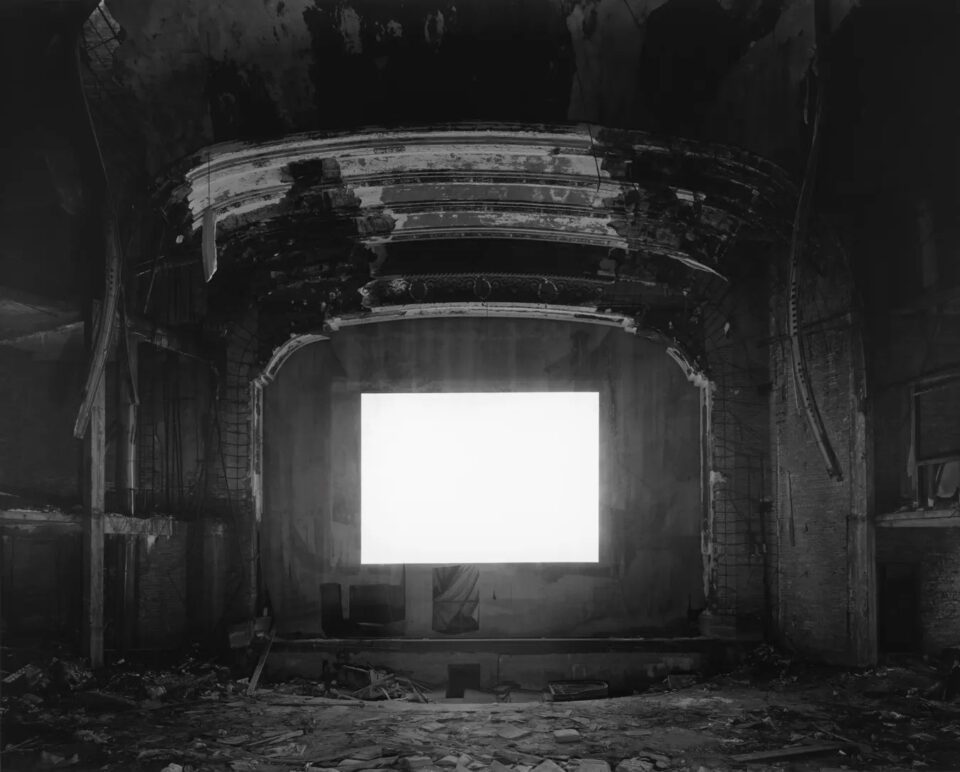
The show includes key works such as Theaters, one of Sugimoto’s best-known series. It emerged from a thought: “What would happen if I photographed an entire movie?” The artist guessed the result would be a glowing screen, and, after capturing an entire movie from start to finish using a long exposure, he found he was right. The whole story had been reduced to a single rectangle of shining white light. Theatres from the golden age of the movies were his shooting locations, including the U.A. Playhouse in New York, Hollywood’s Cinerama Dome and The Palace Theater in Gary, Indiana. The latter opened in 1925 as the city’s premier cinema, seating nearly 3,000 people. The structure has now been closed for over 50 years. Its magnificent decoration – now crumbling – is even more striking when lit by the glowing screen.
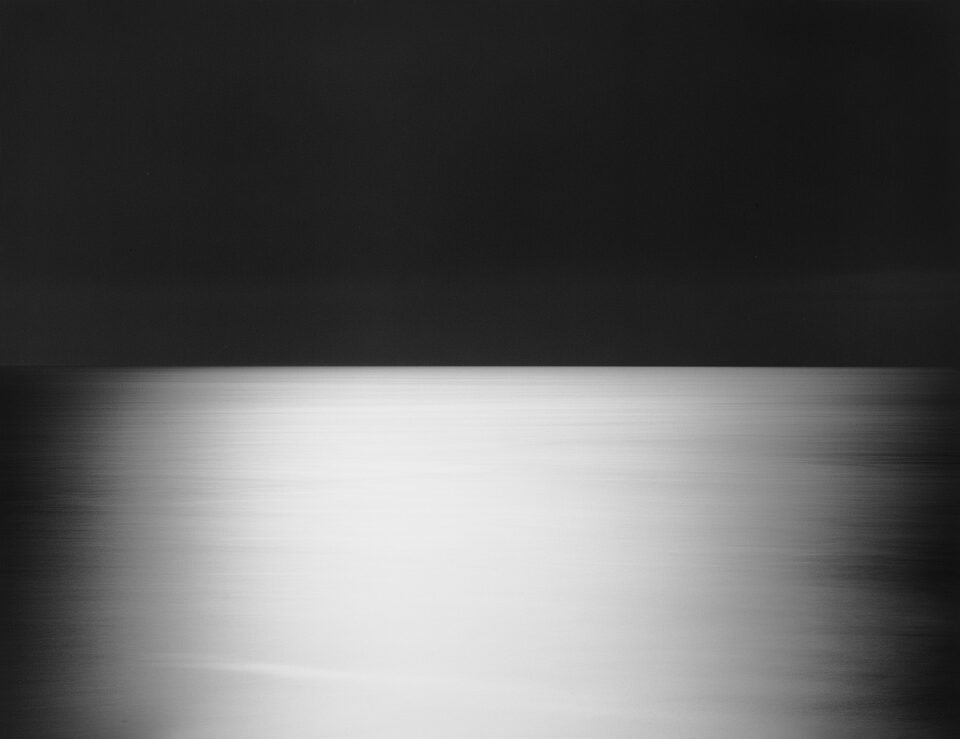
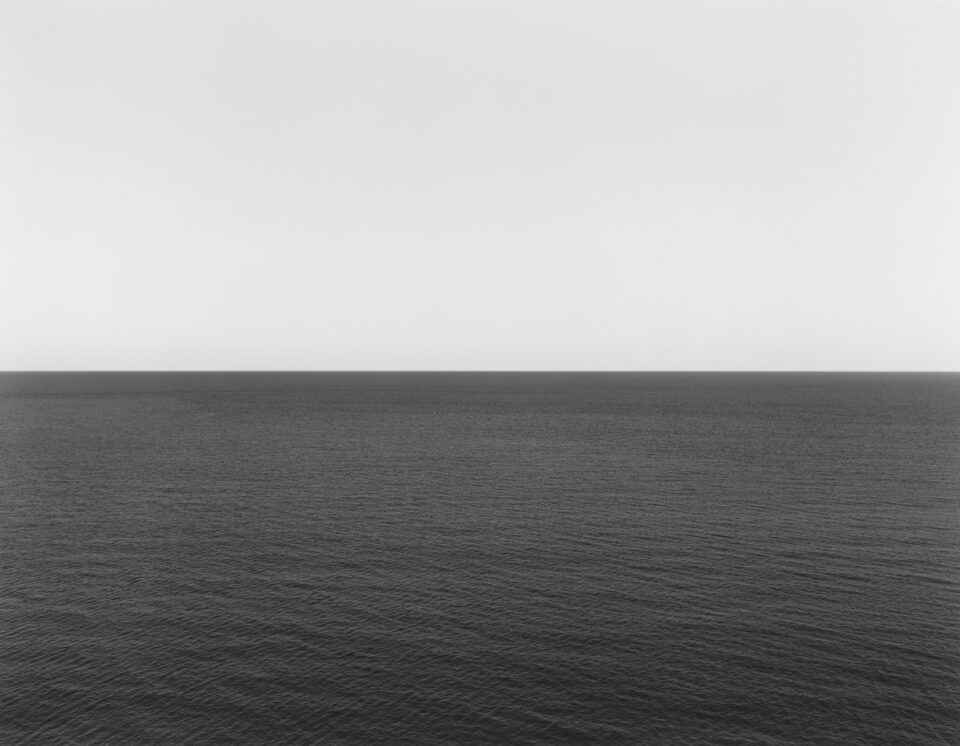
Another standout is Seascapes, a collection of images split by the horizon – with the lower half depicting the sea, and the upper showing the sky. All other elements are excluded. This body of work is the answer to another of Sugimoto’s questions: “Is it possible for people today to see the same scenes that primitive humans once saw?” Here, he uses photography as a time-travel device to transport us to prehistoric times. Caribbean Sea, Jamaica (1980) is the first entry in the series, and since then he has documented seascapes around the world with the same compositional arrangement. The project is still ongoing.
Audiences will also come face-to-face with Dioramas, which records display cases at the American Museum of Natural History in New York. Sugimoto presents immobile taxidermy creatures – and their constructed habitats – as if they were living and breathing scenes. “No matter how fake something appears, the minute you photograph it, it becomes a real-life image,” he notes. The same idea is expanded upon in Portraits, shot at Madame Tussauds in London, as well as other similar museums. “If I can photograph a stuffed polar bear and make it seem alive, I’m pretty sure I can do the same thing for a wax figure,” he says. Amongst the “people” depicted in the series are Anne of Cleves, Diana, Princess of Wales and Fidel Castro.
Fashion is another subject explored in the show. Sugimoto takes a characteristically unconventional perspective on clothing, looking “at the human body and the artificial pelts in which it is dressed as a piece of modern sculpture.” Elsewhere in the display are images of icons of 20th century modernist architecture – including the Villa Savoye, Le Corbusier’s most famous structure. Sugimoto uses a large-format camera and blurring to “recreate the architect’s mental vision of a building before it was actually built.” His out-of-focus shot of the World Trade Center, made in 1997, is a particularly poignant addition.
Sugimoto’s deep engagement with photographic history runs through Extinction. In Opticks, viewers experience his attempt to recreate Isaac Newton’s (1643-1727) 17th century light spectrum experiment, for which the scientist used a prism to prove that white sunlight is composed of individual colours. Sugimoto has also made positive images from William Henry Fox Talbot’s (1800–1877) pioneering negatives. “In order to bear witness to silver-halide photography’s demise, as self-appointed chairman of the funeral committee, I am toiling away in the crematorium (darkroom), convinced that the smell of chemicals is in fact the aroma of incense, as I print the negatives of Fox Talbot, the father of photography.”
In Extinction, Sugimoto turns a supposedly obsolete technique into the perfect tool for talking about disappearance and memory. Theatres have closed, wax figures stand in for people who are dead and extinct animals appear animated. At the same time, there is life – ancient seas remain visually unchanged and historic images are resurrected for new audiences. This is the paradox at the heart of the show: Sugimoto is documenting the last days of his medium whilst finding new ways to make it feel alive. He never stands still – looking backwards to understand what has been lost, whilst always pushing forwards.
Hiroshi Sugimoto: Extinction is at The National Museum of Modern Art, Tokyo, until 13 September.
Words: Eleanor Sutherland
Image Credits:
1. Hiroshi Sugimoto, U.A. Playhouse, New York, 1978, gelatin silver print, 119.4 × 149.2 cm
2. Hiroshi Sugimoto, Bay of Sagami, Enoura, 2025, gelatin silver print, 119.4 × 149.2 cm
3. Hiroshi Sugimoto, Palace Theater, Gary, 2015, gelatin silver print, 119.4 × 149.2 cm
4. Hiroshi Sugimoto, Caribbean Sea, Jamaica, 1980, gelatin silver print, 119.4 × 149.2 cm


