Mark Ellen Mark (1940 – 2015) is one of the most influential photographers of the 20th century. For four decades, she turned her lens upon those marginalised, overlooked and neglected by society. This month, her iconic works are on display alongside self-taught Turkish artist Sabiha Çimen (b. 1986) at Howard Greenberg Gallery in New York. Sabiha Çimen and Mary Ellen Mark: The Girls highlights the universal nature of being a girl, captured by two artists separated by time and geography. The photographers never met, but their careers intertwined briefly in 2012, when Çimen was asked by a curator to locate a Turkish girl photographed by Mark in 1965. The curator was curious about subject’s life. Çimen, who was not yet a photographer, successfully located Mark’s now grown sitter. By then, Emine was a grown woman, married, with children of her own. She recalled the encounter with remarkable clarity. As a child playing in the street, she remembered a foreign “tourist looking” woman elegantly dressed, carrying a camera who spent time with them, gently observing and photographing. Only years later did that brief meeting reveal its lasting significance. This anecdote is an interesting place to start an exhibition, offering a poignant reminder that iconic photographs do not exist in a vacuum. They extend beyond the realm of contemporary art, influencing the lives and communities they capture long after the artist presses the shutter.
Born in Philadelphia in 1940, Mark is one of the most influential photographers of the late 20th century. Her documentary works and portraits were exhibited worldwide and in publications including LIFE, The New York Times Magazine and The New Yorker. Her photo essay on runaway children in Seattle – one of 21 books she published – became the basis of the Academy Award-nominated film Streetwise. Mark was a member of Magnum Photos from 1977 – 1981, spotlighting her as one of the defining voices of her generation. Her images of diverse cultures across the world have become landmarks in the field of documentary photography, whilst her portrayals of Mother Teresa, Indian circuses and brothels in Bombay mark her out for a distinct eye for the moments that distal our shared humanity.
The Girls presents some of Mark’s most iconic works, including a selection from Streetwise, the 1983 project focusing on the lives of homeless children in Seattle and Prom, a sweeping look at American prom cultural between 2006 and 2009. Particularly poignant are the shots from Ward 81, a series that marks a departure from her usual focus on youth and childhood. The 1976 project documented the lives of female patients at the Oregon State Mental Hospital, the only locked ward for women in the state. Mark took on the assignment with sociologist Dr Karen Folger Jacobs, spending a month alongside the women in an attempt to better understand and represent their life experiences. They had extraordinary access, producing images that reveal the often-porous line between sanity and mental illness for those relegated to the margins of society. As Jacobs said: “They are the women we might have been or one day become.” The images are startlingly intimate, revealing both the beauty and brutality of life for these women: in one shot, two figures dance together, in the next, a patient is shown tied to their bedframe with leather cuffs.
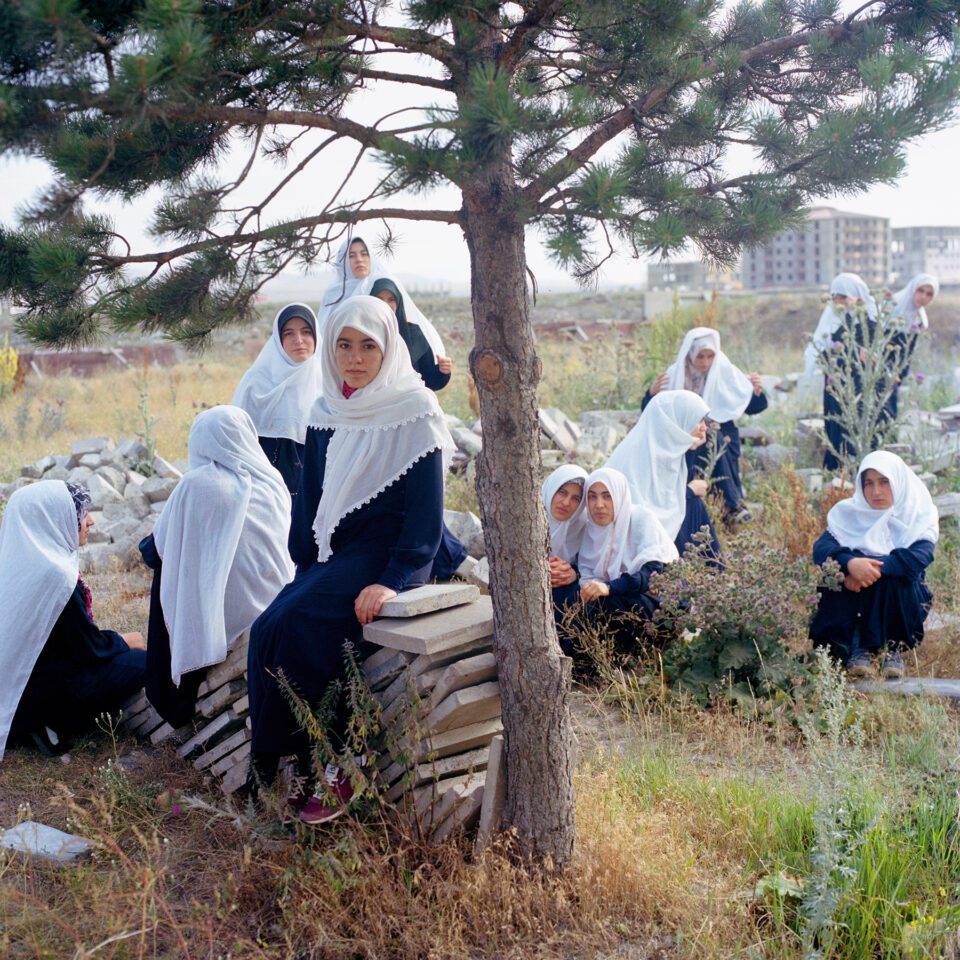
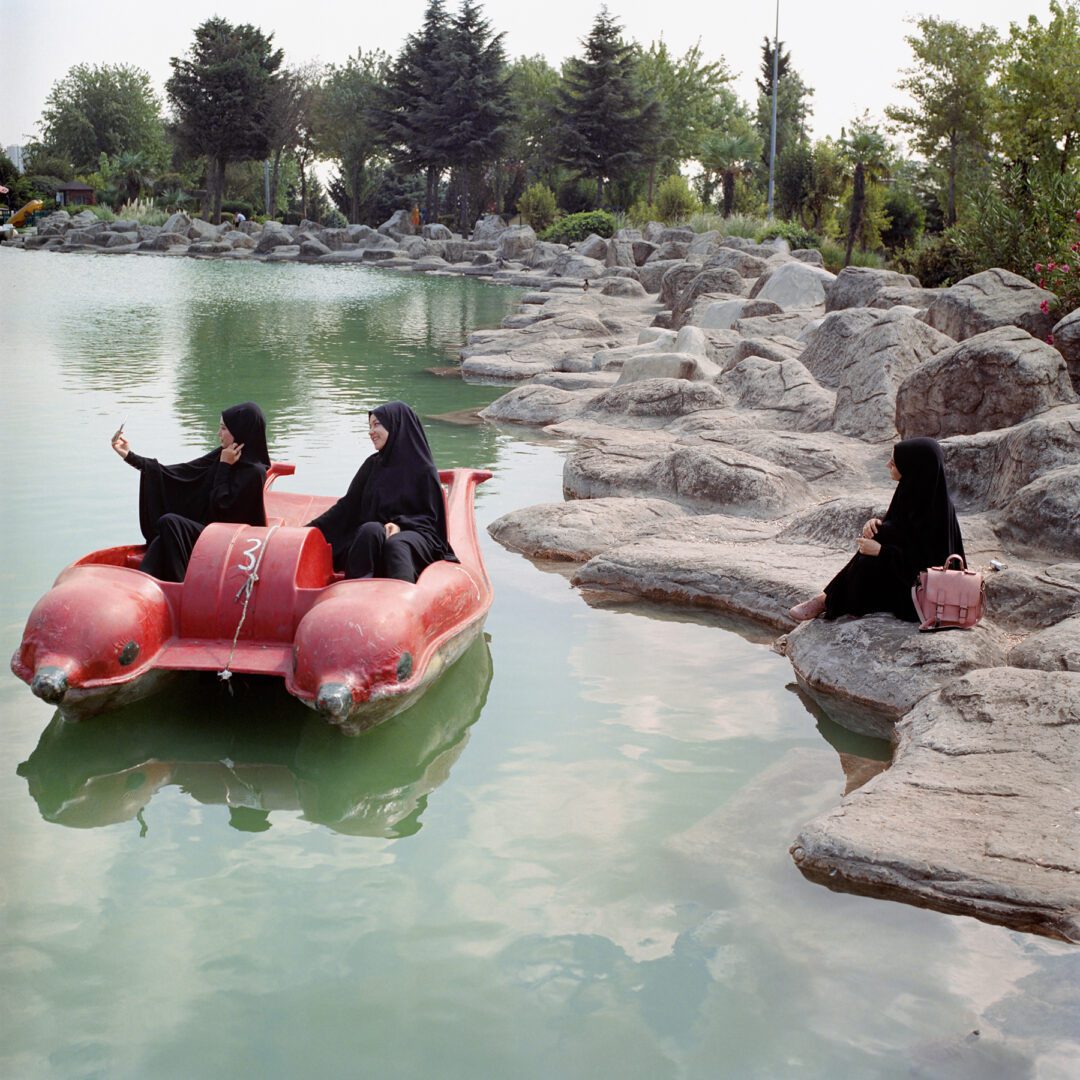
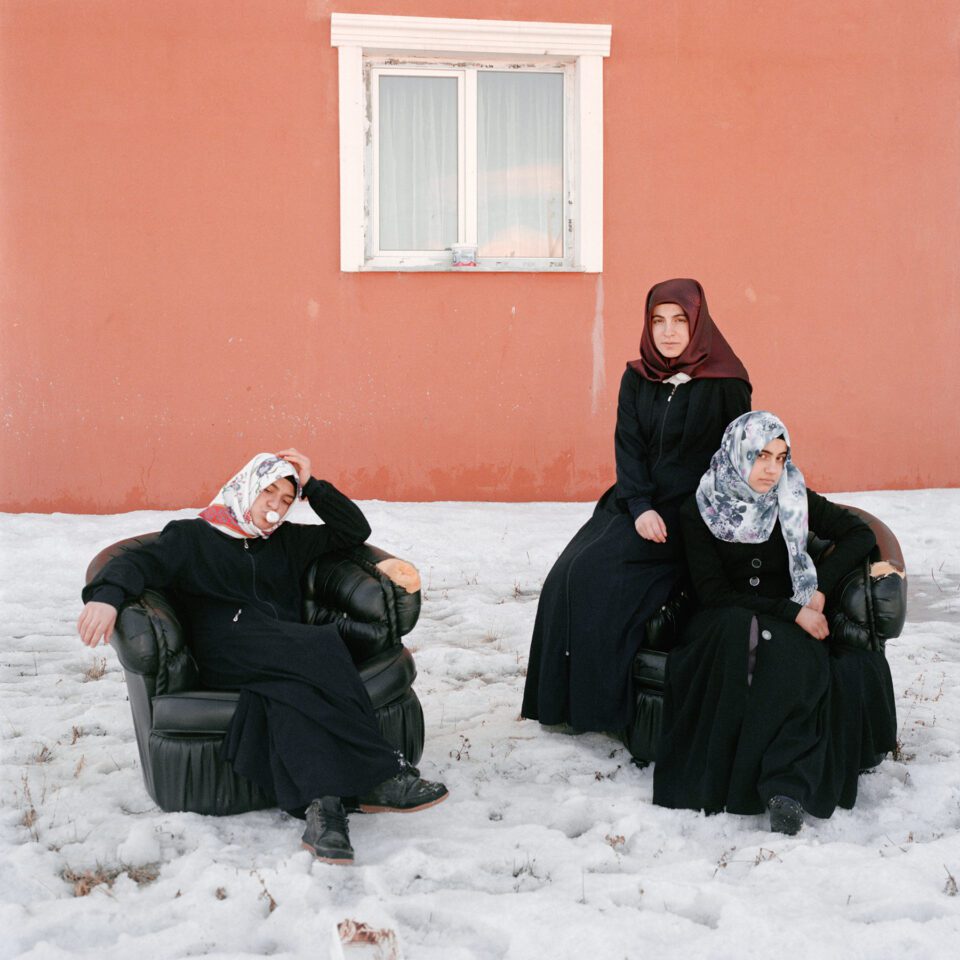
Mark’s black-and-white works are complemented by a flood of pastels from Çimen. The artist explores women, Islamic culture, portraiture and still life through deeply introspective and visually poetic projects. Her images of girls’ Qur’an schools – collected in her award-winning 2021 series Hafiz – explore a world that is marked by strict routine yet continues to be playful. Here, young girls take selfies, whilst enjoying leisure time on a lake, or roller-skate on the school yard. Çimen captures the universality of girlhood, a feeling that transcends cultures or countries. The artist says: “across different generations and geographies, Mary Ellen Mark and I share curiosity about the inner lives of girls. The delicate threshold of girlhood exists in a suspended moment between innocence and self-discovery. While our photographs were made in different worlds, Mary Ellen and I meet in a shared attention to the emotional terrain of growing up, the inner world of girls where vulnerability, imagination and resilience quietly unfold.”
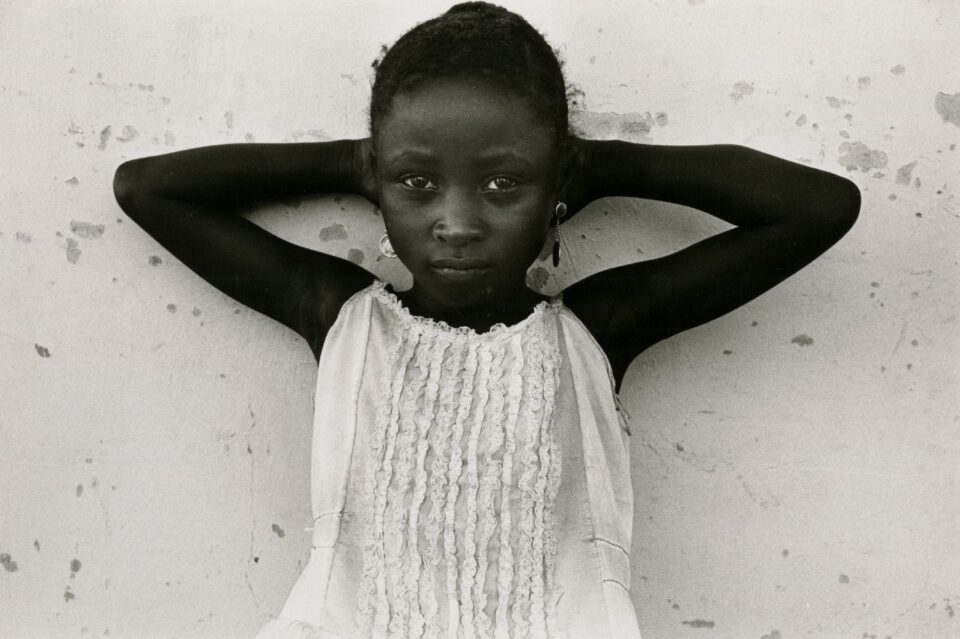
Sabiha Çimen and Mary Ellen Mark: The Girls is a celebration of the timeless activities of girlhood. Separated by decades and continents, the two artists are nevertheless united in their focus. Neither shy away from the often-excruciating complexities or awkwardness of growing up, instead framing it as something to be celebrated. Mark once said: “What I’m trying to do is make photographs that are universally understood … that cross cultural lines. I want my photographs to be about the basic emotions and feeling that we all experience.” Howard Greenberg’s exhibition is a testament to this sentiment – reminding audiences of Mark’s ability to speak to our shared humanity, and spotlighting Çimen as following this rich tradition.
Sabiha Çimen and Mary Ellen Mark: The Girls is at Howard Greenberg Gallery, New York until 9 May.
Words: Emma Jacob
Image Credits:
1. Sabiha Çimen, Students having fun at an artificial lake during a weekend event. Istanbul, 2018 © Sabiha Çimen, Courtesy of Howard Greenberg Gallery, New York.
2. Sabiha Çimen, Students relaxing at break time. Kars, 2018 © Sabiha Çimen, Courtesy of Howard Greenberg Gallery, New York.
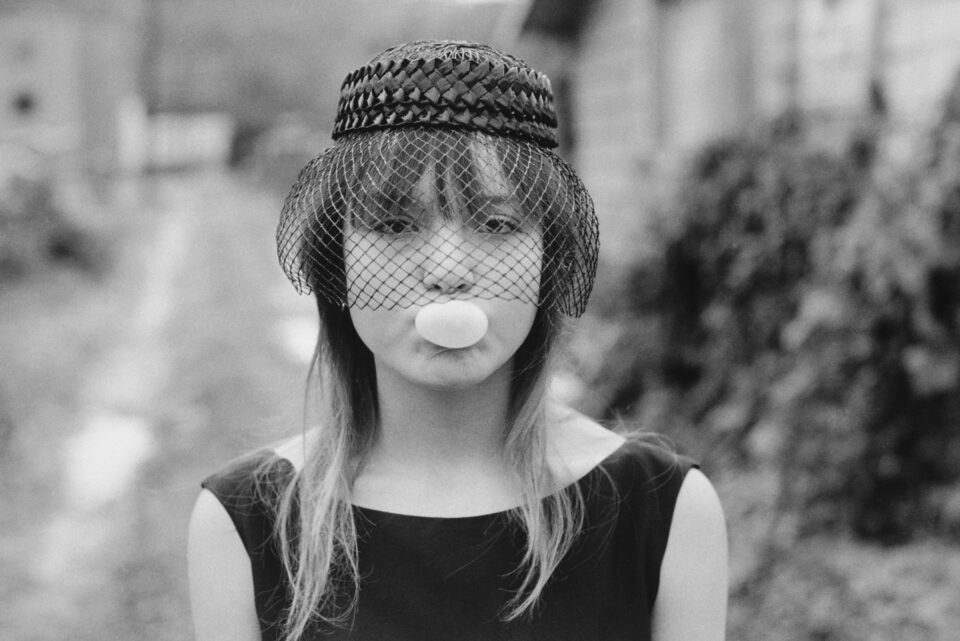
3. Mary Ellen Mark, Tiny blowing a bubble (during “Streetwise”), Seattle, 1983. Gelatin silver print; printed later, 11 x 14 in. © Mary Ellen Mark Library, Courtesy of Howard Greenberg Gallery, New York
4. Sabiha Çimen, Girls singing Kurdish love songs together at noon break, after prayers, in the backyard of the Quran school. Kars, 2018 © Sabiha Çimen, Courtesy of Howard Greenberg Gallery, New York.
5. Mary Ellen Mark, Gasoline Station Owner’s Daughter, Zaria, Nigeria, 1973. Gelatin silver print; printed c.1973, 20 x 30.2 cm © Mary Ellen Mark Library, Courtesy of Howard Greenberg Gallery, New York.