The late Japanese composer Ryuichi Sakamoto (1952-2023) is remembered as a pioneer of experimental music who repeatedly redefined the boundaries between sound, film, performance and visual art. He gained international recognition in Tokyo in the late 1970s, as a co-founder of Yellow Magic Orchestra, a pioneering trio that combined electronic music, synthesiser technologies and digital production methods in previously unknown ways. They are known for landmark releases such as Yellow Magic Orchestra (1978), Solid State Survivor (1979) and Technodelic (1981). Sakamoto investigated the potential of instruments, computers and global communication platforms before terms such as “techno” became commonplace.
Outside of Yellow Magic Orchestra, Sakamoto forged a solo career, composing film scores for acclaimed directors such as Alejandro González Iñárritu, Bernardo Bertolucci and Nagisa Oshima. He won numerous prestigious accolades, including an Academy Award for The Last Emperor (1987), two Golden Globes and a Grammy. From the 2000s onwards, he began to explore audio as an art form, developing three-dimensional sound environments, often in collaboration with creatives such as Carsten Nicolai, Shiro Takatani, or filmmaker Apichatpong Weerasethakul. Now, an exhibition at Berlin’s Hamburger Bahnhof, seeing sound, hearing time, foregrounds these works. The uniting theme is the importance of listening across Sakamoto’s practice – whether that be to other people, technological developments, history or nature.
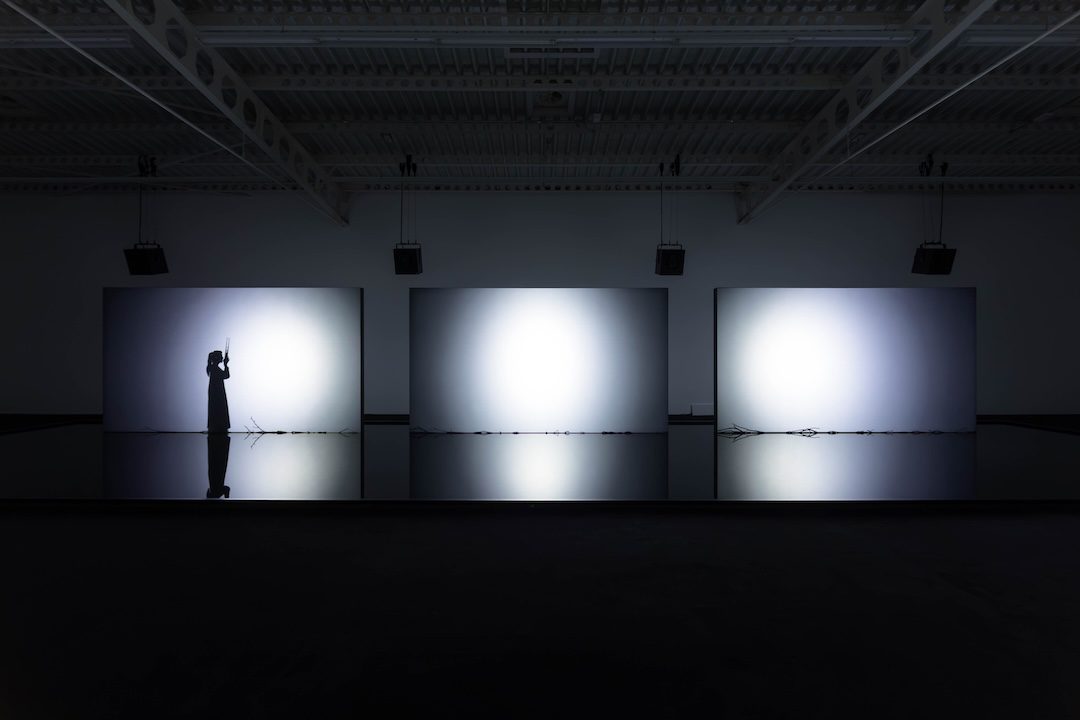
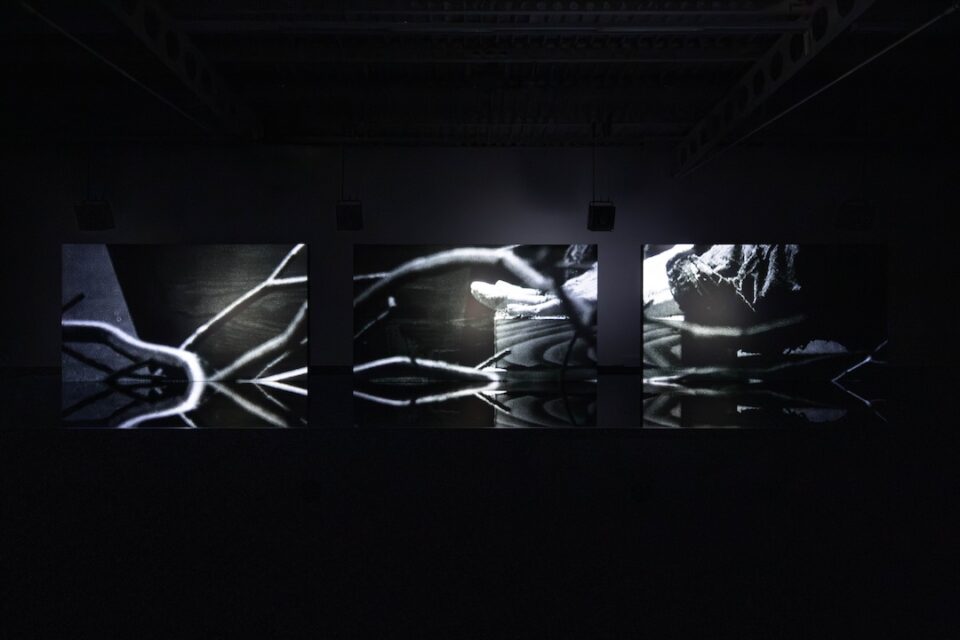
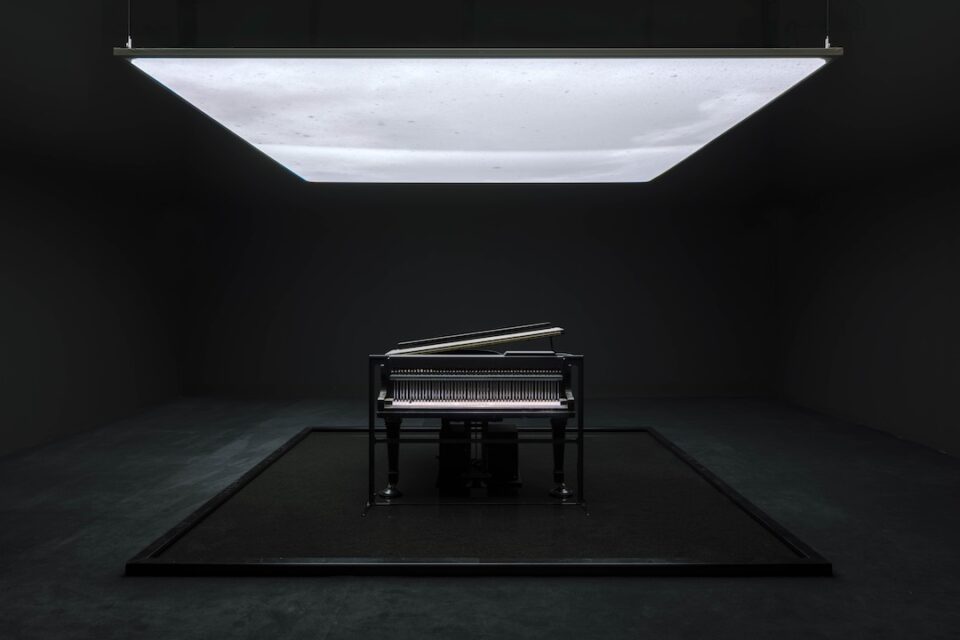
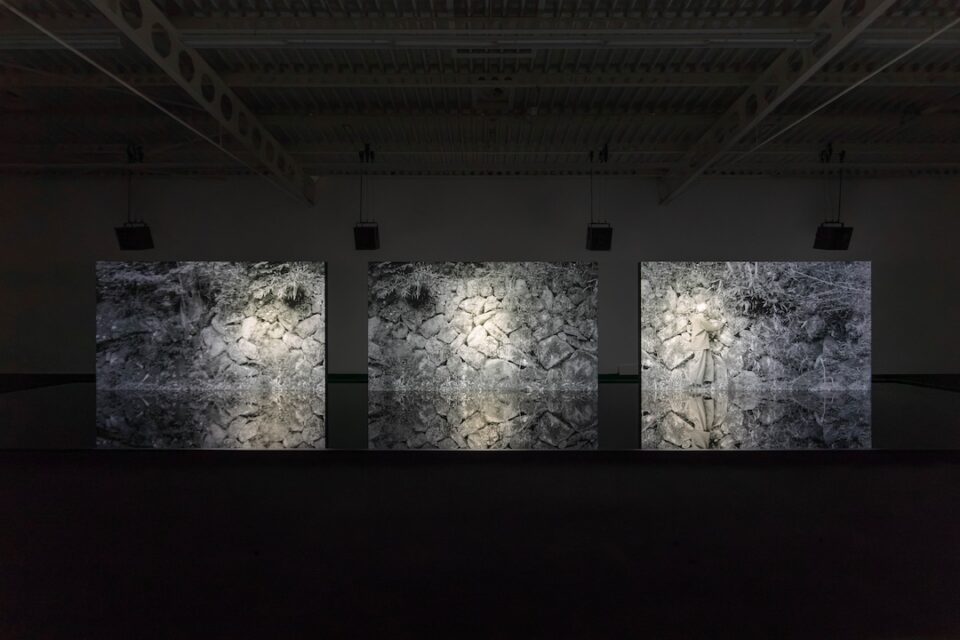
Spanning around 1,500 square metres, audiences will encounter seven works within five large-scale installations, including vast pools of water and a huge video wall. These pieces are shaped by Sakamoto’s experience of illness, his confrontation with mortality and the effects of ecological crises. IS YOUR TIME (2017/2024) is a prime example. An out-of-tune piano – badly damaged by the Great East Japan Earthquake and subsequent tsunami in 2011 – stands in a body of water, as an automated playing device strikes the keys based on seismological data from tremors all over the world. Water was a recurring motif in Sakamoto’s work, “as the source of life, the bearer of memory and a symbol of constant change.” It likewise appears in TIME, TIME (2024), developed in collaboration with Takatani, co-founder of Dumb Type, an artist collective established in 1984 in response to rapid technological development. Three projections show dancer Min Tanaka and shō player Mayumi Miyata performing on a liquid-drenched stage.
Visitors move through a series of similarly immersive worlds, where sound and image converge. async–immersion (2023), for example, unfolds across a monumental 18-metre-long LED wall. Composed by Takatani, a stream of images drawn from photographs of objects in Sakamoto’s New York studio accompanies music from the artist’s album async (2017), played through a multi-channel speaker system that fills the space. The installation is followed by another response to the album, this time by Weerasethakul. async–first light (2017) brings together images of people at film screenings, streetscapes, animals and more. Its companion film, Durmiente (2021), depicts actor Tilda Swinton falling asleep in a scene originally captured in connection with Weerasethakul’s acclaimed feature film Memoria (2021).
The show closes with a room dedicated to the relationship between Sakamoto and Berlin-based artist Carsten Nicolai, who collaborated closely for more than 20 years. Drawing inspiration from Jules Verne’s science-fiction novel Twenty Thousand Leagues Under the Sea, Nicolai is currently working on an essayistic film installation, from which the videos PHOSPHENES, featuring abstract visuals, and ENDO EXO, with footage of specimens from the Berlin Natural History Museum, are presented. Each employs one of two tracks from Sakamoto’s final studio album 12, a sonic diary created between 2021 and 2022.
This is the first major presentation of Sakamoto’s work in Europe, offering audiences an introduction to a figure who continually expanded the possibilities of music. His installations liberated sound from the fixed structures of a concert performance, transforming it into an experience shaped by space, image and movement. Yet what emerges most strongly is the importance of human connection. Through decades of collaboration, Sakamoto forged creative relationships that extended the possibilities of his own practice by uniting different perspectives and disciplines. seeing sound, hearing time is a fitting tribute to a true trailblazer, whose legacy lives on through the people and ideas he brought together.
Ryuichi Sakamoto: seeing sound, hearing time is at Hamburger Bahnhof, Berlin, until 20 June.
Words: Eleanor Sutherland
Image Credits:
1. Ryuichi Sakamoto | seeing sound, hearing time, Ausstellungsansicht / Exhibition view, Hamburger Bahnhof – Nationalgalerie der Gegenwart, 11.9.2026 – 20.6.2027, TIME, TIME, 202$, Ryuichi Sakamoto + Shiro Takatani © The Estate of Ryuichi Sakamoto / KAB Inc, Foto: Jacopo La Forgia
2. Ryuichi Sakamoto | seeing sound, hearing time, Ausstellungsansicht / Exhibition view, Hamburger Bahnhof – Nationalgalerie der Gegenwart, 11.9.2026 – 20.6.2027, TIME, TIME, 202$, Ryuichi Sakamoto + Shiro Takatani © The Estate of Ryuichi Sakamoto / KAB Inc, Foto: Jacopo La Forgia
3. Ryuichi Sakamoto | seeing sound, hearing time, Ausstellungsansicht / Exhibition view, Hamburger Bahnhof – Nationalgalerie der Gegenwart, 11.9.2026 – 20.6.2027, IS YOUR TIME, 2017/2024, Ryuichi Sakamoto with Shiro Takatani © The Estate of Ryuichi Sakamoto / KAB Inc, Foto: Jacopo La Forgia
4. Ryuichi Sakamoto | seeing sound, hearing time, Ausstellungsansicht / Exhibition view, Hamburger Bahnhof – Nationalgalerie der Gegenwart, 11.9.2026 – 20.6.2027, TIME, TIME, 202$, Ryuichi Sakamoto + Shiro Takatani © The Estate of Ryuichi Sakamoto / KAB Inc, Foto: Jacopo La Forgia