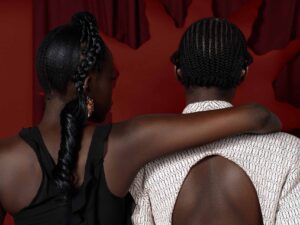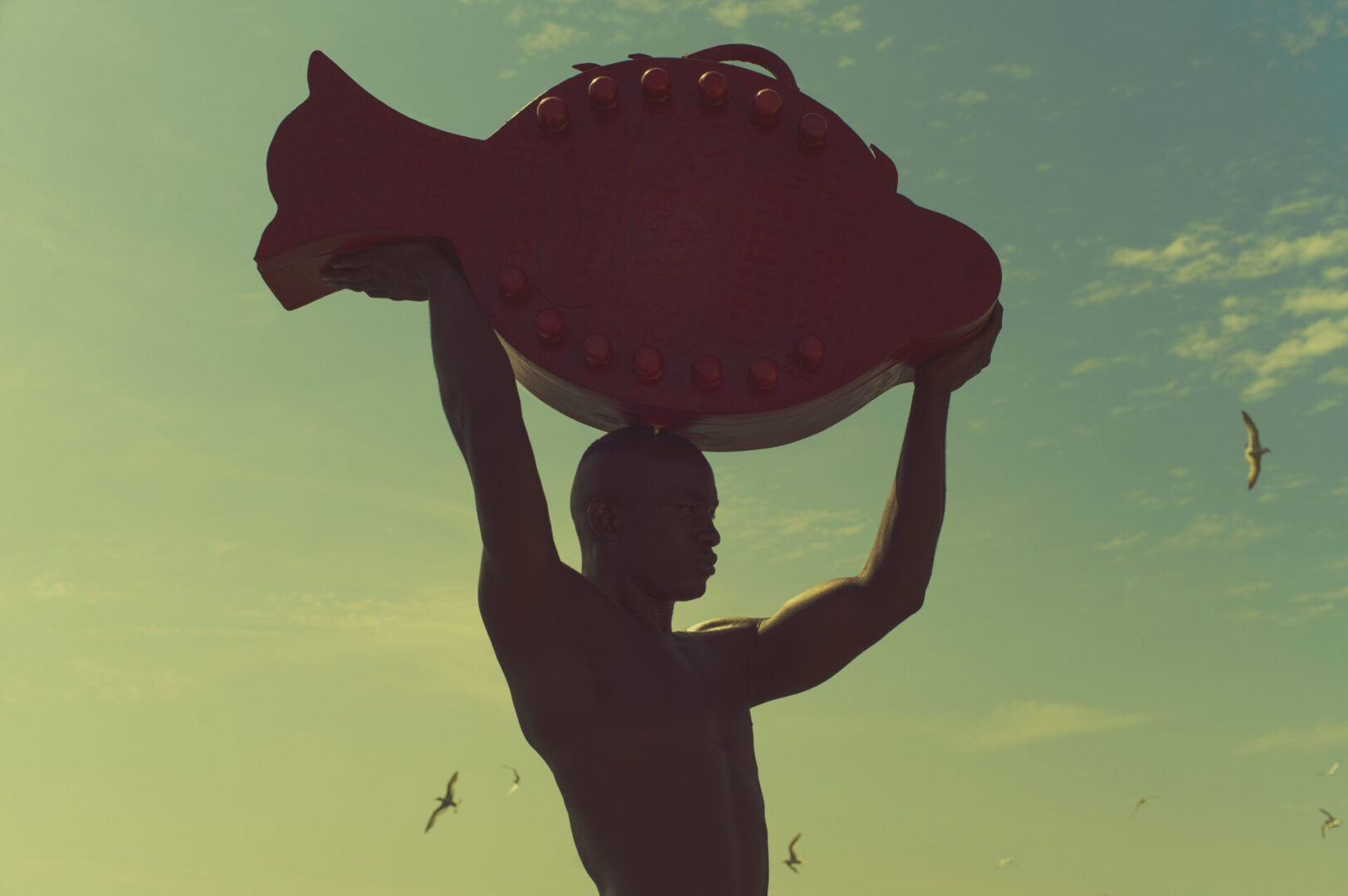
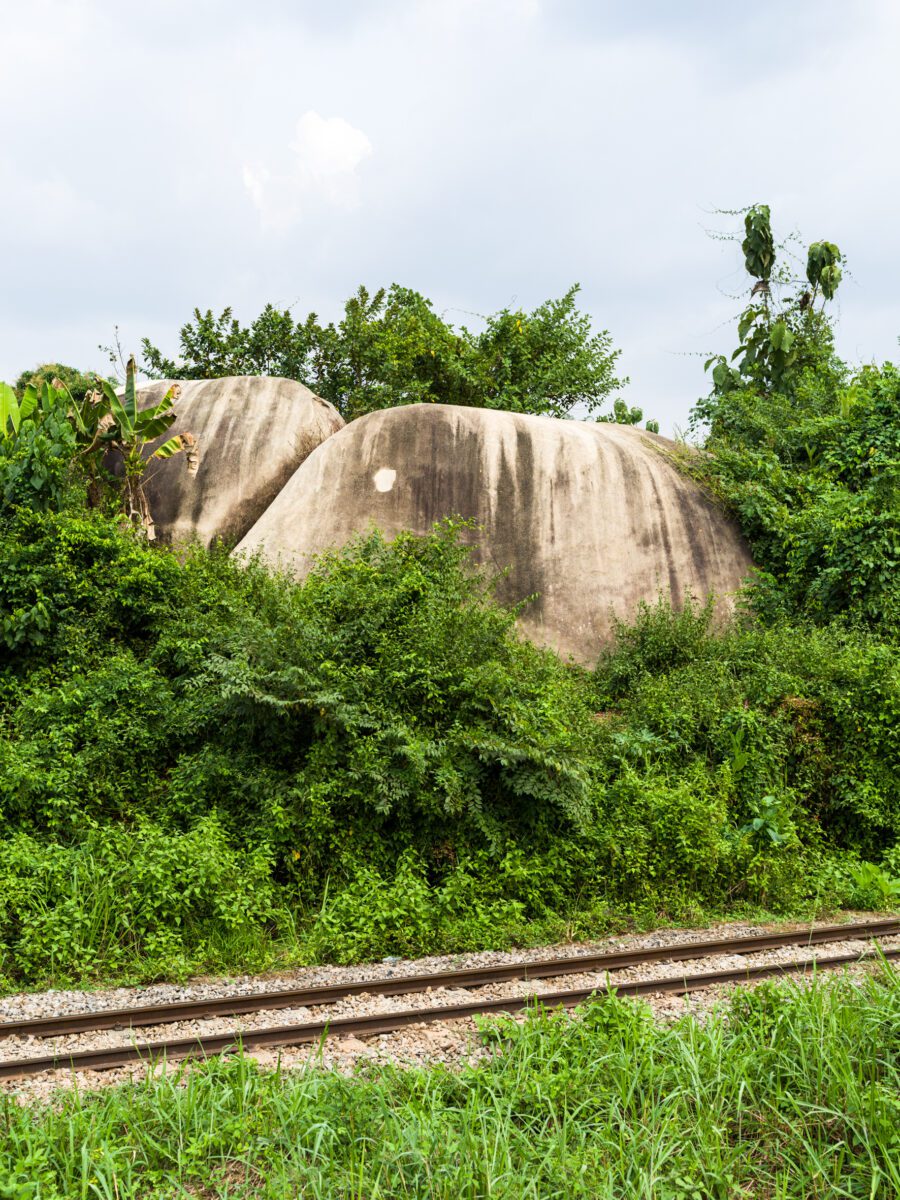
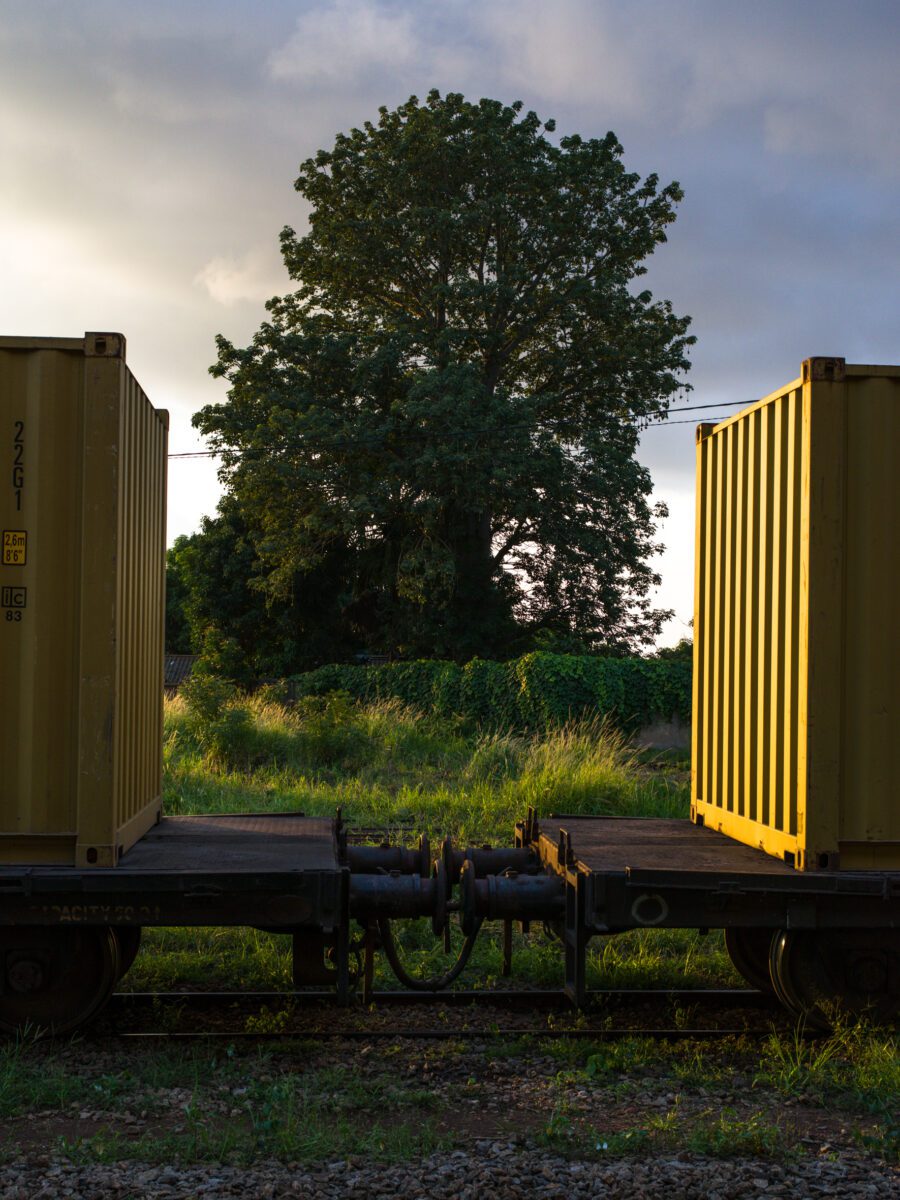
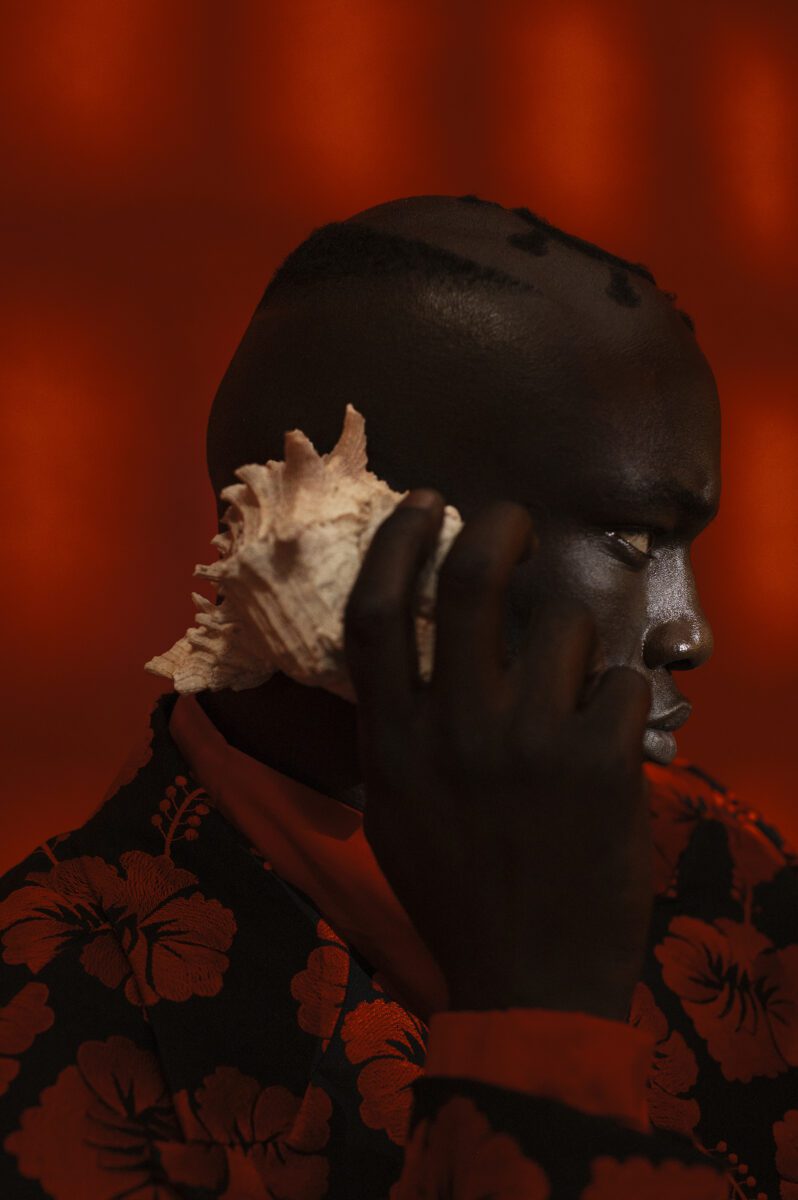
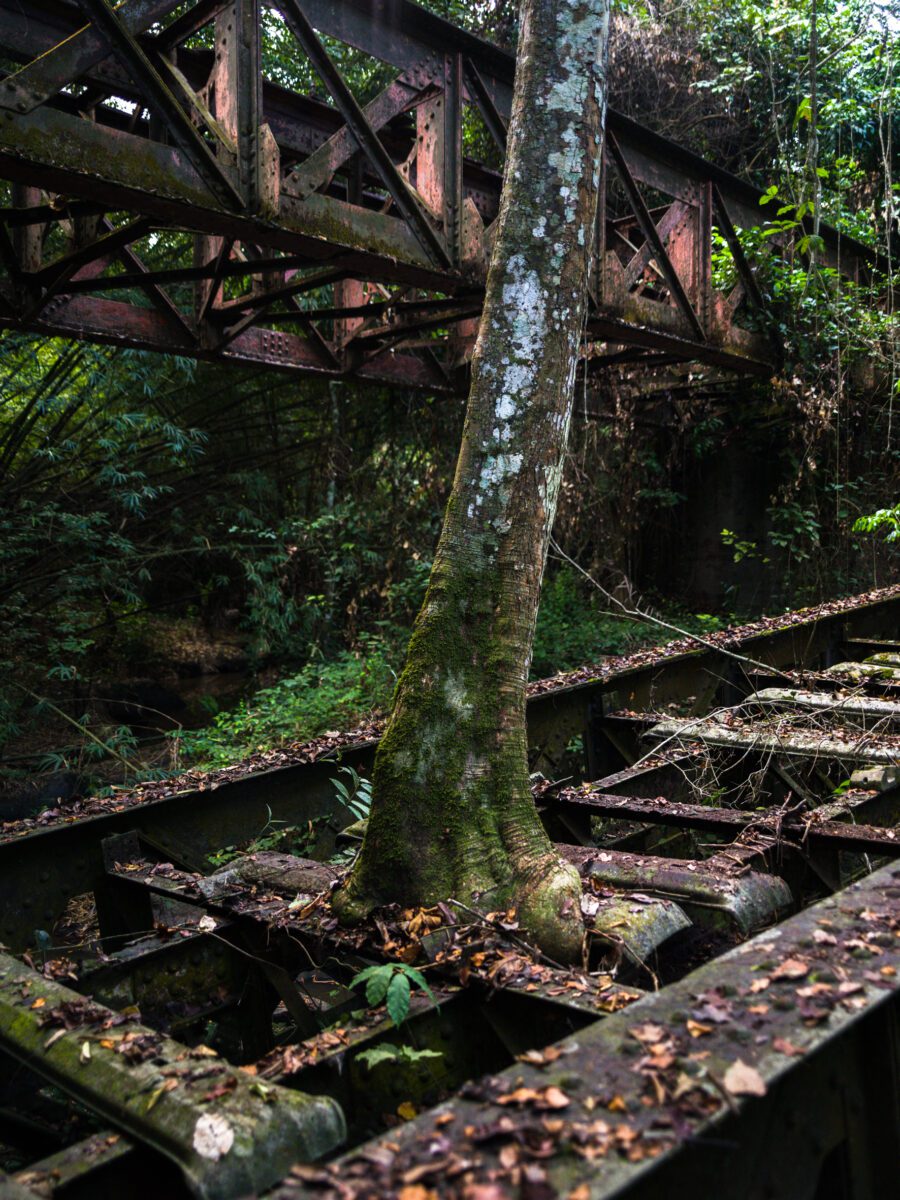
International Center of Photography’s latest exhibition, Latitudes, introduces a new way of thinking about place, perspective and contemporary image-making. The project, developed with the Fondation d’entreprise Hermès and the Fondation Henri Cartier-Bresson, gives space to individual voices, supporting artists from regions that are underrepresented internationally, inviting them to produce new bodies of work that travel between Paris, New York and their home nations. It opens with Côte d’Ivoire as its first point of focus, presenting new work by Nuits Balnéaires and François-Xavier Gbré. The country has experienced significant upheaval in the past 20 years, with a 2002 armed rebellion splitting the nation in two and leading to the first Ivorian Civil War, followed by a second in 2010. The two artists take distinct perspectives on their history. Nuits Balnéaires’ series, EBORO, stages images that explore the relationship between his ancestors in exile and his own perspective on travel and migration. François-Xavier Gbré, meanwhile, turns to the built environment, following the railway line to reveal how colonial legacies continue to echo through today’s infrastructure. Shown together, their works offer parallel ways of reading place. We caught up with the artists ahead of the show’s opening to discuss the inspiration behind their works and what they hope it will bring to conversations around Côte d’Ivoire.
A: How did you begin working as an artist?
NB: Artistic creation has always been an intrinsic part of me. Literature and writing were present from my childhood, as I was born into a family of writers, authors and journalists, and I grew up immersed in musical influences from across the globe, thanks to my father’s passion for music. I learned to play the piano during my adolescence. Very early on, I also became drawn to architecture, video and the creation of animations. It was at the end of high school that I discovered photography. I began with a small Sony compact camera my mother had brought back from her pilgrimage to Mecca. I photographed friends, family and my immediate environment, eventually creating a Facebook page to share my work. It was during this period that I quickly started receiving commissions from fashion magazines. My work soon became a means of documenting and archiving history and cultural transformation in our region.
FXG: Building sandcastles, watching them get destroyed by the waves, and starting over again.
A: How did you decide on the form your work would take for Latitudes?
NB: When I had the opportunity to propose a project for Latitudes, I had already been contemplating EBORO for several years. It was about exploring the concept of destiny through a genealogical lens, engaging in dialogue with a particular figure: my uncle Noel X Ebony. He was a journalist, poet and playwright who died in unresolved circumstances in Senegal. I sought to uncover the similarities between our trajectories, but also across the geographical, cultural, temporal and socio-political landscapes we navigated. Visually, the work draws from my Akan Agni-bona heritage and from adinkras, visual symbols that represent concepts, proverbs and aphorisms. It also references the iconography of tarot cards and a color palette informed both by Akan tradition and a more universal visual language. At times, EBORO assumes a performative dimension, healing certain wounds or shadows within my personal history, whilst also resonating, in many ways, on a collective scale.
FXG: The form of the work for Latitudes is a usual one for me. I always create with multiple mediums. I use several exhibition methods: large prints, constellation of small prints and giant photo collage.
A: Francois-Xavier, memory and history are central to Radio Ballast. How do you explore these concepts in your work?
FXG: These themes are the core of my practice. Photography is a powerful tool. The hardest aspect of creating a work is finding the right form to tell a story. Sometimes, you can convey something that is both moving and accurate with very few images, whereas on other occasions accumulation, collection and repetition are necessary to express an idea.
A: What did following the railway reveal to you that you didn’t expect?
FXG: I knew people were working hard to make the railways work, but not to this extent. It took me 14 hours to cover 300 kilometers because of technical issues. To fix the trains and railway everyday is an exhausting, and seemingly never-ending, task for people in Côte d’Ivoire.
A: Nuits, EBORO explores the relationship between your ancestors in exile and your own perspective on travel and migration. What was it like to draw on personal history for this project?
NB: It is a profoundly vulnerable process, one that compels me to confront painful parts of my personal history. Yet, it is also an act of storytelling and repair that belongs to our collective narrative. I experienced the necessity of living abroad due to the war in Côte d’Ivoire, while both my uncle and father endured exile for political reasons. EBORO is partly inspired by Déjà Vu, a seminal 1980s collection of poems by Noël X Ebony. In this work, as in much of his oeuvre, one finds a relationship to places with borders almost erased, navigating geographies and eras as if without boundaries. From one poem to another, the reader moves from Pennsylvania and Apapa to Lagos, from Bondoukou to Stockholm. Being born in this part of the world can quickly evoke a sense of confinement, given the profound difficulties of mobility. It is as if people from this region are denied the freedom and ease of traversing the globe. Referring to Noel X Ebony and his global experience was liberating for me, allowing me to embrace fully the idea of a free and shared human experience. His work helped me recognise that existing between territories is almost innate, even while remaining acutely aware of the immense privilege it represents.
A: How does sound, poetry and language influence both of your practices?
NB: Sound is central to the way I perceive and convey narrative. Music, through its ability to evoke atmospheres with intensity, profoundly nourishes my imagination. Poetry shaped me from childhood, as I often expressed myself through writing. I have also drawn inspiration from cinema and architecture, and later from sculpture and painting. These mediums interweave naturally in my storytelling. Above all, the tale I wish to convey guides the choice of medium, each serving the story with integrity.
FXG: These aspects are part of the cultural baggage I carry with me when I create images. They influence my work all of the time. Each exhibition is like a musical score, you can play loud, long or softly.
A: Who, or what, are your biggest creative inspirations?
NB: Above all, it is my values that inform my inspirations, along with my father and mother, my grandmother who raised me, and my uncle Noël X Ebony for both his work and ethical approach. Family occupies a central place in my journey, it is my compass. The ambition to dissolve barriers between our lives through the reclamation of our shared history profoundly informs my practice. Aside from this , the ocean, nature, light, textures and forms are enduring sources of inspiration.
A: What perspectives on Côte d’Ivoire do you hope this exhibition adds or complicates?
NB: EBORO offers an artistic perspective on a chapter of our collective history, marked by shadows and wounds. We are a generation demanding accountability in the face of historical injustices, striving for a recalibration of human relationships. Drawing inspiration from a period when freedom of expression and irreverent writing had no place in the face of existing authority, this work becomes a space for reflection on our shared past, echoing a vision of freedom and a celebration of multiculturalism in a new era.
FXG: I hope this part of our history will be remembered forever, that the railway will be renewed to allow people to enjoy the beautiful landscape from the window, to experience the magic of the train.
A: What would you like audiences take with them after seeing this exhibition?
NB: I believe that beyond fully inhabiting our present, we also need to understand our ancestry and its influence on our contemporary experience. This project emerged from an inward quest, aiming to illuminate the strength and significance of personal histories. It addresses the necessity for each of us to understand why we are who we are, why we traverse certain experiences and how previous trajectories can influence, or even predetermine, our own paths. EBORO seeks to heal transgenerational wounds.
FXG: I hope the audiences will find wonder in ordinary things that nevertheless tell an important story. I wish they keep in mind that this exhibition is part of a collective labour to preserve shared memory.
Latitudes: Nuits Balnéaires and François-Xavier Gbré is at International Center of Photography from 29 January – 4 May: icp.org
Words: Emma Jacob, Nuits Balnéaires & François-Xavier Gbré
Image Credits:
1. Nuits Balnéaires, Le Mat 4, from the series Eboro, 2025 © Nuits Balnéaires.
2. François-Xavier Gbré, Rubino, from the series Radio Ballast, 2024 © François-Xavier Gbré, ADAGP, Paris, 2025.
3. François-Xavier Gbré, Gare de Bouaké, from the series Radio Ballast, 2024 © François-XavierGbré, ADAGP, Paris, 2025
4. Nuits Balnéaires, Le Messager 8, from the series Eboro, 2025 © Nuits Balnéaires.
5. François-Xavier Gbré, Rubino, from the series Radio Ballast, 2024 © François-Xavier Gbré, ADAGP, Paris, 2025.