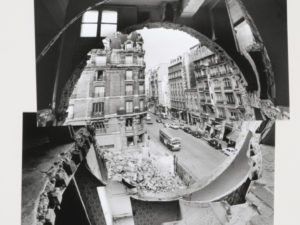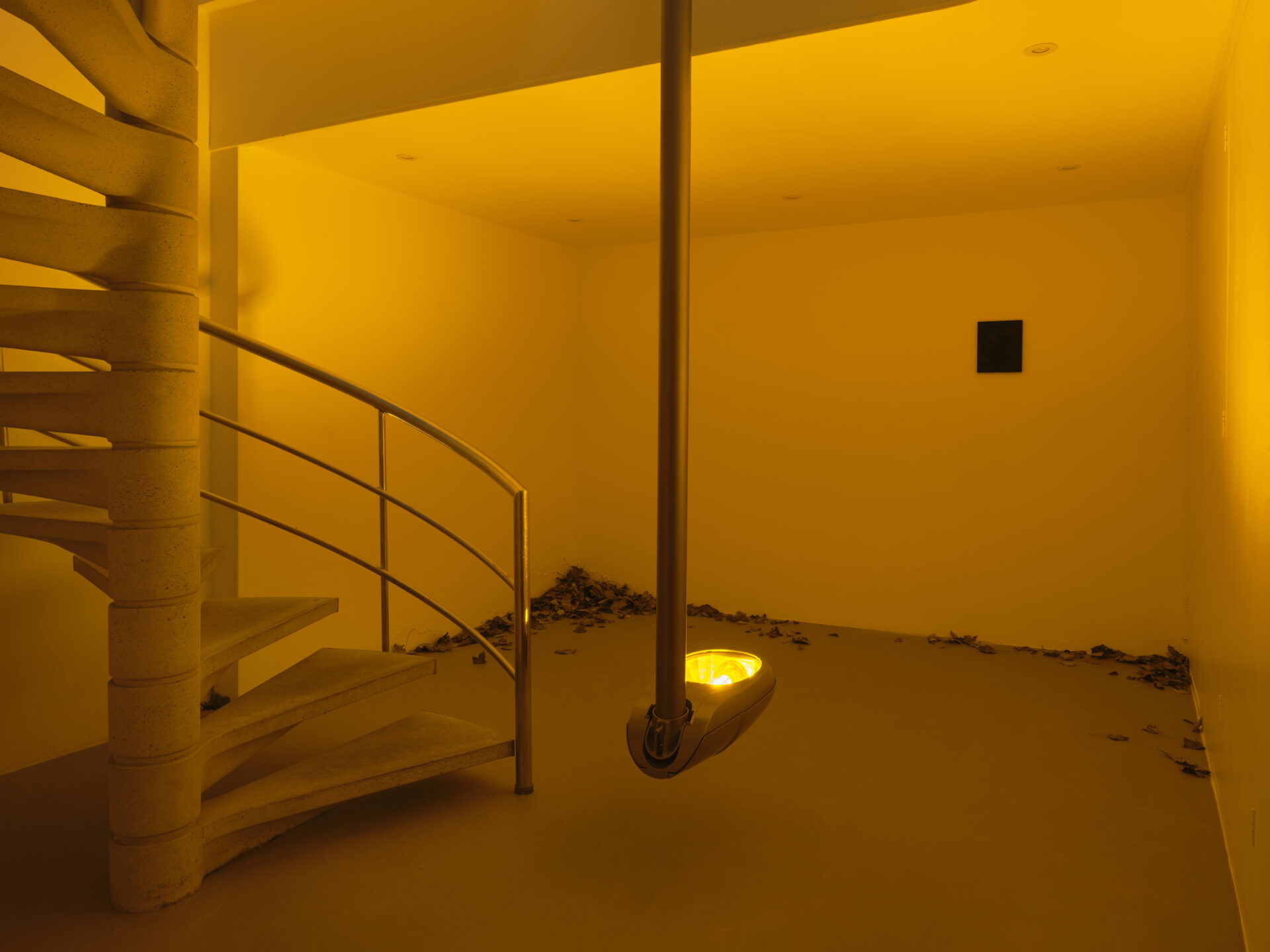
Architecture is never simply a container for human experience. It directs movement, frames encounters and establishes the conditions through which bodies become visible or disappear. Prem Sahib’s practice has, for more than two decades, examined these unseen negotiations, exploring how desire, identity and memory become embedded within the environments we inhabit. His sculptures do not depict social life so much as register its aftermath – the traces left behind when bodies have passed through, gathered or been forced to adapt. This mid-career survey at De La Warr Pavilion offers an opportunity to consider an artist whose restrained material language has become one of the most distinctive investigations of space, intimacy and belonging in contemporary British sculpture.
Born in London in 1982, Sahib developed his practice during a period when artists were reconsidering the relationship between Minimalism’s formal austerity and the social conditions concealed beneath it. Rather than accepting the autonomous object as an end point, he has consistently questioned what materials can reveal about lived experience. His use of glass, aluminium, rubber, neon and found objects draws from industrial vocabularies, yet these materials are never neutral or purely structural. They carry associations with public infrastructure, private rituals and the architectures through which communities form. Across his career, Sahib has developed a language of suggestion, where surfaces become evidence.
In this sense, Sahib belongs to a wider movement of contemporary artists who have transformed sculpture into a means of examining social systems rather than simply producing objects. His work shares an interest with Mona Hatoum’s investigations into domestic and institutional spaces, where familiar structures become sites of tension and control. There are also affinities with Félix González-Torres, whose spare installations transformed absence into a deeply emotional and political condition, and with Doris Salcedo’s attention to objects as carriers of collective trauma and memory. Like Michael Dean, Sahib understands sculpture as something that exists between the physical and the social, where material form is inseparable from human consequence. However, his approach remains distinctive: where these artists often foreground rupture, Sahib works through accumulation, allowing meaning to emerge gradually.
The exhibition at De La Warr Pavilion is particularly significant because of its relationship with modernist architecture. Designed by Erich Mendelsohn and Serge Chermayeff, the Pavilion was built around ideals of openness, accessibility and connection between interior and exterior space. These principles have long been central to modernist thinking, suggesting architecture as a democratic framework for collective life. Sahib’s work introduces a more complicated reading, revealing how apparently open spaces can still contain invisible codes of behaviour and belonging. His sculptures do not oppose architecture but expose its social implications, asking how environments shape our sense of comfort, vulnerability and visibility. In this context, the Pavilion becomes not simply a gallery but an active participant in the show’s investigation.
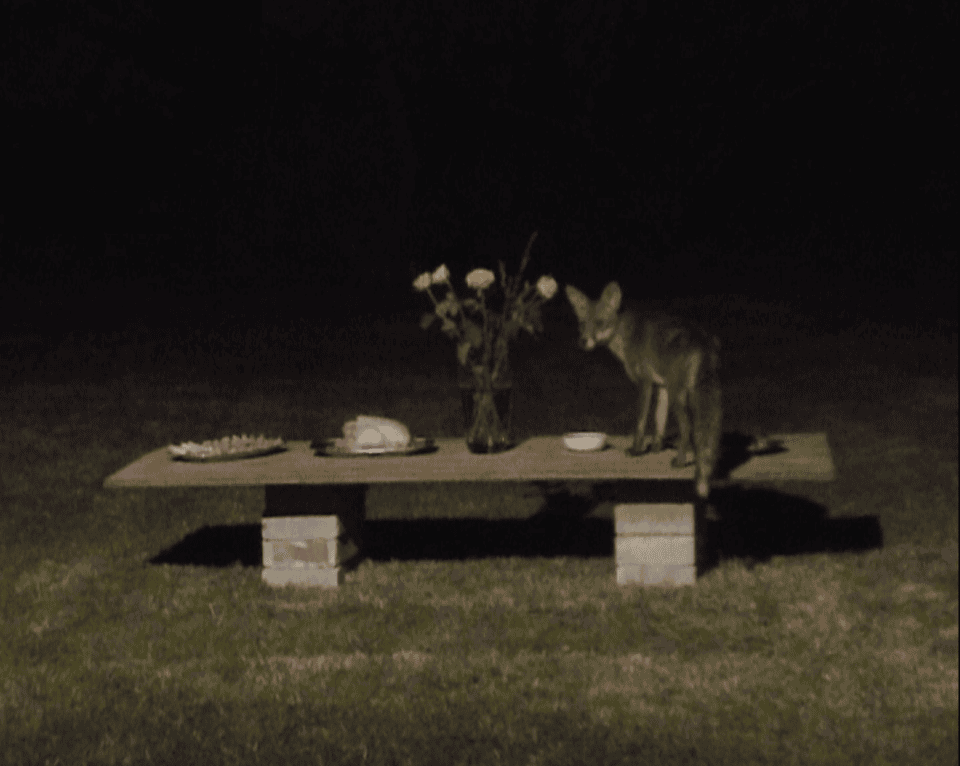
An early work, Fox (2004), establishes many of the questions that continue throughout Sahib’s practice. The video presents a carefully arranged outdoor table at night, complete with food and flowers, before a fox enters the scene and begins to explore the setting. The encounter is quiet and almost theatrical, but its implications are unsettling. The fox occupies an uncertain position, neither invited guest nor unwelcome intruder, disrupting the rituals that define hospitality. Instead of than presenting a symbolic narrative, Sahib creates a situation in which categories begin to dissolve. The work anticipates his later interest in spaces where social boundaries are negotiated rather than fixed, and where belonging is conditional.
This concern with the relationship between bodies and environments becomes central in the Exit series (2014), part of Sahib’s ongoing exploration of sweat, condensation and the physical traces of occupation. The works consist of aluminium panels marked with individually applied resin droplets, creating surfaces that appear almost geological from a distance. Only through sustained looking do they reveal themselves as records of accumulation, resembling moisture gathering on walls or the residue left after bodies have occupied an enclosed space. Their reference to the sauna is significant, not because the works document a specific location, but because the sauna represents a complex social architecture – a place of privacy, community and vulnerability. Sahib transforms a fleeting bodily experience into a permanent sculptural form, turning what would ordinarily disappear into something that demands attention.
The conceptual strength of these works lies in their refusal to represent the body directly. Instead, they operate through what remains after the body has gone. This approach recalls Rosalind Krauss’s writing on the index, where traces and impressions become evidence of an event without illustrating it. Sahib’s surfaces suggest touch without showing the hand, intimacy without depicting the encounter. In doing so, they challenge traditional assumptions about sculpture as something defined by physical presence. The work becomes a meditation on memory and materiality, proposing that absence can be as tangible as form. The viewer is not presented with a body but with the conditions that allow bodies to leave their mark.
The newer Horizon series (2026) shifts Sahib’s attention towards perception, technology and landscape. Comprising acrylic panels individually painted by the artist, the works create the illusion of digital displays through subtle variations of colour and light. Their pixel-like appearance initially suggests technological production, yet the handmade process beneath the surface remains central to their meaning. The tension between digital appearance and physical labour reflects a wider contemporary concern with images that increasingly exist between material and virtual worlds. Installed within the Pavilion, the works establish a dialogue with the actual horizon visible through the building’s glazing, connecting the constructed image with the surrounding landscape. Here, Sahib transforms a familiar view into a question about distance, desire and the ways environments are mediated through perception.
Prem Sahib: Chamber is at De La Warr Pavilion, Bexhill-on-Sea from 10 October – 4 January: dlwp.com
Words: Simon Cartwright
Image Credits:
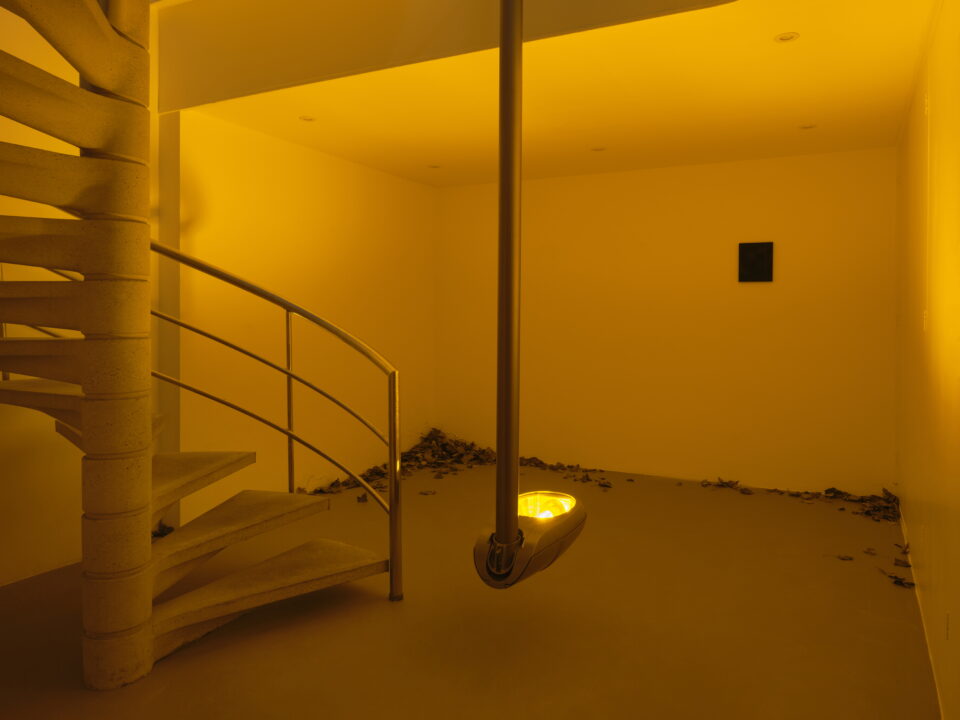
1&4. Prem Sahib, what you need to know to get rid of these blood sucking parasites (in the form of a whisper), 2023. Image by
Fine Art Documentation / Ben Westoby, courtesy the artist and Phillida Reid, London.
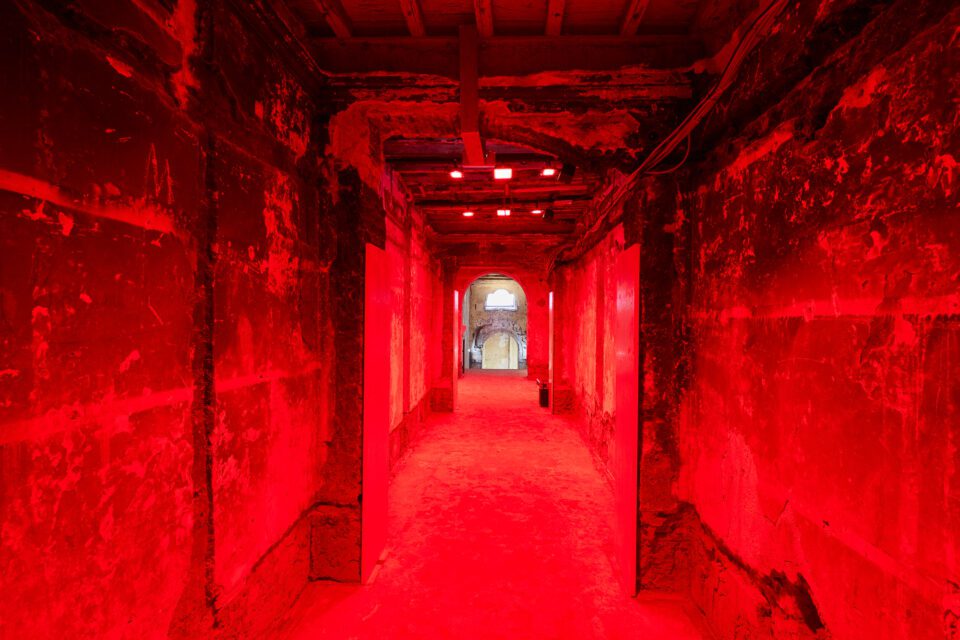
2. Prem Sahib, entrance corridor of Chi esce entra. Photo by Enrico Fontolan, 2025.
3. Prem Sahib, Fox, 2004 (still). Courtesy the artist and Phillida Reid, London.