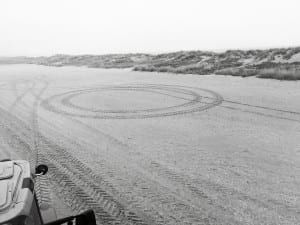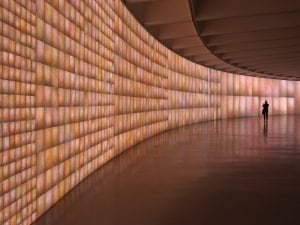
Contemporary photography is increasingly less concerned with the production of singular images and more invested in the infrastructures that allow them to circulate, accumulate, and acquire meaning over time. The archive, once understood as a stable repository of historical fact, has become a contested terrain where memory is continuously rewritten through acts of looking. In this shift, the photographic image is no longer treated as transparent evidence but as a cultural object shaped by power, geography, and inherited systems of knowledge. Artists are returning to institutional collections to interrupt and reconfigure the logics through which histories have been visually constructed. The act of seeing itself is under scrutiny, exposed as partial, situated, and politically charged. It is within this expanded field that the Hidden Narratives Residency situates its enquiry, reframing the archive as a living space of artistic production.
It is against this conceptual backdrop that the announcement of Erdiola Kanda Mustafaj as the recipient of the Hidden Narratives Residency takes on particular resonance. The programme, a collaboration between the Italian Cultural Institute in London, Photoworks, and the Royal Geographical Society, embeds contemporary artistic practice within one of the most significant geographical image collections in the world. Rather than treating the archive as inert historical storage, the residency activates it as a site of enquiry where photographs are re-read through present urgencies. Mustafaj’s selection reflects a shared institutional interest in landscape, displacement and environmental memory. Her practice enters into dialogue with a collection shaped by centuries of exploration, mapping and scientific observation. The award functions as a methodological proposition – a way of embedding art within archival time.
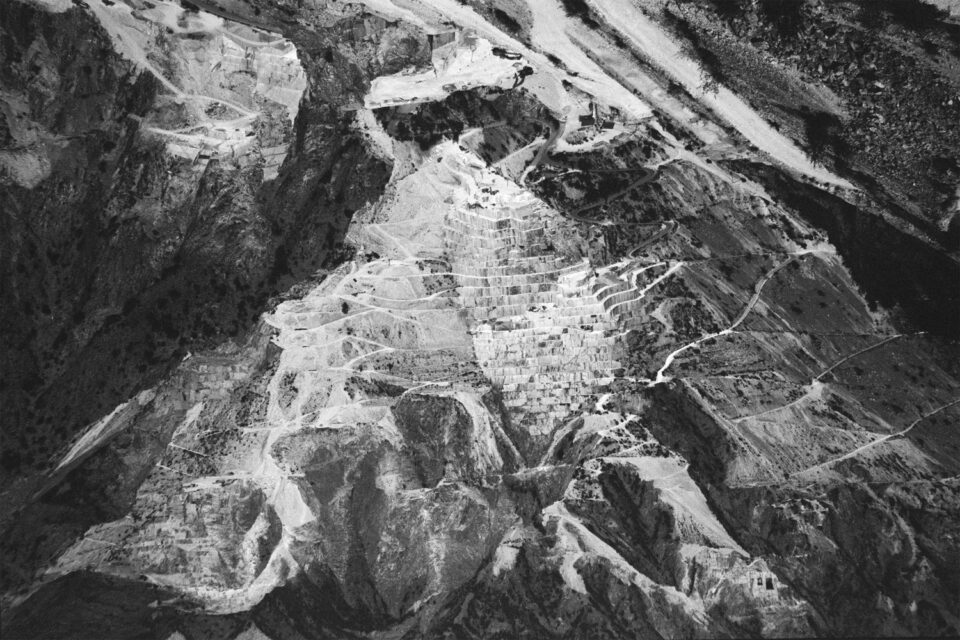
Mustafaj’s project Pasqyra e Lëndës – translated as “mirror of matter” – extends this inquiry into the instability of representation, particularly in relation to diaspora and fragmented memory. Her work resists photography’s documentary certainty, approaching the image instead as a reflective surface shaped by absence, projection, and historical residue. Within the Royal Geographical Society’s Collections, this approach encounters over half a million photographs, negatives, and lantern slides spanning early geographic photography and expeditionary imagery. These materials are entangled with systems of classification, colonial mapping, and scientific authority. Mustafaj’s research opens space for these images to be re-read as constructed narratives rather than neutral documents. Landscape becomes not something discovered, but something continuously produced through regimes of looking.
The structure of the Hidden Narratives Residency reflects a broader shift towards durational, research-led photographic practice. Across three research visits to the UK, Mustafaj will work with archivists and receive mentoring from Photoworks, allowing the inquiry to develop over time rather than through immediate output. This emphasis on duration resists the accelerated cycles of image production that define contemporary visual culture. Instead, it foregrounds slow accumulation, revision, and critical proximity to materials. Public presentations at Summit Photo in 2026 and 2027 situate the work within wider debates on photography’s role in climate, migration, and conflict discourse. The residency becomes a framework for thinking through images as processes rather than conclusions.
The Hidden Narratives Residency does not position itself as a continuation of an established lineage of winners, but as a developing curatorial platform. The 2026 cycle includes shortlisted artists such as Sara Palmieri and Giorgio Di Noto, whose practices respectively explore archival recomposition and technological systems of image production. There is no publicly documented record of prior recipients under this specific residency title, suggesting that the programme is either newly launched or newly reconfigured in its current form. What emerges instead of a legacy of winners is a field of inquiry still in formation – one that situates artists within institutional archives as active sites of research.
The Royal Geographical Society’s Collections provide a particularly charged context for this inquiry, encompassing over two million items that chart the evolution of geographical knowledge over five centuries. Embedded within this archive are both scientific records and visual artefacts shaped by imperial exploration and cartographic authority. Alongside these are fragmentary observations that resist totalising narratives, opening alternative ways of seeing and recording the world. The residency positions Mustafaj within this layered field where geography becomes a cultural and visual construction. Landscape is reframed as something assembled through historically contingent systems of representation.
At a broader institutional level, the Hidden Narratives Residency reflects a shift in photography’s positioning from output-driven production to critical research practice. Organisations such as Photoworks and the Royal Geographical Society are increasingly framing archives as sites of experimentation rather than preservation alone. Public programmes such as Summit Photo extend this approach, bringing together artists, scientists, and activists to consider how visual culture intersects with ecological and humanitarian crisis. Within this expanded field, Mustafaj’s residency operates not at the level of resolution, but at the level of sustained inquiry.
The selection of Erdiola Kanda Mustafaj articulates a broader shift in how photographic residencies are conceived: as frameworks for rethinking perception rather than producing fixed outcomes. Pasqyra e Lëndësenters into dialogue with an archive that is at once expansive and ideologically complex, asking how images carry histories within their surfaces. The residency’s temporal structure ensures that these questions unfold across time, resisting closure in favour of sustained attention. As the work develops towards Summit Photo in 2027, it participates in a wider redefinition of photography’s role in contemporary culture. The archive here is not a place of certainty, but a field of ongoing negotiation – where seeing becomes an act of interpretation, and interpretation becomes a form of responsibility.
Erdiola Kanda Mustafaj will present work at Summit Photo at the Royal Geographical Society 17 – 19 July: rgs.org
Words: Simon Cartwright
Images:
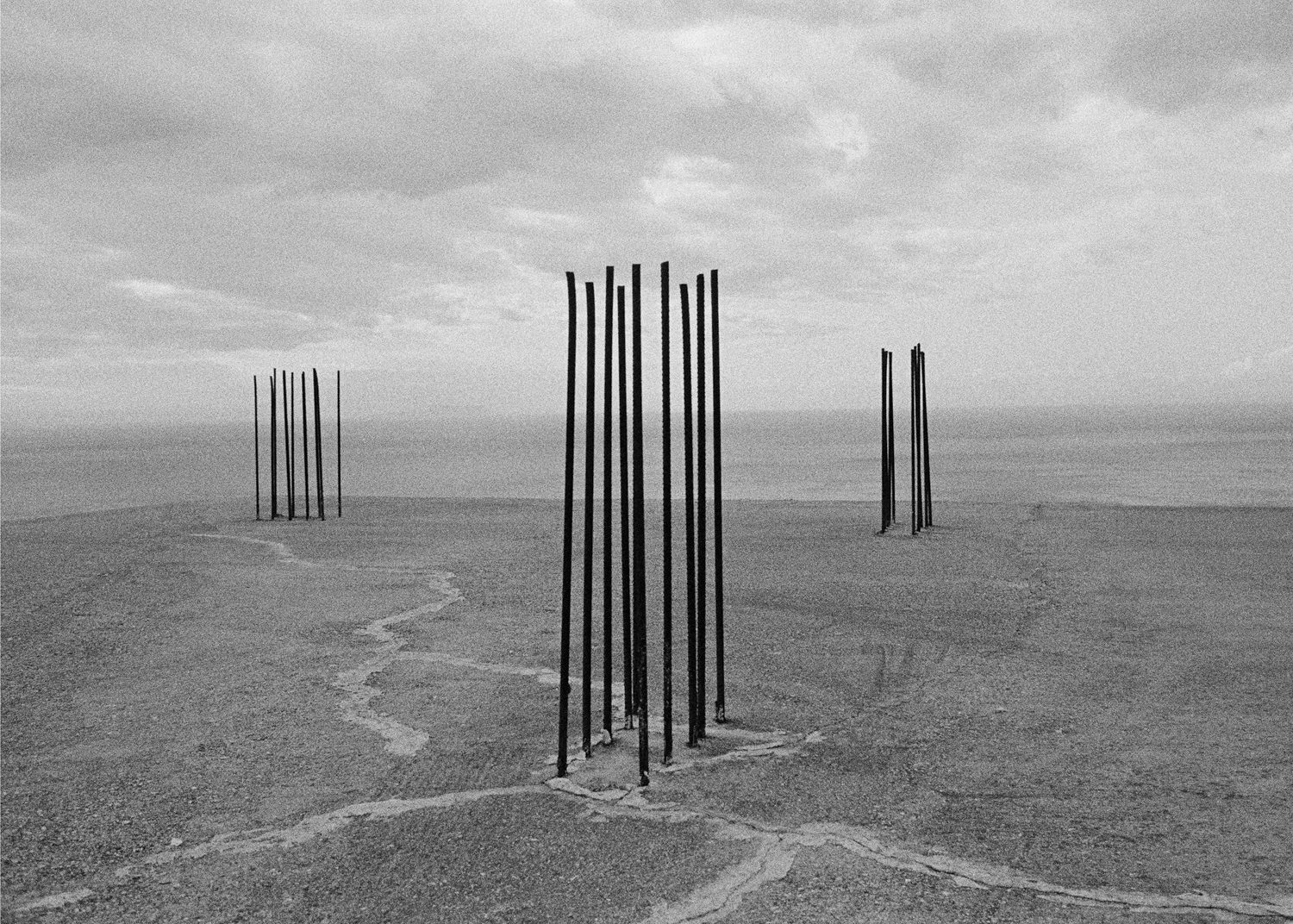
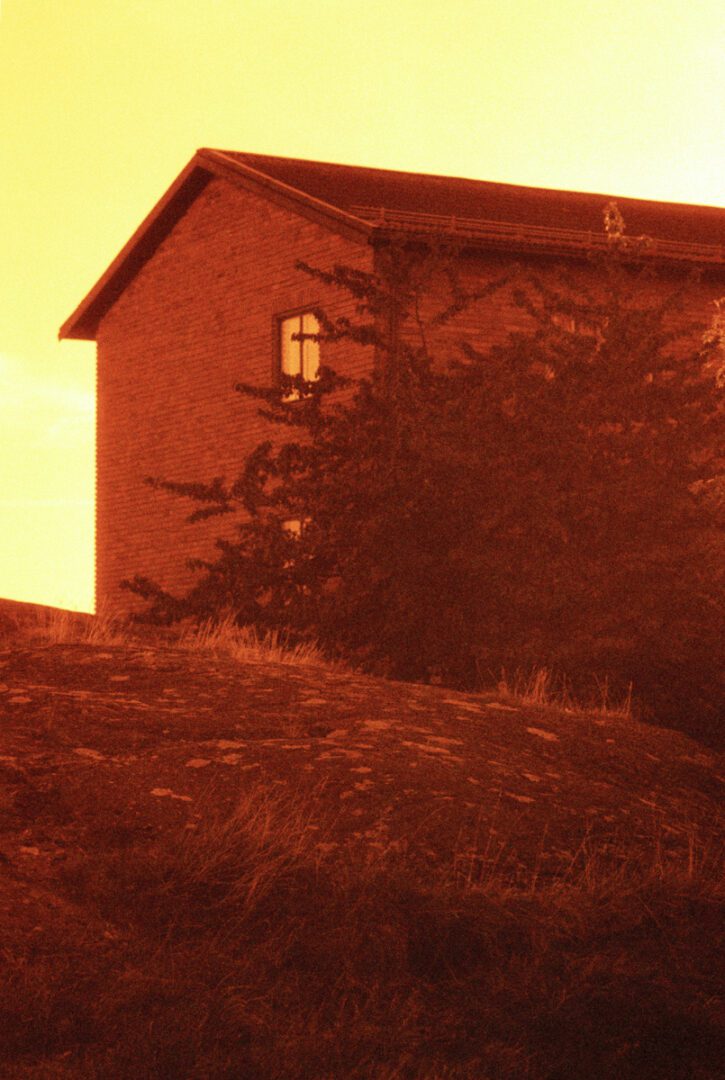
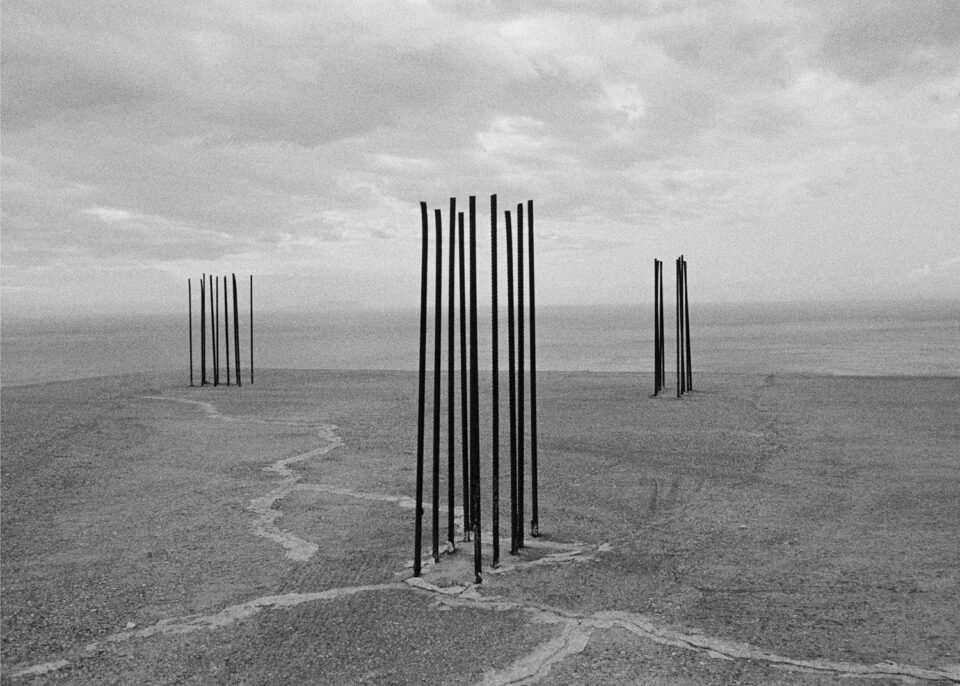
1&5. Sentinels of a new-found future from project “Pasqyra e Lëndes”, Albania, 2022. Awagami Kozo print on support, 60x85cm, Iron frame.
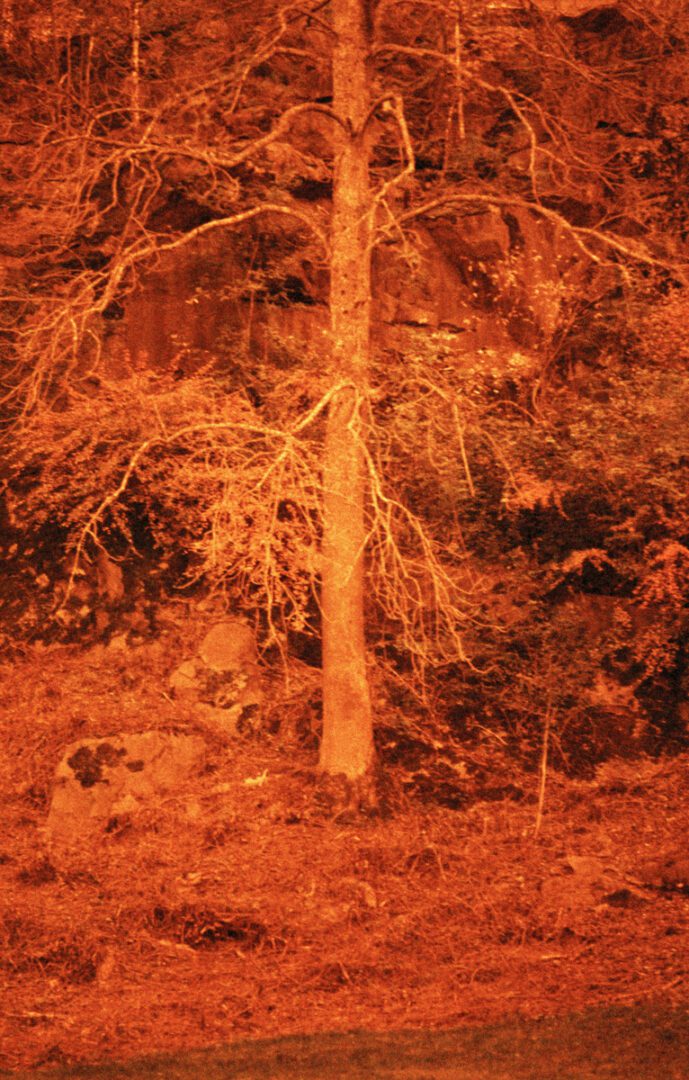
2. Sacred Mountain from “Pasqyra e Lëndes”, Italy 2020. Photography, Photo Rag Baryta Hahnemühle – 145x100cm
Exhibited at Giovane Fotografia Italiana (Reggio Emilia) 2025.
3. An Unusual Face, Stockholm 2025. Photography, Lightbox 55x82cm. Exhibited at the Italian Cultural Institute in Stockholm, (Sweden) 2026.
4. The landscape of shadows from “An Unusual Face”, Stockholm 2025. Photography, Photo Rag Baryta Hahnemühle and Lightbox 110×70, 2cm. Exhibited at the Italian Cultural Institute in Stockholm, (Sweden) 2026.