Artificial intelligence has become remarkably skilled at producing certainty. It predicts, categorises and optimises with increasing confidence, promising futures where complexity can be managed through data and every interaction can be refined. Artists, however, continue to work in the opposite direction. They remain interested in ambiguity, contradiction and the unpredictable spaces between human intention and technological systems. This tension runs throughout 3 Evenings: Experiments in Performance and Technology, Somerset House Studios’ 10th anniversary programme, which brings together artists exploring what happens when bodies, machines and ideas of intelligence collide. Rather than presenting technology as either a solution or a threat, the project examines how it is already shaping contemporary experience.
Boilers, turbines and vast hydraulic machinery provide the setting at Wapping Hydraulic Power Station, where industrial architecture becomes a backdrop for experiments in performance, robotics, artificial intelligence and immersive broadcast. The building’s original purpose – powering London’s infrastructure – creates an unexpected dialogue with artists examining today’s digital systems. Steel, machinery and obsolete forms of engineering sit alongside motion capture, gaming environments and responsive installations. The contrast is not simply visual; it suggests a longer history of technological transformation, where every new invention carries traces of earlier ambitions, anxieties and failures.
That relationship between past and future informs the curatorial approach. Under the direction of Marie McPartlin, Somerset House Studios has spent the past decade supporting artists whose moving between disciplines, bringing together performance, moving image, sound, software and speculative research. 3 Evenings extends that commitment beyond the Studios, commissioning new works specifically for this industrial site while expanding into digital space through 3ETV, an online platform created with Pioneer Works, New York and HEK, Basel. The result, not a simple broadcast extension, but another environment where artists reconsider what liveness means when audiences are distributed across different locations.
The project’s connection to 9 Evenings: Theatre and Engineering (1966) provides an important historical reference point, although the relationship is not one of repetition. In the 1960s, artists invited engineers into experimental collaborations to explore emerging technologies. Today, technology is no longer something brought into the studio; it structures the conditions in which creativity takes place. Public debate around the integration of AI has become increasingly repetitive, caught between Silicon Valley optimism and familiar dystopian narratives. The most compelling artists are moving beyond that binary, examining instead how technology can alter identity, labour, communication and perception.
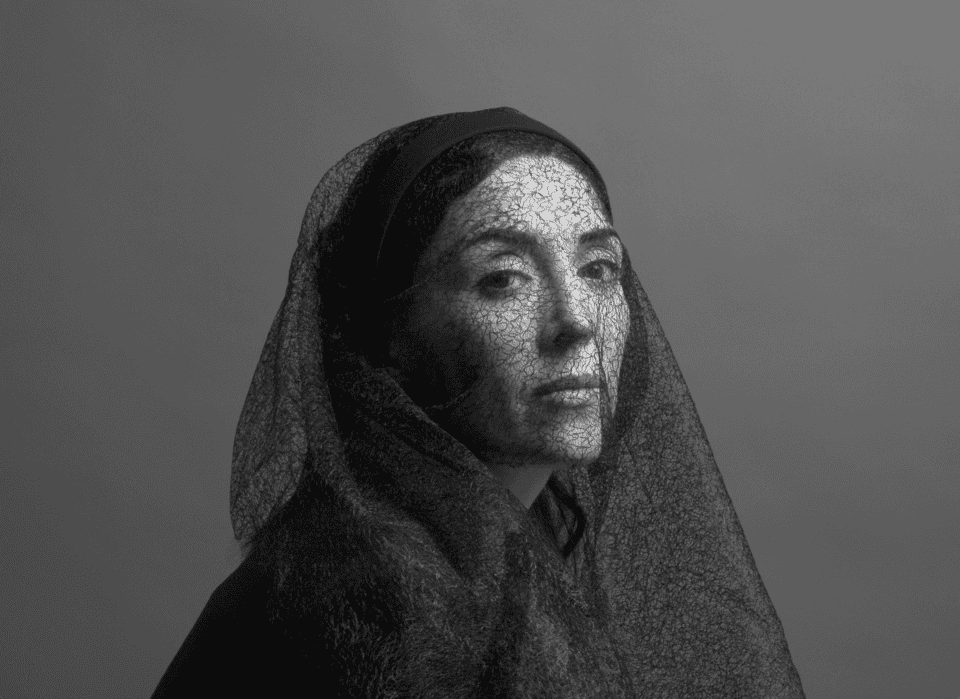
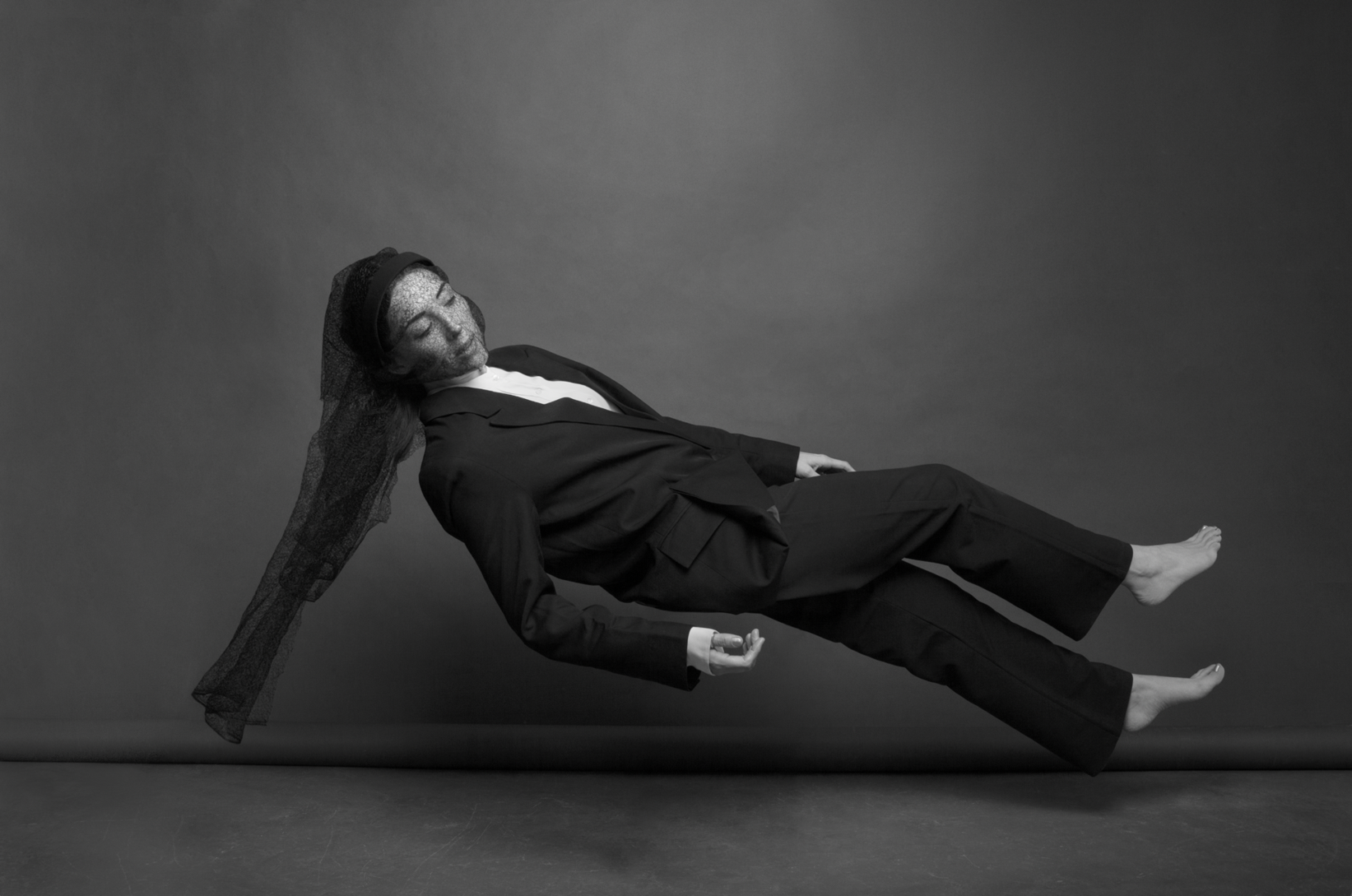
Questions of identity recur throughout the programme, although they appear in very different forms. Lawrence Lek’s NOX imagines a future in which autonomous vehicles undergo rehabilitation after failing to meet the expectations of the systems that created them. His fictional world of intelligent machines is less concerned with prediction than with the emotional consequences of technological progress. Lynn Hershman Leeson’s return to Roberta Breitmore brings a different history into the conversation. Created in the 1970s, the fictional persona anticipated many of today’s debates around avatars, online identities and self-performance long before social media transformed everyday life. Gazelle Twin’s Ragebait extends these questions into sound and embodiment, where voice and robotics become difficult to separate, suggesting that technology often reflects the impulses already embedded within human behaviour.
The instability of identity is closely connected to questions of labour and consumption. Jenkin van Zyl’s Hostess presents the promotional figure of a fictional franchise continuing her performance long after the audience she was designed to attract has disappeared. Her endless welcome becomes both absurd and unsettling, revealing the strange persistence of systems even after their original purpose has collapsed. Ayoung Kim approaches similar concerns through a different medium in her new playable work extending the Delivery Dancer series. Combining generative AI, game engines and live-action footage, Kim creates a world where performers become optimised workers within neon-lit environments, forcing players to consider whether participation means adapting to the system or resisting it.
Participation takes on more complexity forms the programme’s second evening. Team Rolfes’ The Mustang Speedrun – Pitt Call places audiences in a motion-captured performance apparatus where collective choice determines the outcome of the work. The boundary between viewer and performer becomes unstable, turning spectatorship into shared responsibility. Holly Blakey and Tai Shani explore a different mediation in I am a Glass Doll under the Heel of a Dirty God, combining choreography, feminist mythology and multi-camera broadcast. Shifting constantly between physical encounter and mediated image, asking how perspective changes when performance exists simultaneously in the room and on screen.
Other commissions consider whether technology might conversely create new forms of connection rather than simply distance. Gary Zhexi Zhang, Klara Kofen and Cameron Graham’s Puss transforms Giambattista Basile’s fairy tale into a hybrid robotic performance, combining puppetry, simulation and generative music to question empathy between human and non-human forms. Keiken’s Liquid Perception approaches this communication through a sensory exchange, using haptic technology, light and sound to create a shared perceptual environment between participants. These works avoid the familiar assumption that digital mediation necessarily weakens human relationships. Instead, they ask the question of what kinds of encounters become possible when communication is redesigned.
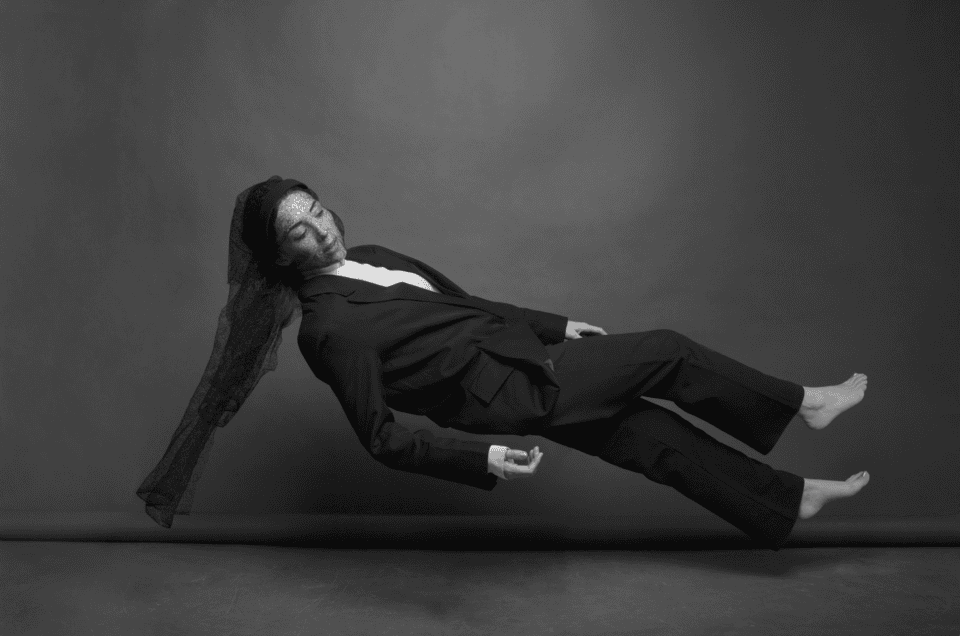
The body remains a central site of investigation. Ligia Lewis’s The Rant That Can’t uses fragmented speech, repetition and augmented sound to transform language into a physical presence within the architecture of the power station. Words become echoes, rhythms and interruptions rather than straightforward messages. Precious Renee Tucker’s live performance moves from the intimate relationship between pianist and instrument towards a much larger scale, drawing on planetary science and astrophysical research to create a composition informed by exoplanetary atmospheres. Both artists resist spectacle in favour of attention, revealing performance as a space where listening becomes as vital as looking.
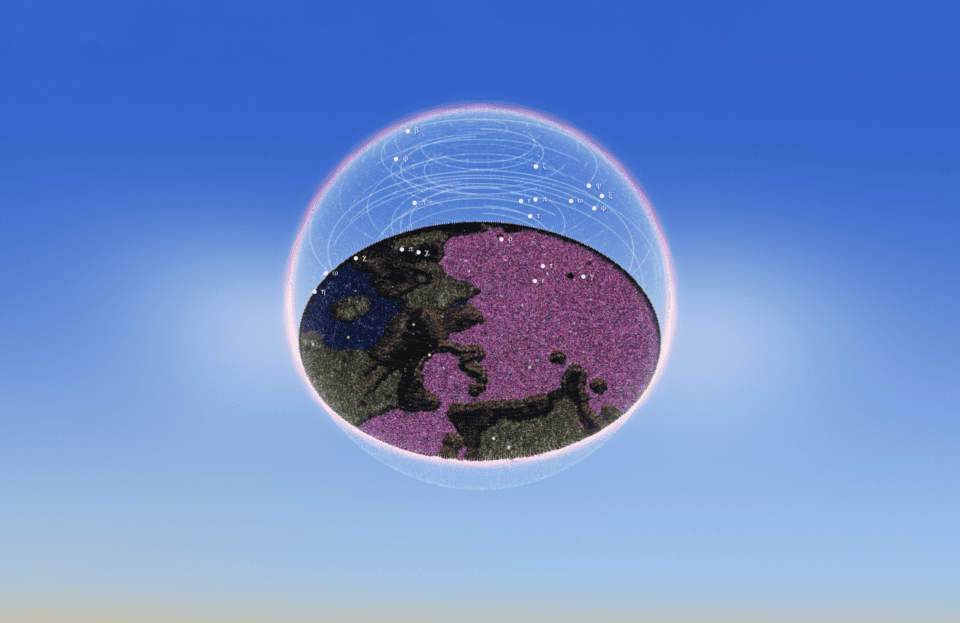
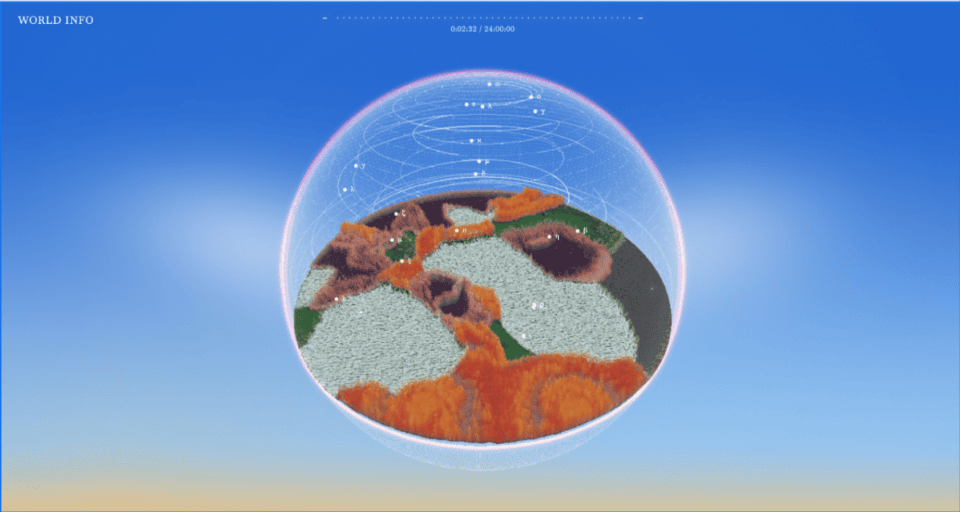
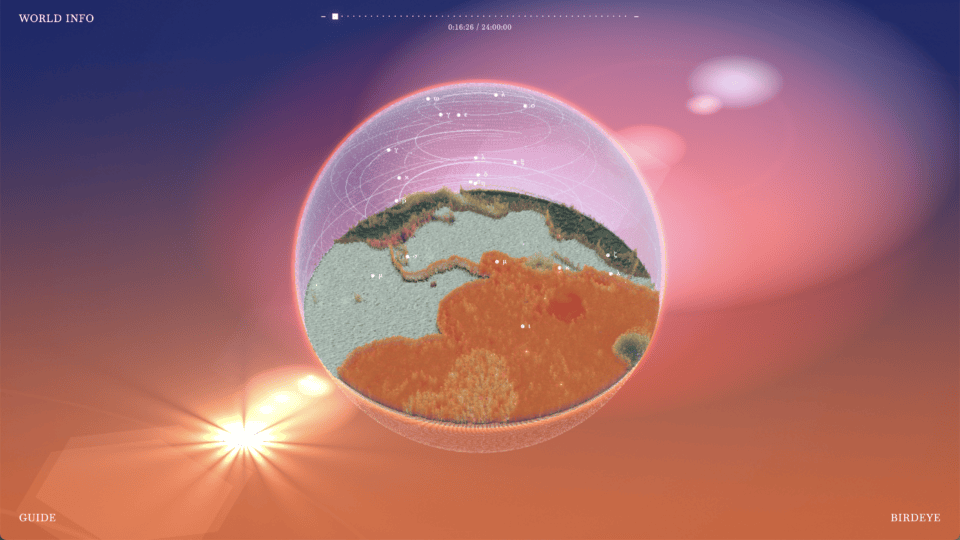
Across the weekend, the installations by Xin Liu, Ayoung Kim and Keiken create slower, more exploratory encounters. Liu’s nom nom develops an artificial ecosystem in real time, where millions of computational particles form and dissolve across a large LED surface. Her body of work reflects a broader interest in the relationship between biological processes, technology and planetary systems. Rather than presenting computation as simply something hidden behind interfaces, Liu makes its processes visible, allowing audiences to witness a world constantly generating itself. These shifting environments reinforce the programme’s wider interest in systems that remain open, unfinished and unpredictable.
The digital dimension of 3ETV expands these questions beyond the physical venue. Developed with international partners, the online platform brings together live performance, moving image, archival material and new commissions from artists including Larry Achiampong, McKenzie Wark, Lauren Lee McCarthy, Cory Arcangel, Shu Lea Cheang, Mimi ỌNỤỌHA and Wong Ping. Across nine simultaneous channels, audiences navigate their own pathways through the material, creating a viewing experience closer to contemporary internet culture than traditional broadcasting. The platform treats digital space not as documentation, but as another site where artistic ideas can develop.
Ten years after Somerset House Studios was established, 3 Evenings shows why experimentation remains essential in contemporary art. The programme does not attempt to predict what technology will become, nor does it offer simple resistance to technological change. Instead, its artists examine the conditions shaping the present: automated labour, constructed identities, mediated relationships and new forms of intelligence. Performance becomes valuable because it introduces uncertainty into predictive systems.
That uncertainty is the programme’s most significant contribution. In a culture increasingly organised around efficiency and optimisation, these artists make space for ambiguity, failure and imagination. Technology continues to accelerate, but art offers a different movement – slower, more questioning and less willing to accept the future as decided. 3 Evenings suggests the most important role of experimentation is not to anticipate what comes next, but to challenge the assumptions that determine where we go.
Somerset House’s 10th Anniversary celebrations take place 16 – 18 October: somersethouse.org.uk
Words: Simon Cartwright
Image Credits:
1&6. Xin Liu, nom nom (2026). Commissioned by LAS Art Foundation in Collaboration with Google Arts and Culture
2. Xin Liu, nom nom (2026). Commissioned by LAS Art Foundation in Collaboration with Google Arts and Culture
3. Gazelle Twin by Teri Varhol.png
4. 0 Xin Liu, nom nom (2026). Commissioned by LAS Art Foundation in Collaboration with Google Arts and Culture
5. Gazelle Twin by Teri Varhol.png