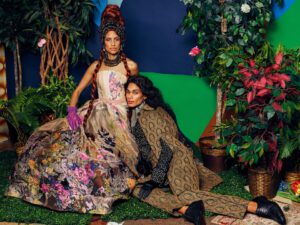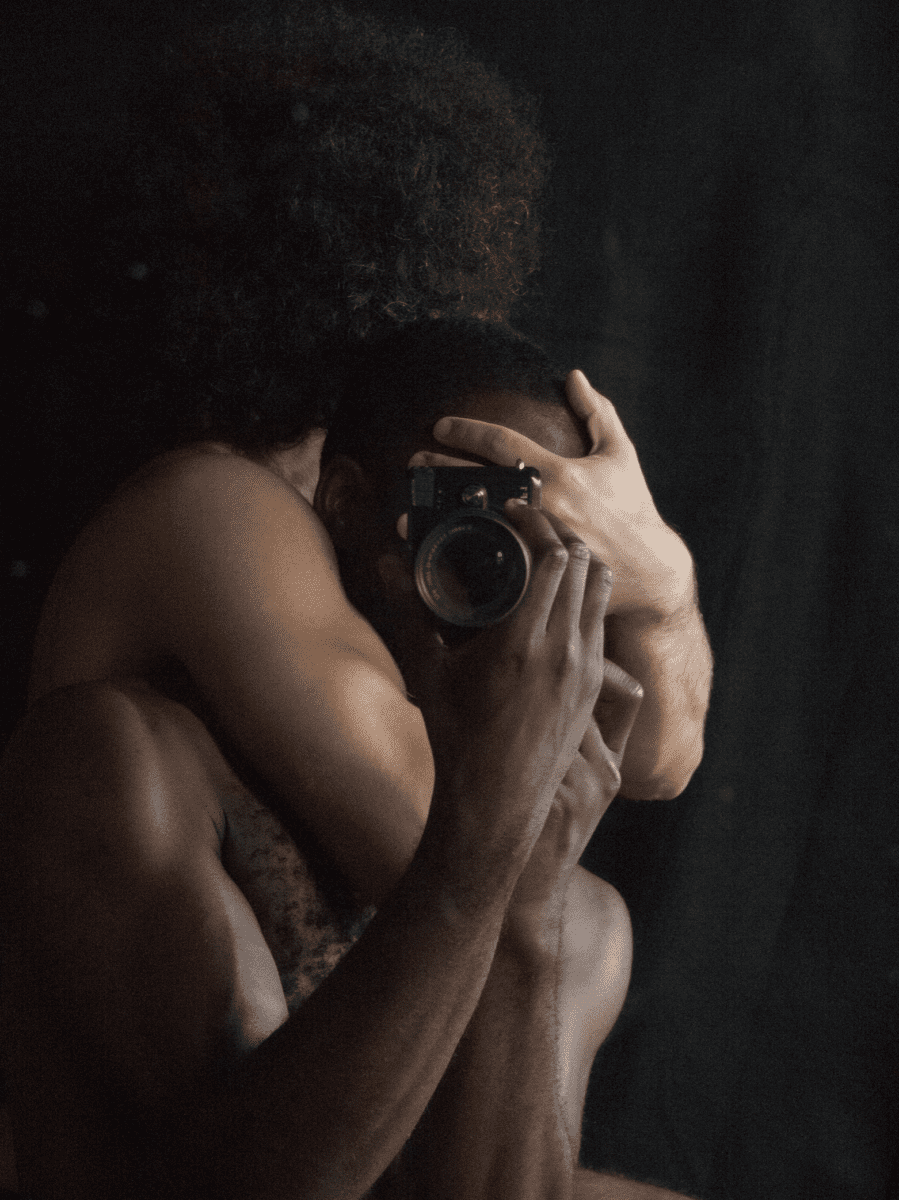
Paul Mpagi Sepuya’s (b. 1982) photographs unfold with both sensual intimacy and visual precision. The USA-based artist is best-known for intimate studio portraits of friends and lovers that navigate the line between exposure and concealment. They often reveal as much about the process of photographing as they do about the subject themselves. Queer, Black bodies are fragmented. Protected, private spaces are made public. The camera becomes a character. This spring, Fotomuseum Winterthur presents Sepuya’s first major solo exhibition in Switzerland, bringing together a vast array of early and recent works, alongside extensive ephemera drawn from the artist’s own personal archive.
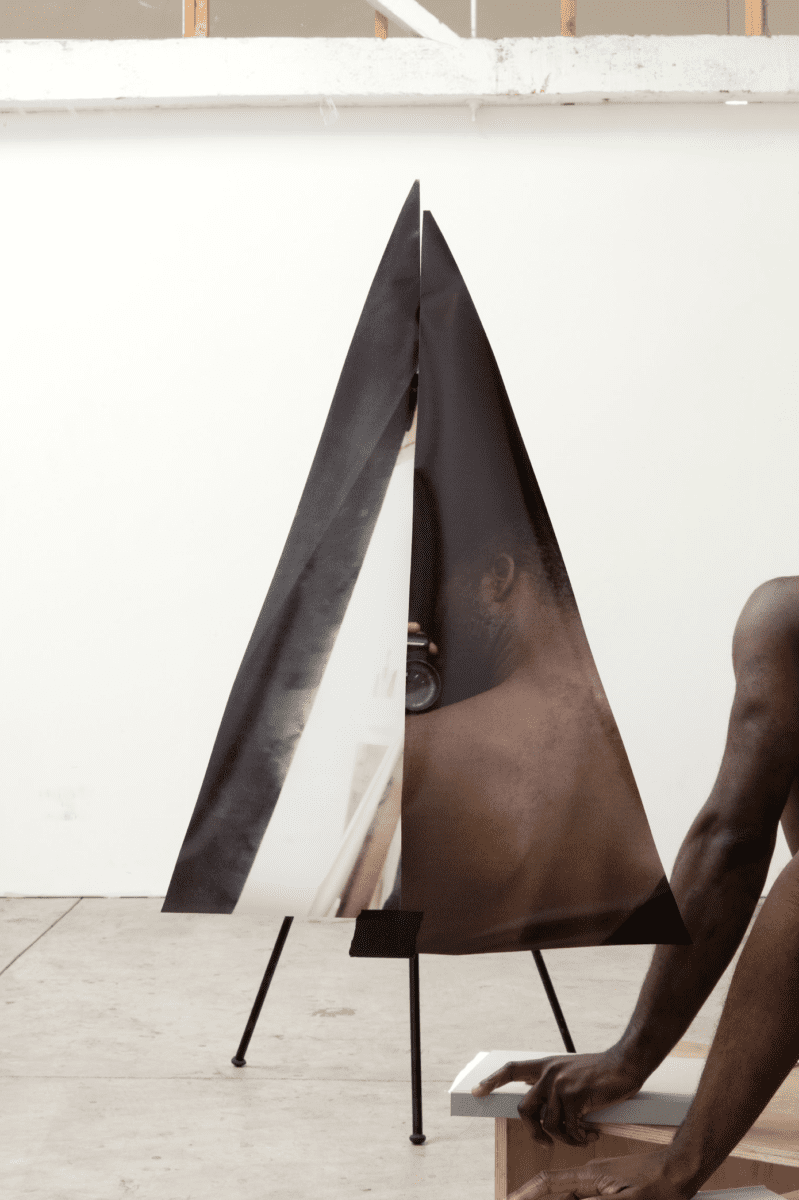
Much of Sepuya’s oeuvre reminds audiences that photographs do not reflect reality – they construct it. He renders the process of image-making visible, often showing cameras, tripods and lighting in his pieces. There’s a deliberate interplay of exposure and concealment. The artist ensures nothing is altered in post-production: each photograph is carefully composed in the studio and captured as a single exposure. In one shot, a lens obscures the face of the subject, the sitter wrapped in the arms of another person. In another, a naked man has his back turned to the viewer. His face is only partially visible through a phone screen. Here, Sepuya prompts vital questions: who has historically allowed to be seen? What types of bodies, communities and desires are hidden from view? What are we missing?
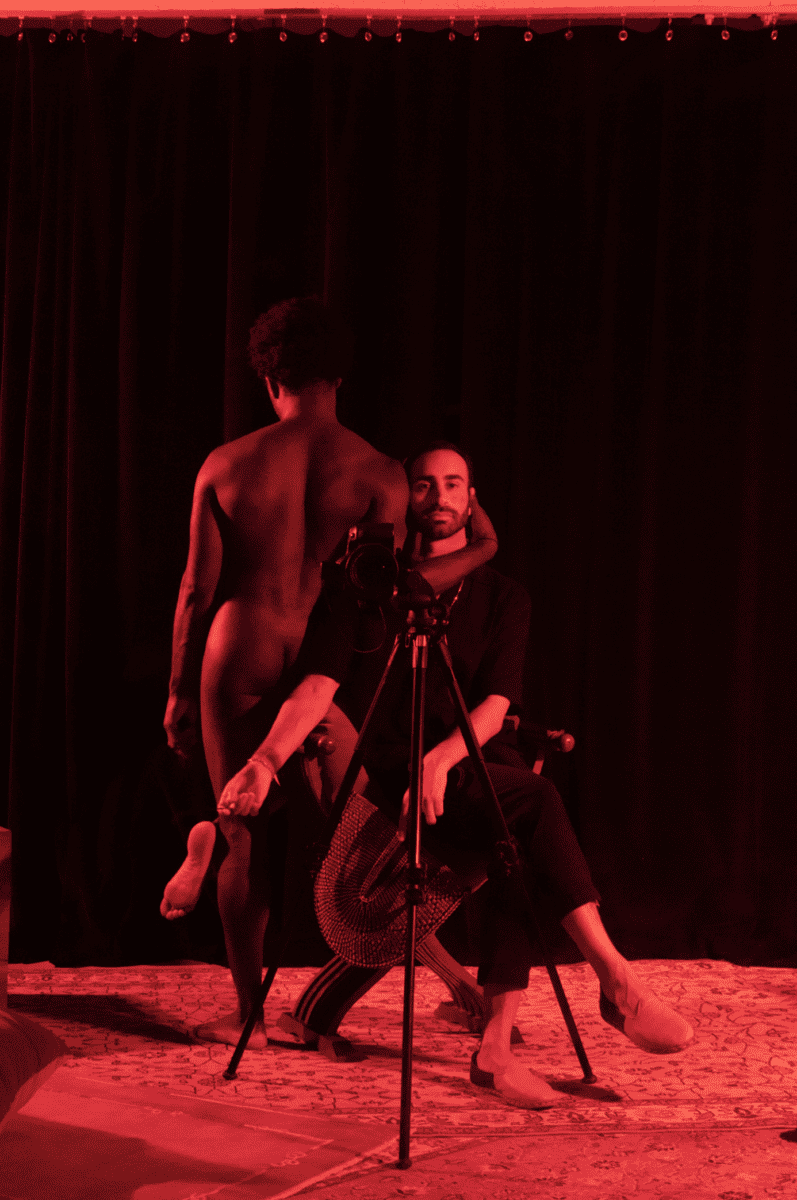
For nearly two decades, the sites of photography – whether home, residency or artist studio – have been central to the development of Sepuya’s artistic practice. This concept is central to the first space in this exhibition, with a selection of works tracing the development of his distinctive visual language, alongside the emergence of key elements, artistic methods and recurring figures that converge his layered compositions. Sepuya’s studio functions as a social space – a site of queer and creative networks, shaped by friendship and community. Trust, intimacy, curiosity and desire shape the encounters within the photographic arrangement that Sepuya often keeps visible in the image. The artist places himself in the frame as the arranging hand; as the gaze through the viewfinder; or as a body in relation to others. His practice undoes conventional roles and power relations between photographer and sitter.
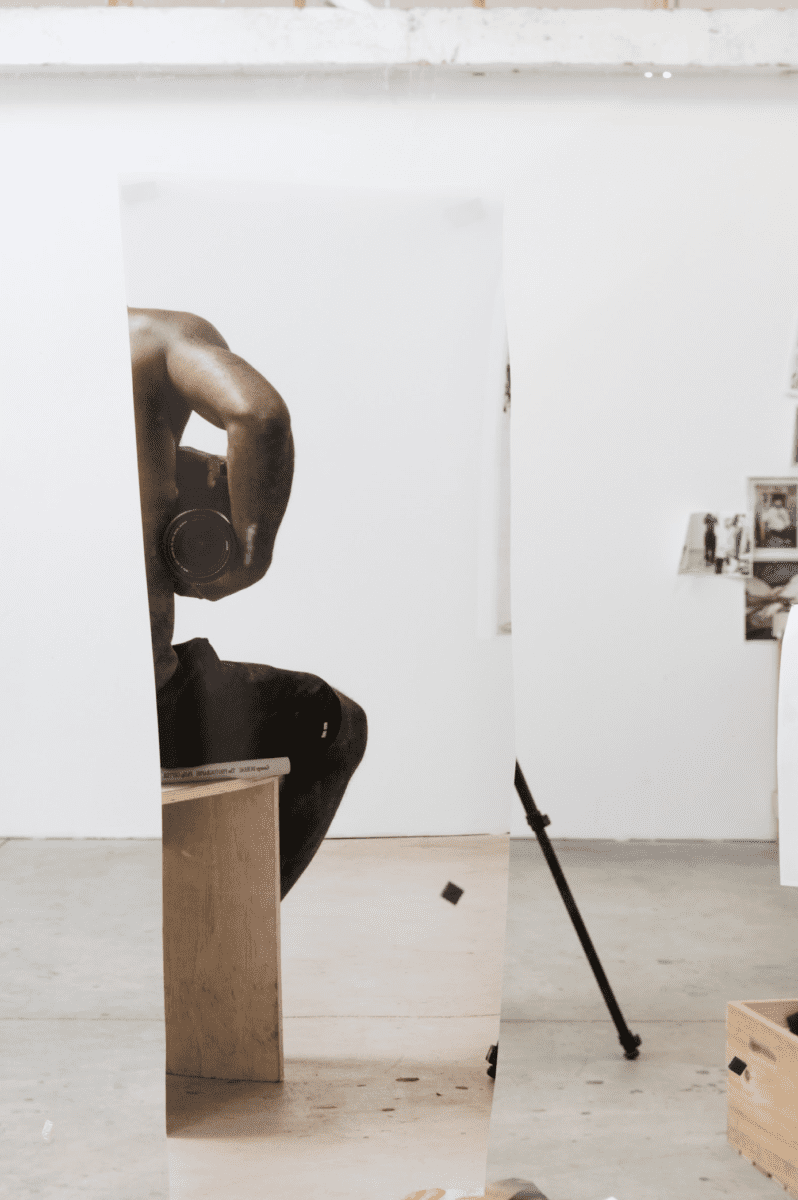
A third of the exhibition is dedicated to Sepuya’s investigation of the darkroom, which he describes as “both the historical origins of the photographer’s craft, as well as the privileged yet marginalised site of queer and coloured sexuality and socialisation.” Here, the artistic location collides with the low-lit sites of queer desire in bars, clubs, and saunas where, for example, gay men meet for anonymous sex. These spaces become a possibility for seeing and desiring beyond established heterosexual norms. In disrupting portraiture, Sepuya offers a new definition of what it is to be in front of and behind the camera.
Paul Mpagi Sepuya: Focus. Desire. is at Fotomuseum Winterthur until 14 June: fotomuseum.ch
Words: Emma Jacob
Image Credits:
1. Darkroom Mirror (_2070386), 2017 Paul Mpagi Sepuya, Darkroom Mirror (_2070386), 2017 © Paul Mpagi Sepuya.
2. Mirror Study (0X5A7394), 2018 Paul Mpagi Sepuya, Mirror Study (0X5A7394), 2018 © Paul Mpagi Sepuya.
3. Mirror Study (0X5A1237), 2017 Paul Mpagi Sepuya, Mirror Study (0X5A1237), 2017 © Paul Mpagi Sepuya, Courtesy the artist and DOCUMENT, Chicago | Lisbon.
4. Dark Room Studio Mirror (0X5A3797), 2022 Paul Mpagi Sepuya, Dark Room Studio Mirror (0X5A3797), 2022 © Paul Mpagi Sepuya, Courtesy the artist and Galerie Peter Kilchmann Zurich, Paris.