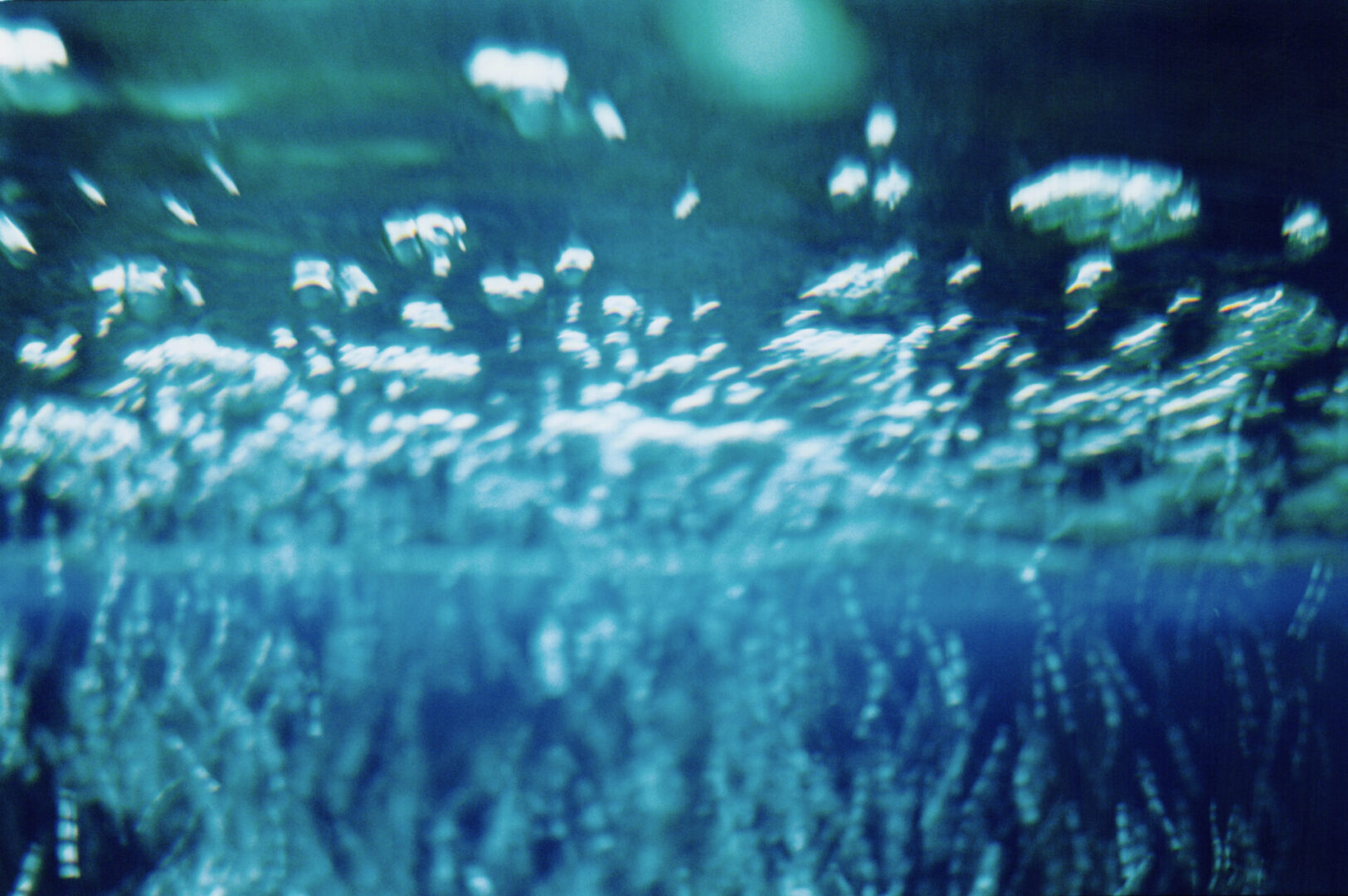
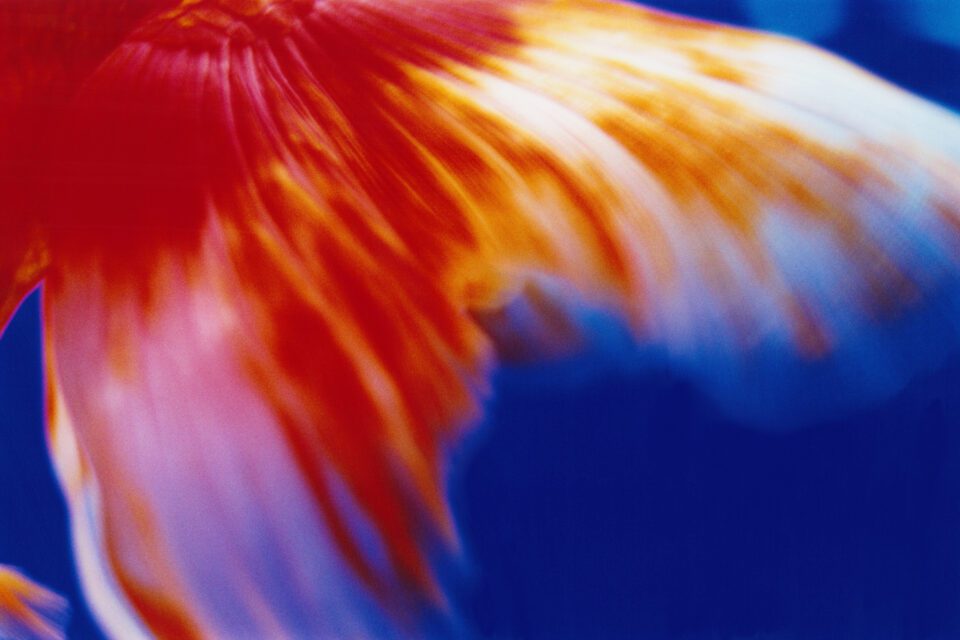
Mika Ninagawa’s Captive Blooms at the Soho Photography Quarter arrives as both eruption and exhale, staging the artist’s saturated visual language directly into the fabric of central London. Installed just outside The Photographers’ Gallery on Ramillies Street, the open-air exhibition extends photography beyond the white cube and into the city’s everyday circulation. Large-scale images of blossoms, goldfish, and nocturnal cityscapes unfold across the street like shifting atmospheric conditions, reframing Soho as a space of spectacle and reflection in equal measure. At dusk, a film of Ninagawa’s work activates the site further, layering stillness with cinematic drift. The installation does not simply occupy urban space – it recalibrates it – turning passersby into inadvertent participants. In doing so, it reasserts photography’s capacity to shape not only what is seen, but how a place is felt.
Public photography installations of this scale have become increasingly central to how cities like London articulate cultural identity in the twenty-first century. From large-format street projections and billboard commissions to institutional spill-outs into public realm, the photographic image now operates as a civic material as much as an exhibition medium. Projects such as JR’s global paste-ups or the Southbank’s façade-scale interventions demonstrate how photography can function as both visual interruption and urban punctuation. Within this lineage, Ninagawa’s contribution resists documentary clarity in favour of sensory saturation, privileging affect over narrative legibility. Where some outdoor photography seeks to clarify or map the city, Captive Blooms instead destabilises perception – asking viewers to linger within excess rather than extract information. The result is less an exhibition than an environment entered.
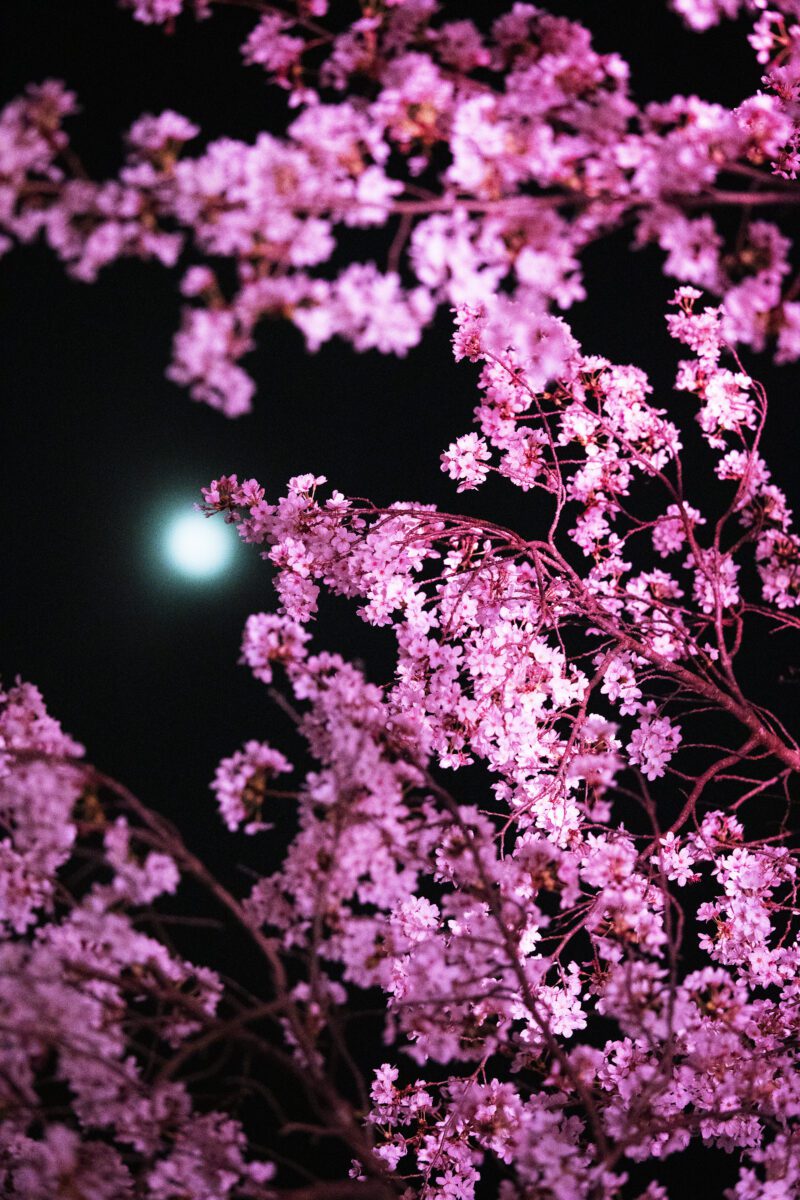
This spatial logic aligns with broader curatorial concerns at The Photographers’ Gallery, where photography is consistently framed as a condition of visibility, mediation, and contemporary experience rather than a fixed object. Across its programme, the gallery has emphasised how images circulate through technological, social, and institutional systems, shaping how reality is constructed and consumed. Ninagawa’s work extends this inquiry outward into the street, where image-making becomes atmospheric and bodily rather than purely representational. Her compositions – cherry blossoms at peak bloom, submerged dreamscapes, neon-lit urban fragments – operate as intensities rather than documents. They suggest a world in constant oscillation between ephemerality and spectacle. In this sense, the Soho installation functions as an exterior counterpart to the gallery’s interior critical frameworks.
That dialogue continues inside the institution through Japanese Women Photographers: From 1950s to Now, on view at The Photographers’ Gallery, which situates Ninagawa within a wider historical and generational field. The exhibition traces shifting approaches to authorship, gender, and visual culture in postwar and contemporary Japan, positioning photography as both personal expression and socio-historical register. Within this context, Ninagawa’s practice appears as part of a broader spectrum of image-making that embraces stylisation, constructed narrative, and performative selfhood. Her work sits alongside practices that challenge Western assumptions of photographic restraint, foregrounding instead colour, fiction, and theatricality. The result is a curatorial framework that expands photography beyond indexical.
In parallel, the current programme at Japan House London presents KYOTOGRAPHIE: Kawada Kikuji x Iwane Ai, a major exhibition that foregrounds a very different set of photographic concerns. Rather than Ninagawa’s hyper-saturated visual world, this presentation brings together Kawada Kikuji’s postwar conceptual experimentation and Iwane Ai’s meditative, often nocturnal landscapes. The pairing stages photography as a medium of memory, displacement, and historical sediment rather than spectacle or pop-inflected intensity. It also marks an important institutional moment as the first photography-focused exhibition at Japan House London, underscoring a growing commitment to the medium within the organisation’s wider cultural remit. Within this frame, photography is positioned less as image-event and more as slow register – a counterpoint to the immediacy of urban visual culture outside.
Ninagawa herself occupies a distinctive position within contemporary Japanese visual culture, operating across photography, film, and installation. A recipient of the Kimura Ihei Award, she has directed feature films including Helter-Skelter (2012) and Diner (2019), as well as the Netflix series FOLLOWERS (2020), each marked by a heightened chromatic sensibility and stylised visual excess. Across more than 120 photobooks and over 150 solo exhibitions, her practice demonstrates both prolific output and a sustained commitment to colour as emotional structure. Her floral compositions and underwater series are not depictions of nature but constructed psychological environments, where surface becomes intensity and saturation becomes affect. In Captive Blooms, this multidisciplinary language is compressed into an urban encounter.
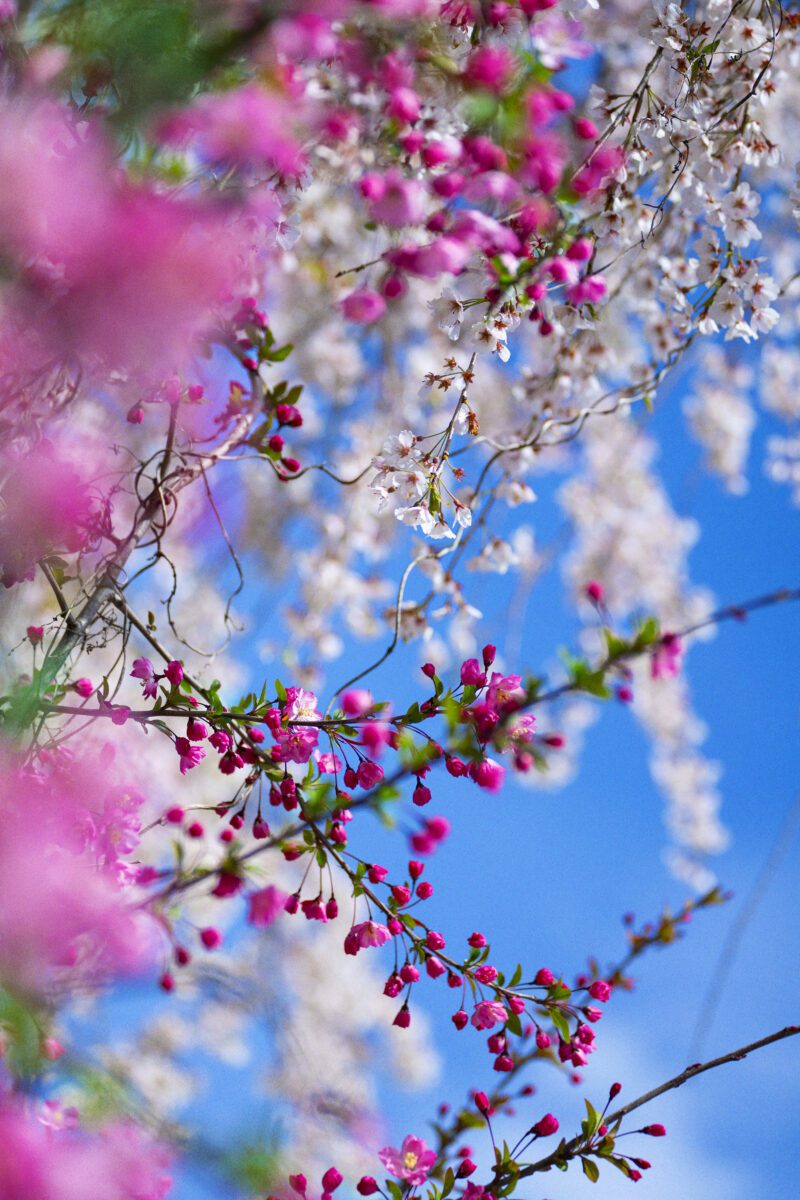
The installation’s presence in Soho recalibrates the relationship between image, body, and architecture, dissolving the boundary between curated space and everyday movement. As pedestrians pass beneath towering blooms and luminous aquatic scenes, they are briefly absorbed into a chromatic field that exceeds interpretation. The work resists resolution, instead privileging sensation, duration, and perceptual drift. Ninagawa’s own reflections on fragility – that contemporary life can feel “like sand escaping through our fingers” – find resonance here, where the city itself becomes unstable and luminous. Within London’s visual density, the installation introduces a momentary suspension of the ordinary.
Captive Blooms demonstrates how outdoor photography functions as a form of urban re-enchantment, temporarily interrupting the logic of the city with chromatic excess. In dialogue with programming at The Photographers’ Gallery and the contrasting historical lens of Japan House London, it reveals photography’s expanded role across public and institutional space. The work accumulates as atmosphere, colour and duration. London becomes both surface and participant – a city reconfigured through image. What remains is an environment suspended, where photography is not only seen but inhabited.
NINAGAWA Mika: Captive Blooms is at the Soho Photography Quarter, London until 1 June 2027: thephotographersgallery.org.uk
Words: Simon Cartwright
Image Credits:
1. NINAGAWA Mika, Untitled, from Liquid Dreams, 2003 © NINAGAWA Mika, Courtesy of Tomio Koyama Gallery.
2. NINAGAWA Mika, Untitled, 2021, from Flowers, Shimmering Light © NINAGAWA Mika, Courtesy of Tomio Koyama Gallery.
3. NINAGAWA Mika, Untitled, from Liquid Dreams, 2003 © NINAGAWA Mika, Courtesy of Tomio Koyama Gallery.
4. NINAGAWA Mika, Untitled, 2026 © NINAGAWA Mika, Courtesy of Tomio Koyama Gallery.