Argentinian artist Julio Le Parc died on 30 May aged 97. He will be remembered for artworks that surprise and delight audiences – the product of a career dedicated to engaging the public, whether that be through employing optical effects, crafting sensory encounters or encouraging physical interaction. His goal was to make us feel part of the art, and, this summer, Tate Modern’s show does exactly that. It presents over 60 pieces spanning from the late 1950s to the 2020s, including interactive installations, light sculptures and abstract paintings curated to form a “maze-like” experience. It’s about making audiences “aware of the role they can play in bringing art to life.” Light. Colour. Action are three words Tate uses to describe this show.
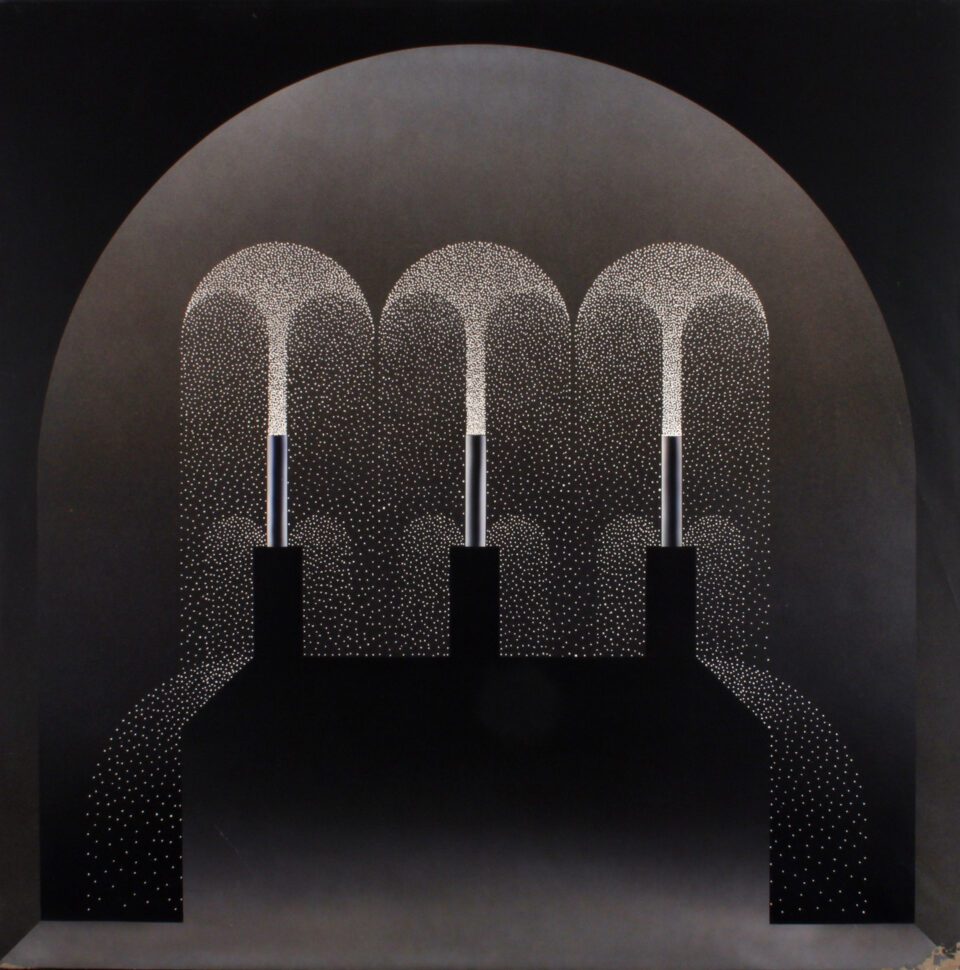
Born in Argentina, and studying at the Escuela de Bellas Artes in Buenos Aires, Le Parc moved to France in 1958 and joined the vibrant Parisian creative scene of the 1960s. The exhibition kicks off with early black-and-white gouache studies from this time, depicting geometric patterns that shift, rotate or flicker. Examples include Instability (1959) and Progressive Sequences (1959), where Le Parc employed mathematical principles to create optical illusions. Notably, some of these works also experiment with “retinal afterimages” – where high-contrast motifs leave an impression on the eye for long enough to be visible against a blank background. Here, viewers can “complete” Le Parc’s works just by looking at them.
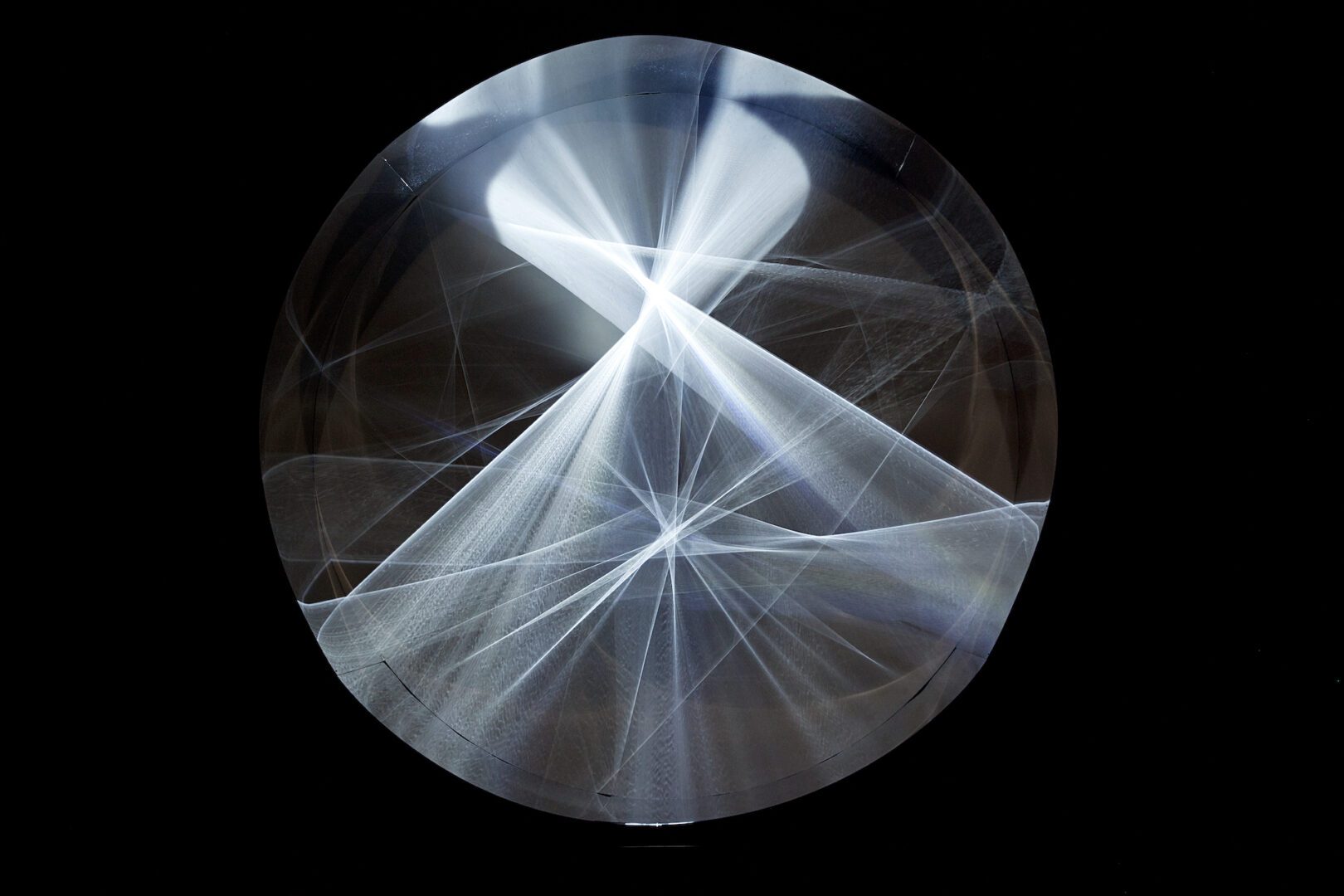
Tate also presents several of the artist’s most well-known kinetic sculptures. There are examples from the seminal Continual Light Mobiles, debuted in 1960, where spotlights create ever-changing visual displays, and suspended elements move in response to spectators’ movements. Light distortion effects are also explored in Unique Continual Light Cylinder (1962) as well as the room-sized installation Vibrating Light – Tulles (1968). Across all these works, Le Parc put into practice the tenets of the GRAV (Groupe de Recherche d’Art Visuel) manifesto: “It is forbidden not to participate. It is forbidden not to touch. It is forbidden not to break.” He was an active member of the group – which comprised 11 opto-kinetic artists including François Morellet, Vera Molnár and Yvaral – until its dissolution in 1968.
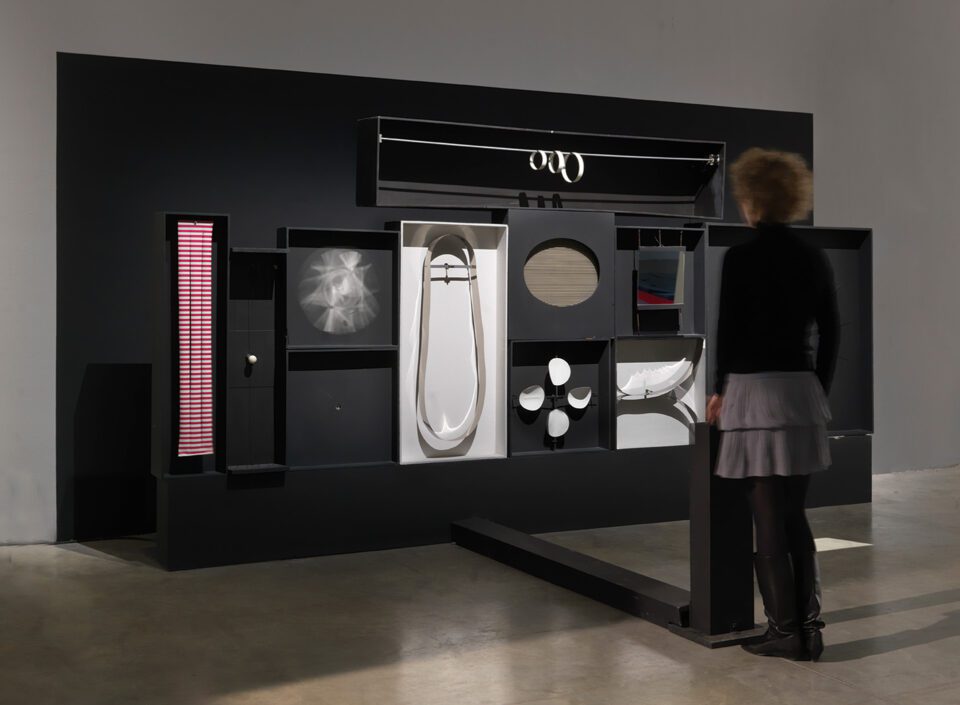
Other works on view at Tate invite even deeper physical participation. 64 Reflective Blades (2017) encourages viewers to move between a painting and a screen with a row of reflective stainless-steel strips, fragmenting and distorting their reflection. These are shown alongside Game Room installations from the mid 1960s, such as Ensemble of Eleven Surprise Movements (1965) and Pattern to Manipulate (1967), where visitors can press buttons and play along. It’s thrilling to see this in the context of today, where the boundary between games and art has dissolved even further. Just think of Larry Achiampong’s Wayfinder exhibition, which turned sections of Turner Contemporary, MK Gallery and BALTIC into dedicated video games spaces, or the playable works of Danielle Brathwaite-Shirley, Jakob Kudsk Steensen and Lu Yang.
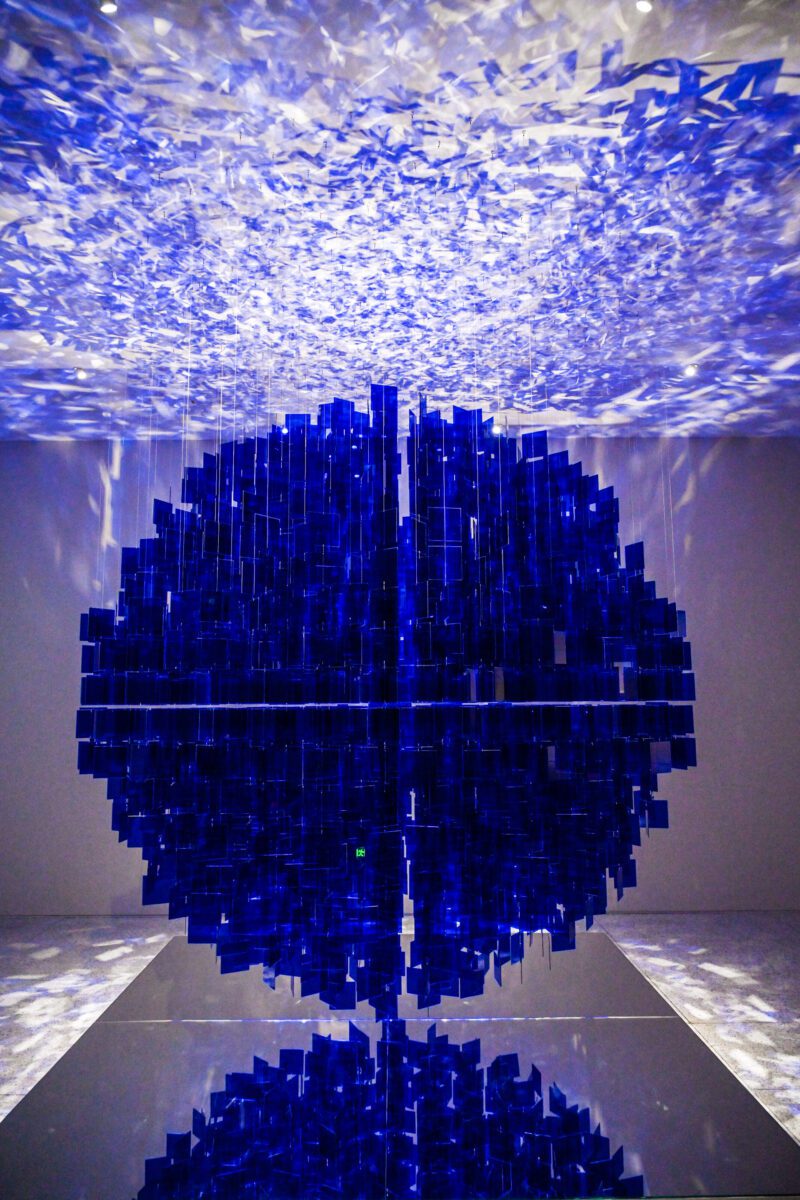
The show concludes with Le Parc’s explorations of colour, ranging from early experiments to more recent paintings. Much of the artist’s work utilises 14 signature hues, first developed in 1959 through works such as the Colour Project, a series of small gouaches in which Le Parc extrapolates every possible variation of his palette. The striking Blue Sphere (2001-2022) brings all these ideas together. Suspended from above and formed of deep blue Plexiglass squares, it feels like a centrepiece – a planet orbiting the gallery.
You can trace throughlines from Le Parc to so many of today’s most popular interactive exhibitions – from the “solid-light” installations of Anthony McCall to Olafur Eliasson’s participatory environments and Carsten Höller’s preoccupation with play. Light. Colour. Action is a portrait of an artist with a singular vision, who continued to innovate and never stood still. It is certain to be a standout of the summer.
Julio Le Parc: Light. Colour. Action is at Tate Modern, London, from 11 June 2026 – 3 May 2027.
Words: Eleanor Sutherland
Image Credits:
1. Julio Le Parc,Unique Continual Light Cylinder1962-2012.Lent by theAtelier Le Parc 2026 © ADAGP, Paris and DACS, London 2025. Photo ©Everton Ballardin–Galeria Nara Roesler, 2013.
2. Julio Le Parc, Alchemy 175, 1991. Lent by the Atelier Le Parc 2026. © ADAGP, Paris and DACS, London 2025.
3. Julio Le Parc, Blue Sphere 2013. Tate. Lent by the Tate Americas Foundation, courtesy of the Latin American Acquisitions Committee 2023. © ADAGP, Paris and DACS, London 2025. Photo © Museum of Art Pudong.
4. Julio Le Parc Ensemble of Eleven Surprise Move ments 1967 Lent by the Atelier Le Parc 2026 © ADAGP, Paris and DACS, London 2025. View of the Julio Le Parc solo show, Palais de Tokyo (27.02.13 – 13.05.13) © Adagp, Paris, 2026 Photo: André Morin