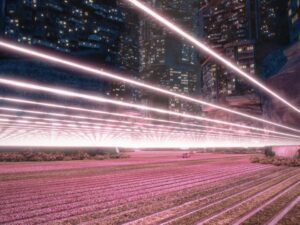
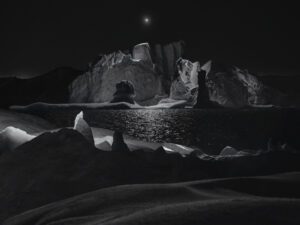
The term “El Niño” has appeared across numerous news articles and social media this summer. But what does it mean? According to the Met Office, an El Niño is declared when sea temperatures in the tropical eastern Pacific rise 0.5 °C above the long-term average. This fluctuation can cause all manner of weather events, from droughts and wildfires to flooding and marine disruption. In 2023, an El Niño triggered the fourth global mass coral bleaching event, which impacted around 84% of the world’s reefs. Port Antonio, Jamaica, was one of the most severely affected areas. The region is now the subject of Hope Line (2026), a new artwork by Julian Charrière (b. 1987) opening at the Museum of Contemporary Art in Los Angeles. Visitors can watch, listen and even speak to the habitat via a live stream, delivered via a subsea camera.
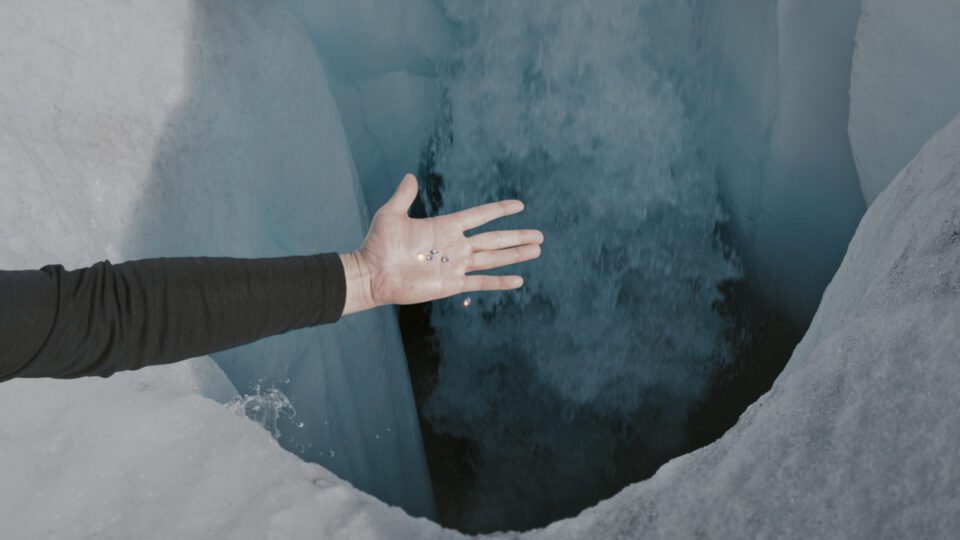
The piece central to Deep End, opening this November and one of two Eric and Wendy Schmidt Environment and Art Prize exhibitions in LA this season. Charrière is a Swiss-French artist based in Berlin, who has long engaged with the relationship between humanity and nature. His practice is rooted in scientific research and fieldwork, taking him to glaciers, volcanoes and nuclear test zones around the world. The goal: to uncover the realities of rapid industrialisation, extraction and pollution, along with other urgent issues at the forefront of the climate conversation. As its title suggests, Deep End is concerned with Charrière’s work in marine environments, engaging with the sea not only as a regenerative carbon sink, habitat and chemical marker for climate change, but also as a vast biogeological system of which we are an integral part. This idea – of every living thing, including humans, being connected – is central to Charrière’s approach. “If an artwork can, even momentarily, alter our relationship to a landscape, be it an ocean zone, or a glacier, or a reef, then it can perhaps also reshape how we understand our place alongside and within that environ, and the responsibilities and implications that come with it,” he says.
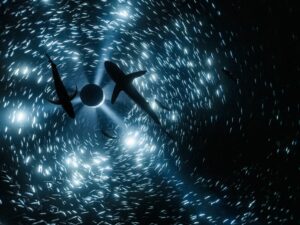
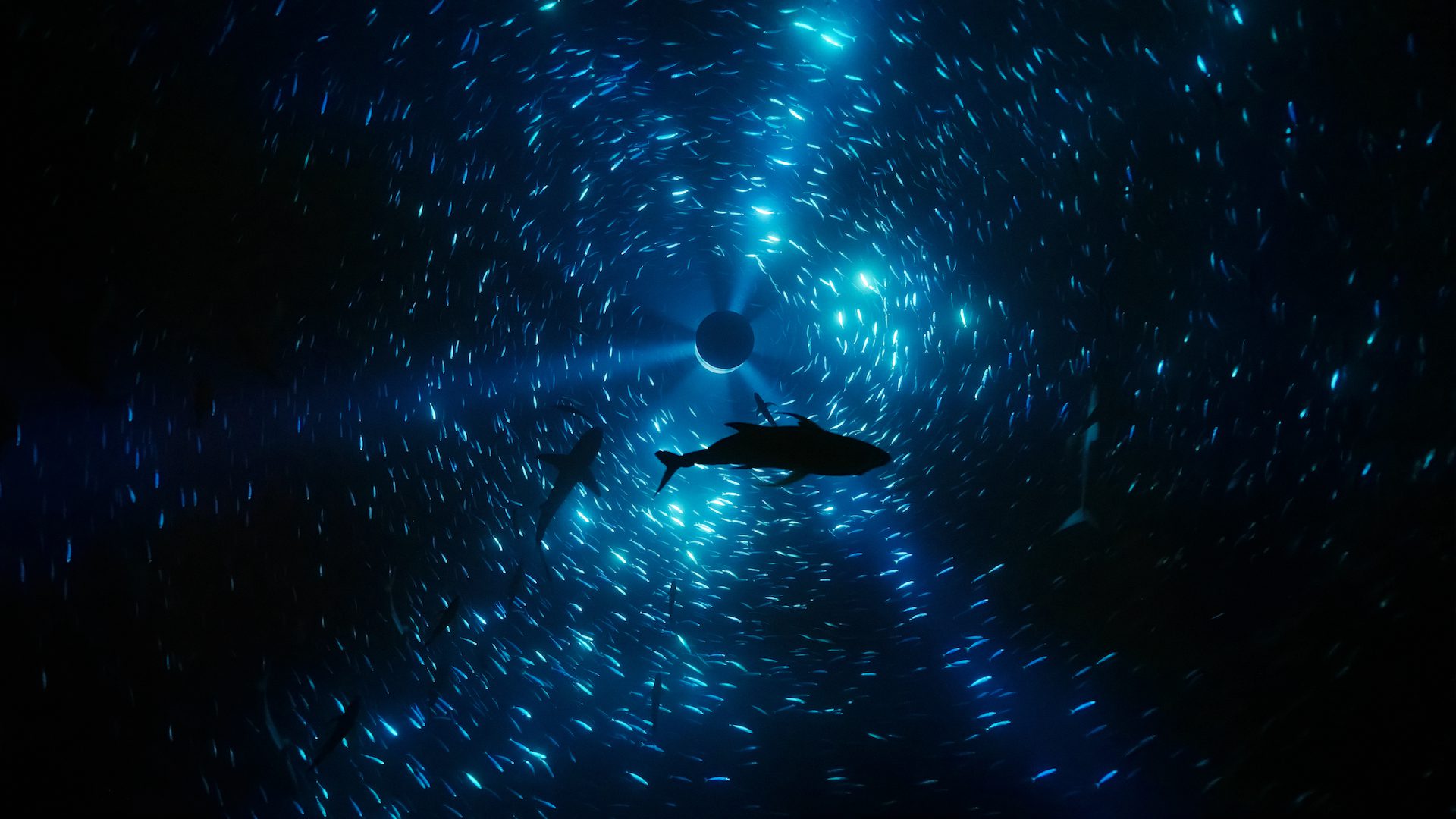
Beyond Hope Line, the exhibition also marks the US premiere of Midnight Zone (2024/2025), a film and installation that plunges viewers downward into the waters of the Pacific Ocean. It is set within the Clarion-Clipperton Fracture, an area between Hawaii and Mexico whose rich seabed is a target for deep-sea mining. A Fresnel lighthouse lens, traditionally used to aid navigation on the ocean’s surface, descends slowly into the water, guiding viewers towards the so-called ‘midnight zone,’ which, whilst too deep for the rays of the sun to penetrate, is richly populated by fish, sharks and countless other marine animals. The same lens rotates inside MOCA’s galleries – casting a ghostly light throughout the museum.
Deep End offers engrossing viewer encounters: darkened exhibition spaces filled with multi-sensory experiences, dreamlike moving image works and soundscapes. It takes audiences on a visceral journey into some of the planet’s most vulnerable and remote ecosystems, encouraging careful listening to the constant communication between the organisms that occupy them. Materials such as bitumen, ground coral and mud from the deep seafloor are even embedded in several works. This sense of immersion is important to Charrière, who reflects: “Art, for me, is about lingering on reality. It is not necessarily about changing anyone’s mind, but about creating spaces and encounters that allow us to see and feel anew; to re-attune our senses and values. Because attention is, in and of itself, political; it has a charge. It can be an act of reorientation, shifting how we think about being in and with the world.”
But Deep End is more than just another spectacle or light show. It’s about education and public awareness, reflecting the Eric and Wendy Schmidt Environment and Art Prize’s commitment to creatives working at the intersections of art, climate and environmental justice. Hope Line, for example, was made in collaboration with a group of advisors including marine scientists, researchers, designers and coral restoration partners. Assistant Curator Paula Kroll feels that this collaborative process has been central to the exhibition, “grounding its immersive experiences in actionable support for communities working directly to protect both the deep sea and vulnerable reef ecosystems across the world.” In doing so, Charrière joins a host of contemporary names – including Mandy Barker, whose sculptures of marine waste debris are as unsettling as they are beautiful – in using art as a call to action protect the underwater world. As Kroll continues: “Deep End draws attention to the ways we perceive the ocean, deploying art as a tool for generating understanding and stewardship for marine environments.”
Julian Charrière: Deep End is at The Museum of Contemporary Art, Los Angeles.
15 November – 6 June.
Words: Eleanor Sutherland
Image Credits:
1. Julian Charrière Midnight Zone, 2024 Film still © The Artist / VG Bild-Kunst, Bonn 2026.
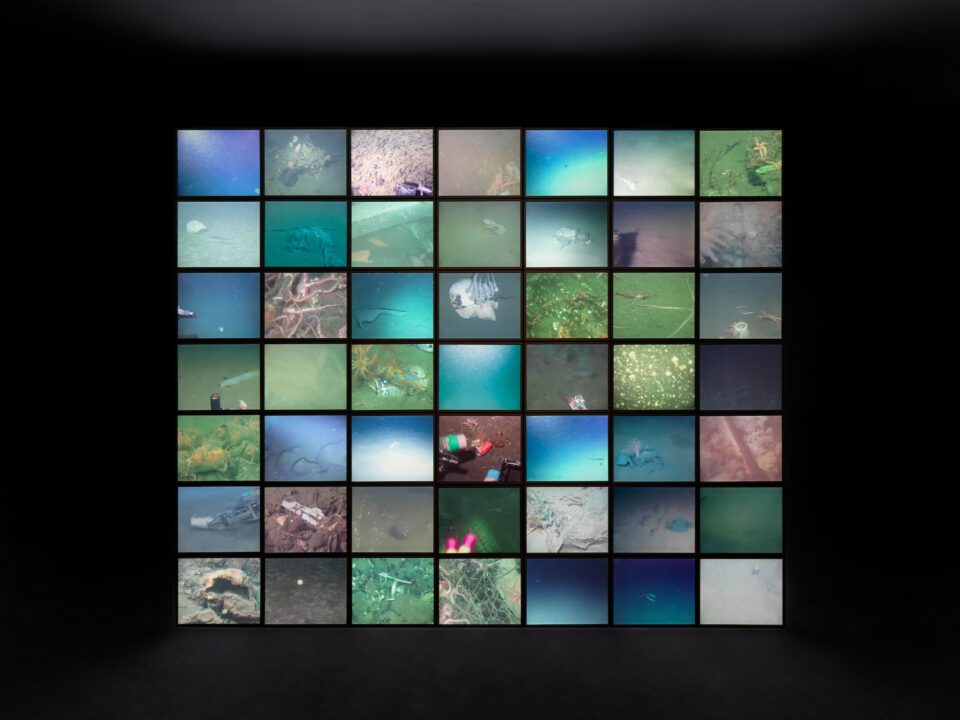
2. Julian Charrière Pure Waste, 2021 Video still © The Artist / VG Bild-Kunst, Bonn 2026.
3. Julian Charrière The Gods Must Be Crazy, 2019 Installation view, Julian Charrière: Midnight Zone, Museum Tinguely, Basel, Switzerland, 2025 © The Artist / VG Bild-Kunst, Bonn 2026 Photo by Jens Ziehe.
4. Julian Charrière Midnight Zone, 2024 Film still © The Artist / VG Bild-Kunst, Bonn 2026.