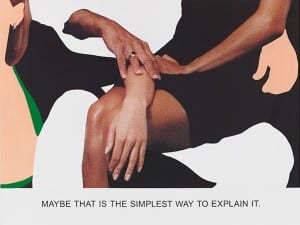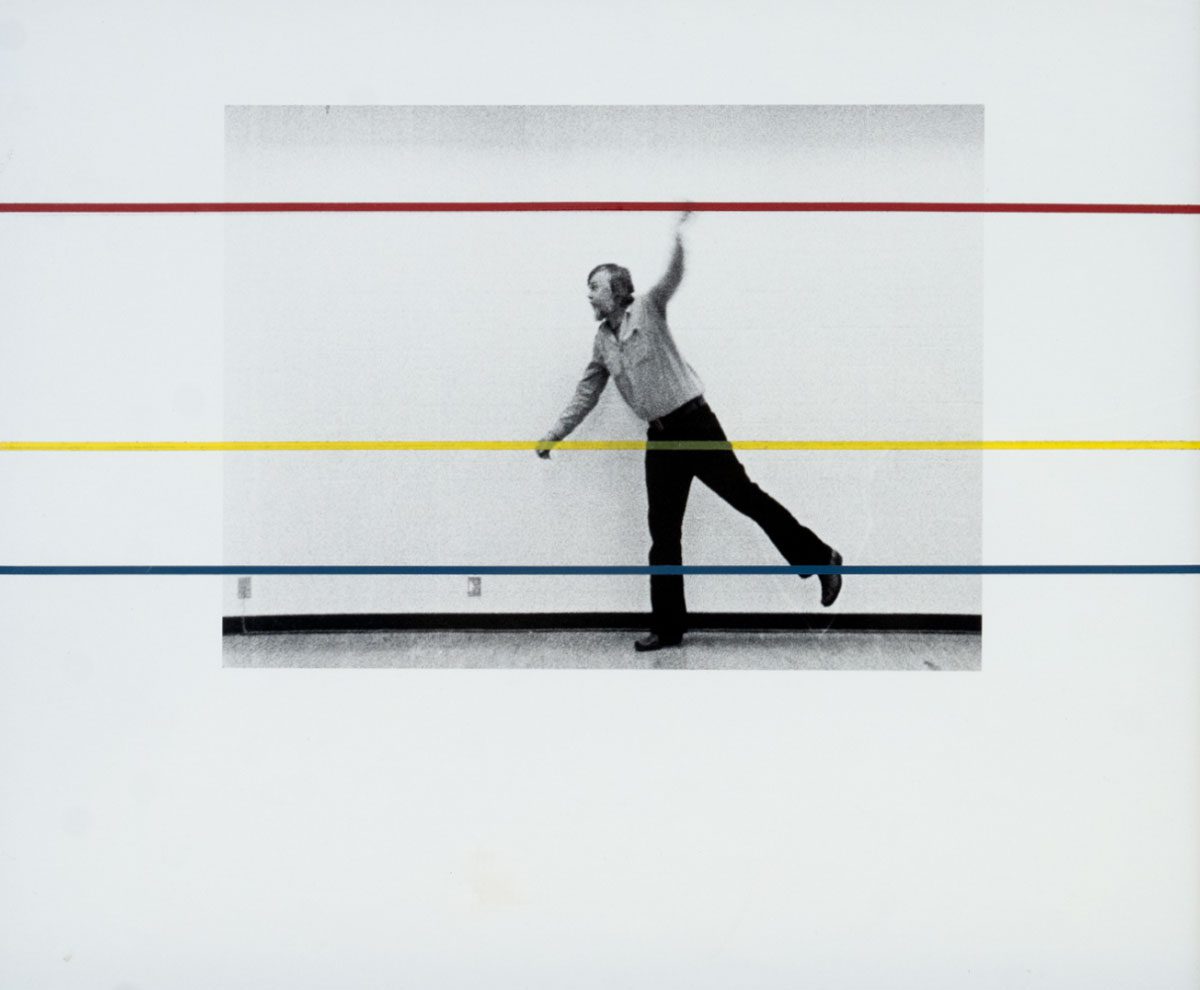
John Baldessari (1931–2020) occupies a rare position in contemporary art history: an artist whose influence is measured less through a singular aesthetic than through a transformation in how artists understand images, authorship and meaning. After abandoning traditional painting in the late 1960s, Baldessari redirected his practice towards language, photography, film and appropriation, questioning the assumptions that had governed artistic production for generations. His work dismantled the romantic idea of the artist as solitary creator, replacing individual expression with systems, structures and conceptual investigation. Through deadpan humour and philosophical precision, he revealed that images are not passive reflections of the world but active participants in shaping cultural understanding. His death in 2020 marked the end of an extraordinary career, yet the questions he posed remain embedded in contemporary art’s ongoing debates around representation, technology and visual power.
The continued relevance of Baldessari’s thinking can be seen across the practices of artists working today who explore the instability of images and the construction of identity. Cindy Sherman, Barbara Kruger and Cao Fei have each developed approaches that echo his interrogation of media, authorship and cultural codes while moving into distinct territories. Sherman’s staged photographs expose identity as a constructed performance shaped by visual conventions; Kruger’s text-based interventions examine the ideological forces embedded within advertising, language and consumer culture; Fei’s digitally focused installations and virtual environments investigate how technology reshapes experience, identity and collective imagination. Together, these practices reveal Baldessari’s lasting contribution: the understanding that images do not simply communicate meaning but actively produce the realities through which we understand the world. His legacy exists not as a fixed visual language, but as a critical framework that continues to shape how artists analyse an increasingly image-saturated culture.
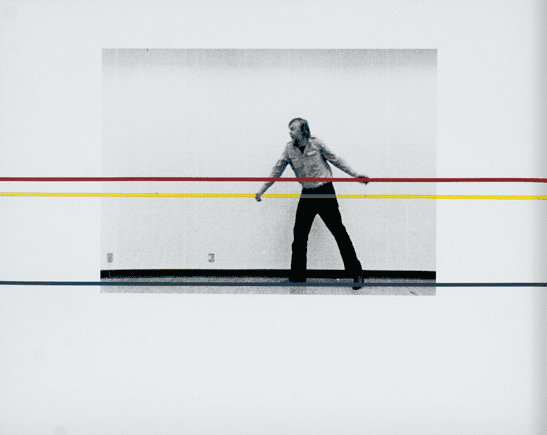
This enduring influence provides the foundation for John Baldessari: The End of the Line, a major survey opening at Pérez Art Museum Miami (PAMM) that brings together nearly 40 works spanning five decades. Drawn largely from the Craig Robins Collection, the exhibition marks the first significant institutional presentation of Baldessari in South Florida and examines the artist’s sustained engagement with the relationship between image and language. Organised originally by Karen Grimson, curator of the Craig Robins Collection and director of art and culture at Miami Design District, the presentation at PAMM is organised by José Carlos Diaz, Senior Director of Curatorial Affairs and Chief Curator, with Fabiana A. Sotillo. Rather than functioning simply as a retrospective, the exhibition positions Baldessari as a thinker whose investigations remain central to contemporary discussions around visual culture.
PAMM provides an especially significant context for reconsidering an artist so invested in the structures of contemporary image production. Since opening its Herzog & de Meuron-designed building in downtown Miami in 2013, the museum has developed a programme that connects international artistic practices with the social, cultural and geographic complexities of South Florida. Recent exhibitions, including Woody De Othello: coming forth by day and Shadows and Traces: Selections from PAMM’s Collection, have explored themes of materiality, memory and perception, creating a wider institutional dialogue around how individuals encounter and interpret their environments. In Miami, a city shaped by advertising, architecture, tourism and cinematic spectacle, Baldessari’s examination of visual systems gains particular resonance. His work asks audiences to consider not only what they see, but how they have learned to see.
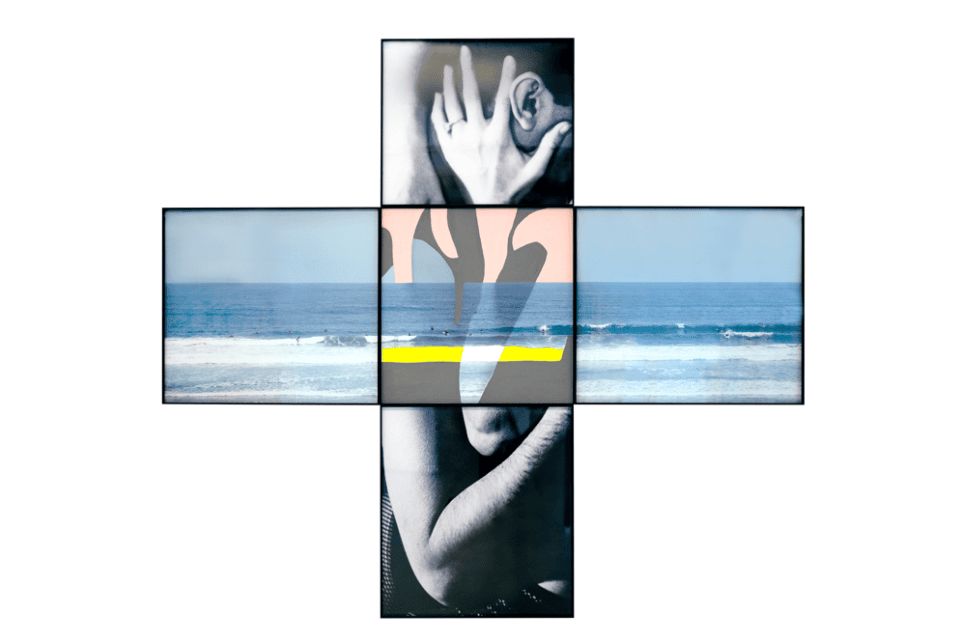
Baldessari’s radical departure from painting was not simply an artistic reinvention but part of a broader philosophical shift within late 20th century culture. His practice emerged alongside conceptual art’s challenge to modernist ideas of originality, craftsmanship and medium-based purity, aligning with wider theoretical developments around signs, language and representation. The influence of semiotics – the study of how meaning is constructed through symbols – is deeply embedded in his approach, as he treated images and words as unstable elements. Works such as Clement Greenberg (1966–1968), in which he commissioned a commercial sign painter to reproduce text from the influential critic’s writing, exposed the conventions surrounding artistic labour and authority. The work’s humour lies in its simplicity, yet its implications are profound: if the artist’s hand disappears, where exactly does artistic value reside?
That questioning of authorship became even more explicit through the Cremation Project (1970), when Baldessari destroyed paintings produced between 1953 and 1966, transforming their ashes into a symbolic rejection of his earlier practice. The gesture reflected the conceptual movement’s broader desire to move beyond the artwork as precious object and towards art as proposition, process and thought. It also anticipated later postmodern debates surrounding appropriation, where artists began to challenge the ownership of images and the distinction between creation and selection. Baldessari understood that modern culture was already built from borrowed materials – advertisements, cinema, newspapers and mass media – and that originality itself was increasingly complicated. His work did not reject images but examined the systems that determine how they gain authority.
Photography became the ideal medium through which Baldessari could investigate these tensions. In works such as Kissing Series: Simone. Palm Trees (Near) (1975) and Blasted Allegories (1978), he disrupted conventional expectations of photographic narrative by isolating, repeating and recombining fragments of existing visual information. The resulting compositions resemble investigations into the grammar of images, revealing how meaning is created through sequence, framing and omission. Rather than presenting photography as a transparent record of reality, Baldessari treated it as a constructed language with its own rules and contradictions. This approach anticipated the later rise of appropriation art and remains relevant in an environment where images are edited, reproduced and redistributed across digital platforms.
The contemporary relevance of Baldessari’s practice becomes even clearer when considered against today’s attention economy. In a culture where billions of images compete for visibility each day, questions around authorship, ownership and interpretation have become increasingly urgent. The challenges he explored through found photography and media fragments now appear in debates around AI, algorithmic selection and digital manipulation. Baldessari’s work suggests that the central issue is not simply the quantity of images surrounding us, but our ability to critically understand the forces shaping their circulation. His practice offers a model for looking slowly and analytically at a moment defined by speed.
Alongside his artistic production, Baldessari’s influence was amplified through teaching, particularly during his time at the California Institute of the Arts and the University of California, Los Angeles. His approach encouraged generations of artists to think beyond conventional categories and to view art as a space for experimentation and intellectual exchange. The artists associated with his teaching legacy helped define the expanded field of contemporary practice, where installation, photography, performance and conceptual strategies increasingly intersect. This educational impact reinforces the idea that Baldessari’s greatest achievement was not creating a recognisable style but opening possibilities for others. His influence is visible wherever artists question how images function rather than simply how they appear.
John Baldessari: The End of the Line is a retrospective of an artist whose work remains unresolved in the most productive sense. By bringing together painting, photography, video and installation, the exhibition traces a career devoted to examining the gap between seeing and understanding. The collaboration with the Craig Robins Collection also highlights the relationship between Baldessari and Miami, where his public commissions in the Design District created a lasting connection between his ideas and the city’s visual landscape. More than a historical survey, the show becomes an opportunity to reconsider how contemporary culture produces meaning through images. At a time when visual information has become one of the dominant forces shaping public experience, Baldessari’s questions feel less like reflections on the past and more like urgent propositions for the present.
John Baldessari: The End of the Line is at Pérez Art Museum Miami from 20 August – 9 May 2027: pamm.org
Words: Anna Müller
Image Credits:
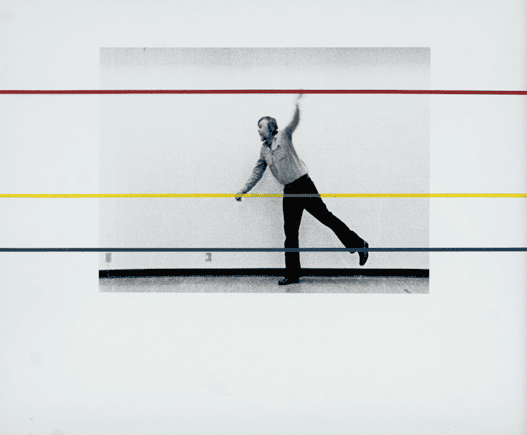
1&4. John Baldessari, Throwing a Ball to Get Three Melodies and 15 Chords.
2. John Baldessari, Throwing a Ball to Get Three Melodies and 15 Chords.
3. Intersection Series: Embrace (Hand and Ear)/Seascape, 2001. 5 digital photographic prints (one with acrylic paint) mounted on foam LVC board. 76 x 84 3/8 inches framed.
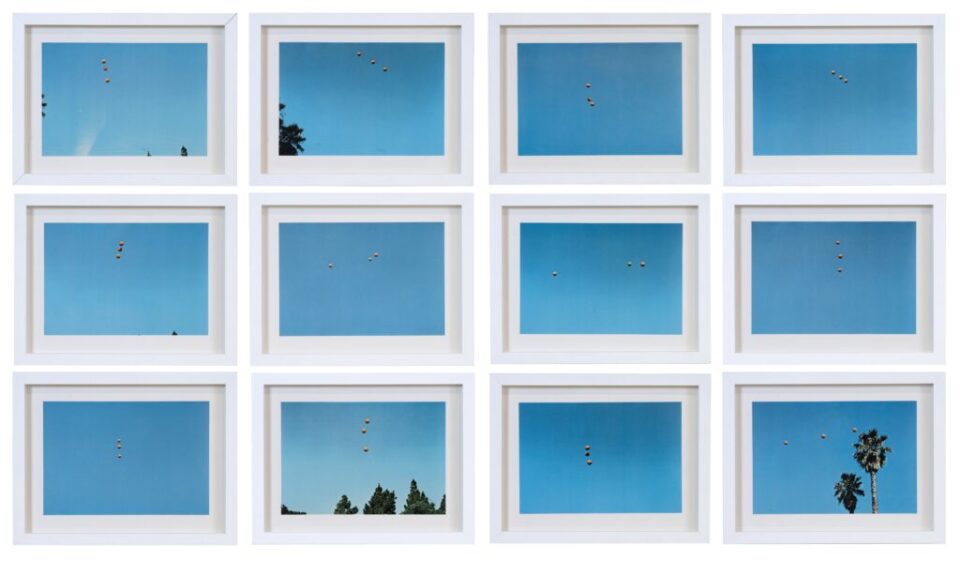
5. Throwing Three Balls in the Air to Get a Straight Line (Best of Thirty-Six Attempts), 1973. Offset lithograph in twelve parts, 10 1/2 x 13 5/8 inches framed.