In the late 1970s and early 1980s, an unofficial group of artists emerged in New York City. Their approaches, subject matter and methods were vastly different, but they were united by a common interest in, as MoMA describes, “using the tools of mass media to critique it, questioning notions of authorship, originality and identity as a fixed entity.” The group’s name is somewhat misleading, taken from a 1977 exhibition title, as many artists also worked in performance, installation film and video. Major names include Cindy Sherman, whose self-portraits place the artist as various imagined characters, evoking typical female roles in performance media, and Barbara Kruger, whose visual word art consists of black-and-white images, overlaid with declarative captions. Her distinctive “I shop therefore I am” and “Your body is a battleground” statements are immediately recognisable. Together, these artists provided new frameworks with which to analyse popular culture and the mass media.
Marlo Pascual (1972 – 2020) is part of this rich tradition, creating photo based works that amuse, confuse and provoke viewers. Pascual primarily used found imagery of anonymous and often glamorous women from vintage or thrifted sources, which she then dramatically remixed or recontextualised with the addition of sculptural elements. Marlo Pascual: Making Something Out of Something, at National Museum of Women in the Arts (NMWA), is the first solo museum exhibition of Pascual’s work in 15 years. The show familiarises viewers to an artist who blurred the line between photography and sculpture. Virginia Treanor, NMWA Senior Curator, says: “The exhibition not only introduces visitors to the work of this visionary artist but also preserves Pascual’s legacy. We are proud to be ongoing champions of her work, which, through the transformations of seemingly familiar images, challenges us to see the world around us in new ways.” Pascual died of cancer at the age of 48, at a moment when her work was just gaining momentum, and NMWA plays an integral role of keeping her influential practice accessible for future generations.
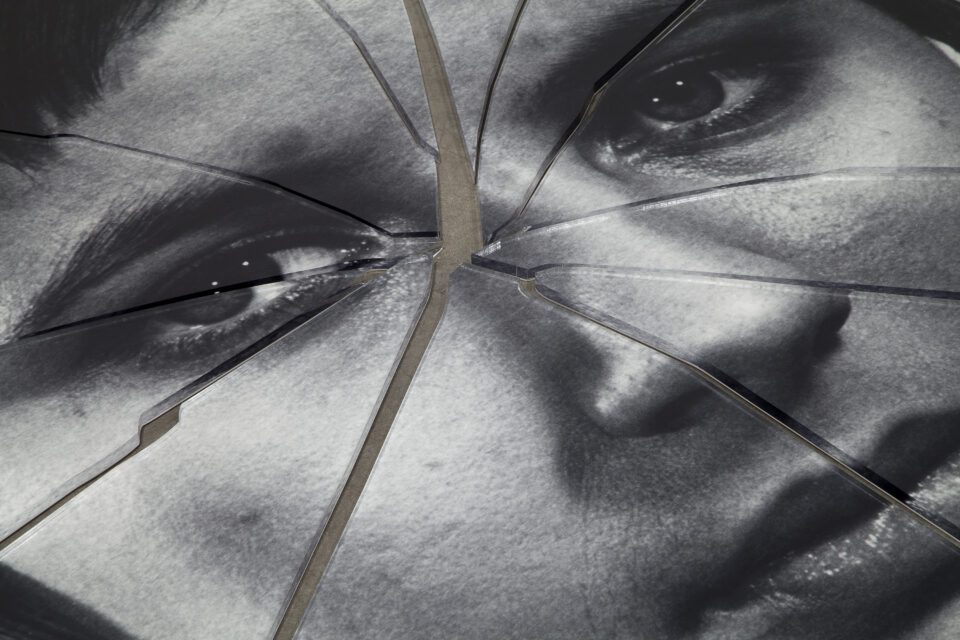
The show features 17 works, made between 2009 and 2014, that have been drawn from the museum’s collection. They reveal how Pascual exaggerated and highlighted the artifice of the vintage images she chose. She gave them a new aesthetic function, frequently encasing the enlarged images in thick Plexiglas and pairing them with common yet unexpected objects. By extending them well beyond their intended size, the artist asserted the physicality of the images, giving them volume and form akin to sculpture. Pascual spoke of choosing imagery that she felt was “overtly constructed,” such as studio portraits, yearbook photos and advertisements. The artist noted: “I think about the construction of the image – how it’s a fragment, and not the whole story, not the truth with a capital ‘T’.”
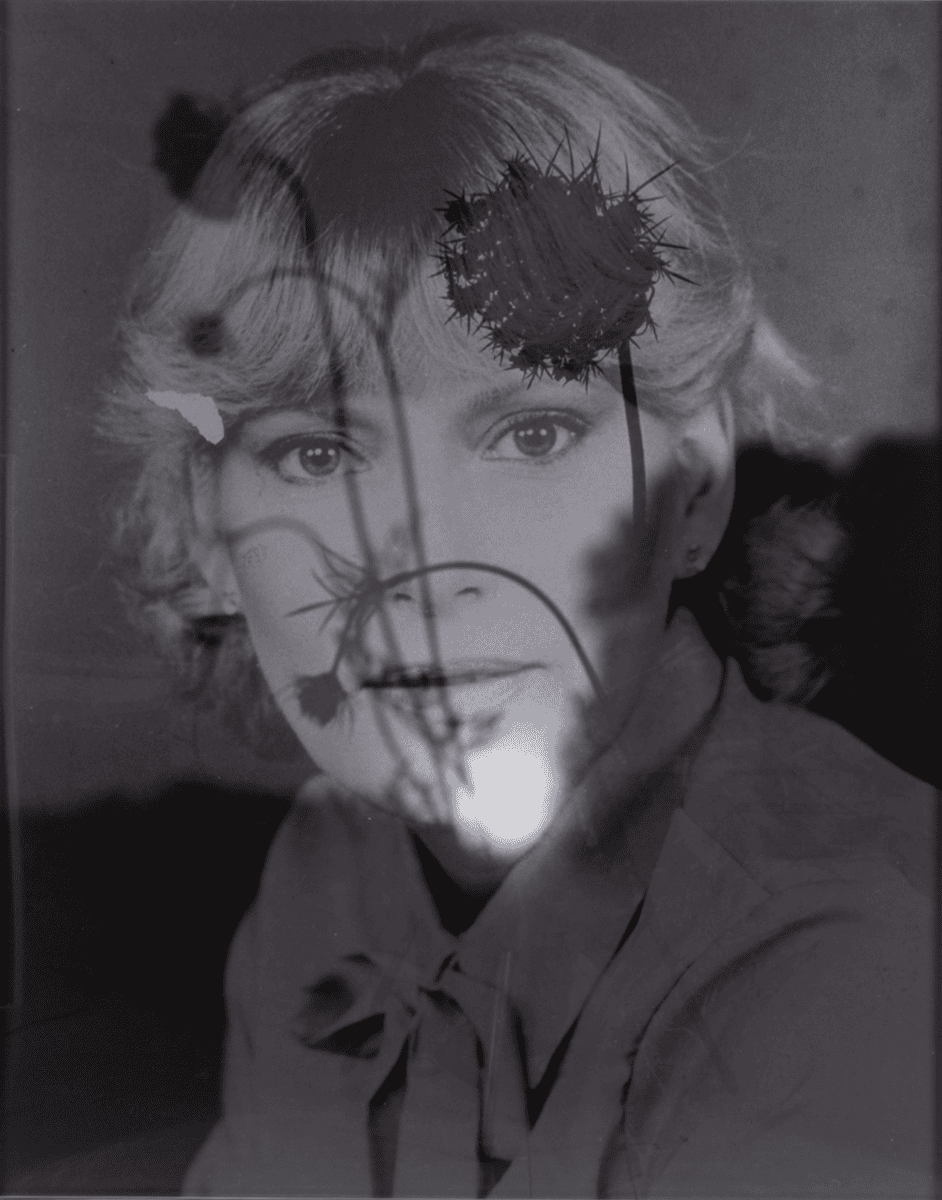
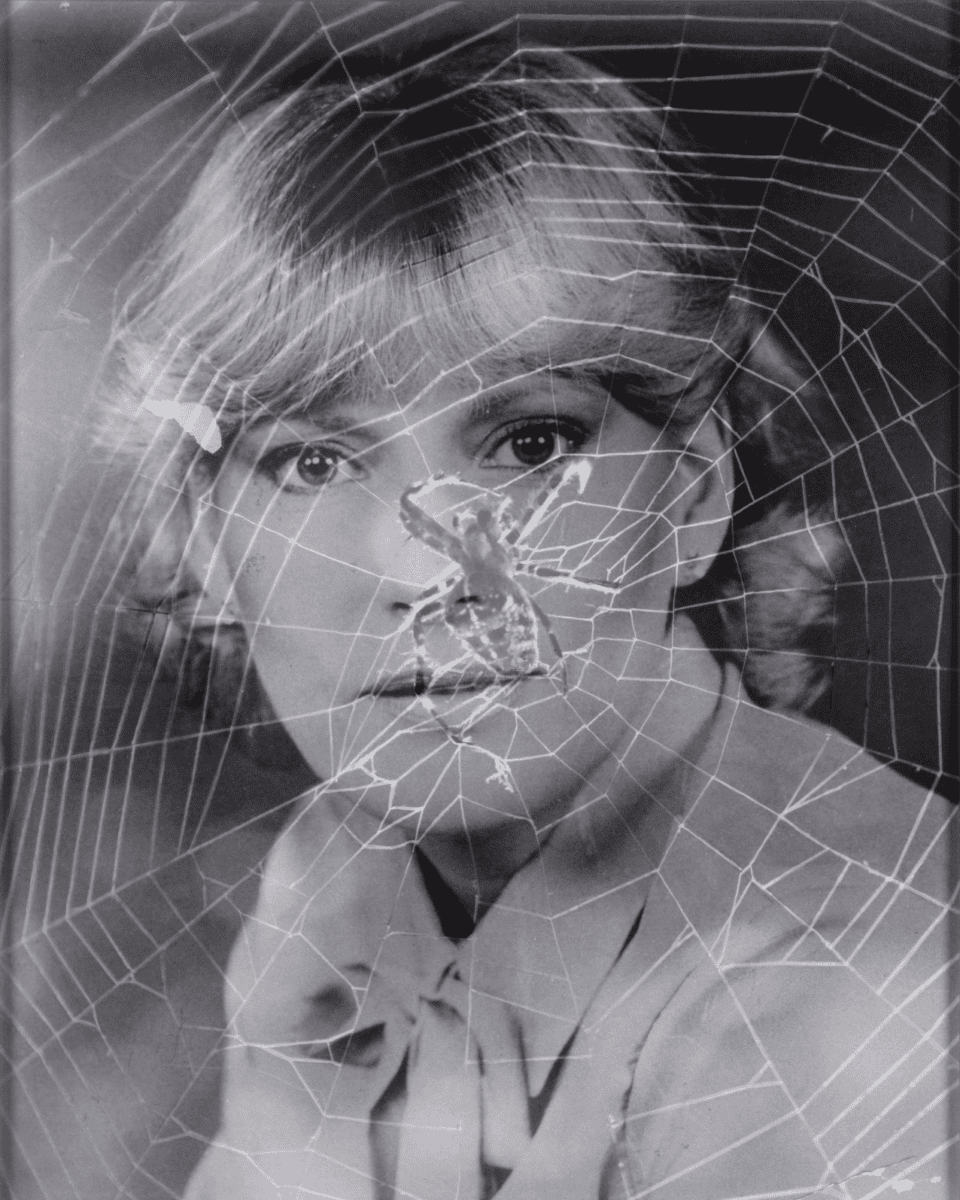
Pascual’s work transforms what is familiar and even nostalgic into something uncanny, prompting deeper contemplation of what is often taken for granted. Heads, hands, arms and legs appear disconnected from the rest of the body and become compositional elements of the larger whole. Her process, a creative metamorphosis, can be unsettling, as viewers perceive an emotional tension between beauty and destruction. In a series of eight photographs in the exhibition, a portrait of a young blonde woman is repeatedly obscured by objects and shadows, including a hand, spiderweb, table and flowers. Whether intended as humorous or sinister, these incongruous elements call attention to the artist’s manipulation.
In another work, Pascual flipped a bust-length portrait of a woman upside down and positioned the head and neck at a ninety-degree angle beside the torso. She then placed a table lamp directly on top of the woman’s face, obscuring it completely. In this way, the portrait of the woman becomes the physical support for this common household item, relegating her to the same inanimate status. The curator continues: “As many of Pascual’s fragmentary images are of women, it is hard not to view her works as commentary on the objectification of women that such ‘overtly constructed’ imagery sustains. The transformation of the images into large, stationary objects, which often serve as support for domestic objects like lamps and candle holders, seems to bring the absurdity of ‘women as object’ to its inevitable, irrational conclusion.”
The artist once explained her approach to found objects as “I’m not destroying them. I like to think I’m giving them a new life.” NMWA’s exhibition feels as though it follows in this spirit, giving new life to Pascual’s archive and allowing it to reach new audiences. The museum has a well-earned reputation for serving as a vital advocate for better representation of women and non-binary artists and this show is a prime example of this effort. Pascual deserves to sit alongside contemporaries that are household names, and in dedicating this show to her work, NMWA begins the process of making this a reality.
Marlo Pascual: Making Something Out of Something is at National Museum of Women in the Arts, Washington D.C. until 28 February 2027: nmwa.org
Words: Emma Jacob
Image Credits:
1. Marlo Pascual, Untitled, 2014; Laser-cut digital C-print on Plexiglas, 55 x 40 in.; National Museum of Women in the Arts, Gift of Tony Podesta Collection, Washington, D.C.; Image courtesy of the artist and Casey Kaplan. A detail shot of a black-and-white image of a person’s face printed on plexiglas that has been shattered in the center.
2. Marlo Pascual, Untitled, 2013; Digital C-print, 50 1/8 x 40 1/8 in.; National Museum of Women in the Arts, Gift of Tony Podesta Collection; Image courtesy of the artist and Casey Kaplan, New York.
3. Marlo Pascual, Untitled, 2013; Digital C-print, 50 1/8 x 40 1/8 in.; National Museum of Women in the Arts, Gift of Tony Podesta Collection; Image courtesy of the artist and Casey Kaplan, New York.