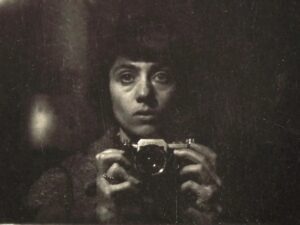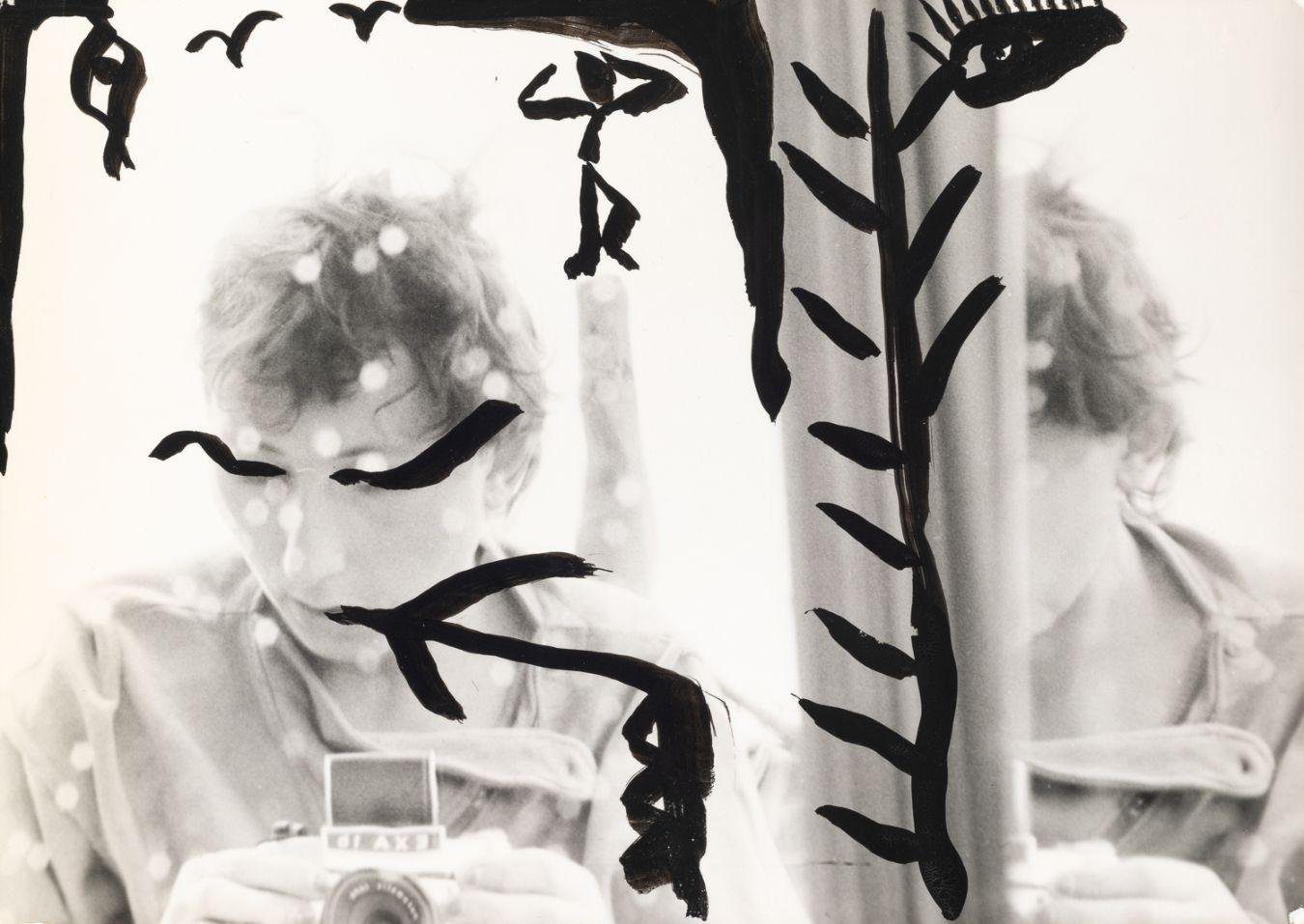
Experimental. Dissident. Subversive. These words are often associated with Gabriele Stötzer (b. 1953), an artist whose practice is closely linked to her experiences of imprisonment and political struggle in the German Democratic Republic (1949-1990). In 1977, in connection with a petition campaign against the expatriation of singer-songwriter Wolf Biermann, she was arrested on charges of “defaming the state” and sentenced to one year in Hoheneck Women’s Prison. This event was a turning point in her life and career, strengthening her resolve to resist oppression whilst also sparking a desire to become an artist. Following her release, she joined the literary and cultural underground in Erfurt, where she befriended punks and squatters and began to organise exhibitions, public interventions. studios and workshops.
Stötzer’s early output spanned drawing, painting, writing and weaving, but she turned to photography at the start of the 1980s, stepping both in front of and behind the camera. In the mid-1980s, she co-founded the Künstlerinnengruppe Erfurt, or Erfurt Women Artists’ Group, which was the only female performance collective of its kind in East Germany. “Our guiding principle was to make our lives the subject of art and to express them through fashion, film and performance,” she remembers. “In this way, our individual acts of protest and resistance felt meaningful, helping us not to fade away in solitary rebellion.”
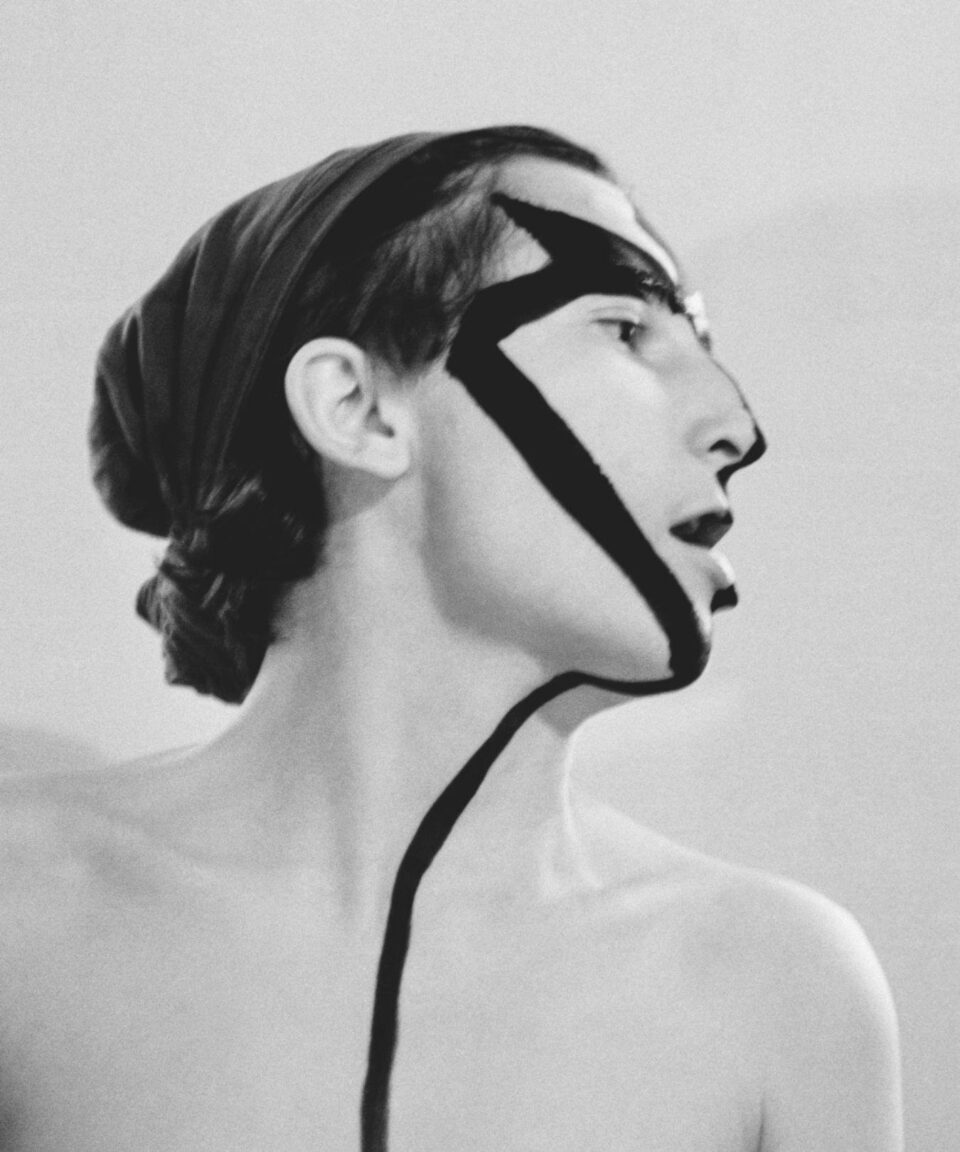
Now, Dabeisein und nicht schweigen (Showing up and Not Remaining Silent) – a new exhibition dedicated to Stötzer – launches at Berlin’s Gropius Bau. It opens with Super 8 films by the Künstlerinnengruppe Erfurt, created between 1983 and 1990, in which observations of everyday life are interwoven with surreal, dreamlike sequences and actions. The moving-image piece Veitstanz/Feixtanz (1988), for example, features Stötzer and her collaborators reenacting the medieval phenomenon of St. Vitus’ Dance, wherein groups of people, sometimes thousands, danced to the point of collapse. Here, ecstasy is positioned as a form of disobedience and resistance – an “expression of the freedom that’s in all of us, if we decide to take it.”
There are 150 pieces in total. Across various rooms, they combine personal experience with an unflinching gaze at social conditions, often centring the artist’s own body as a site of feminist resistance. There are photographic experiments with gesture and movement, as well as texts, drawings and mixed-media. Self-published books are central – Stötzer describes them as her “own little galleries” – as well as a new piece created especially for the show. Undine kommt (Undine Comes) (2026) is a large-scale sculpture-meets-tapestry composed of ceramic and sheep’s wool, repurposed from works created back in the 1980s.
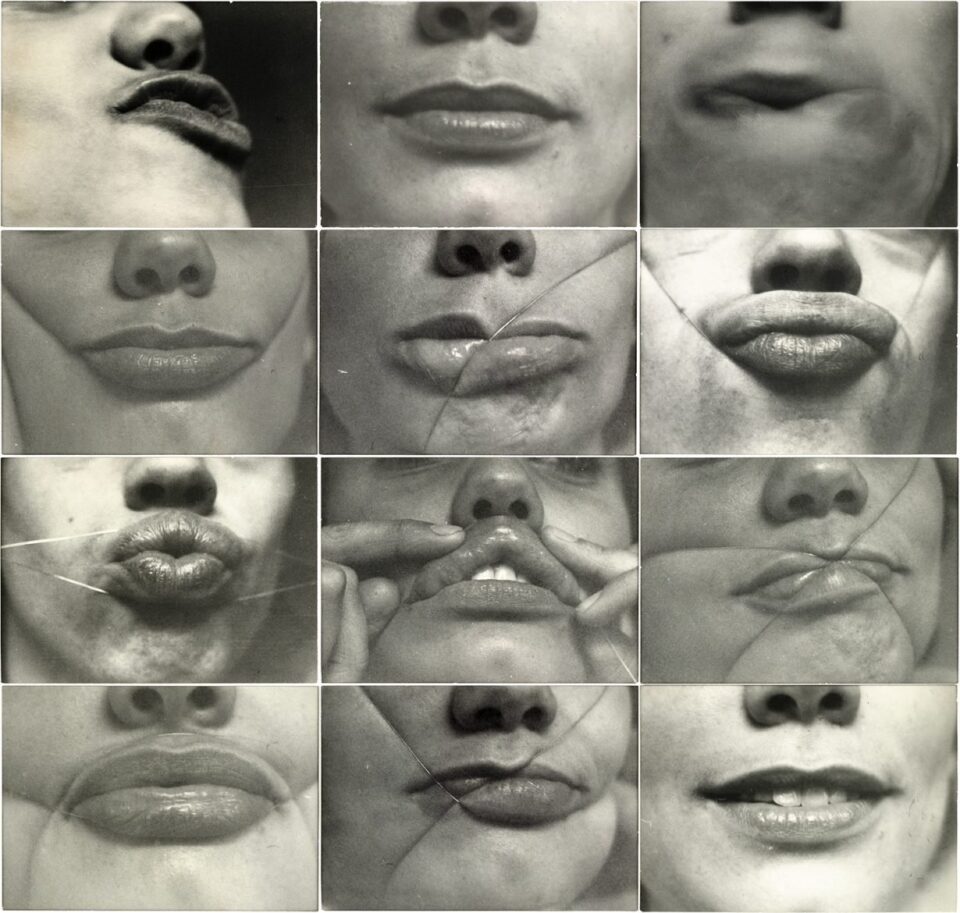
Dabei sein und nicht schweigen brings renewed attention to a true trailblazer who helped shape East Germany’s underground cultural scene. Across film, photography, performance and textiles, Stötzer challenged political and social restrictions, using creative expression as a form of dissent. Her work remains a testament to the role art can play in resisting oppression and asserting individual freedom. “Stötzer’s practice is defiant and distinctive,” says Jenny Schlenzka, Gropius Bau Director. “To this day, her art operates outside of institutional structures and exposes injustice. With her sharp eye on society, clear artistic voice and punk spirit, Stötzer challenges categorisation and demonstrates how art might act as a catalyst for change. We are delighted to give this important artist the stage she deserves.”
Gabriele Stötzer: Dabei sein und nicht schweigen is at Gropius Bau, Berlin, until 6 December.
Words: Eleanor Sutherland
Image Credits:
1. Gabriele Stötzer, Mir gegenüber – Selbst im Spiegel, 1985, courtesy: LOOCK Galerie, Berlin. © VG Bild-Kunst, Bonn 2025.
2. Gabriele Stötzer, Die Auslöschung eines Blicks – Ich trage meine Wunden heute offen, 1983, courtesy: LOOCK Galerie, Berlin, photo: Heike Stephan. © VG Bild-Kunst, Bonn 2026.
3. Gabriele Stötzer, Lippen mit Draht, 1983, courtesy: LOOCK Galerie, Berlin. © VG Bild-Kunst, Bonn 2026.