

Jaywick, near Clacton-on-Sea in Essex, is the most deprived neighbourhood in England, according to the Ministry for Housing, Communities and Local Government. The 2025 study was the fourth consecutive time the town had been given the title. It is joined on the top 10 list by several areas in Blackpool, indicating a wider trend of coastal areas experiencing higher levels of poverty and inequality. The impact of this goes far beyond the financial: young people in England’s coastal towns are three times more likely to have a mental health condition, whilst teens in the most deprived areas are 2.5 times more likely to have dental decay and are a staggering 3.2 times more likely to be admitted to hospital.
Photographer Polly Braden puts a face to these statistics, reminding audiences of the lives behind the numbers. Against the Tide was created in collaboration with young people growing up in some of the most deprived and often forgotten places across England. The series is part of Seascapes, a long-term project, edited by Lisa Bachelor from The Guardian, which looks at the state of our oceans. The pair spent more than a year visiting coastal places across the country, talking to the younger generation about their lives and what mattered to them. The result, now on display at Arnolfini, Bristol, is a layered picture that goes beyond the usual, negative portrayals and shines a light on the hope that is sometimes hidden from view.
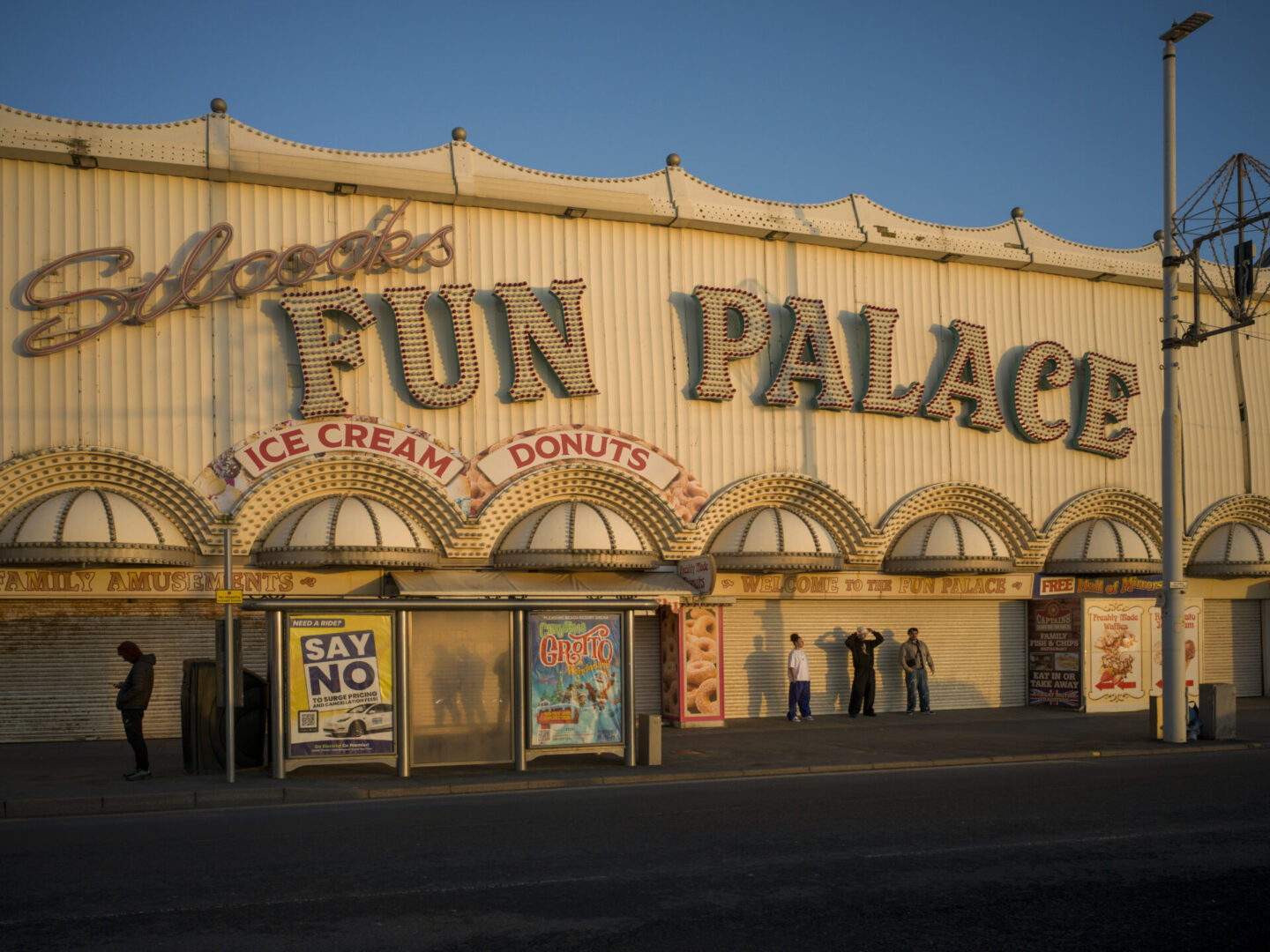
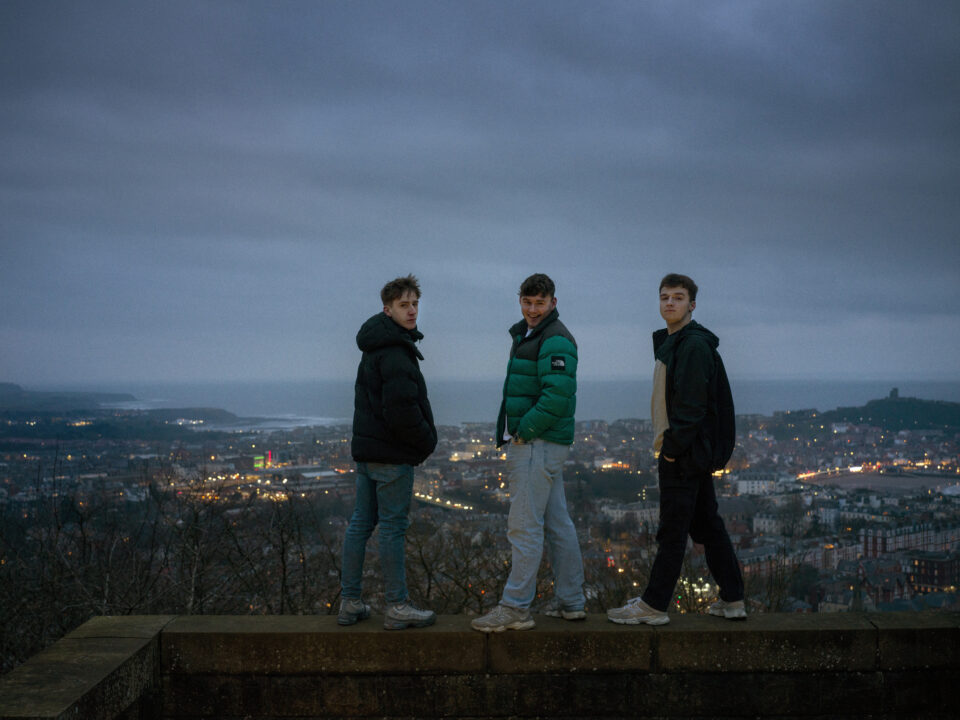
Spanning the entire length of the country – Blackpool, Grimsby, Portsmouth, Rhyl, Scarborough, Southend, Tendring, Weston-super-Mare and Whitehaven – Against the Tide reveals a side of coastal life rarely seen in national narratives. Braden’s work moves beyond observation, offering a platform for young people to express their ideas and experiences, and to form new connections with peers in similar situations. The images are rebellious in their hopefulness, a visual rejection of labels. In one image, three teenage boys – Charlie, Jack and Keane – stand on a wall, framed by a backdrop of their town lit up at dusk. The lights of shops and homes glow and the sea stretches out in the distance. The three young men are smiling; chins lifted in defiance and their bodies twisted away from the view. In another, a group stands in front of seaside amusements, where “Silcock’s Fun Palace” advertises ice cream, donuts and a hall of mirrors.
The images are supported by quotes and interview with the subjects. Taylor, a 17-year-old from Jaywick, says: “People should come over and have a look for themselves what’s here. It’s quite nice growing up near the sea because if you live in a city you can smell the pollution but here you get lots of fresh air. I like to put headphones on and listen to music while I walk along the sand.” Michael from Blackpool adds: ““For me, it has been an amazing place to grow up. I don’t understand why anyone would talk down their home town. So many good things are happening here but nobody is telling those stories.” Meanwhile, Keane encapsulates the spirit of the series: “When I leave here, there’s always going to be a part of me that stays behind.” These enrich the exhibition, platforming the voices of those at its heart.
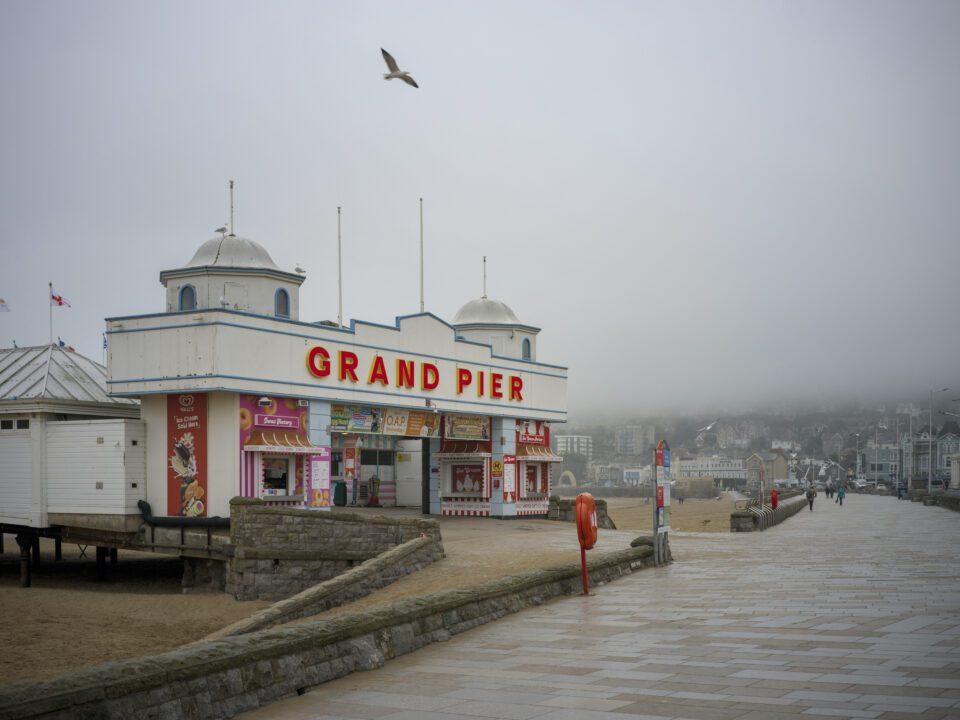
Throughout the exhibition, it is clear that these young people shaped it at every stage. Its authenticity shines through. Through five workshops led by local artists in Weston-super-Mare, Blackpool, Whitehaven and Brightlingsea, the participants documented their surroundings by creating photographs that challenge and reframe dominant perspectives on their hometowns. They are curating the resulting images through local exhibitions – including in Bristol, where Besides the Sea opens in Arnolfini’s Gallery 5. As the project with Braden unfolded, the participants created a series of handwritten postcards, sharing messages of frustration, resilience and hope with peers in other towns, building connections across geographical divides. They have also spoken directly to policymakers. Baden and Bachelor accompanied a group to present to MPs at the All-Party Parliamentary Group of Coastal Communities in Parliament.
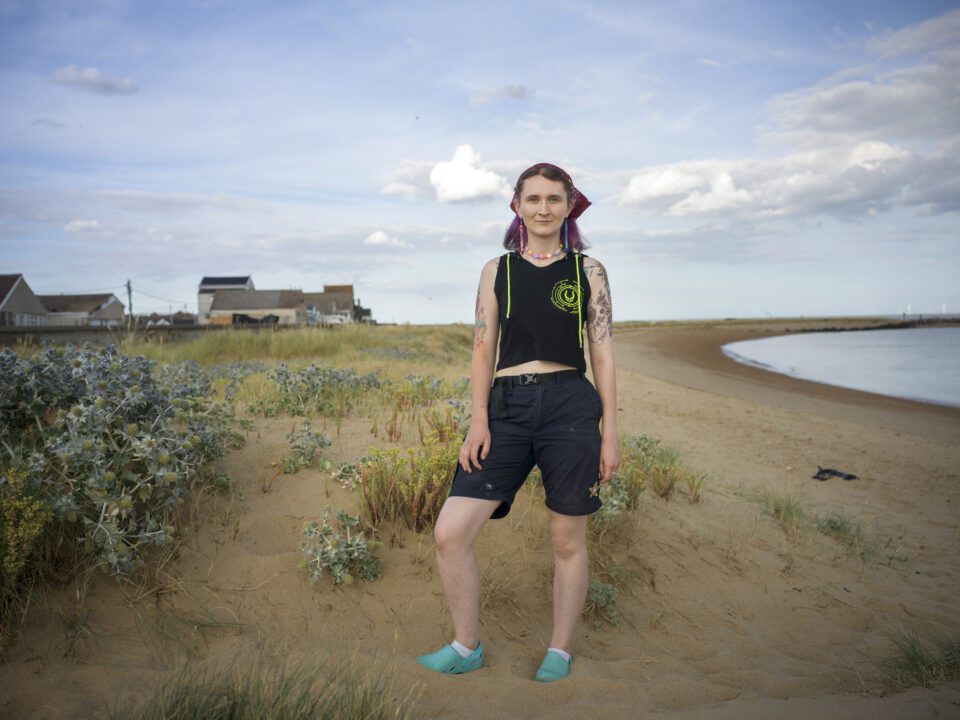
Against the Tide positions photography as a space for dialogue and agency, where images become a means of connection and advocacy. Alongside accounts of isolation and lack of opportunity are expressions of resilience, ambition and hope, and a clear message: coastal towns are not just sites of decline, but places of creativity and possibility. The exhibition asks what futures young people want to build, and what needs to change for those futures to become possible. The show is a defiant, urgent triumph.
Polly Braden: Against the Tide is at Arnolfini, Bristol until 27 September: arnolfini.org.uk
Words: Emma Jacob
Image Credits:
1. Blackpool fun palace, Against the Tide, 2026. Photograph by Polly Braden.
2. Charlie, 17, and Keane, 19, both from Eastfield, and Jack, 17, from Scarborough, pictured at Oliver’s Mount, overlooking Scarborough. Keane wrote a play as a ‘love letter’ to his home town. Against the Tide, 2026 Photograph by Polly Braden.
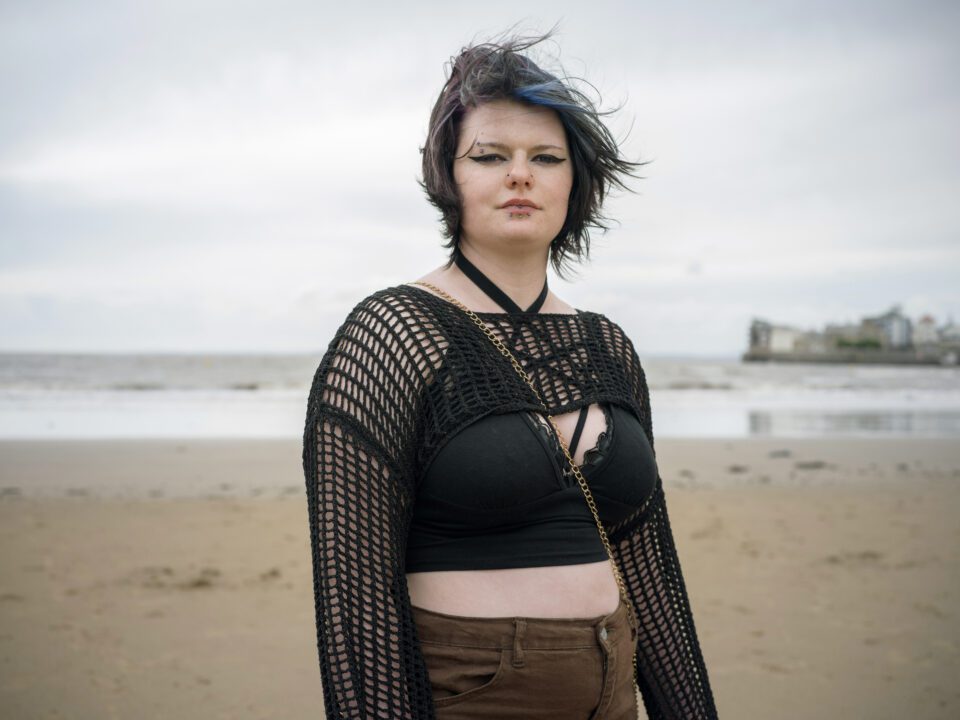
3. Ceilidh, 21, in Weston-Super-Mare, Against the Tide, 2026. Photograph by Polly Braden.
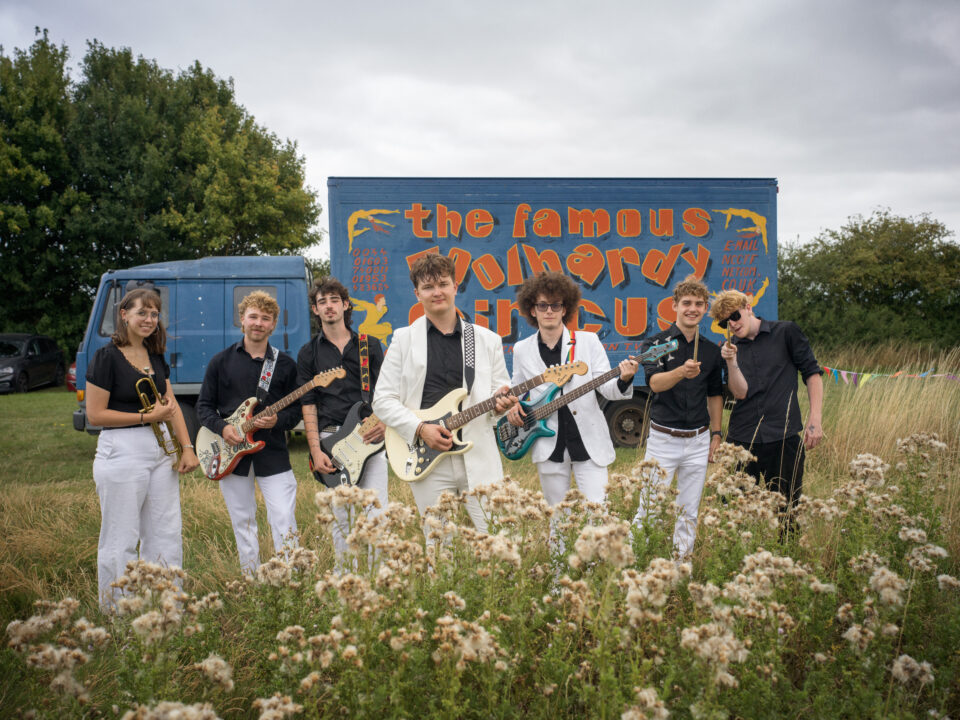
4. The band Voyage, which grew out of We Are Music in Harwich. From left: Maisy, 18; Drew, 19; Tom, 18; Kyle, 21; Oliver, 18; Matt, 19; and Finn, 18. Against the Tide, 2026. Photograph by Polly Braden.
5. Weston-super-Mare, Against the Tide, 2026. Photograph by Polly Braden.
6. Millicent, a 22-year-old fine art graduate from Jaywick, says: ‘There’s not much here. But you saw me come out of my house – it’s right on the seafront. I just love that’
Against the Tide, 2026. Photograph by Polly Braden


