In 1927, aged twenty-four, Charlotte Perriand (1903-1999) visited the Paris studio of the famed architect Le Corbusier (1887-1965), clutching her drawings and searching for a job as a designer. “We don’t embroider cushions here,” he said. But just a few months later, after seeing her sleek aluminium, glass and steel Bar sous le toit (1927) at the prestigious annual Salon D’Automne, he apologised and asked her to join his workshop. Perriand would go on to become one of the 20th century’s most influential creative minds – a trailblazer who left an indelible mark on modernism by breaking down the boundaries between architecture, art, furniture, interior design and photography. This October, Barcelona’s Fundació Joan Miró celebrates this legacy by presenting the first major exhibition in Spain dedicated to her vision.
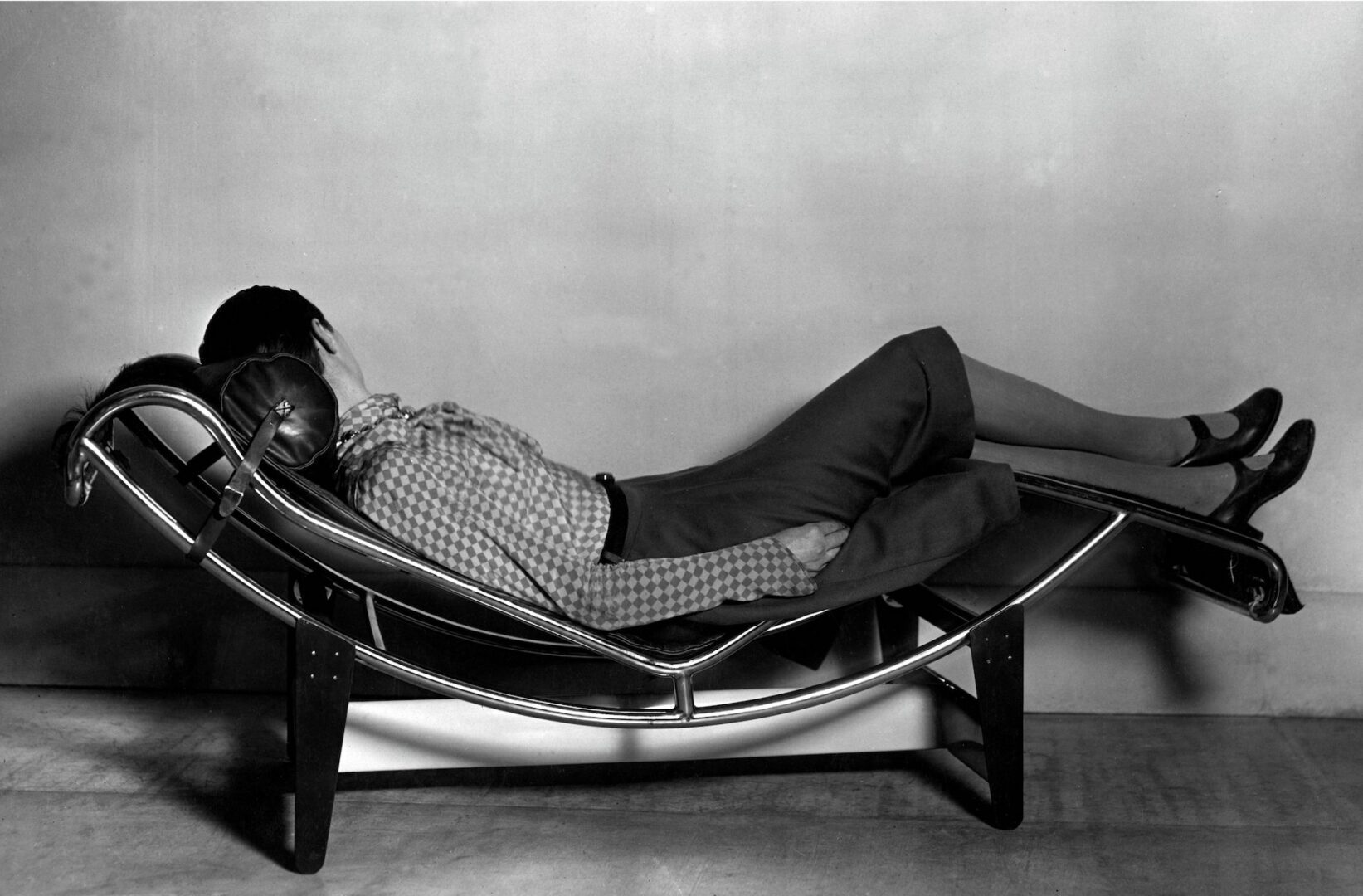
The Freedom to Rethink the World spans from the early days of Perriand’s career until 1955, and includes some of her most iconic projects. Bar sous le toit (1927) is featured, alongside the dining room Salle à manger 28 (1928). There’s also a faithful reconstruction of the Équipement intérieur d’une habitation (1929), a domestic interior Perriand created with Le Corbusier and his cousin Pierre Jeanneret for the Salon d’Automne in 1929. It has since become a landmark of the modern movement. Perriand also developed her now-iconic series of tubular steel chairs whilst working as part of this trio. Their projects are emblematic of the “machine age” aesthetic – characterised by efficiency, clean lines and polished chrome.
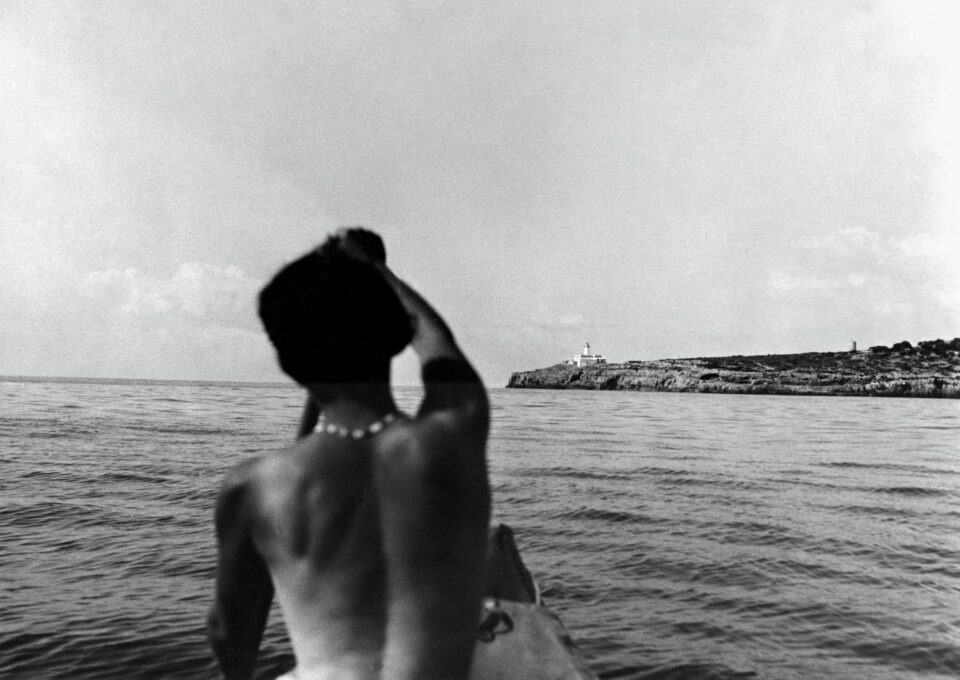
As the 1927 anecdote suggests, Perriand had to carve out her own path against a backdrop of sexism and prejudice. She was often overshadowed by her famous male collaborators. Now, thankfully, the balance is being redressed, with exhibitions such as The Freedom to Rethink the World and The Modern Life (previously at London’s Design Museum) showing how Perriand challenged the limitations placed on women of her time. Besides her contributions to Le Corbusier’s studio, Fundació Joan Miró draws attention to her identity as an avid traveller, making excursions to mountainous and coastal areas of France, journeying around Mallorca by canoe and staying in Japan and Vietnam for six years. She was also a passionate skier, and spearheaded one of the most recognisable resorts in the world: Les Arcs in the French Alps.
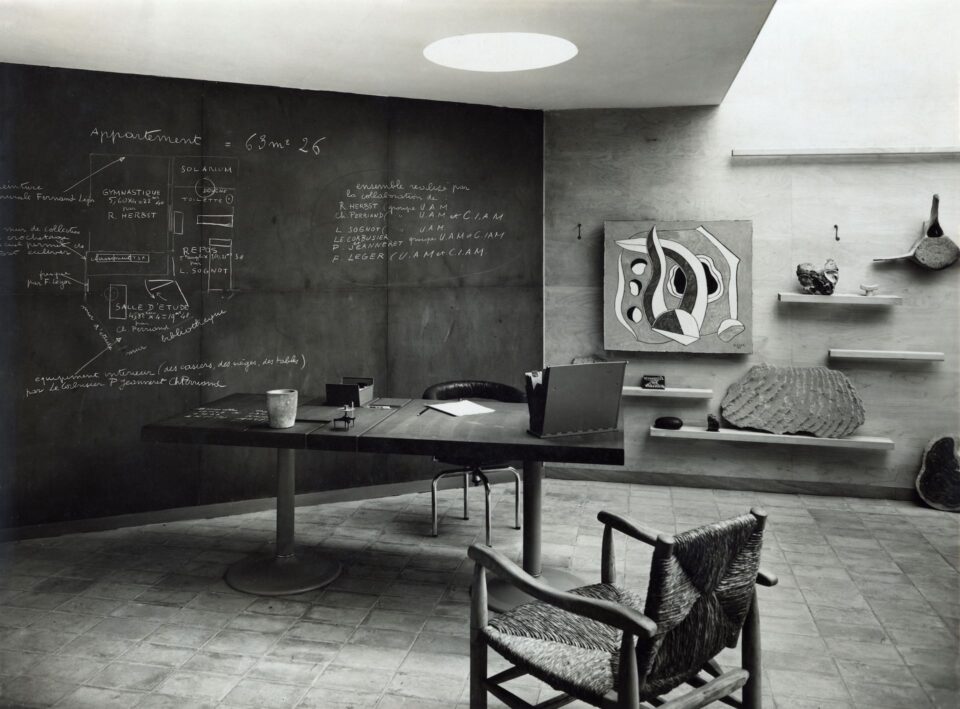
Perriand’s global voyages, particularly across Asia and Latin America, had a profound impact on her vision. They helped shape her philosophy of “l’art de vivre” (the art of living), which injected a human touch into the previously cold and rigid look of the machine age. Whilst Le Corbusier famously dubbed the house “a machine for living in”, Perriand believed in a more holistic approach, integrating nature and organic materials to create an architecture that served human needs and wellbeing. “Dwellings should be designed not only to satisfy material specifications; they should also create conditions that foster harmonious balance and spiritual freedom in people’s lives,” she said. This had long been important to her; as early as the 1920s, Perriand was coming up with open-plan interiors to give women greater freedom at home.
A century after her first projects, Perriand continues to inspire architects, artists and designers around the world. She revolutionised the way spaces were conceived, with her ideas still visible in the places we inhabit today. Through The Freedom to Rethink the World, Fundació Joan Miró keeps her fearless spirit alive, inviting us to consider how our surroundings shape us – and how we, in turn, shape them.
Words: Eleanor Sutherland
Charlotte Perriand: The Freedom to Rethink the World, is at Fundació Joan Miró, Barcelona.
9 October – 28 February.
Image Credits:
1. Charlotte Perriand on reclining chaise longue, 1928. © Archives Charlotte Perriand. VEGAP, Barcelona 2026.
2. Charlotte Perriand in her canoe. Cap de Cala Figuera lighthouse, Mallorca, 1932. © Archives Charlotte Perriand, 2026. VEGAP, Barcelona 2026.
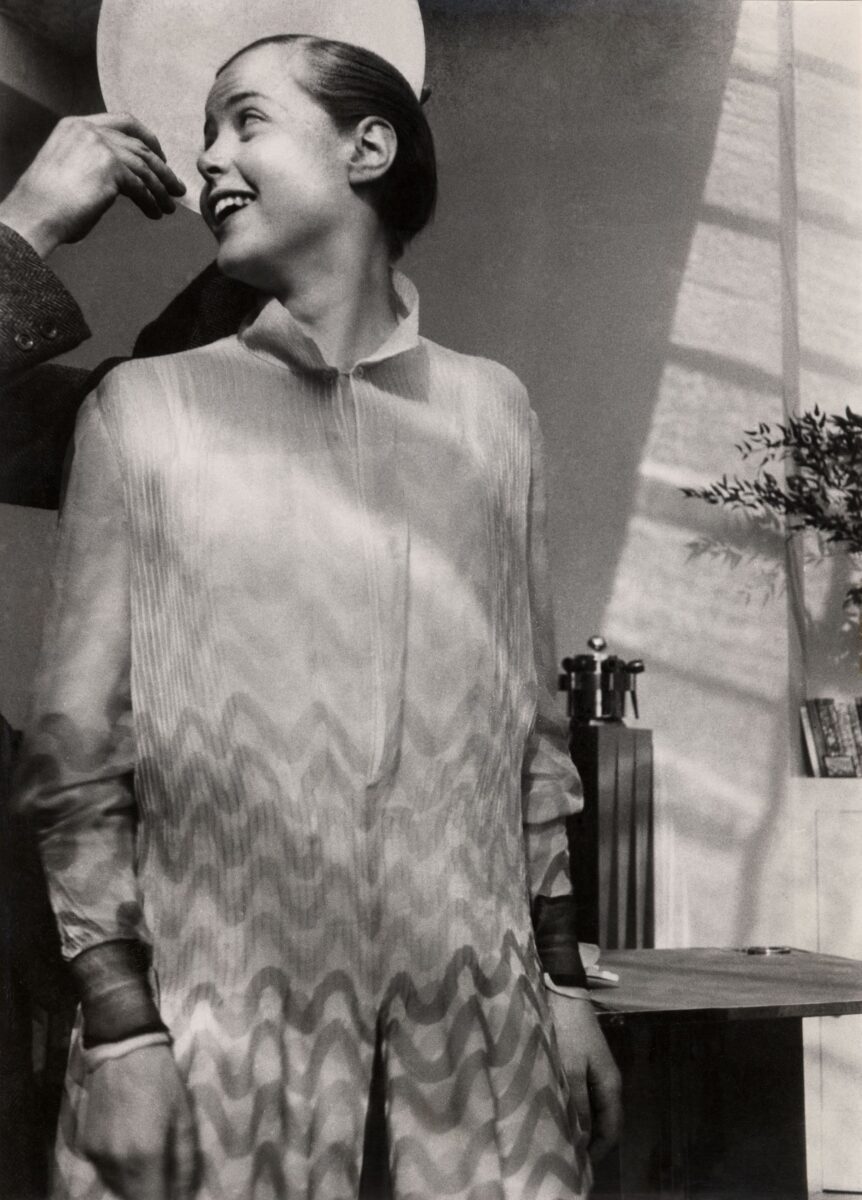
3. Charlotte Perriand with Le Corbusier’s hands holding a plate like a halo, 1928. Photo by Pierre Jeanneret. Archives Charlotte Perriand, 2026. © Pierre Jeanneret, VEGAP, Barcelona, 2026.
4. Le Corbusier, Pierre Jeanneret and Charlotte Perriand, Appartement pour un jeune homme (Apartment for a Young Man), Brussels Universal Exposition, 1935. Photo by C. Vanderberghe. Archives Charlotte Perriand.