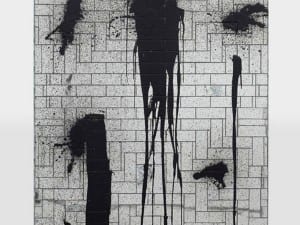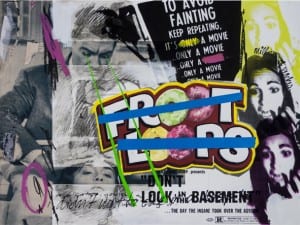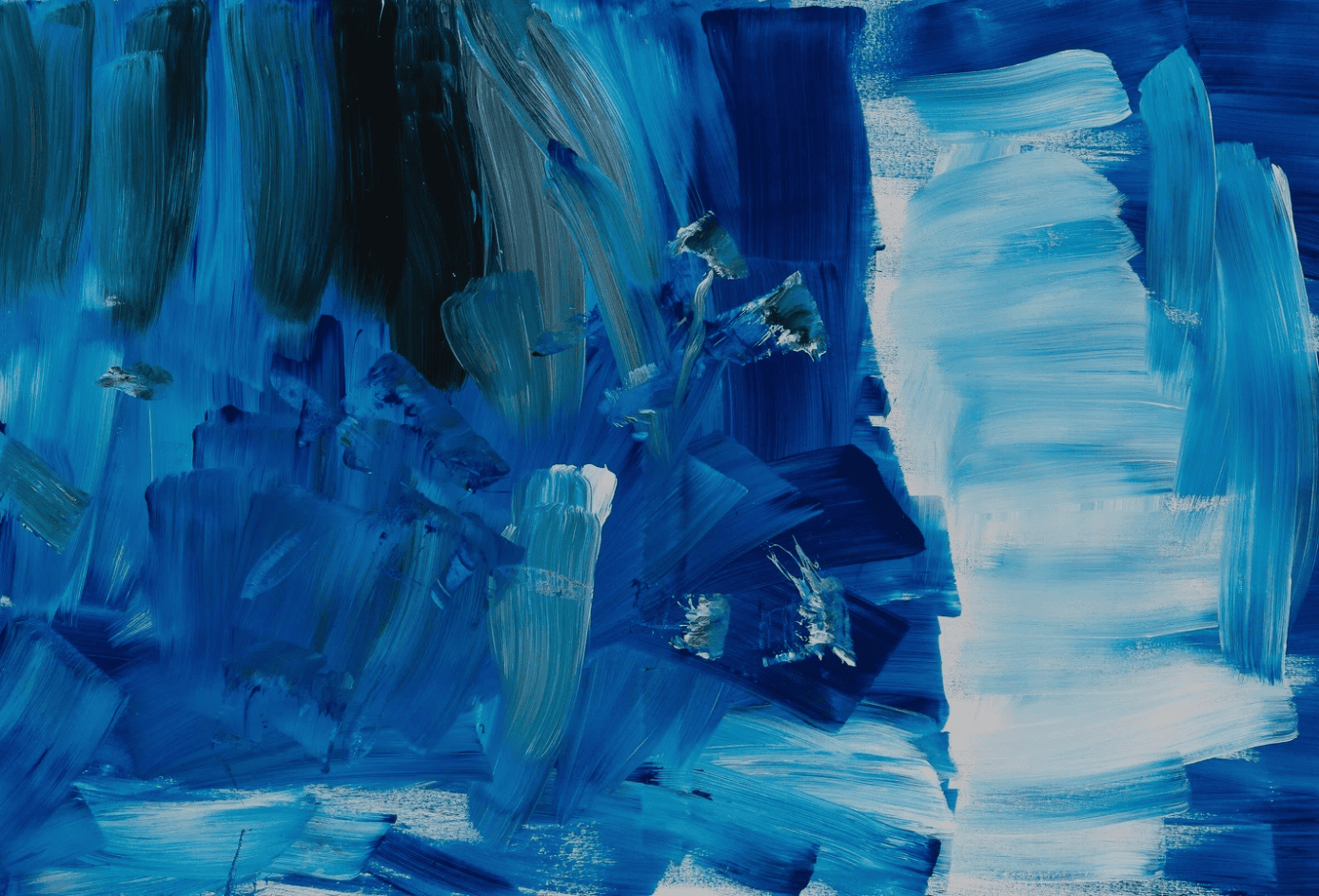
The term “Abstract Expressionism” is often associated with America in the 1940s and 1950s, bringing to mind Mark Rothko’s colour fields and the drip paintings of Jackson Pollock. But the term first appeared in the periodical Der Sturm in 1919, as part of a discussion of German Expressionist art, and has deep roots in Europe. The movement was characterised by visible brushstrokes, large-scale canvases and lack of a single focal point, with proponents bringing a sense of spontaneity, energy and emotion to their compositions. The key idea was for the artist to express subconscious truths through their compositions, moving beyond traditional subject matters – landscapes, portraits, still life – to foreground the act of painting itself.
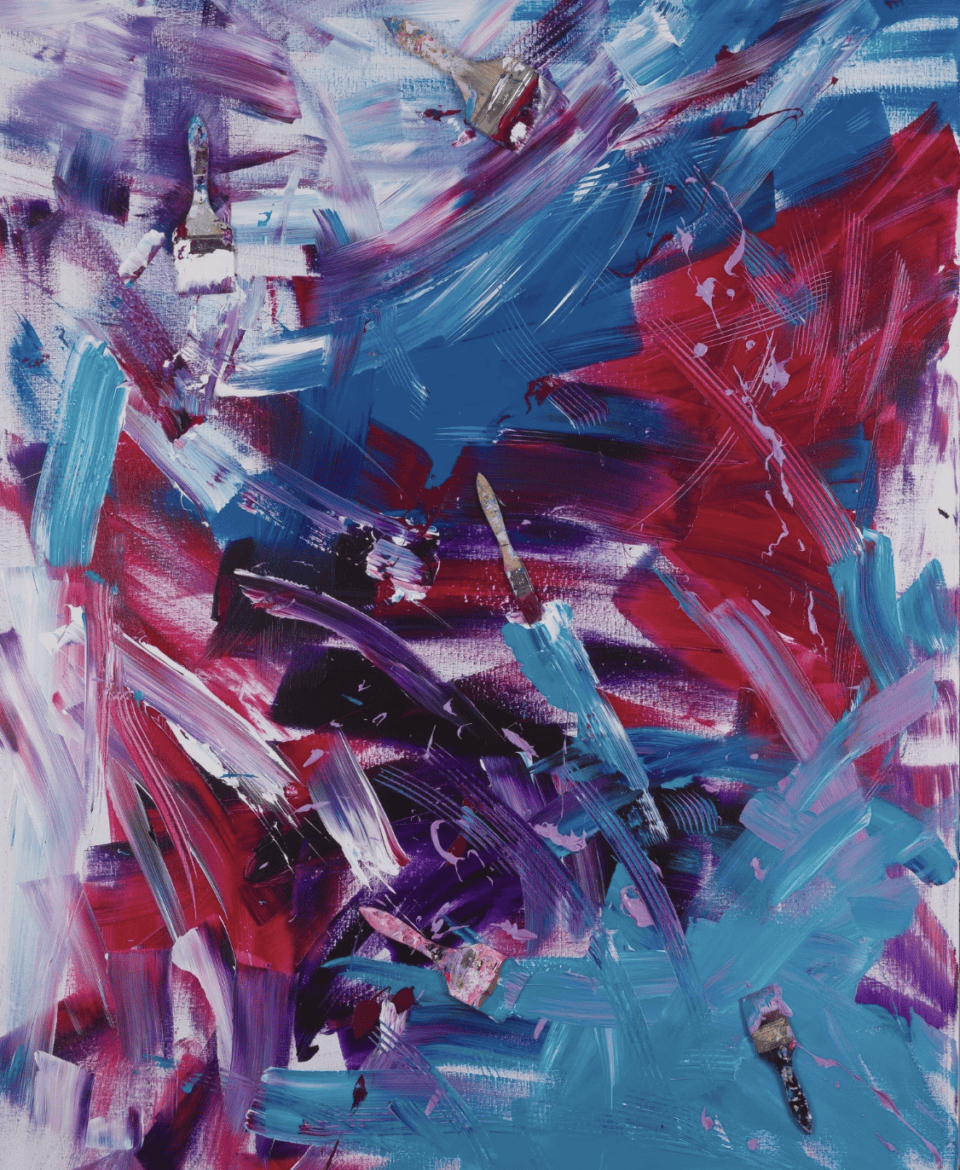
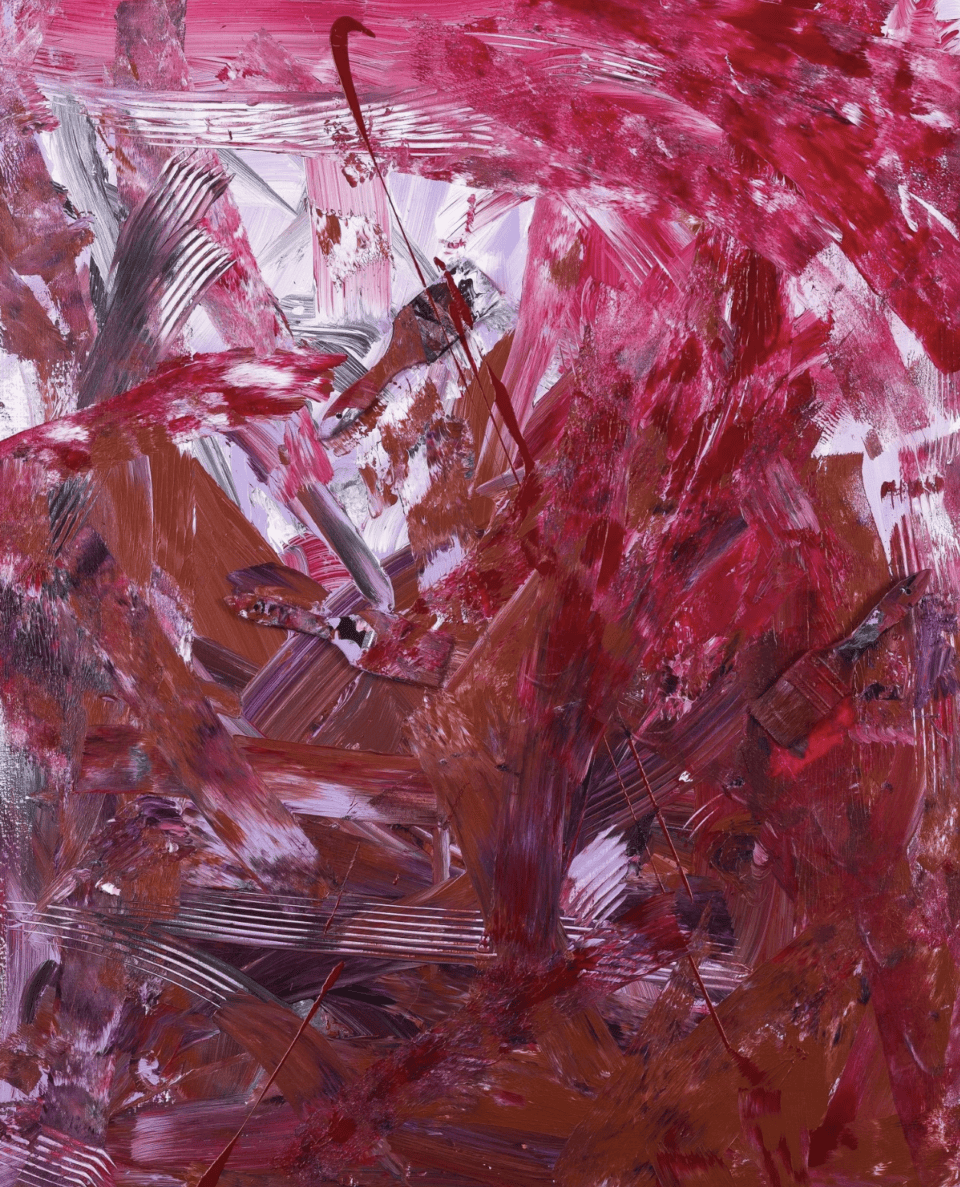
Cécile Lobert (b. 1992) continues this tradition. The neurodiverse, non-verbal visual artist, who is based in Brussels, developed painting and drawing as an alternative language – “a figure of speech for an unconventional consciousness.” Lobert’s artistic journey began with experimentation. After trying out several mediums, she landed on acrylic on canvas. Her unique approach evolved to include staining, perforating, pouring and finger-painting. Each work can be seen as a visual representation of her inner world: where emotions and experiences are distilled into vibrant colours and textures. It’s a rapid-fire process, characterised by spontaneity, with each mark reflecting a raw emotional response. In several compositions, luminescent strokes of royal purple, dark turquoise, raspberry and white collide. Elsewhere, a tempestuous sea of blue tones floods the picture plane, with marks acting as evidence of a thrown brush.
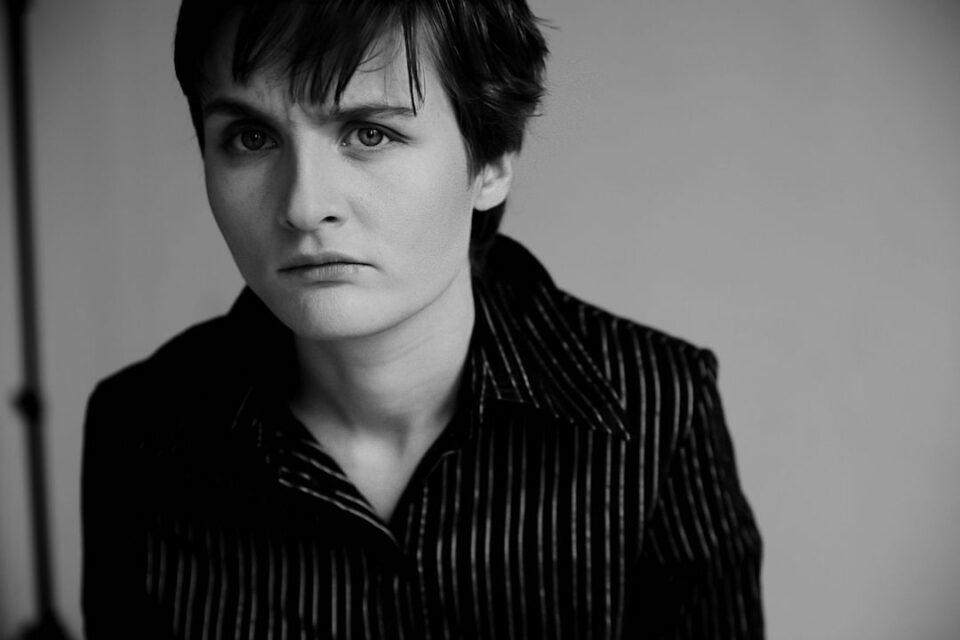
These works are dynamic, energetic and filled with feeling. In recent years, Lobert has become renowned for using UV paint and embedding paintbrushes directly into her canvases. This visceral language culminates powerfully in Cease Fire, (2022), a work “shaped by the psychological turbulence of modern conflict.” Saturated in blood-red tones, earthen textures and metallic flashes suggestive of machinery and warfare, the painting confronts humanity’s recurring cycles of violence whilst simultaneously gesturing toward hope. The permanently affixed paintbrushes appear wounded within the composition itself – “abandoned relics of creation embedded like casualties across a battlefield.” This was the first time the artist left her tools of creation on the canvas, a technique that would continue to emerge in later works. Lobert’s newest compositions, shown below for the first time, take this stylistic evolution one step further: the palette is darker, yet still punctuated by neon – like dark clouds giving way to flashes of sun and sky.
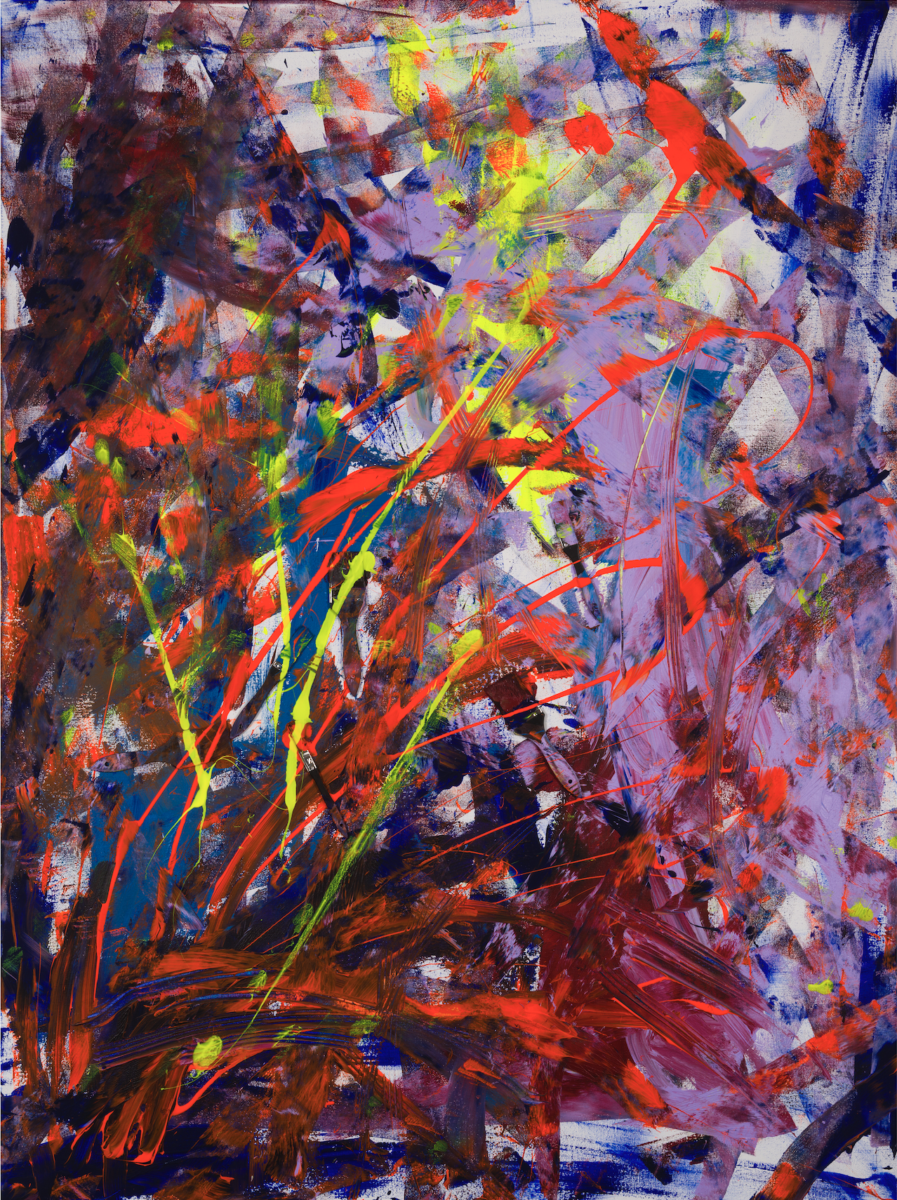
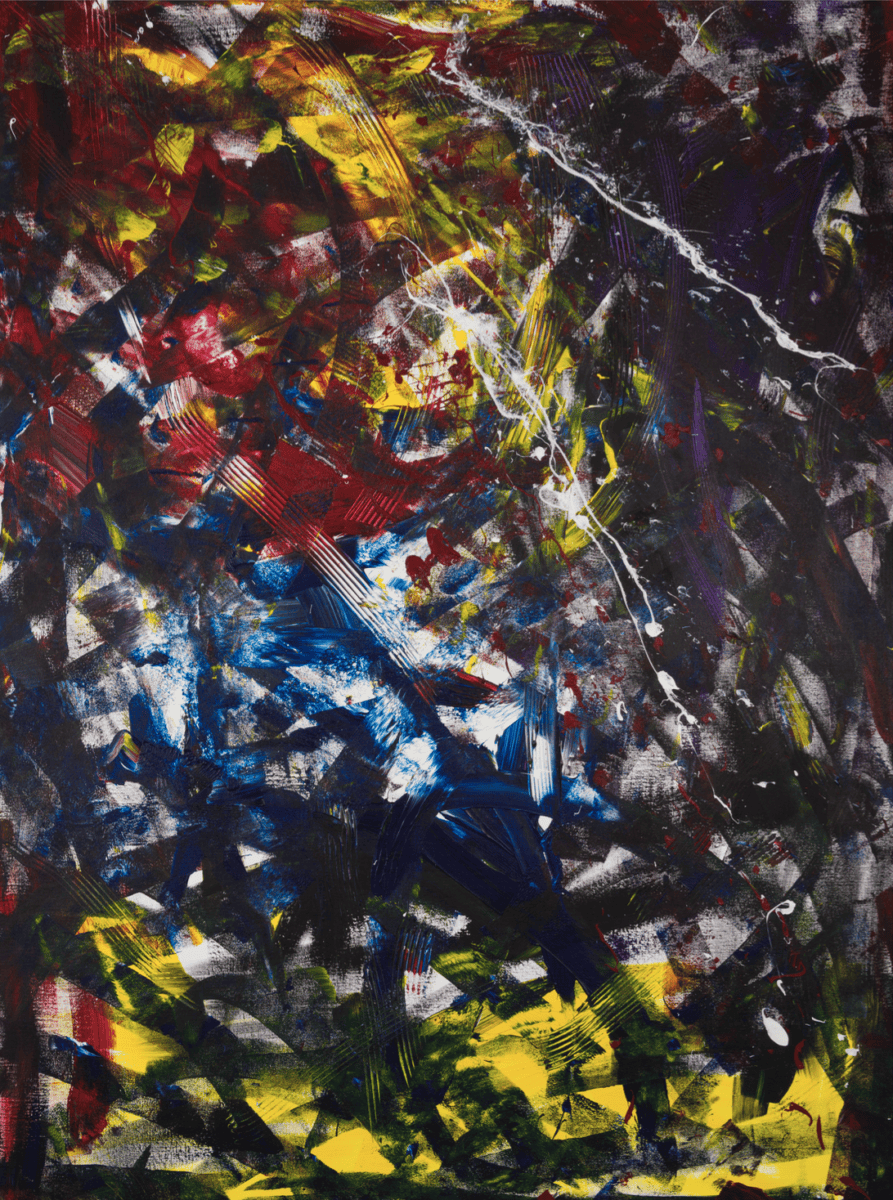
Lobert is a rapidly ascending figure on the international contemporary art scene. Over her decades-long practice, she has accumulated a large online following, exhibited internationally (namely in Abu Dhabi, Barcelona, Berlin, Dubai and Madrid) and was named by Vanity Fair UK as “an artist to look out for.” She is represented by Shrine Gallery, New York. No doubt Lobert is one-to-watch, bringing Abstract Expressionism firmly into the 21st century. Her work retains the movement’s emphasis on impulse, passion and gesture, whilst expanding its limits into three dimensions through physical intervention. Perhaps most striking, though, is the way Lobert harnesses abstraction as a form of communication – transforming instinct and emotion into a visual language through which an inner world can be shared.
cecilelobert.com | @iamcecilelobert
Words: Eleanor Sutherland
Image Credits:
1. Cécile Lobert, End of March, (2020). From the Quarantine collection.
2. Cécile Lobert, Untitled, (2022).
3. Cécile Lobert, Cease Fire, (2022).
4. Image courtesy Cécile Lobert.
5. Cécile Lobert, Untitled, (2025).
6. Cécile Lobert, Untitled, (2025).