What does it mean to belong when the category itself is unstable? British Art Show 10: A Chorus of Strangers has this question at its centre, using the figure of the stranger to reconsider how people, histories and environments might exist alongside one another. Curated by Ekow Eshun, the exhibition brings together 37 artists at a moment shaped by political division, ecological fragility and distrust in institutions. However, its most interesting proposition is that art can make space for uncertainty without immediately resolving it.
That is a particularly resonant position for an exhibition called British Art Show. Since its first iteration in 1979, the series has carried the weight of representing contemporary practice across the country, whilst its touring structure has challenged the concentration of cultural attention in London. The 10th edition opens in Coventry before travelling to Swansea, Bristol, Sheffield and Newcastle Gateshead through 2028, making geography inseparable from the exhibition’s proposition. A national survey can easily become an exercise in definition – an attempt to say what British art looks like now. Eshun instead uses the format to ask what Britishness might look like when identity is understood as contested, relational and unfinished.
The curatorial framework is built around three overlapping ideas: Moments of Being, Ways of Living and States of Nature. Their starting points are Virginia Woolf, Stuart Hall and Timothy Morton, whose very different practices of thinking offer a route from interior experience to cultural identity and ecological interdependence. This structure gives the exhibition an intellectual spine without insisting that every artist illustrates a single argument. More importantly, it establishes relationships between subjects that are often treated separately. Memory becomes political; migration becomes ecological; the individual becomes inseparable from the social and environmental systems in which they move.
Such connections are most persuasive when they remain open-ended. Emma Talbot’s new works, for instance, move between mythology, philosophy and environmental research, refusing a straightforward distinction between personal experience and planetary crisis. The Ethics of Joy places natural wonder beside the consequences of climate collapse and technological development, while Chiron, The Wounded Healer introduces a wounded female centaur as a figure of suffering, knowledge and renewal. The symbolism is deliberately expansive, allowing vulnerability to become something other than a sign of defeat. Rather than illustrating the climate crisis, Talbot asks what kinds of imagination might be necessary when familiar models of progress have become increasingly difficult to sustain.
Memory takes a more subtle form in Matthew Krishanu’s paintings. Drawing on personal photographs and his upbringing in Dhaka, he depicts two boys moving through banyan trees and surrounding countryside, using thin washes of paint to create an atmosphere of childhood wonder. Colonial histories and questions of identity remain present, but they are not forced into the foreground. That restraint matters. In Krishanu’s work, memory is not a stable archive from which the past can simply be retrieved; it is something reconstructed through sensation, image and distance.
The question of whose memories enter the public record becomes more explicit in Liz Johnson Artur’s Where Does Tenderness Come From?. Her Black Balloon Archive, developed over three decades, documents Black life across the diaspora, but the installation resists the neutrality traditionally associated with archival display. Photographs appear on mesh, worn music sheets and window glass, turning documentation into an environment of texture and encounter. The materials matter as much as the images: everyday surfaces suggest that cultural memory is not confined to official institutions but circulates through objects, relationships and shared experience. Tenderness here becomes an archival method – a way of preserving lives without flattening them into evidence.
Elsewhere, Alvaro Barrington turns towards the changing city. The City Is Mines/You Belong BAS 2026 uses metal storefront shutters as a canvas, incorporating popular online memes to reflect on disappearing community spaces and the cultural energy that persists within urban streets. Barrington’s work brings a different register to the exhibition, one rooted in vernacular culture and the visual language of everyday life. Its interest lies partly in the tension between decline and invention: as familiar high-street spaces disappear; new forms of community and expression continue to emerge. The work suggests that belonging is less about protecting a fixed environment than negotiating continual change.
That instability is central to Eshun’s understanding of the stranger. Contemporary art has long questioned the borders between insider and outsider, particularly through practices concerned with migration, diaspora and postcolonial identity. Here, however, otherness is not treated solely as a question of representation. It becomes a condition through which the viewer is encouraged to reconsider their own position. Eshun’s framework therefore avoids presenting difference as something that must be absorbed into a reassuring idea of unity; instead, the exhibition proposes that connection might depend upon maintaining distinctions while finding ways to live alongside them.
Ecology extends that thinking beyond the human. States of Nature, drawing on Timothy Morton’s ecological philosophy, considers plants, animals, air and water as part of a network in which human life cannot be understood in isolation. Nengi Omuku’s Pillars By Night approaches this through a gathering of figures whose bodies seem to dissolve into fields of lilac foliage. Painted on hand-woven Nigerian sányán cloth, the work has a material richness that reinforces its interest in communal experience. Omuku’s experience of bringing art into healthcare spaces is significant here: the work holds difficult emotions alongside the possibility of solace, suggesting that care might itself be a form of collective ecology.
Christina Kimeze’s Flyways makes the politics of movement more explicit. Painted on light-absorbing suede mat board, the work follows the migratory routes of birds across oceans and continents, combining bird and feet motifs to consider belonging and the question of where one is permitted to settle. The comparison unsettles the apparent permanence of borders. Birds move according to environmental systems that precede political geography, while human movement is subject to increasingly contested ideas of territory and belonging. Within Eshun’s wider framework, migration therefore becomes more than a social question – it exposes the artificiality of some of the boundaries through which contemporary life is organised.
Place becomes particularly charged in Coventry, where Jasleen Kaur’s Peace and enters the exhibition through the city’s own history. The commission draws on Coventry’s identity as a place of peace and reconciliation following the 1940 Blitz, assembling RMD scaffolding, courtroom benches, a postcard and a gold necklace around an intentionally unfinished title. The incomplete phrase refuses the satisfaction of closure. Destruction, remembrance and renewal remain in negotiation, and the work’s materials suggest that histories are constructed from both monumental structures and intimate objects.
This relationship between exhibition and place is one of British Art Show 10’s most consequential features. The national touring model means the works will not encounter a single, stable audience or institutional context, whilst five new city commissions will ultimately enter local collections. Such a model complicates the authority of the national survey: rather than moving outward from one centre, the exhibition accumulates meaning as it travels. The show is therefore not simply about British society; its movement through different cities becomes part of how that society is encountered and imagined.
There is, however, a tension within the openness of Eshun’s approach. When so many practices can be connected through the language of belonging, memory, care or interdependence, the differences between them can begin to soften. The danger of any thematic exhibition is that individual practices become evidence for a curatorial thesis rather than retaining their own resistances and contradictions. A Chorus of Strangers is strongest when its artists complicate the vocabulary around them – when Talbot’s symbolism, Artur’s archive or Barrington’s urban imagery refuses to settle into a single interpretation. The exhibition’s plurality works best not when everything connects neatly, but when those connections remain unstable.
That instability gives the 10th British Art Show its relevance. Rather than attempting to produce another authoritative image of what contemporary British art is, Eshun offers a collection of positions through which ideas of identity, environment, history and community can be tested. The exhibition’s ambition lies in its willingness to leave difficult questions unresolved. Its artists move between private memory and collective history, urban space and ecological systems, migration and belonging, creating connections without collapsing their differences. Rather than offering a definitive portrait of the nation, A Chorus of Strangers presents British identity as something shifting, contested and continually reimagined.
British Art Show 10: A Chorus of Strangers is at Herbert Gallery, Coventry until 10 January: theherbert.org
Words: Shirley Stevenson
Image Credits:
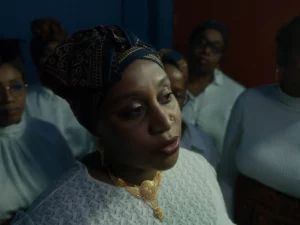
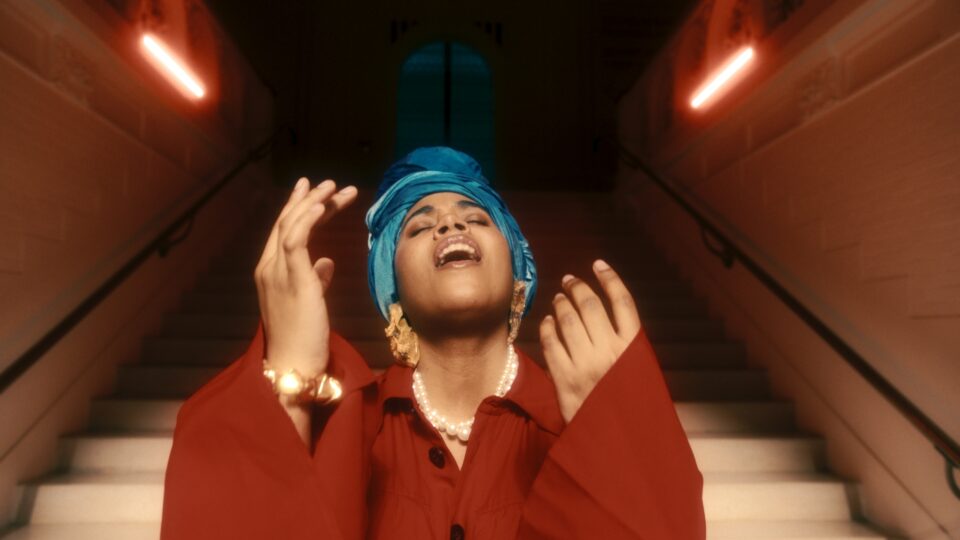
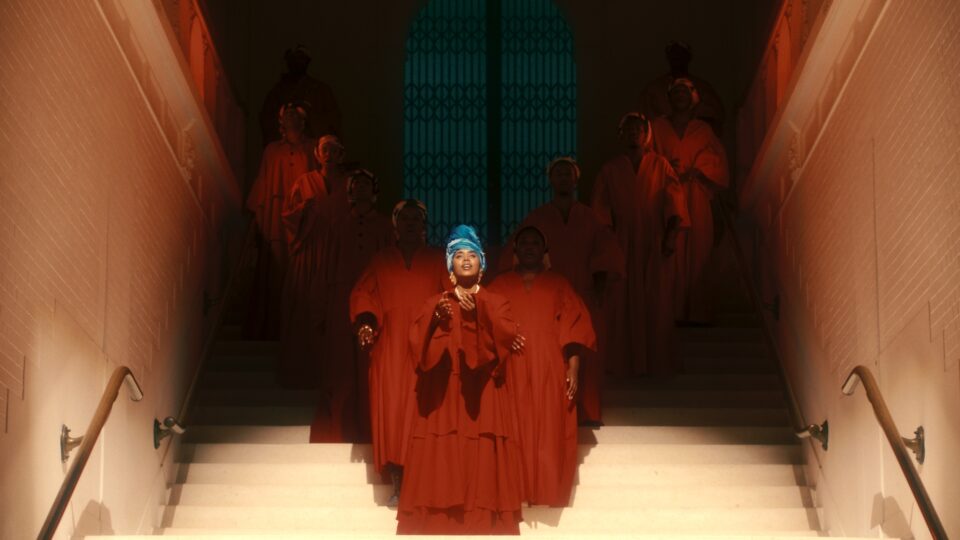
1&7. Julianknxx, Still from Shifting _ Spirit _ Time, BURO Stedelijk, 2025, © Studioknxx.
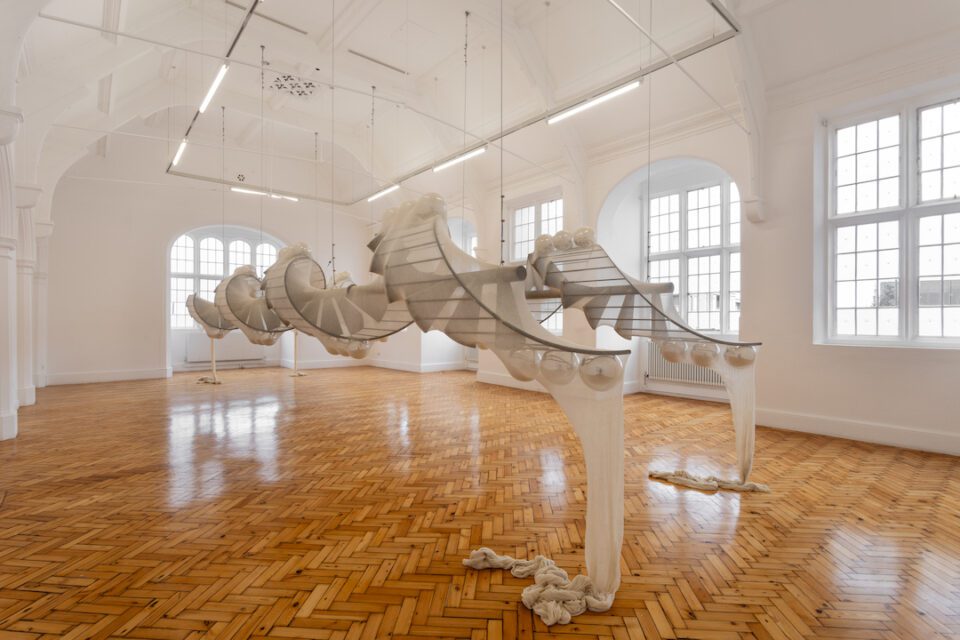
2. Jack O’Brien, Cue the Cue, 2025, installation view, Kestner Gesellschaft. Photo_ Volker Crone.
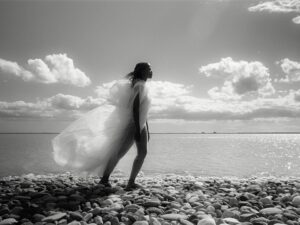
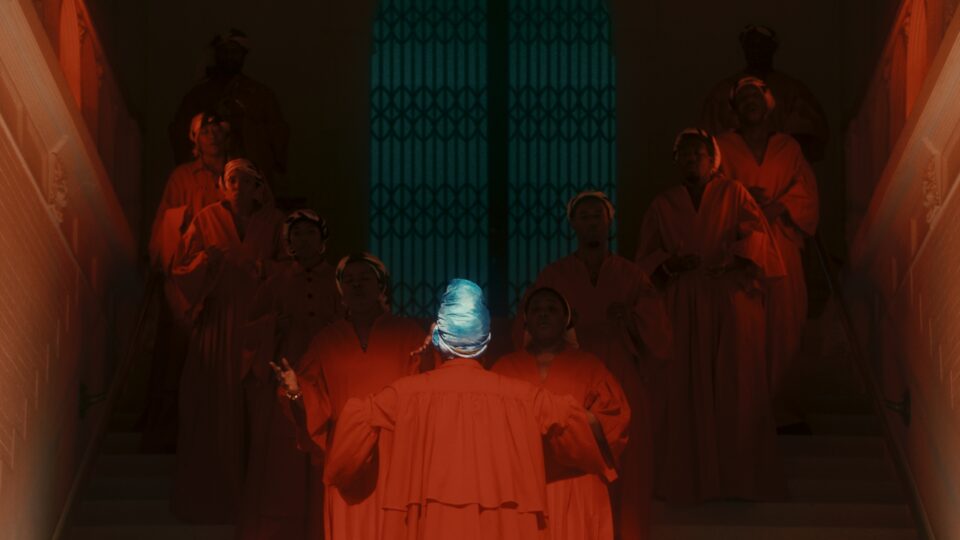
3. Julianknxx, Still from Shifting _ Spirit _ Time, BURO Stedelijk, 2025, © Studioknxx.
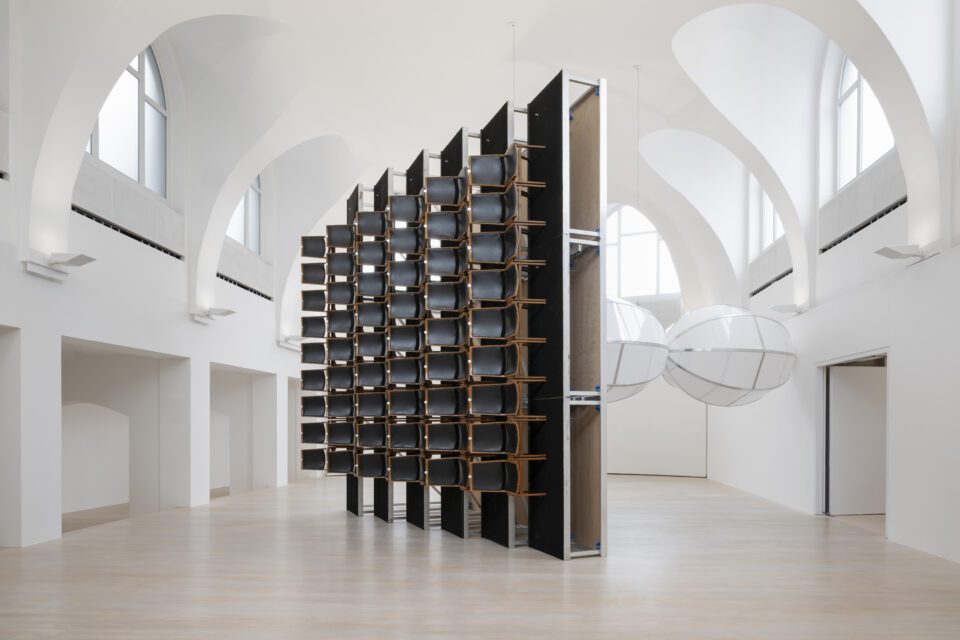
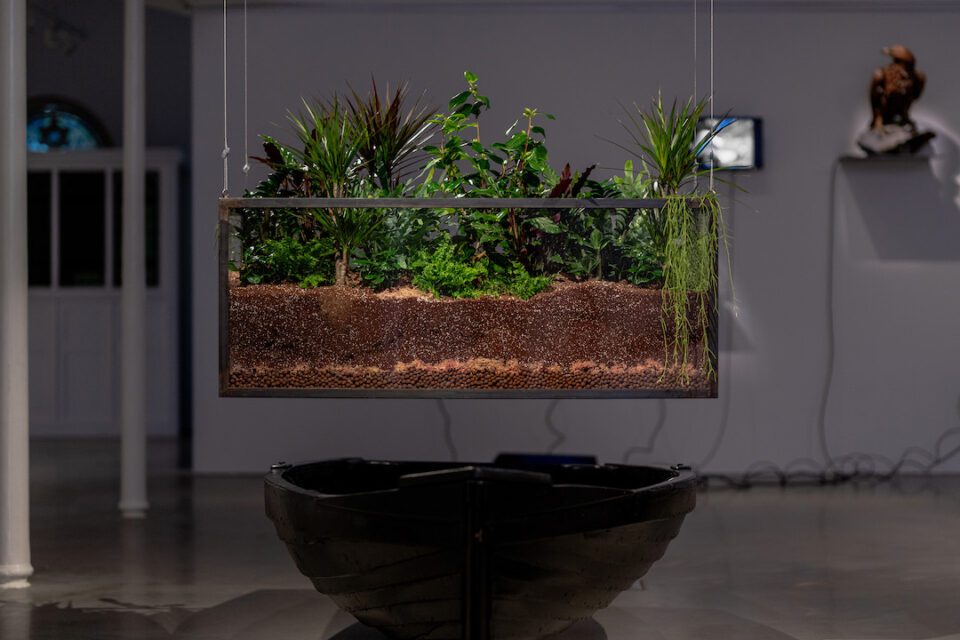
4. Installation view of Jack O’Brien, The Reward at Camden Art Centre, 2024. Photo_ Rob Harris.
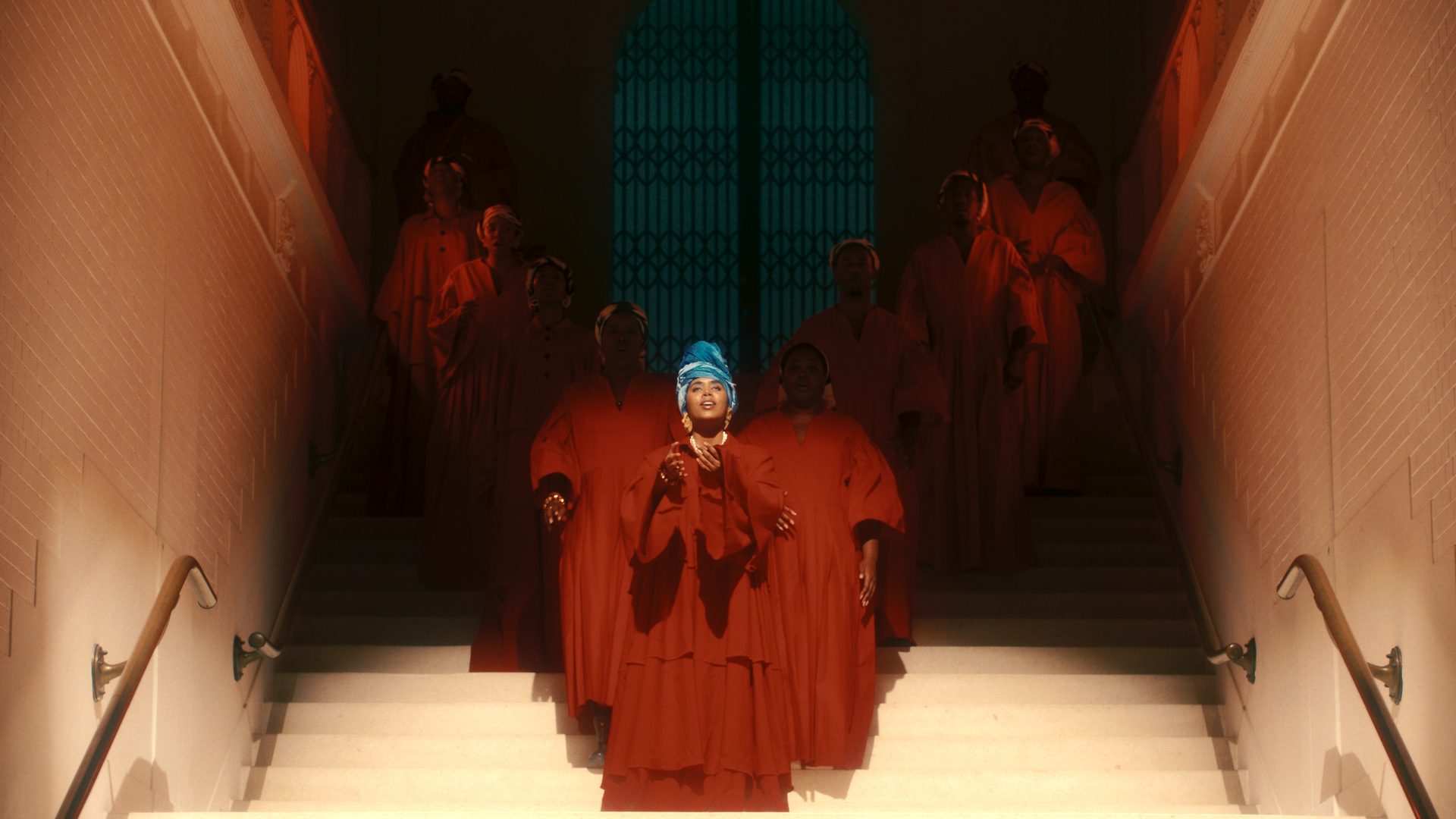
5. Julianknxx, Still from Shifting _ Spirit _ Time, BURO Stedelijk, 2025, © Studioknxx.
6. Installation view of Osman Yousefzada, When Will We Be Good Enough at The Box, Plymouth. Photo_ Dom Moore.