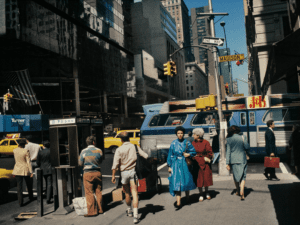
Africa’s is the world’s second largest continent, covering 20% of the Earth’s landmass. It’s home to 54 countries and roughly 1.6 billion people. It is no easy feat to distil the country’s rich and varied street photography into a single publication. Yet, this new publication does just that. Rather than viewing this as a potential problem, however, authors Azu Nwagbogu and Nadine Barth see an opportunity. In the introduction, they describe Street Photography Africa as inviting audiences “on a journey across a continent of contrasts, through countries that could scarcely be more diverse: from Morocco and Senegal to Côte d’Ivoire, across Ghana and Nigeria, Ethiopia and Uganda, down to the Southernmost tip in South Africa.”
The book features 33 photographers, each of whom shape how we see and understand urban existence in Africa. Caleb Kwarteng Prah, for example, takes Ghana’s “tro tros” – buses that function as shared taxis, used by 70% of the population – as his inspiration. The artist photographs people outside the vehicle’s doors, turning moments everyday working-class life into vibrant portraits. A particular highlight from the publication is the work of Sarah Waiswa, who revels in the joy of vibrant clothing, bright patterns and colours, and the interplay of textures. As the book describes, the artist: “captures a woman balancing a tub of colourful household utensils on her head as she marches through the shot, followed by another carrying a bundle of eye-catching cushions. Even a washing line is draped in cheerfully coloured smocks, with a woman seated behind also brightly clad.” The beauty in the mundane comes into clear focus, reminding audiences why we must pay attention to our surroundings.

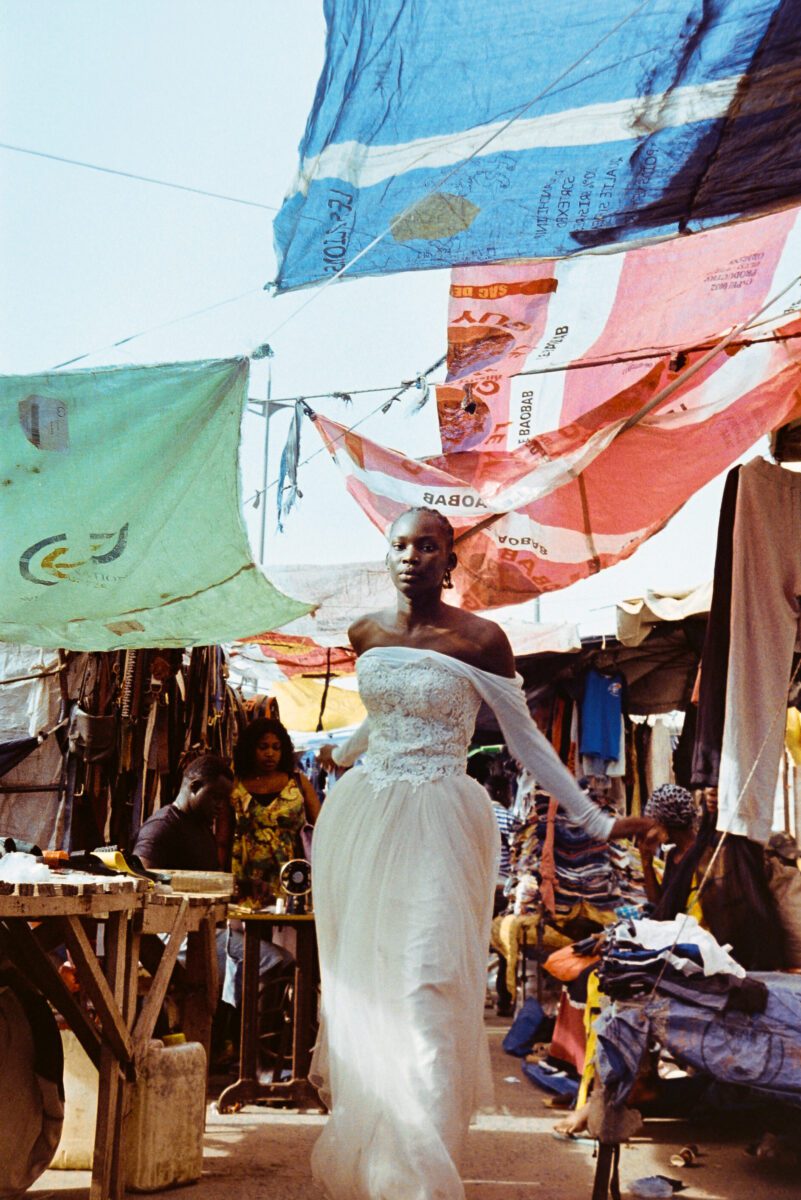
Everyday life and fashion often intersect on these pages. Meanwhile, Brian Otieno highlights the joy of flamboyance, with images that traverse documentary and fashion. His works capture the sartorial innovation coming out of Africa, featuring figures like motorcyclist Dennis Andere, who earned the title “Mr Kibera in 2018” as part of the famous fashion pageant set up to encourage young people in the Kibera township. Franco-Senegalese artist Naëtt Mbaye studied fashion design in Paris and worked as an actress, stylist and agent, before returning to Senegal to pursue her artistic career. The move was a catalyst for her exploration of national culture, as seen in her series Boys in Dakar. Her images look as though they could be torn straight from the pages of Vogue, effortlessly stylish and yet distinctly rooted in a sense of place. Here, the streets of Dakar are the runway and its citizens are setting trends for the rest of the world.
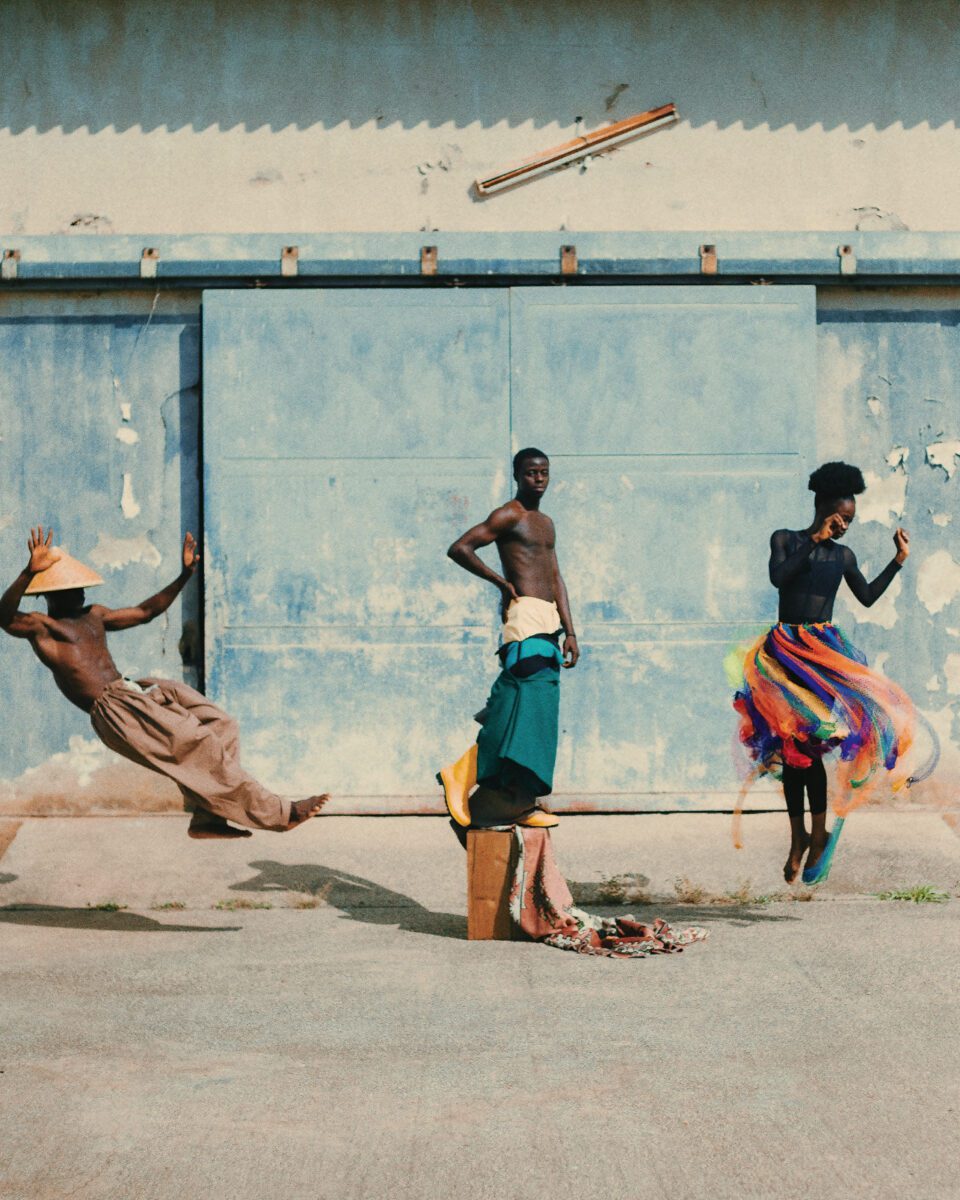
In a chapter titled Participation is Key, Nwagbogu writes: “When photography arrived in African in the mid-19thcentury, it came as an apparatus of enclosure The camera was a tool of administration, measurements and classification – operated by colonial officials, missionaries and ethnographers who sought to extract images from African subjects without their participation….once put in the hands of Africans, it became a tool of communication not capture, amplifying voices not silencing.” This is a book that’s generous with its participation, welcoming diverse photographers, subjects and ideas to tell an ever-changing, beautifully complex story of Africa. In the author’s words: “The click of a camera shutter is an act of self-affirmation, the proof of one’s own existence, if not of life itself.”
Street Photography Africa is published by Thames & Hudson on 27 October: thamesandhudson.com
Words: Emma Jacob
Image Credits:
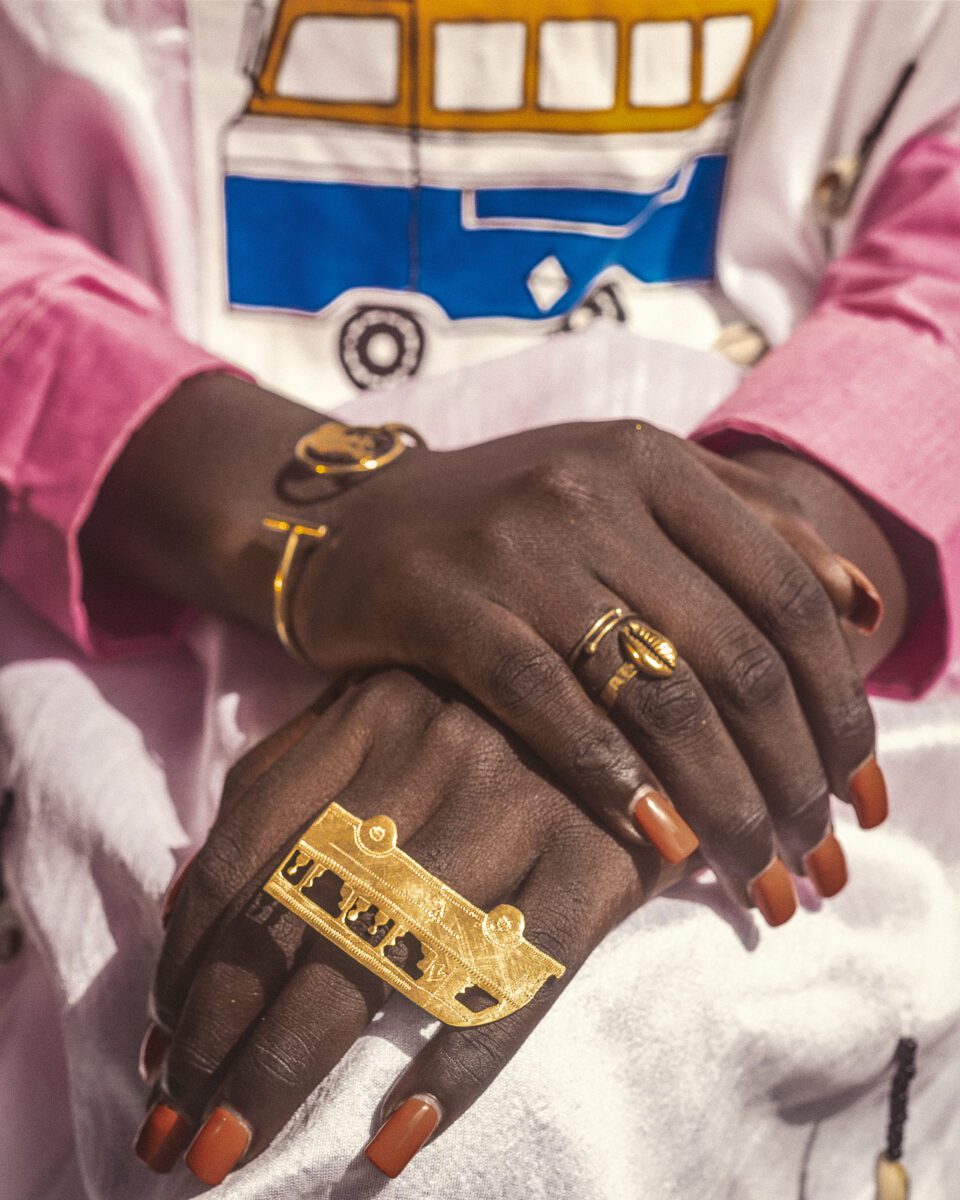
1. Alexandre Gandaho, Yellow Blue Car Rapide, Dakar, Senegal, 2023.
2. Naett Mbaye, from the series Marché 100 Francs, Dakar, Senegal, 2024.
3. Tsion Haileselassie, Two in One, Beherawi, Addis Ababa, Ethiopia, 2021.
4. Kothegrapher, Old Wall, A Balancing Act, Gwagwalada FCT, Abuja, Nigeria, 2024.