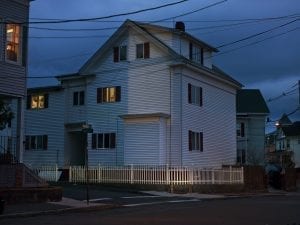
In 1976, the United States celebrated the 200th anniversary of the adoption of the Declaration of Independence. To mark the occasion, the National Endowment for the Arts (NEA) created a grant to fund regional photographic projects that documented people and places across the country. Inspired by the legacy of the Farm Security Administration (FSA) during the Great Depression (from which Dorothea Lange’s famous Migrant Mother emerged in 1936). The NEA envisioned these surveys as a “new portrait of the USA” during a pivotal chapter in its history. Not long after, in the early 1980s, The Smithsonian American Art Museum (SAAM) in Washington, D.C. began actively acquiring photography. It was a time when the art world was beginning to embrace the medium, and, in 1983, 1,000 images were transferred from the NEA to the museum. These works established SAAM’s collection, which has since grown to include more than 10,000 prints. “Since its inception, the museum has been dedicated to collecting and preserving work that reflects the lived experiences of Americans,” said Jane Carpenter-Rock, acting Margaret and Terry Stent Director at SAAM. Now, as the USA reaches another milestone – 250 years – it presents Much Here Is Beautiful, “underscoring an ongoing commitment to stewarding and interpreting images of the nation, ensuring they remain vital to our understanding of our past and ourselves.”
The NEA funded more than 70 projects between the late 1970s to the early 1980s, yielding thousands of pictures by more than 200 photographers. Much Here Is Beautiful – which takes its title from the poem American Journal (1978) by Robert Hayden – explores the range of these initiatives. It includes works by Carleton E. Watkins, Timothy O’Sullivan, William Bell and William H. Jackson, produced as part of the 19th century US Geological Survey, which brought images of the West to many Americans for the first time. Also featured are photographs from the FSA programme of the 1930s and 1940s, which reflect photography’s growing interest in documenting all aspects of American life in the 20th century. The story unfolds through the lenses of celebrated photographers including Arthur Rothstein, Dorothea Lange, John Collier, Marion Post Wolcott, Russell Lee and Walker Evans. “Together, these images present a view of the US from within, as artists turned their cameras toward their own communities with urgency and personal vision,” says John Jacob, the McEvoy Family Senior Curator for Photography and organiser of the show. “At a moment when photography was in transition, the surveys of the US Bicentennial affirmed its power to shape how we see the world – and ourselves within it.” Many have not been revisited since the grants were first offered.
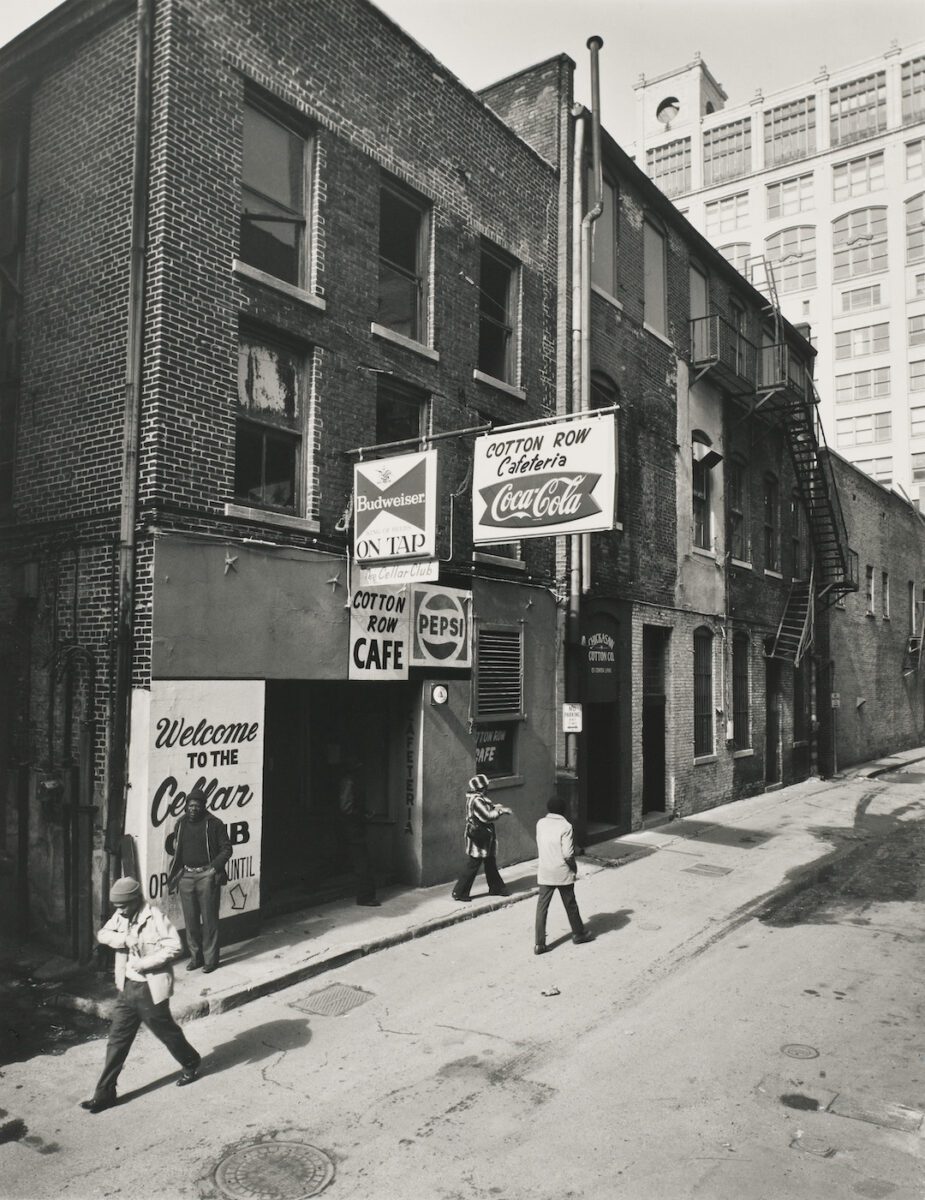
The show is organised by geographic region. The Northeast features Lee Friedlander, who focused on the factories and labourers of industrial towns in Ohio and Pennsylvania. This section also includes Bruce Davidson’s acclaimed Subway series, depicting New York City in the 1980s, alongside a survey of East Baltimore led by Elinor Cahn, Joan Clark Netherwood and Linda Rich. The South debuts never-before-seen images by Robert Townsend Jones Jr., capturing Beale Street in Memphis, Tennessee, during a major transition period. It also includes Martin Stupich’s documentation of the construction of the Metropolitan Atlanta Rapid Transit Authority (MARTA), and shots from Appalachian communities of West Virginia and Kentucky. The Midwest showcases iconic pictures by Joel Meyerowitz that record the look and spirit of St. Louis, dominated by Eero Saarinen’s monumental sculpture The Gateway Arch. There are also large-scale projections of roadside attractions, courtesy of John Margolies, capturing motels, diners, gas stations and “quintessentially American oddities” that defined the landscape during the 1970s. Finally, there is The West, with works from the The Rephotographic Survey Project by Mark Klett and JoAnn Verburg. They are shown alongside prints of the original landscape images made by Carleton E. Watkins and Timothy O’Sullivan a century earlier. Also featured are photographs by Reagan Louie chronicling San Francisco’s Chinatown, a neighbourhood imbued with the artist’s personal and ancestral memories, as well as a selection from Penny Wolin’s Jackalopes, Cowboys and Coalmines: A Photographic Survey of Energy Development in Wyoming.
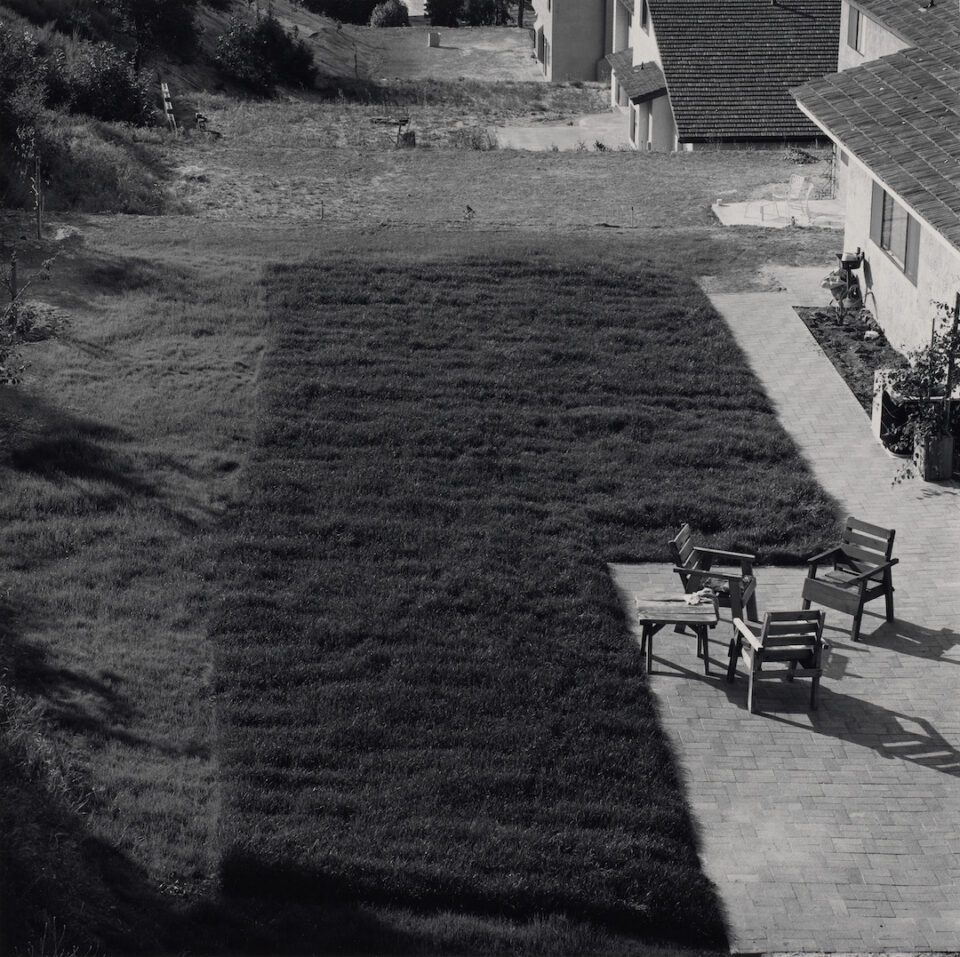
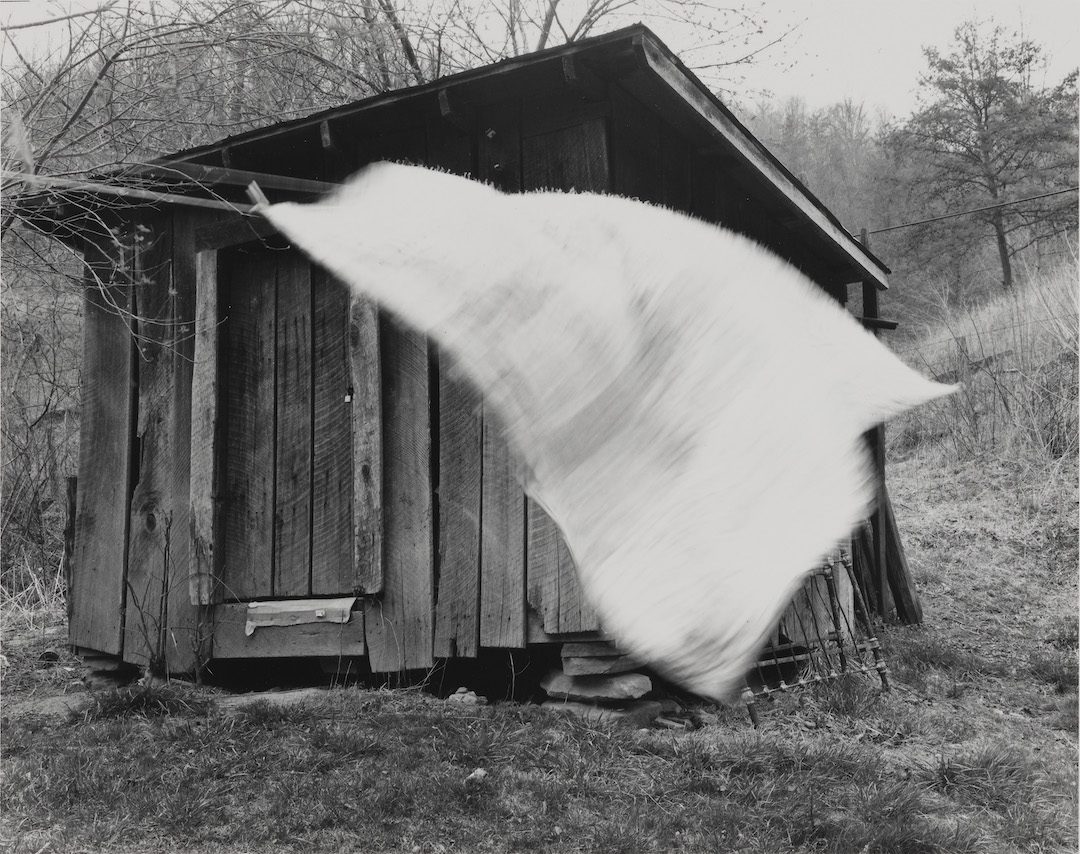
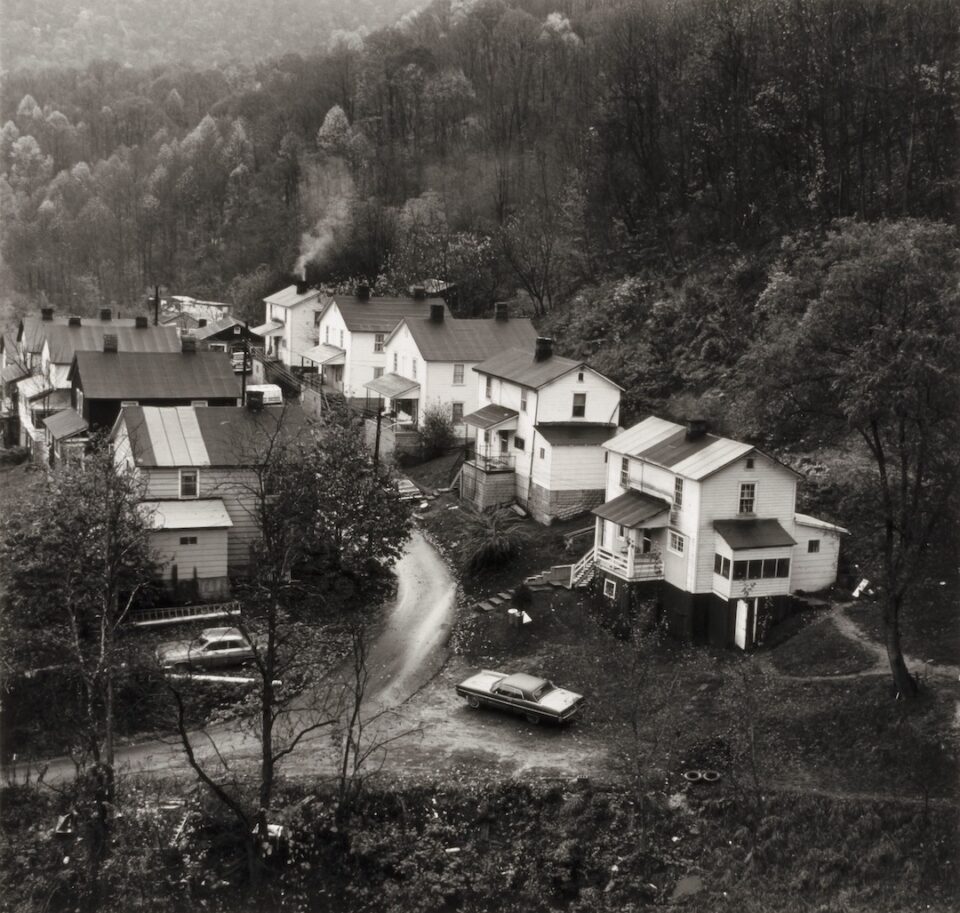
Standout images include Rena Meade’s Quilt by Wendy Ewald, taken from the Appalshop, Inc., Documentary Survey Project of 1977, which captures a sheet of fabric on a washing line, billowing in the wind. Joe Deal’s Back Yard (1980) – with its almost doll-house looking chairs – emerges from a series dedicated to life in Los Angeles, whilst Ted Wathen captures a row of former company houses in Jenkins, Letcher County, Kentucky. Whilst there are many powerful portraits on display, some of the most revealing images are of buildings, cars, landscapes and street corners. More often than not, these photographs capture slices of life, showing rather than telling the stories of everyday America – from the volcanic reaches of Mount St Helens to the shores of Long Beach and beyond. Looking back across these photographic surveys, Much Here Is Beautiful invites us to consider what the next chapter of American image-making might look like.
Much Here Is Beautiful: Photography Surveys of the U.S. Bicentennial
Smithsonian American Art Museum, Washington, D.C | 18 September – 18 April
Words: Eleanor Sutherland
Image Credits:
1. Wendy Ewald, Rena Meade’s Quilt, from the Appalshop, Inc., Documentary Survey Project, 1977, gelatin silver print, Smithsonian American Art Museum, Transfer from the National Endowment for the Arts, 1983.63.487, © 2026, Wendy Ewald.
2. Ted Wathen, Former Company Houses, Jenkins, Letcher County, Kentucky , 1975, Smithsonian American Art Museum, Transfer from the National Endowment for the Arts, 1983.63.1614, © 1975, Ted Wathen
3. Robert Townsend Jones Jr., Cotton Row Cafeteria, Center Lane Alley, Memphis, TN, February 1978 , 1978, printed 2025, gelatin silver print, Smithsonian American Art Museum, Museum purchase, 2026.6.4
4. Joe Deal, Back Yard, Diamond Bar, CA, from the Los Angeles Documentary Project , 1980, gelatin silver print , Smithsonian American Art Museum, Transfer from the National Endowment for the Arts through the Photography Museum of Los Angeles, 1990.38.21, © 1980, Joe Deal