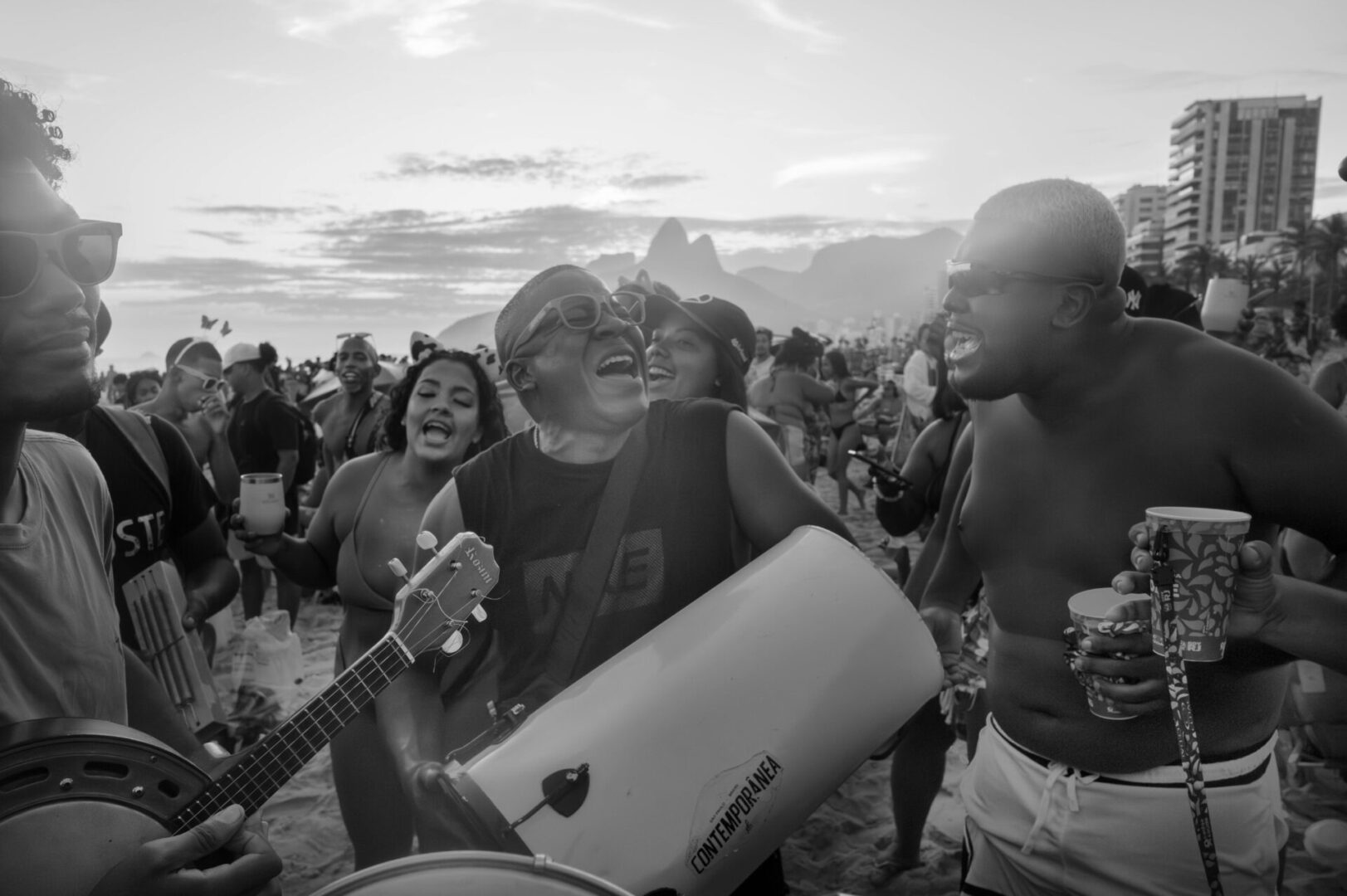
Over 10 years, José Antonio Rosas has photographed some of the world’s greatest celebrations – from Glastonbury and Holi to Kumbh Mela, Carnaval, the pilgrimages of Lalibela and Qoyllur Rit’I, and the dances of Candelaria. The artist works from within these vast gatherings, capturing the charged moments when cultural and social boundaries dissolve and collective euphoria takes hold. Yet, even within these immense crowds, individuality persists. In each expression of ecstasy, devotion or abandon, something irreducibly personal breaks through. What emerges is a portrait of a universal human yearning – to surrender to something larger than oneself in search of release, connection and transcendence. This decade-long project is now the subject of a book from Kehrer Verlag, spotlighting what it means to come together in deeply human moments of celebration, worship and collective release.
A: Take us back to the start. Where did you get your first camera?
JAR: I bought a compact film point-and-shoot just before my honeymoon in 2000. But I really started to get serious about photography a few years later, when digital came along. In 2004, my wife got pregnant with our first child, and I bought the Canon Digital Rebel to record my family life. I started immersing myself in the world of photography, getting more and more interested in the craft. What started as a hobby gradually evolved into a dedication, first in the natural world, and then into other people and cultures.
A: You first experienced this feeling of collective euphoria at Glastonbury in 2015. What exactly happened to you in that crowd that made you want to spend the next ten years pursuing that feeling?
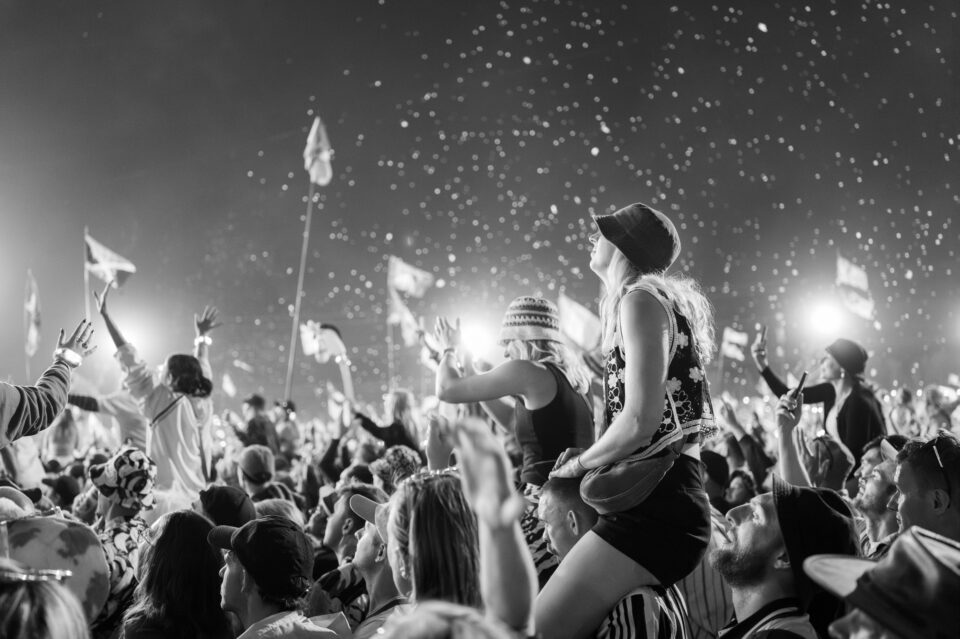
JAR: As a lifelong fan of rock music, I had already experienced a sense of connection with crowds at concerts and festivals. I went to Glastonbury expecting a grander experience, in terms of scale and musical offerings. But what struck me most wasn’t any of that. It was a deep sense of community, a shared euphoria among total strangers. For a few days, everyday life ceased to exist. People who had never met before connected over a collective state of release and elation. At the time, I was contemplating leaving my business career, so that feeling of release felt especially poignant.
A: What were you searching for when you began following this feeling across different cultures, continents and gatherings?
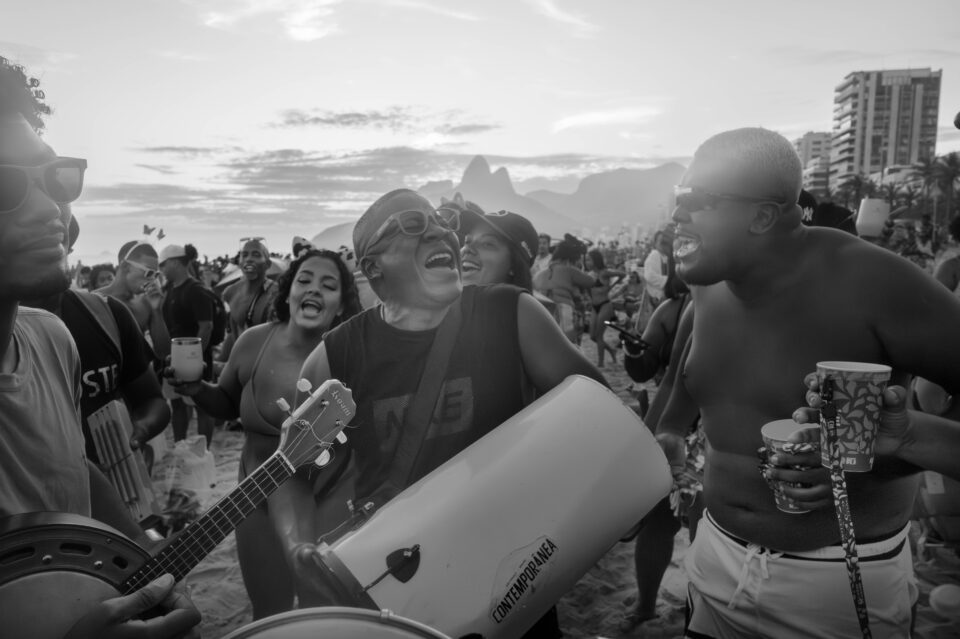
JAR: At first, I wasn’t consciously looking for anything in particular. It took me a couple of years after Glastonbury to start photographing celebrations in Peru. In those, I took a documentary approach, not yet fully aware of the similarities between those festivals and Glastonbury. That realisation started to manifest itself during the COVID-19 lockdown. I had just come back from Holi in India, and began to reflect on what we lose when unable to get together: a collective joy that we can only experience when gathered in crowds. After the pandemic, I became conscious of trying to capture that feeling across different traditions.
A: Why do you choose to document from within the crowd rather than from a distance?
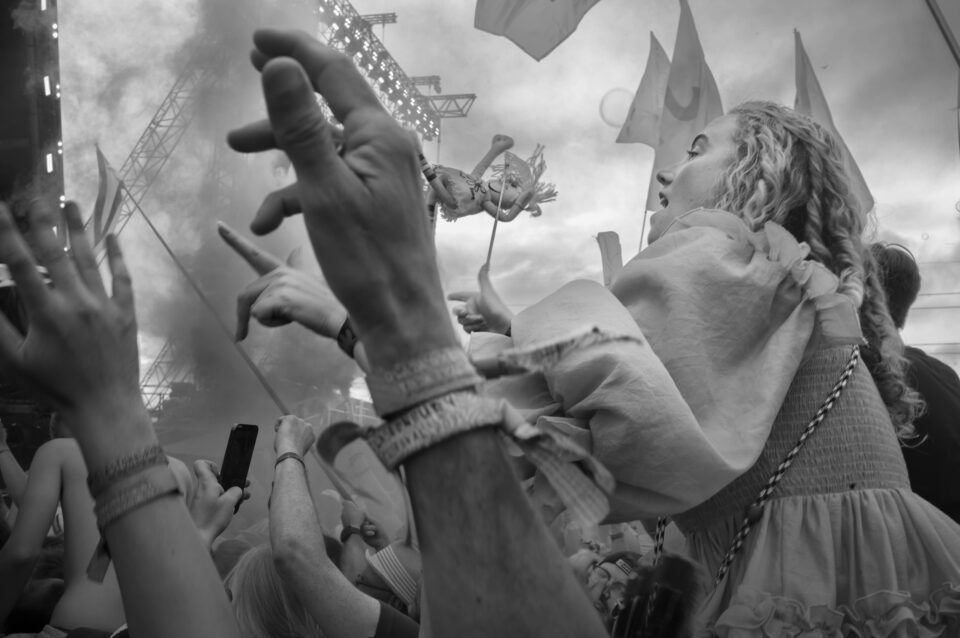
JAR: From a distance, these massive gatherings might seem like a sea of indistinct bodies. It is easy to imagine that in the middle of the crowd, individuality dissolves completely. However, when examining each gesture from deep within the group, I have found something else happening. In each pair of closed eyes, each open mouth, each expression of ecstasy, there is an individual striving for something personal, perhaps a release from the pressures of everyday life, a deep connection not found in the normal world or a search for transcendence. Whatever the reasons, by letting themselves go during the communal frenzy, people end up setting themselves apart from the crowd and releasing a deep expression of their being.
A: When you’re part of a crowd where so many things are happening at once, what is it that makes you pick up the camera and capture an image?
JAR: At these gatherings, I always have my camera in hand, ready to go. There are a few moments during which I get so lost in the crowd that I forget about taking pictures, but most of the time I will be watchful of everything going on around me, looking for those special moments gestures and expressions of emotion from individuals that show them as connected to the crowd, while setting themselves free.
A: Many of the images you capture are of moments of intense worship or cultural celebration. How do you approach photographing people in vulnerable or private moments?
JAR: That is one of the most challenging parts of this project: how to capture a special moment of deep worship, contemplation or revelry without disrupting or interfering with the experience. For me, the answer lies in always showing respect and care for the people and their traditions. Establish eye contact, show that I am present in the moment as an observer, be mindful of not standing in the way of a ritual or celebration and be ready to step away if I sense that I am causing discomfort.
A: Do you have a particular experience that has stuck with you from your 10 years on this project?
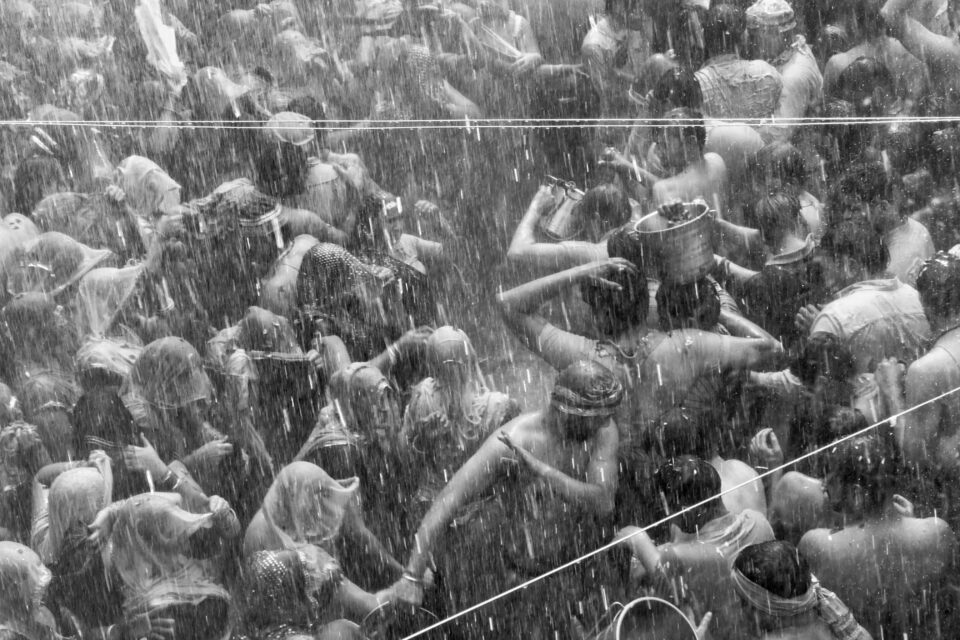
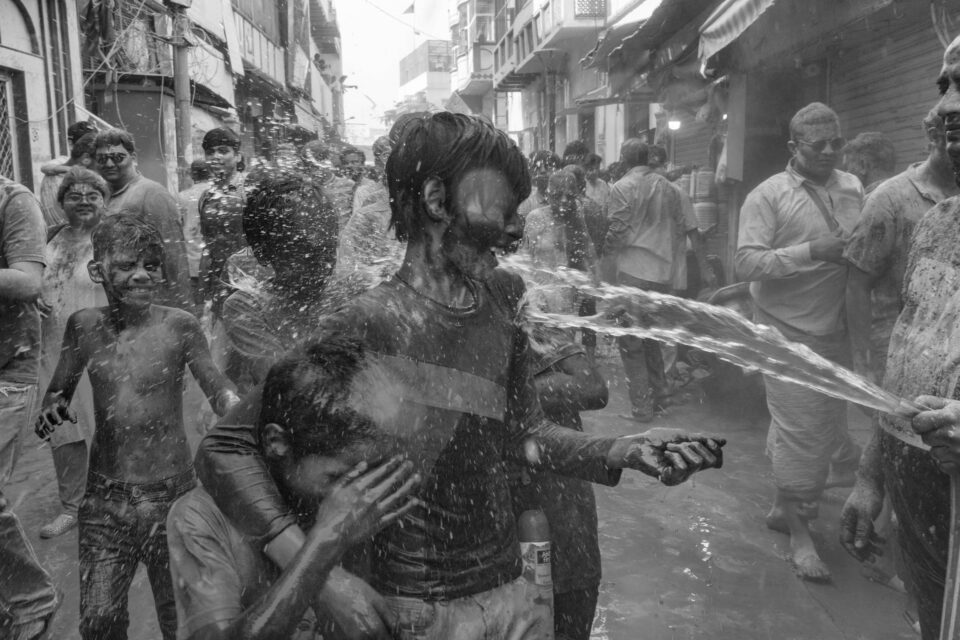
JAR: During my first time at Holi in India, I went with a group of photographers to a remote temple for a celebration called Huranga. We stepped into the courtyard, which was filled with men dancing, then the women appeared, all dressed in colourful saris. Each of them roped a man with her silk shawl, stripped him of his shirt and started flogging him with it, while water rained from pipes above. I later learned that it was a playful enacting of revenge. At the moment, I was so absorbed that I didn’t realise that my group had left and I was the only foreigner in the courtyard. Suddenly, I felt a pull at the back of my t-shirt. It was a young woman, trying to rip my shirt apart. Even though her elders disapproved, she tore my shirt from me and started flogging me hard with it, while her friends laughed. I emerged from the temple shirtless, soaked and filled with powder up to my nostrils, to general laughter from young locals. It remains a special moment, because I started the day as an observer of a foreign ritual and ended it as a full participant.
A: You’ve been across the world, from India’s Holi to the candlelit devotion of Christmas in Lalibela. What have you found unites these disparate events
JAR: These festivals originate from different traditions and are driven by various motives, but they share common characteristics: multi-day gatherings that suspend societal norms, halt regular life, dissolve social categories and encourage people to give in to uninhibited joy. These factors lead to the emergence of a phenomenon called “collective effervescence,” first described by the sociologist Émile Durkheim at the beginning of the 20th century. The act of gathering generates an electricity that runs through everyone in the crowd, driving people to shed their regular identities and allowing for a freer version of themselves.
A: Tell us about the title – Somewhere We Feel Free. What does this mean?
JAR: When thinking about a title for the book, I listened carefully to the lyrics of my favorite songs. A line in “Wildflowers” by Tom Petty struck a chord: “You belong somewhere you feel free.” That “somewhere” implies a place different from where you are now, away from troubles and worry, as the song later says. Then there’s the “feel free,” the sense of release and liberation one experiences. I changed the “you” for “we”, in order to give it the meaning of community and connection. And so, the title became Somewhere We Feel Free, a special place where we gather to find connection and release.
A: Are there any events or celebrations that you want to photograph, but haven’t had the chance?
JAR: After 10 years, I’m taking a break from big gatherings. I arrived at each of the seven celebrations featured in the book under different circumstances and driven by various motives. I didn’t reach any of them with a prior intention of incorporating them into this book. There was chance involved in how I arrived at them, and how I found the similarities that ended up making them part of the same project. So, I would rather let chance continue to take me to the next event.
José Antonio Rosas: Somewhere We Feel Free is published by Kehrer Verlag: kehrerverlag.com
Words: Emma Jacob & José Antonio Rosas
Image Credits:
All images Jose Antonio Rosas: Somewhere We Feel Free. Courtesy of the artist and Kehrer Verlag.