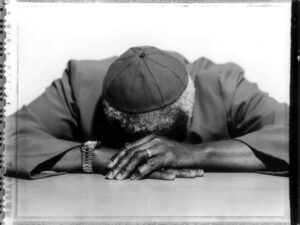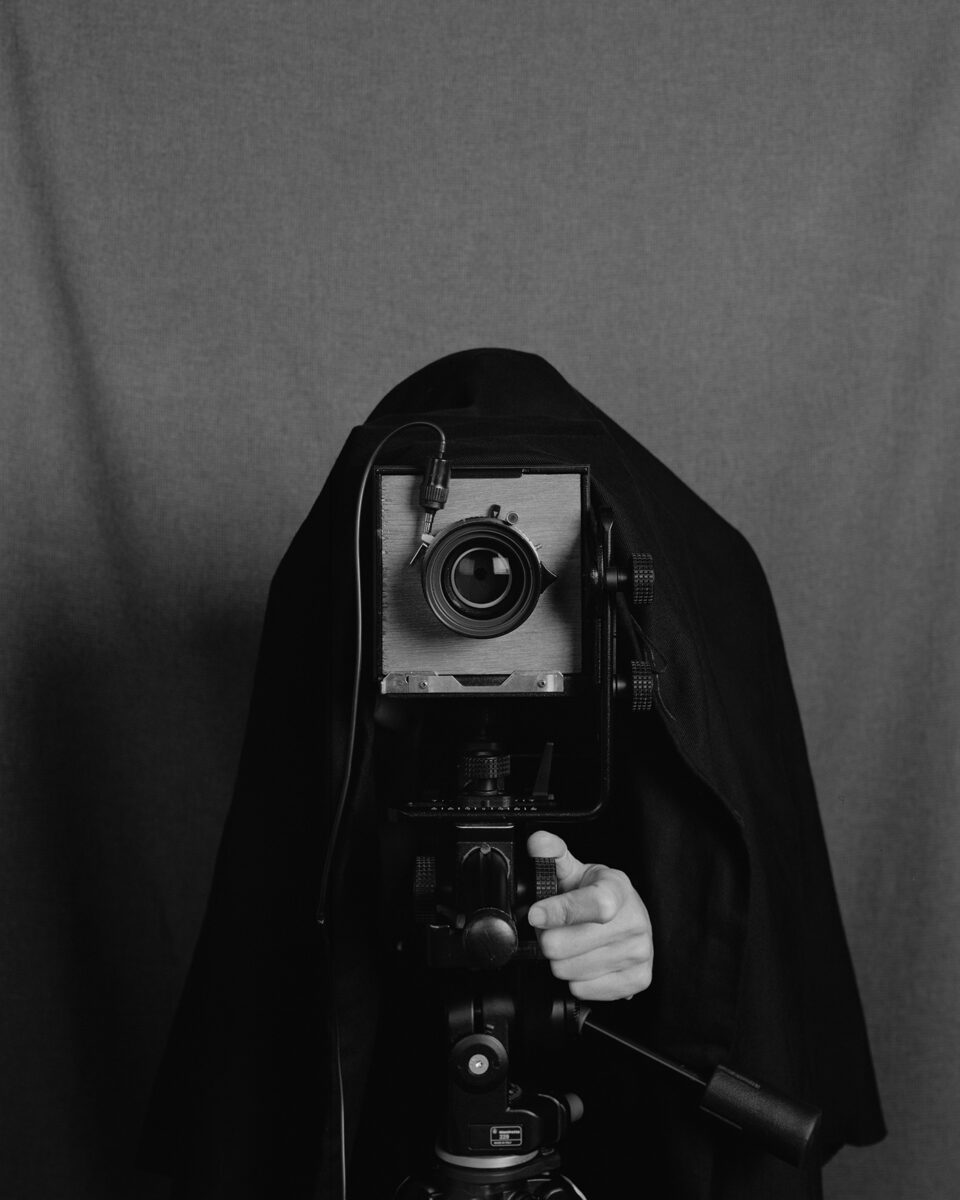
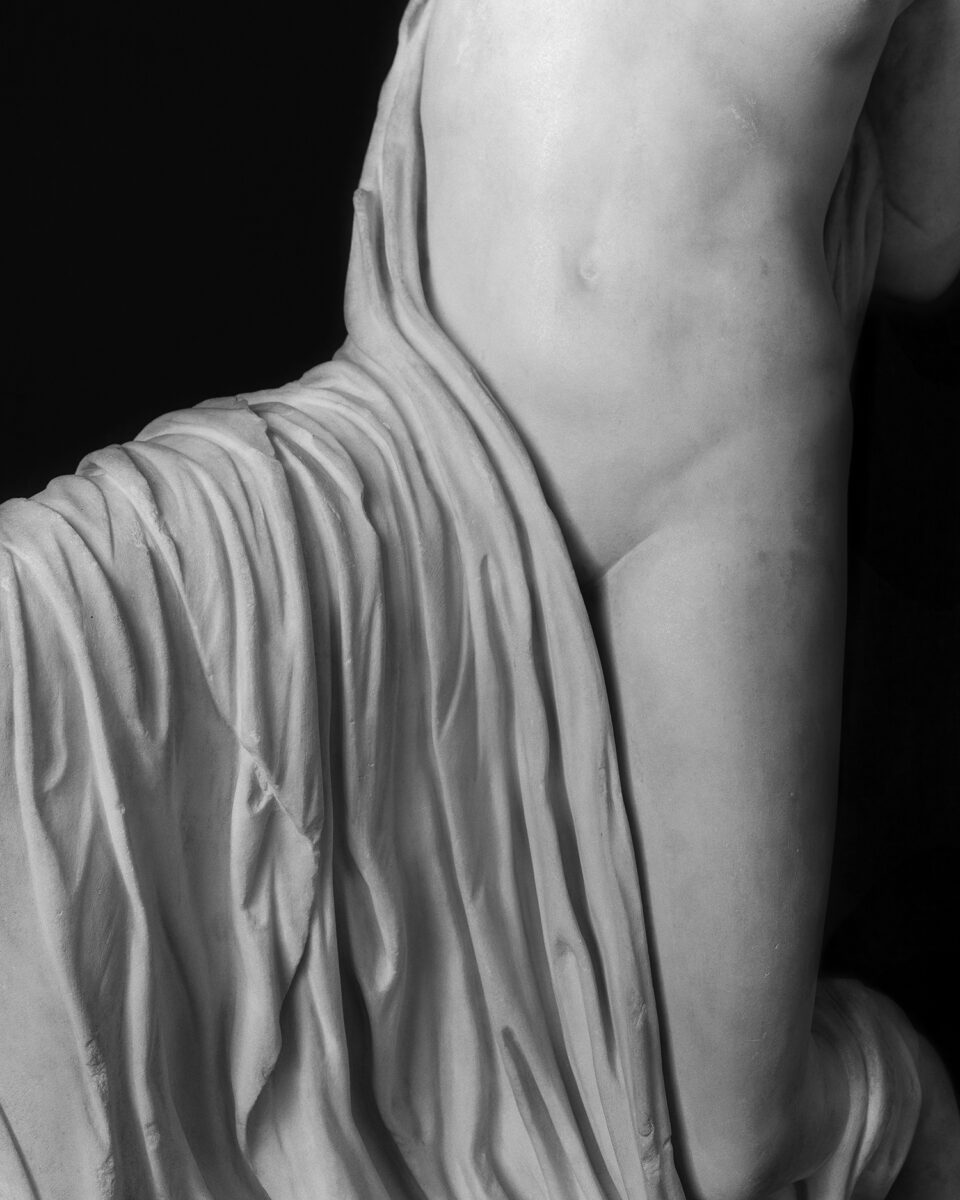
Classical sculptures meet traditional studio portraiture in the work of Åsa Johannesson. The artist’s long-term project The Queering of Photography, turns both traditional genres on their head. The experimental work investigates the complex relationship between queer identity and photographic representation. The artist creates formal, yet playfully subversive images of human figures, Roman statues and studio props to challenge and reimagine how identity and desire are represented. The project evolved from a series of interconnected works – Looking Out, Looking In; Frame; Figural, Figurative; Turn; and Skin – spanning performative black-and-white studio portraits, studies of Roman statues and studio props, experimental “profil perdu” Polaroids, and Polaroid emulsion sculptures. Each of these works is shaped by a commitment to tradition, experimentation and joy, revealing the making of photographs as both a site of intimacy and transformation. Now, the full series is on display at Stills, Edinburgh, offering audiences a rare chance to engage with Johannesson’s full archive. We caught up with the artist ahead of the show’s opening.
A: Tell us how you began working behind the lens?
AJ: My interest in photography began in childhood; I bought my first 35mm camera when I was a teenager. I grew up in Sweden, surrounded by a family that had a strong interest in photography. My great-grandfather, grandparents, and father all built darkrooms in their homes to develop and print images for family albums. Their engagement with darkroom printing was not primarily driven by artistic ambition, but by modest budgets – it may sound surprising today, but in the 1980s it was cheaper to produce black-and-white photographs yourself than to develop colour film in high-street labs. As a result, almost all images of me as a child are black and white. I moved to London in the late 1990s and began studying photography at the University of Westminster in the early 2000s. At that time, I was exploring London’s LGBTQ club scene, mainly in Soho and around King’s Cross. During the final year of my undergraduate studies, I began making portraits of friends, many of whom I met in these clubs and bars. My queer community and interest in photography merged at that point, starting what has become a 20-year engagement with queer art.
A: How did this project first come about?
AJ: It began during my doctoral studies at the Royal College of Art in 2015. My PhD was practice-based, and it was important to me that the photographs I made were strong enough to have a life outside of academia. What began as a study of the queer photographic portrait developed into a substantial body of studio-based work, which continued to expand after the completion of my PhD. The title, The Queering of Photography, considers how queer concerns can be addressed and expressed in a variety of forms. There is a particular focus on the possibility to rethink queer photography beyond traditional paradigms, which often focus solely on identity and in doing so, sidestep the photographic process itself. I’m interested in bringing back conversations about photography in photographic projects on identity.
A: How has your understanding of “queering” photography evolved between 2015 and 2025?
AJ: The use of “queer” as a verb rather than a noun is particularly interesting to me, as it allows queer politics to be activated across different contexts. However, I believe that both “queer” and “queering” require a grounding in LGBTQ+ identity, and that queer photography should emerge from within the LGBTQ community rather than being applied by anyone as a form of critique. When I began exploring “queering” in photography in 2015, I experienced something of a crisis as an artist. Having made portraits of queer-identified individuals for several years, I became increasingly aware that, regardless of my intentions – for example exploring nonlinear narratives or queer formalism – my work was often reduced to representations of identity. I love documentary, so I want to stress that my concerns were not a critique of this photography genre. My concern was that this framing erased the significance of process and materiality. A painter or sculptor working with queer themes is often discussed in terms of material and technique, whereas photography is still widely assumed to be a “transparent” medium. Technique, materials and the dynamics of production all have the potential to generate queer vocabularies. In many ways, the past decade has been an exploration of how “queering” photography can shift from what is in front of the camera to what happens within the production process and the image itself. This encompasses all the relationships that underpin photographic meaning – between photographer and sitter; artist and camera; or image and viewer. I push this approach furthest in my series Skin, which consists of three-dimensional Polaroid emulsions. Here, queerness is articulated through the peculiar materiality of emulsions –each piece is fragile, beautiful, and difficult to categorise.
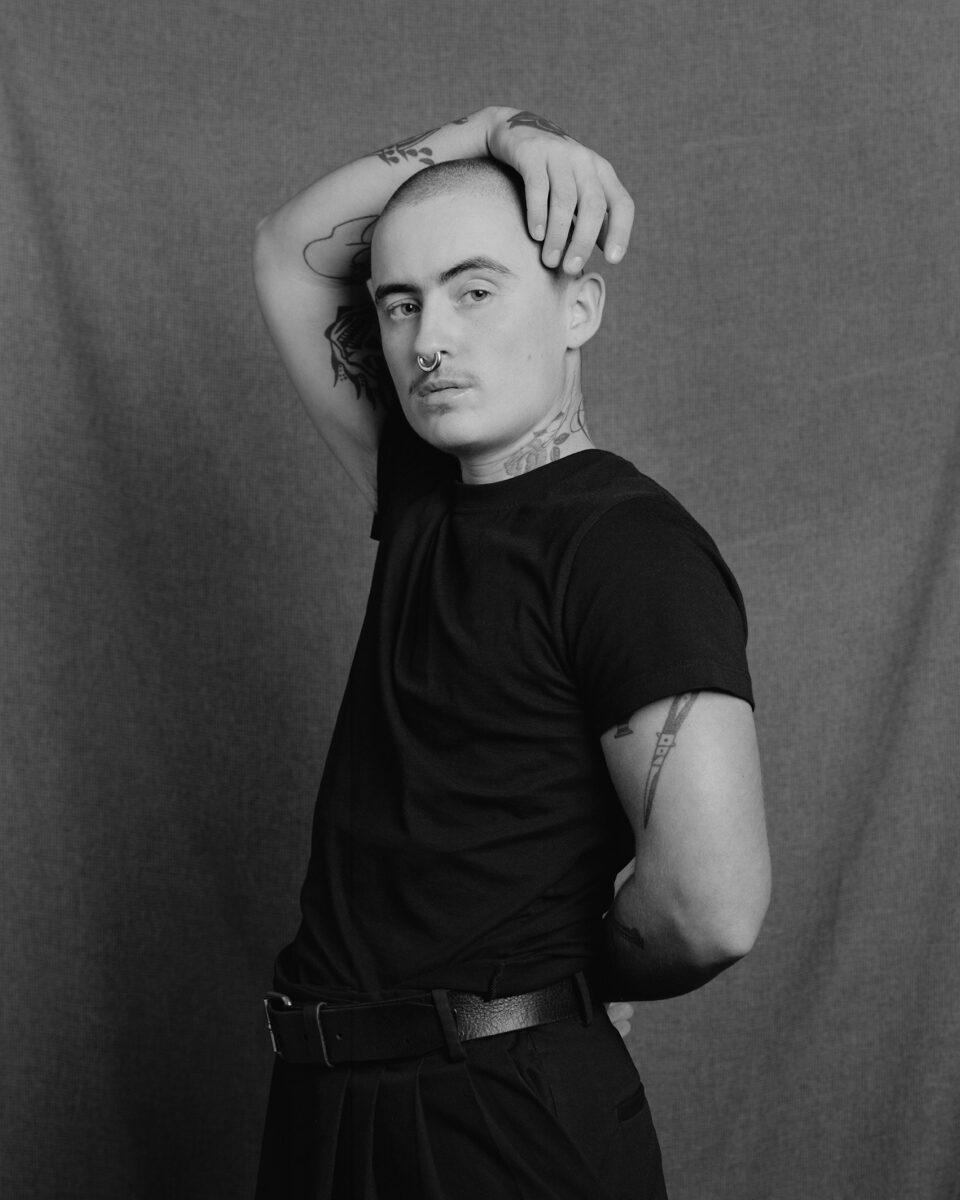
A: The Queering of Photography was developed in collaboration with the London LGBTQ+ community and at artist residencies at the British School at Rome. How did these influences shape the final vision?
AJ: The most rewarding aspect of making The Queering of Photography has been the opportunity to work with and meet so many inspiring people, as well as engaging with the marble statues in Rome. The individuals I captured contributed to shaping their portraits by suggesting poses and working with the slow pace required by my large-format camera. The statues on the other hand have offered new insights into art’s ability to transform the body into something slightly other – a photographic creature. I’m particularly interested in the dialogue between the human and sculptural portraits, as each informs the other. For example, the Turn series of human subjects is influenced by Roman busts.
A: How does your work subvert traditional portraiture?
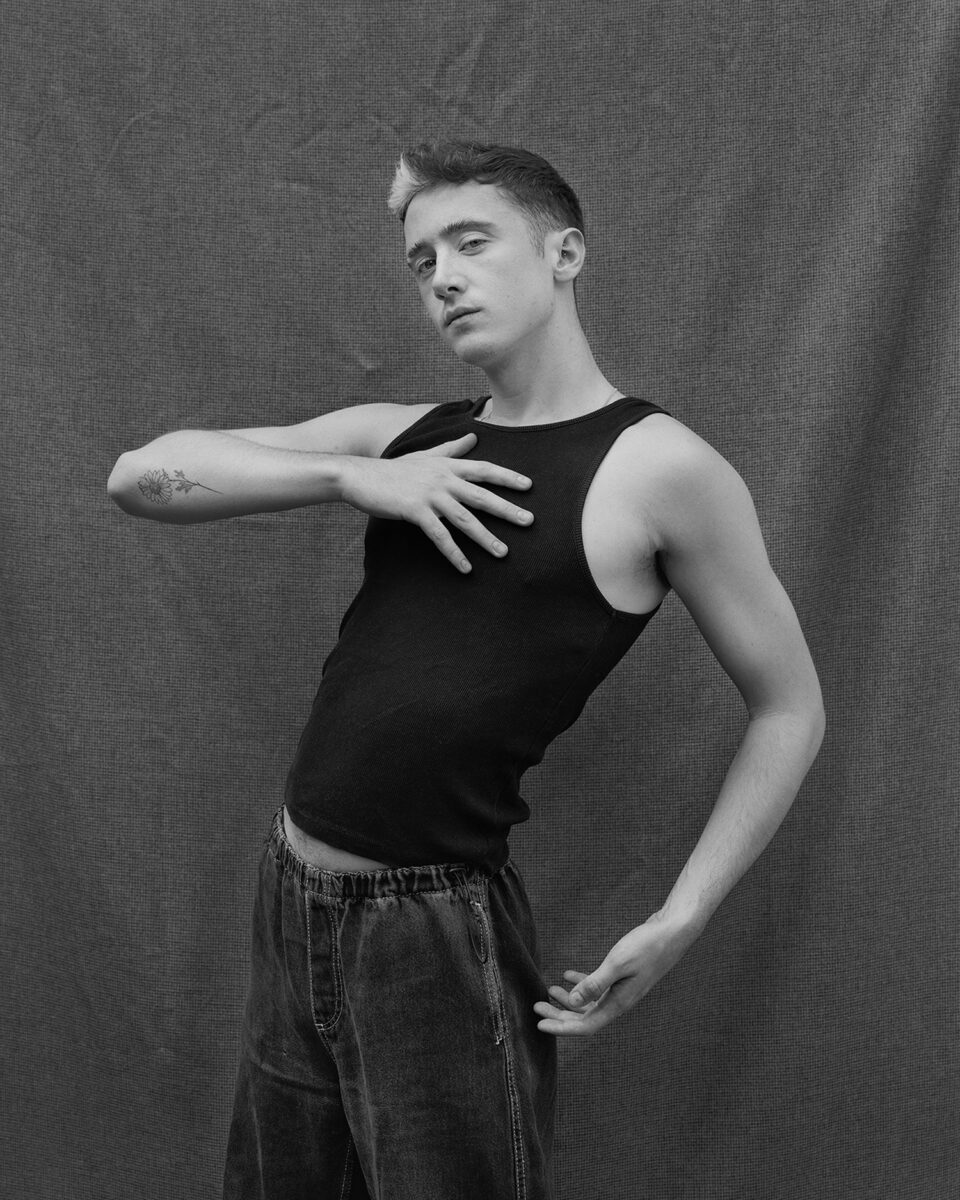
AJ: I think my work simultaneously subverts and conforms to traditional photographic portraiture. Many of my images are black-and-white studio portraits that echo 20th century modernist aesthetics through their monochrome minimalism and fabric backdrops. In the series Looking Out, Looking In, I am less interested in poses or compositions that signal “gender bending” and more concerned with challenging assumptions about what constitutes a normal portrait. This might involve a playful emphasis on a body part such as arms or a neck, or a sitter turning their face away. The performative gestures that appear are never pre-determined; imposing them would create unnecessary pressure during a shoot. I don’t know in advance where the strength of a portrait will lie, it might emerge through flamboyance or through quiet subtlety. I am ultimately interested in the sensibility of a portrait, what makes it compelling.
A: Who, or what, are your biggest creative influences?
AJ: Photographically, I have been strongly influenced by the black-and-white portraiture of Peter Hujar and Robert Mapplethorpe, as well as the experimental practices of Mark Morrisroe and Rotimi Fani Kayode. I also love Claude Cahun’s self-portraits, of course. More broadly, my work draws from a combination of photographic aesthetics, feminist theory and queer poetry. I am particularly drawn to writing that is poetic and diaristic rather than strictly academic, such as Yve Lomax’s work on photography and Derek Jarman’s writing on colour. Karen Barad has also been an important philosophical influence, especially in relation to non-binary approaches to queer knowledge production. Many of my key creative moments come from visiting museums, galleries, libraries, and bookshops – encounters with installations or unusual texts often spark new ideas. I often encourage my students to put their phones down and experience photography in physical spaces where its material presence can be fully appreciated.
A: Why do you choose to include Roman statues in your work?
AJ: My work with statues has been both creatively and technically exciting. They allow me to experiment with photographic approaches that would be impossible with human subjects, who require shorter exposure times. This has enabled me to engage with still life while maintaining a connection to portraiture. During my residencies at the British School at Rome, I explored queer narratives within classical sculpture, photographing statues in museums and studying archival photographic reproductions in the library. The statues introduce a certain awkwardness into my practice, which I value as it disrupts linear expectations of what a queer portrait project should be. The statues and busts also speak about a body in transition; broken bodies that have been altered or mended. Some of these statues share an androgynous physicality with my human subjects: bodies that do not aspire to “pass” or conform to conventional ideals of beauty.
A: You’ve described playfulness as a “critical mode of inquiry.” Could you tell us more about this?
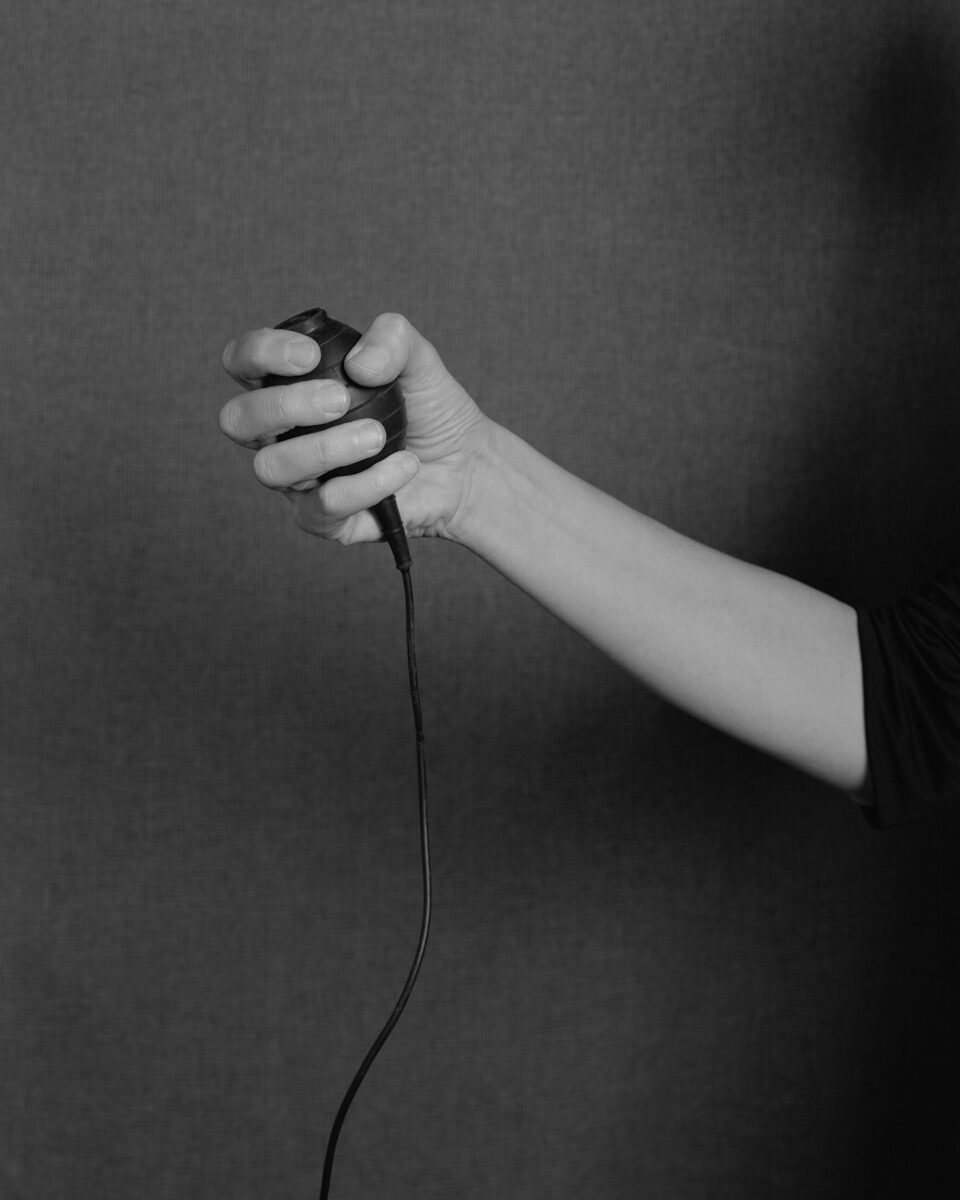
AJ: I am drawn to playfulness and mischievousness in photography, perhaps as a counterbalance to the often-rigid frameworks of academic discourse. Saying that, I’m a big believer in playful academic writing and this is something that I try to foreground in my book Queer Methodology for Photography (Routledge 2024). Many of my portraits carry a subtle humour, and I am often told that they do not look “queer enough” compared to other contemporary work. I think this stems from my exploration of diverse aesthetic approaches, which has led me toward a kind of playful formalism. With my series Frame, I foreground the studio setting: the backdrop, the shutter release, the camera – I think this is some form of playful critical inquiry too, to make art out of the behind-the-scenes apparatus. I’m currently finalising my first poetry collection on queer photography, informed by conversations with my sitters.
A: How do you direct or co-create the portraits with your subjects?
AJ: I approach each shoot as a dialogue that begins with me directing and gradually becomes a collaboration. It is important that my sitters feel comfortable and informed about the project, so I always begin with a conversation, often over coffee, about what we will explore in the studio. Working with a 5×4” large-format camera requires time and precision; each exposure demands stillness while I load the film and release the shutter. I may start with a conventional pose, such as a profile, but we often move toward experimental positions as the session develops. It is in these moments that something unexpected and often powerful can suddenly emerge. This is where magic can happen.
A: What do you hope audiences take away from The Queering of Photography?
AJ: I think of The Queering of Photography as containing an implicit question mark – it invites curiosity about what queer photography is and what it might become. I hope that some elements of the work stay with my audience. This could be anything really, a portrait that spoke to them, a sentence they read, or a sequence they particularly enjoyed. I don’t believe that it’s an artist’s primary role to educate, but I’d like people to be open to experiencing queerness through my lens. I especially hope that LGBTQ+ individuals will find strengths in my photographs – particularly the trans community. At a time when they are often subject to stereotyping and scrutiny, I hope the work offers a space in which their beauty can be recognised.
The Queering of Photography is at Stills, Edinburgh 1 May – 27 June: stills.org
Words: Emma Jacob & Åsa Johannesson
Image Credits:
1. Åsa Johannesson, Frame 4.
2. Åsa Johannesson, Figurative Drapery.
3. Åsa Johannesson, Looking In 32.
4. Åsa Johannesson, Frame 5.
5. Åsa Johannesson, Looking In 28.