

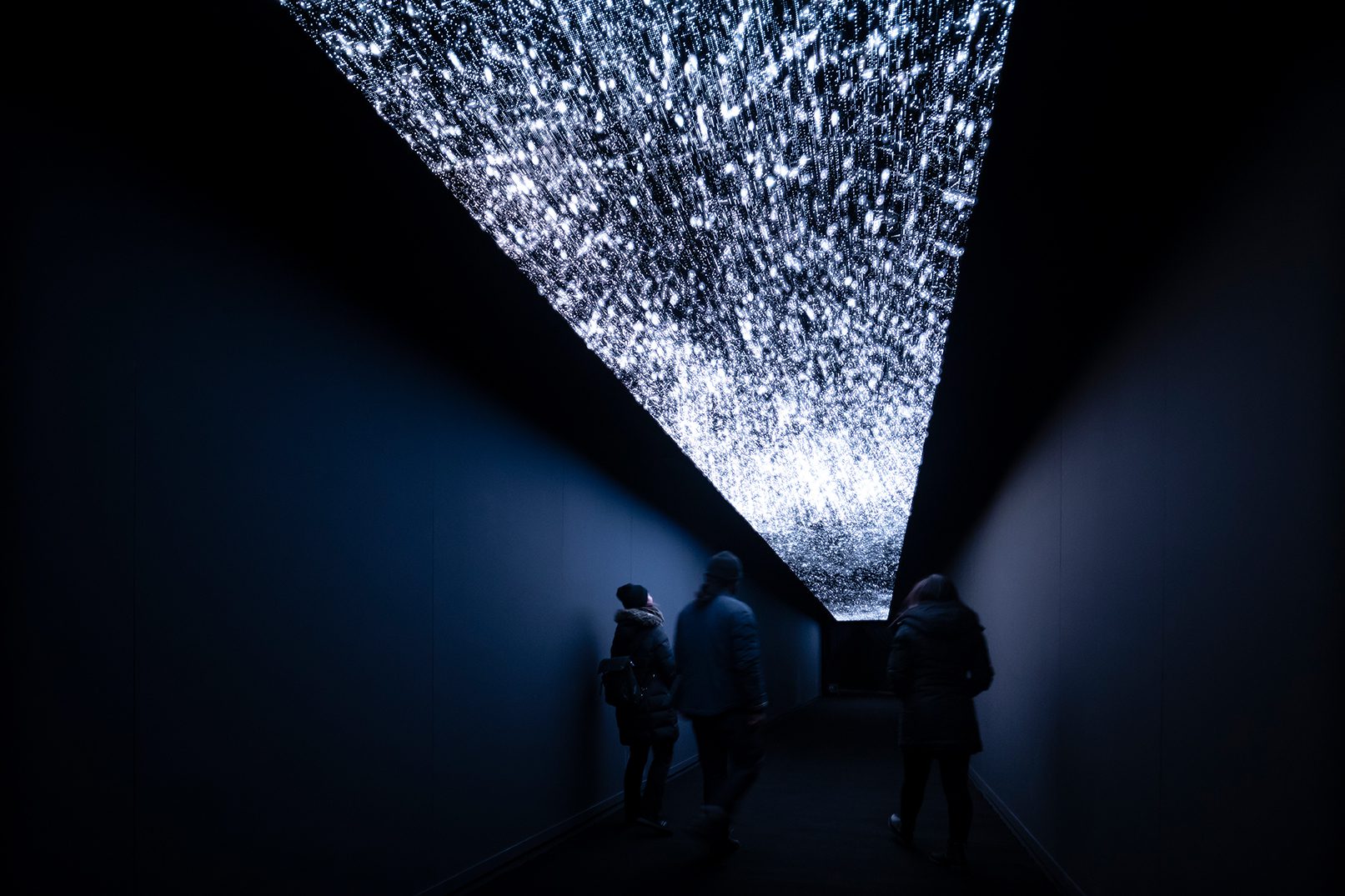
In 2019, four major bridges across London’s River Thames lit up. They were the first instalment of the Illuminated River project, an ambitious endeavour which, by mid-2021, had become the longest public art commission in the world – incorporating five more of the city’s bridges and spanning 3.2 miles. Behind this monumental effort was Leo Villareal (b. 1967), a Mexican-American artist celebrated for fusing light, technology and architecture. Here, he worked with LED technology and custom software to “paint with light,” producing sequenced patterns influenced by the site, history and engineering of each bridge. He drew inspiration from a range of sources, including Impressionist colour palettes and the constant flow of movement and culture across the capital. In so doing, he joined a long tradition of artists who have responded to the Thames, including painters like JMW Turner, Claude Monet and James McNeill Whistler.
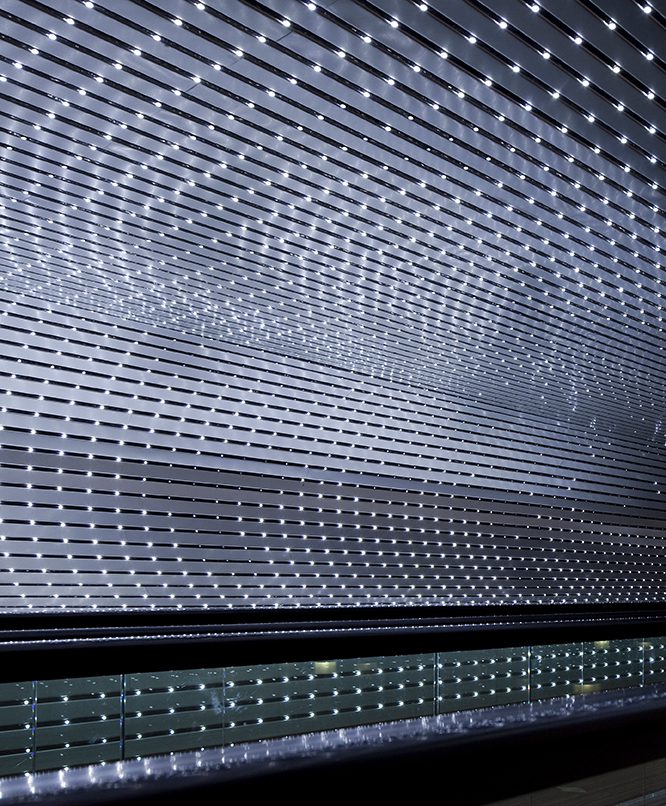
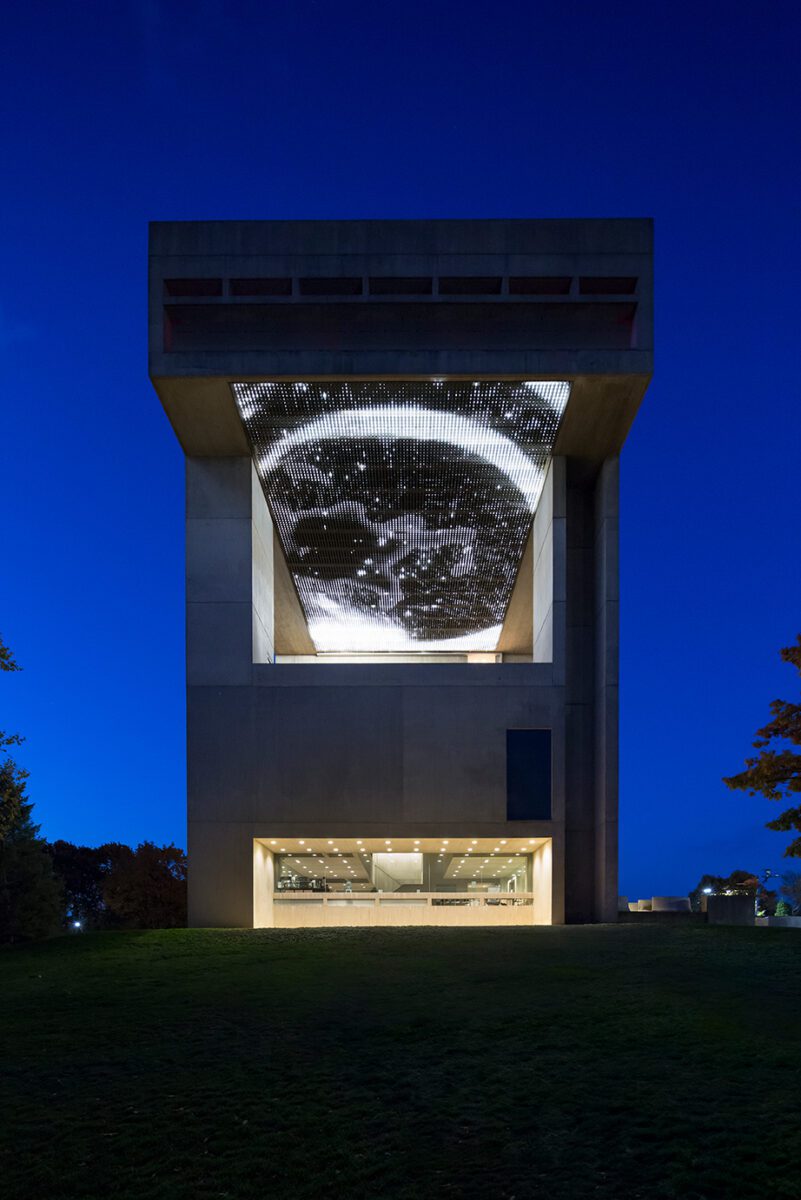
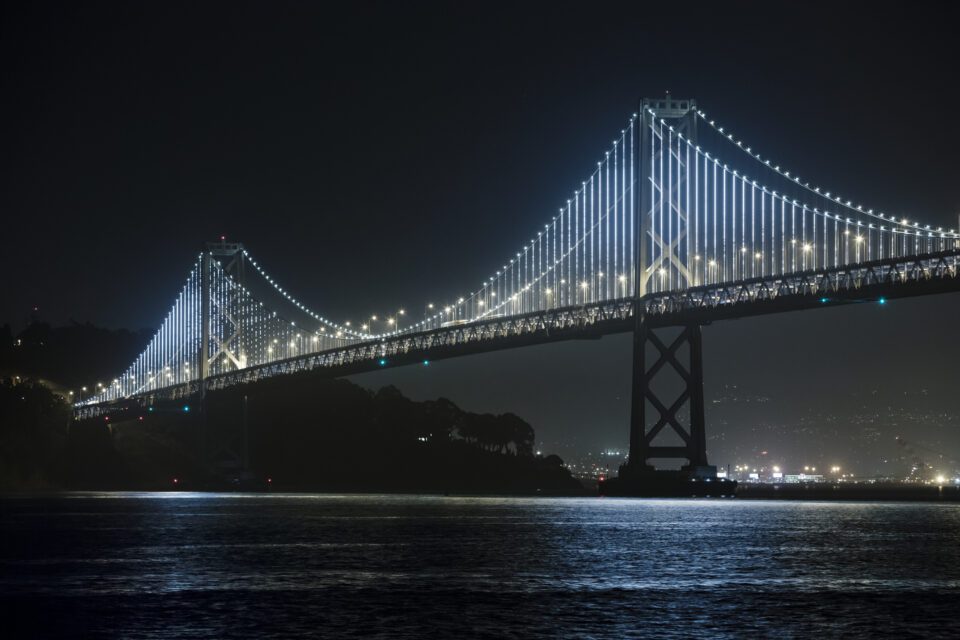
But Illuminated River wasn’t the first time Villareal had transformed architecture in a big way. At this point in time, his previous commissions included The Bay Lights (2013), which had adorned the San Francisco-Oakland Bay Bridge for several years, and would continue to do so until 2023. Then there’s Multiverse (2008), an immersive tunnel installation at the National Gallery of Art in Washington, DC. These were career-defining commissions. Now, they are at the heart of Coding Light, Villareal’s most comprehensive monograph to date, published by Monacelli. It features more than 50 works from over two decades, tracing Villareal’s evolution from early experiments in code-based art to monumental achievements in the public realm – bringing mesmerising visuals to subway stations, hospitals, airport terminals and museums.
The book is filled with 350 striking images. Each page is wondrous: awash with twinkling walls, starbursts, sun rays, nebulas and ceilings full of stars. But it’s the technicality behind these images that really sets them apart. Inside the book, in an interview with Sarah Sze, Villareal recalls the “epiphany where I connected software and light and space for the first time.” He’s talking about Strobe Matrix, constructed in 1997 as a night-time beacon for his Burning Man camp, mounted on top of his RV. It used a binary microcontroller, and it was only possible to have four lights on at once. This set the tone for what was to come, leading to ever-more complex ideas – in 2008, he built Multiverse, comprising 41,000 computer-programmed LEDs – as well as today’s generative projects, whereby the code produces a different iteration each time it runs.
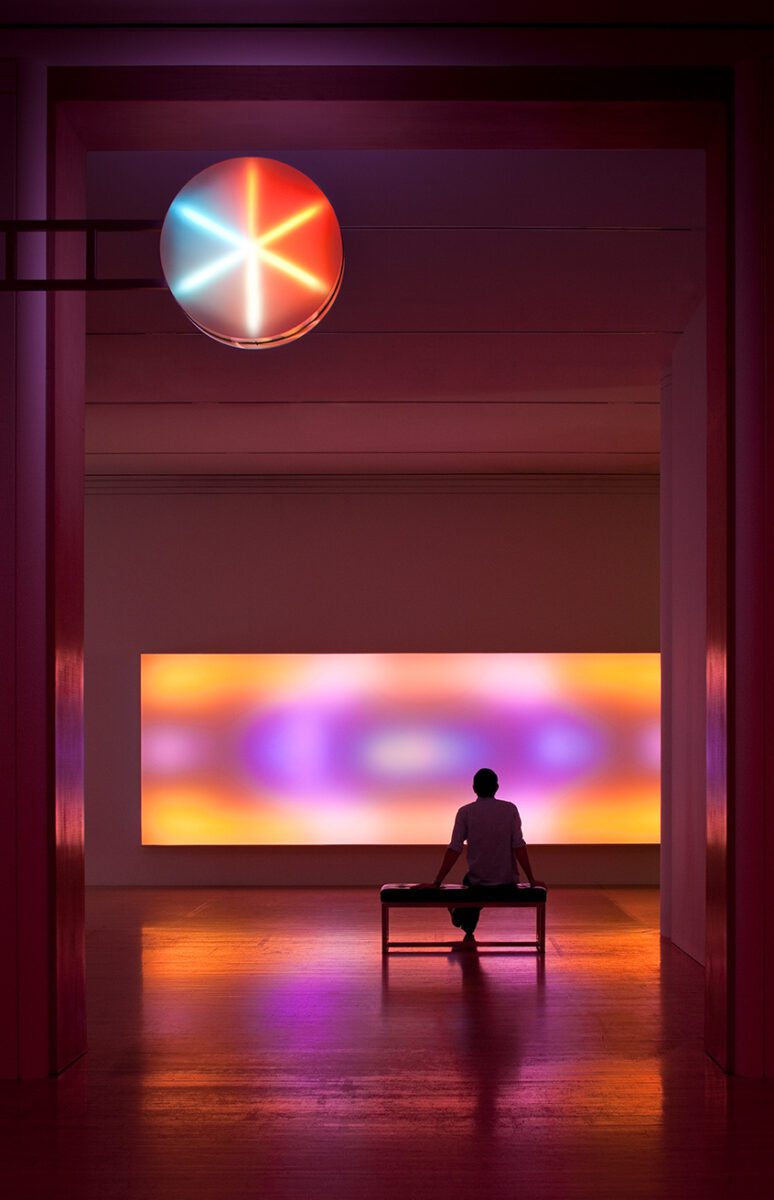
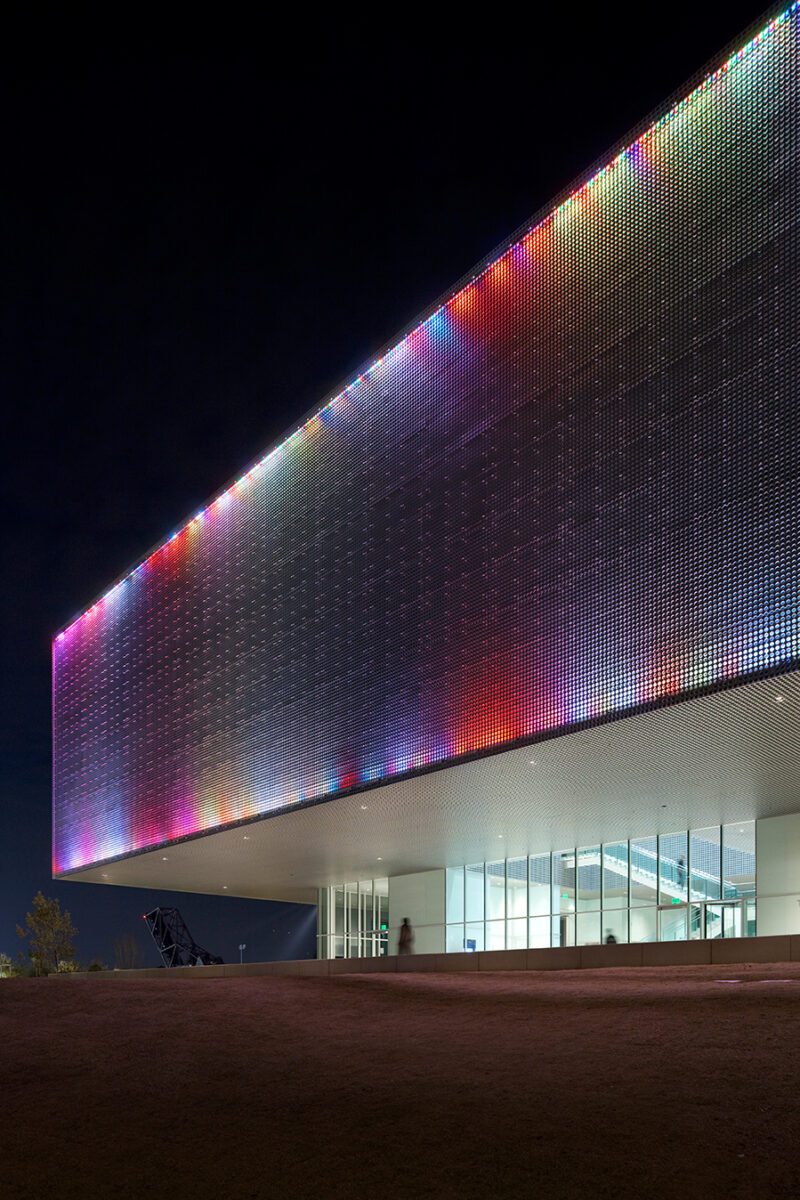
The interview between Sze and Villareal is complemented by further insightful essays from curator Molly Donovan and art historian Annie Dell’Aria, who put his work in context with a host of artistic forebears and contemporaries. There are references to 20th century painters like Frank Stella and Mark Rothko, as well as titans of the Light and Space Movement including Dan Flavin and James Turrell, and the bold, outdoor messaging of Barbara Kruger and Jenny Holzer, to name a few. Coding Light is beautiful and accessible title. It is a celebration of an artist whose algorithmic light installations have redefined public and digital art on a global scale. Moreover, it’s a love letter to the beauty of chance, the precision of rules, and the underlying structure of complex systems – showing that there’s often more to “light art” than meets the eye.
Leo Villareal: Coding Light is published by Monacelli, an imprint of Phaidon.
Words: Eleanor Sutherland
Image Credits:
1. Leo Villareal, Star Ceiling, 2019. Photo credit: James Ewing / JBSA (pages 214-215) LEDs, custom software, electrical hardware, stainless steel, 5 ft. 3 in. × 72 ft. 4 in. (1.6 × 22 m).
2. Leo Villareal, Multiverse, 2008. Photo credit: James Ewing / JBSA (page 67) LEDs, custom software, electrical hardware, 200 ft. (61 m). National Gallery of Art, Washington, DC.
3. Leo Villareal, Cosmos, 2012. Photo credit: James Ewing / JBSA (page 99) LEDs, custom software, electrical hardware, metal, 67 ft. 6 in. × 44 ft. 4 in. (20.6 × 13.5 m). Herbert F. Johnson Museum of Art Cornell University, Ithaca, NY.
4. Leo Villareal, The Bay Lights, 2013. Photo credit: James Ewing / JBSA (page 137-138) LEDs, custom software, electrical hardware, 1.8 mi. (length) × 226 ft., San Francisco-Oakland Bay Bridge, San Francisco, California.
5. Installation view, Leo Villareal, San José Museum of Art, San José, CA, August 21, 2010 – January 9, 2011. Photo credit: James Ewing / JBSA (page 80).
6. Leo Villareal, Sky (Tampa), 2010. Photo credit: James Ewing / JBSA (page 75) LEDs, custom software, electrical hardware, 45 × 300 ft. (13.7 m × 91.4 m). Tampa Museum of Art, Tampa, FL.


