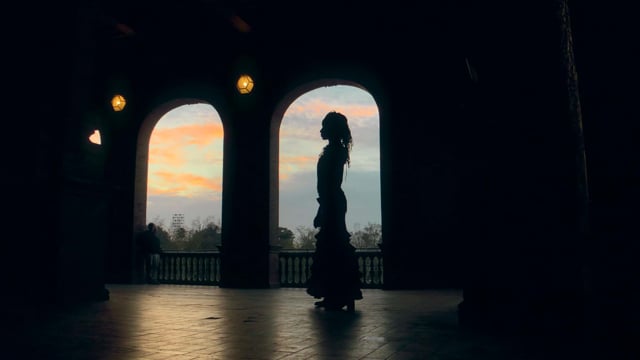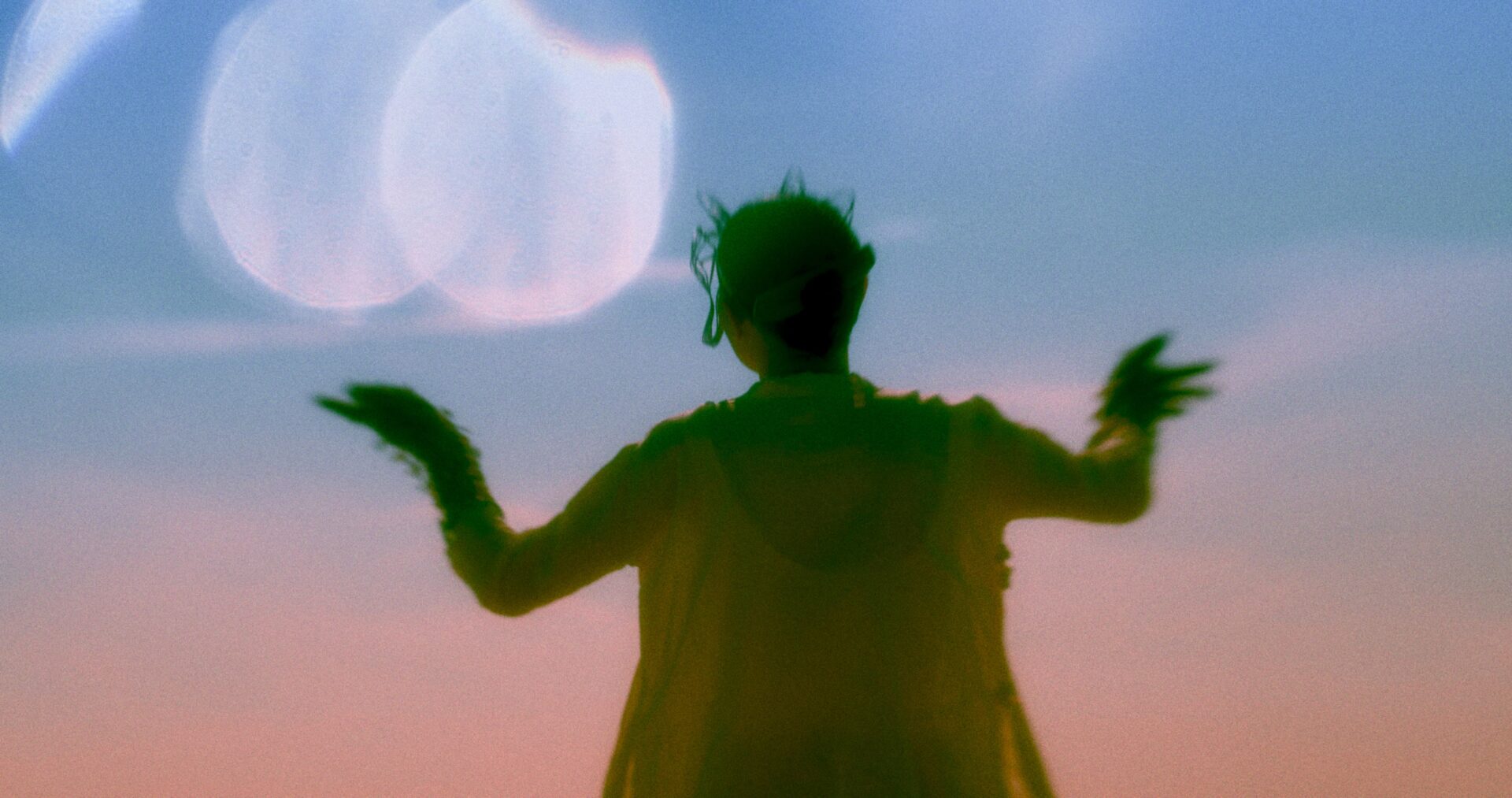
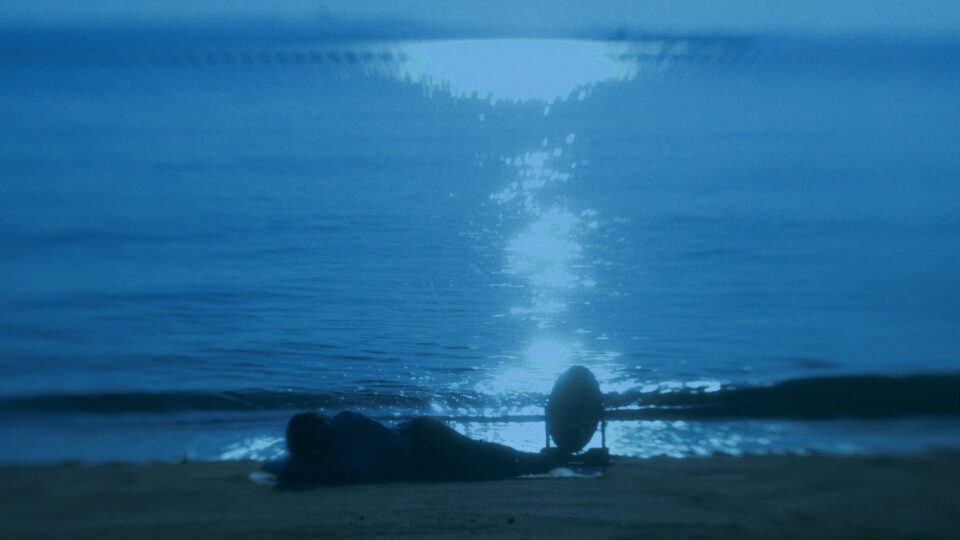
Manchester’s cultural landscape has long thrived on reinvention, a city defined by its capacity to merge histories, communities and creativity into new forms. In 2026, esea contemporary celebrates 40 years of transformation, marking its evolution from a grassroots Chinese Visual Arts Festival to an artist-run space and finally a National Portfolio Organisation. This anniversary exhibition, Thresholds of Becoming, brings together six artists whose practices explore the fragile spaces between stability and change, care and collapse, and tradition and innovation. Curated by Xiaowen Zhu, the show frames transformation not as failure but as a generative state, revealing the potential inherent in flux. It is a meditation on thresholds—of memory, material, ecology and social bonds – where instability itself becomes a site of insight and possibility. In concept and execution, the exhibition embodies a city and institution in perpetual motion.
“From our beginnings as a grassroots Chinese Visual Arts Festival to our evolution into an artist-run space and later a National Portfolio Organisation, our history reflects continual transformation,” Zhu observes. “Our revisioning in 2022 and reopening in 2023 reaffirmed our commitment to supporting artists of East and Southeast Asian heritage while imagining new forms of cultural work. This exhibition gathers practitioners who embrace instability as a generative force, inviting us to consider how relationships, uncertainties and acts of care might guide the futures we create together.” Zhu’s reflection resonates throughout the exhibition, shaping a vision in which ecological, material and social systems are inseparable from aesthetic experience. Instability is not merely thematic but operational: each gesture, structure and interaction reflects attention to flux as a productive, generative state.
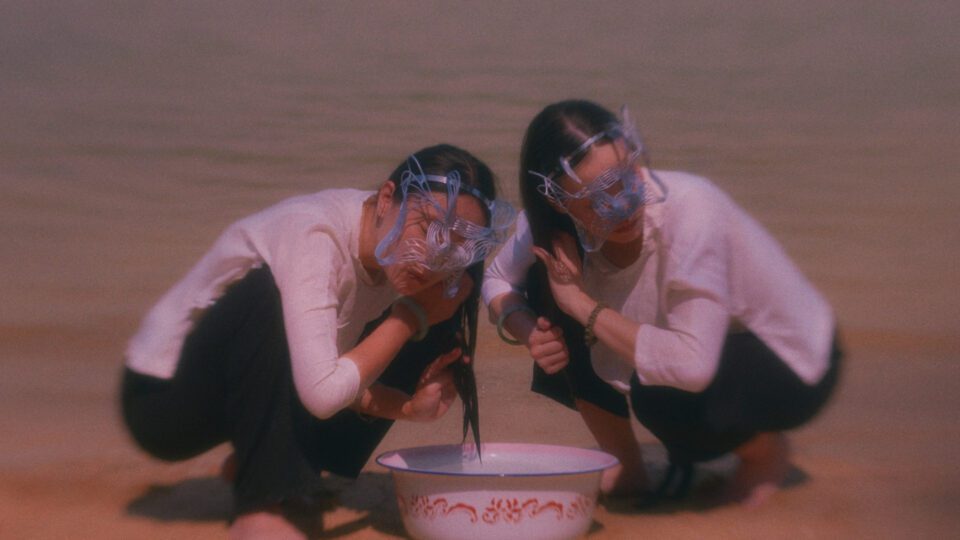
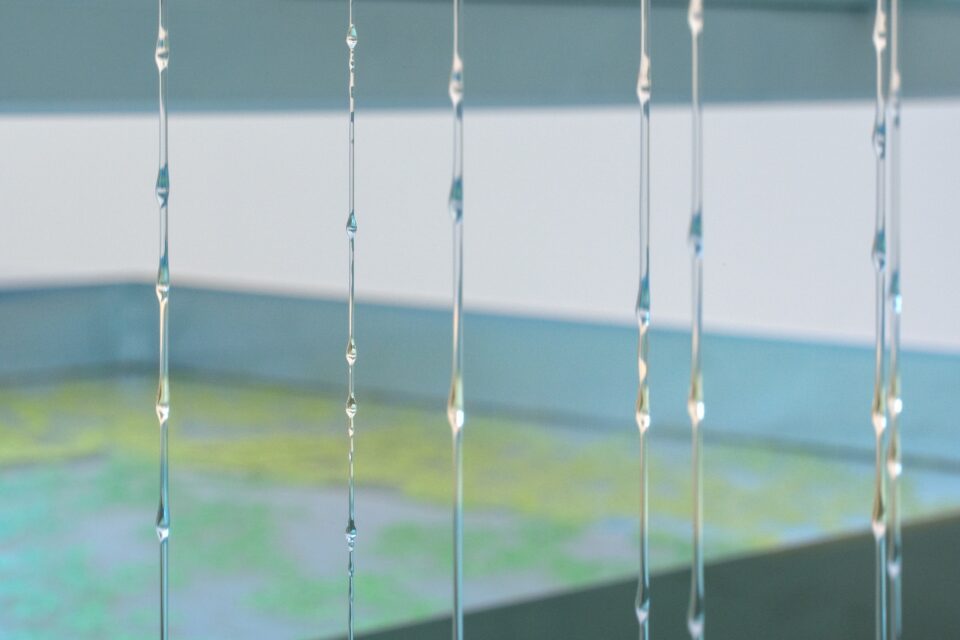
The exhibition unfolds as a continuous conversation across scales and registers, where material, social and temporal thresholds intersect. Nicole Coson’s aluminium oyster shells hover like constellations, tracing the rhythms of aquaculture and memory while mapping histories across geography and time. Xin Liu’s living duckweed ecosystem extends this meditation into the biological, exploring overproduction, ecological precarity and the ethical consequences of growth. Charmaine Poh’s immersive tidal narratives of Singaporean mangroves, data centres and reclaimed coastlines weave human desire and infrastructural care into intertidal and social space. Minoru Nomata and Yang Yongliang expand the scope to architecture and landscape, moving from fragile, solitary structures to sprawling urban panoramas that interrogate the pressures of hypermodernity. Yin Aiwen’s participatory frameworks turn observation into action, modelling interdependency and care in simulated futures. Together, these practices form a lattice of thresholds, each reverberating across ecological, social and temporal dimensions, and creating a conceptual choreography of becoming that draws the viewer into an ecosystem of ideas.
Manchester itself acts as both context and collaborator in this exploration of transformation. Its layered histories of migration, industrial labour and creative enterprise provide fertile ground for work that examines relationality, ethics and resilience. The city is home to a dynamic constellation of cultural institutions: the Whitworth, HOME, Manchester Art Gallery and Castlefield Gallery have cultivated programmes ranging from experimental exhibitions to public participatory projects. Artist residencies such as Islington Mill’s long-term studio initiatives and Castlefield’s residency schemes provide platforms for research-led work and cross-disciplinary exchange, embedding artists into the social fabric of the city. Community engagement runs through these programmes, from school partnerships to intergenerational workshops, ensuring that creativity circulates beyond gallery walls. In this context, esea contemporary operates as a nexus for East and Southeast Asian perspectives, addressing questions of identity, diaspora and relational ethics while engaging with Manchester’s wider artistic and civic infrastructure. The city’s history, communities and institutions are inseparable from the exhibition’s conception and reception, providing a rooted specificity while enabling a globally resonant discourse.
Beyond Manchester, northern England has increasingly demonstrated the capacity to host ambitious, internationally significant cultural programmes. Bradford 2025 exemplified this potential, foregrounding intergenerational dialogue, immersive public art, socially engaged commissions and audience participation on an unprecedented scale. Across the region, institutions have built on this momentum, commissioning artists from underrepresented communities, fostering interdisciplinary collaborations and cultivating international networks. Visitor engagement has been remarkable: over 3 million people attended more than 5,000 events and projects, participating in programmes that reimagined public space, local histories and community narratives. Even within this vibrant ecosystem, our own platforms such as the Aesthetica Art Prize and Future Tense exhibitions showcased emerging and mid-career artists, generating opportunities for critical discourse and global visibility while reinforcing the North, as a site of cultural innovation. By positioning contemporary practices within both local and international frameworks, these initiatives demonstrate how northern institutions can nurture experimentation and amplify voices that might otherwise go unheard. Thresholds of Becoming participates in this dialogue by reflecting the region’s ambition to sustain experimental curatorial practice that resonates both locally and globally.
Across the gallery, the artists’ works intersect and respond to one another, forming a network of ideas that foregrounds relationality and the notion of thresholds as spaces of possibility. Coson’s oyster shells trace histories of cultivation and diaspora, while Liu’s micro-ecosystem foregrounds ecological precarity and the consequences of human intervention. Poh’s tidal installation links these conditions to memory, desire and infrastructural care, bridging material, social and ecological registers. Nomata’s contemplative architectures and Yongliang’s urban panoramas expand the lens to temporal and spatial fragility, mapping the intersection of vulnerability, speculation and urbanisation. Aiwen’s participatory frameworks transform observation into enactment, inviting participants to inhabit systems of interdependency, care and obligation. Across these works, thresholds are not singular events but overlapping zones in which ecological, architectural, social and temporal forms coalesce, producing a dynamic network of ideas.
The exhibition’s success lies in its ability to integrate these diverse practices into a cohesive, reflective experience. Rather than presenting discrete artworks, it creates a continuous choreography of becoming, in which each gesture, narrative and structure resonates across the gallery and beyond. Instability is both method and subject, highlighting the provisionality of ecological, social and architectural systems while demonstrating the potential for care, creativity and renewal. In doing so, Thresholds of Becoming positions esea contemporary at the forefront of Northern curatorial innovation, revealing how sustained, ethically attentive programming can rival London in ambition while remaining rooted in local histories and communities. The exhibition embodies the institution’s 40-year legacy while projecting new possibilities for art, collaboration and audience engagement across scales.
Ultimately, Thresholds of Becoming is both reflective and forward-looking, modelling the conditions under which transformation becomes generative, relational and necessary. Across suspended forms, proliferating ecosystems, tidal narratives, fragile architectures, urban panoramas and enacted futures, the exhibition creates spaces where histories, communities and ideas converge. It affirms that thresholds – of material, ecology, sociality and imagination – are sites of possibility, and when engaged thoughtfully, become a resource for creativity, care and connection. In Manchester and across the North, such work demonstrates the enduring power of ambitious, ethically engaged cultural practice to shape both local and global futures.
Thresholds of Becoming is at esea contemporary, Manchester from 21 February – 17 May: eseacontemporary.org
Words: Shirley Stevenson
Image Credits:
1. Charmaine Poh, The Moon Is Wet (2025), 24:30, 3-channel video installation. Commissioned by PalaisPopulaire. Film still courtesy of the artist.
2. Charmaine Poh, The Moon Is Wet (2025), 24:30, 3-channel video installation. Commissioned by PalaisPopulaire. Film still courtesy of the artist.
3. Charmaine Poh, The Moon Is Wet (2025), 24:30, 3-channel video installation. Commissioned by PalaisPopulaire. Film still courtesy of the artist.
4. Xin Liu, Insomnia (2025). Aluminum, stainless steel, resin, fibreglass, acrylic, led lights, silicone oil, water, duckweed. Tank: 1260 x 1780 x 350mm. Kinetic systems (each): 150 x 1780 x 1200mm. Courtesy of the artist, Makeroom LA, Public Gallery, London.