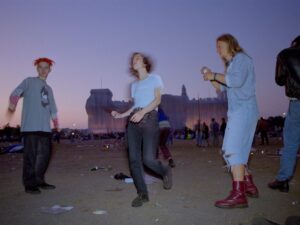
Images no longer simply document the world – they organise it. In today’s networked visual culture, photographs, videos and digital fragments circulate at unprecedented speed, shaping attention, constructing identities and influencing how social, cultural and political realities are understood. Contemporary visual culture exists somewhere between evidence and performance, intimacy and spectacle, communication and control. The Lure of the Image at C/O Berlin examines this unstable territory, bringing together artists who question how visual material is produced, distributed and interpreted in an era dominated by platforms and algorithms. Rather than considering online imagery as disposable content, the exhibition positions visual culture as one of the most powerful forces of the present – capable of creating communities, reinforcing prejudices and transforming collective memory.
Photography has always been bound to questions of power. From colonial archives and documentary practices to advertising and mass media, photographs have shaped ideas of identity, belonging and authority long before the arrival of the internet. What has changed is the scale and speed of circulation: a single photograph can now travel globally within seconds, detached from its original context and absorbed into competing narratives. Digital platforms have transformed visual material into dynamic forms that are constantly edited, copied and reinterpreted. Within this environment, looking is no longer a passive act; it is shaped by systems that decide what appears, what disappears and what demands attention.
This shift has become central to contemporary photographic discourse, particularly through the work of artists and theorists examining the politics of circulation. Hito Steyerl’s influential writing on the “poor image” challenged traditional assumptions around photographic value, arguing that the compressed, reproduced and widely shared picture has its own social and political agency. Ariella Azoulay’s expanded understanding of photography similarly moves beyond the isolated moment of capture, considering the relationships and responsibilities that exist between image-makers, subjects and viewers. These ideas provide a useful framework for understanding a generation of artists who no longer treat the photograph as a fixed object, but as part of a wider network of technological, economic and social exchanges.
Curated by Marco De Mutiis, Doris Gassert and Alessandra Nappo of Fotomuseum Winterthur, and adapted for C/O Berlin by Boaz Levin, The Lure of the Image reflects this expanded understanding of photography. The exhibition does not attempt to recreate the overwhelming experience of digital platforms, nor does it simply reproduce the visual language of the feed. Instead, its spatial arrangement creates moments of immersion alongside opportunities for critical distance, allowing visitors to consider both the attraction and consequences of constant visual consumption. Photography sits alongside installation, video and archival practices, reflecting a world in which visual forms continually overlap. This approach acknowledges that imagery cannot be separated from the systems through which it moves.
At the centre of this enquiry is the question of visibility: who is represented, who is erased and who controls the conditions through which photographs become meaningful. Online platforms have expanded opportunities for self-representation and collective action, but they have also intensified older structures of inequality. Algorithms may appear neutral, yet they are shaped by cultural assumptions, commercial priorities and historical biases. Several works in the exhibition reveal how networked spaces can become both instruments of surveillance and platforms for resistance. Representation is therefore not simply a matter of what is shown, but of the structures that determine how and where it appears.
Zoé Aubry’s #Ingrid (2022) offers a powerful meditation on the ethics of digital circulation. The work examines a protest movement that responded to the publication of degrading crime scene photographs by replacing images of violence with dignified portraits celebrating the victim’s life. Rather than focusing on the spectacle of trauma, Aubry turns attention towards collective acts of care and remembrance. The project demonstrates how communities can reclaim agency over the representations through which public memory is formed. In an environment where photographs are frequently detached from their original circumstances, #Ingrid asks what forms of responsibility accompany the act of looking.
Questions of representation become more complex in Joiri Minaya’s #dominicanwomengooglesearch (2016), which investigates how online search systems reproduce historical stereotypes. By examining the visual results generated around Dominican women, Minaya exposes the colonial and exoticising assumptions embedded within seemingly objective digital tools. Search engines do not simply retrieve photographs; they organise knowledge according to datasets shaped by existing cultural conditions. Her work anticipates wider debates around artificial intelligence, machine learning and the biases encoded within technological infrastructures. In doing so, Minaya expands photographic criticism beyond individual pictures towards the invisible systems that determine how visual information is encountered.
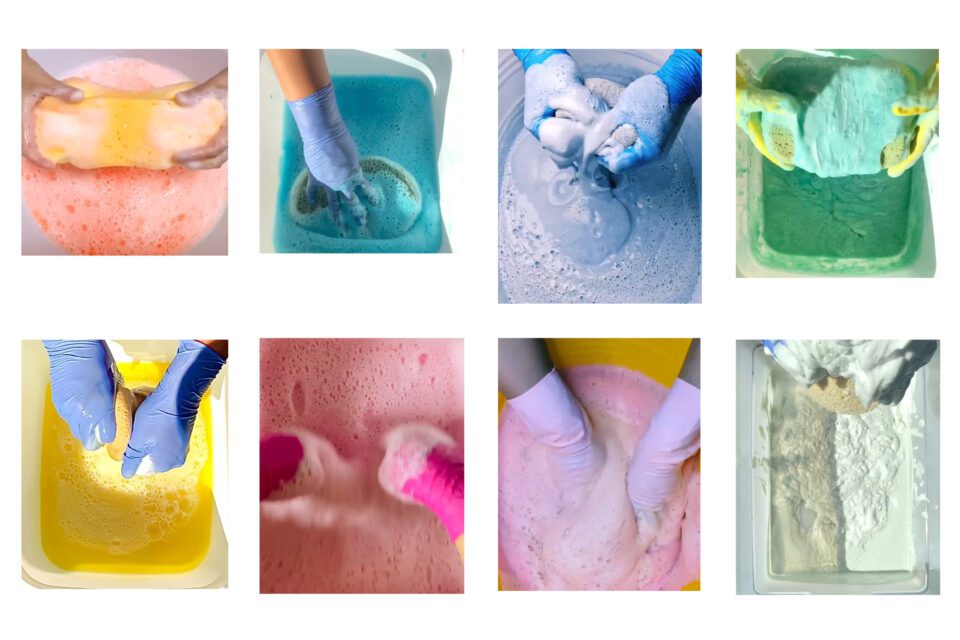
The emotional economy of digital culture emerges through Dina Kelberman’s The Wave (2025), an immersive installation built from thousands of ASMR videos gathered online. The work begins with the promise of calm, drawing together fragments of repetitive gestures, textures and sounds associated with comfort and relaxation. Yet the accumulation of these materials gradually produces another sensation: overload. Kelberman captures a defining contradiction of platforms, where experiences designed to soothe also encourage prolonged engagement. The installation becomes a reflection on attention itself, revealing how digital environments shape not only what audiences encounter, but how they experience time.
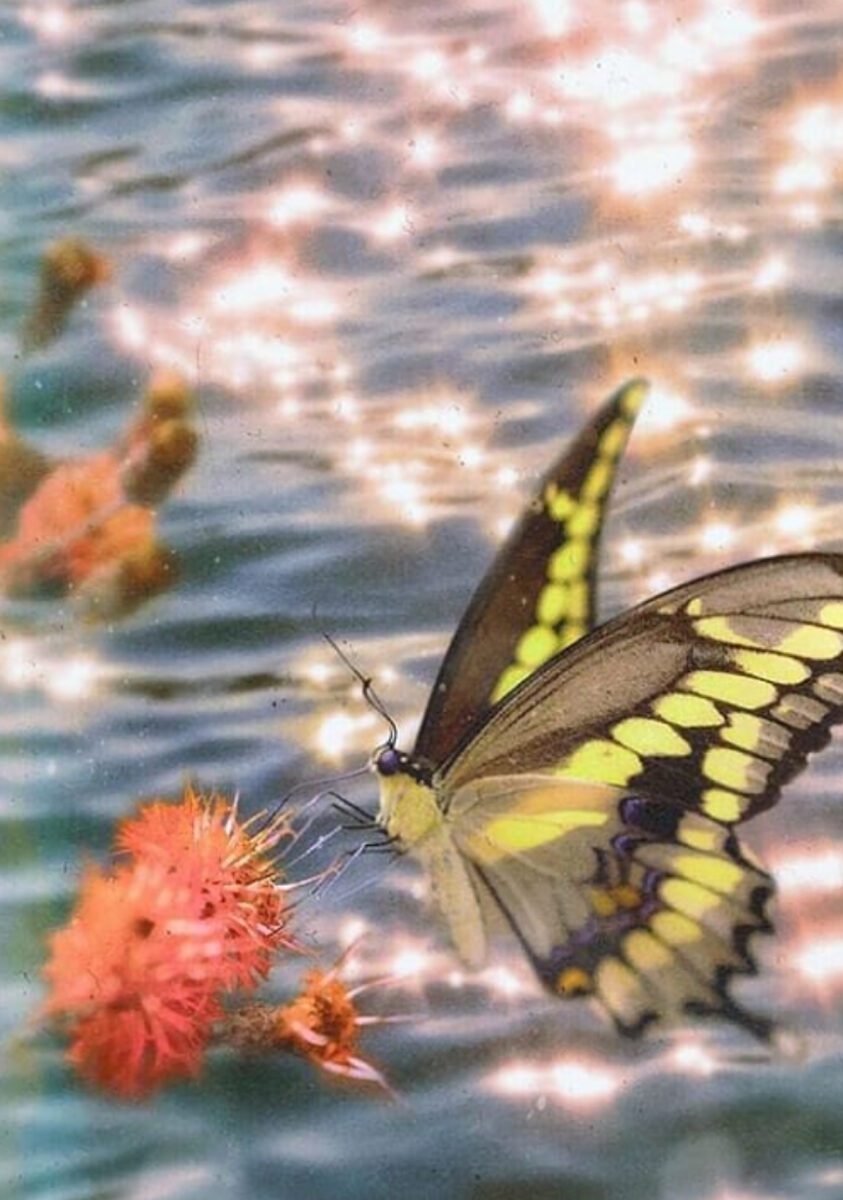
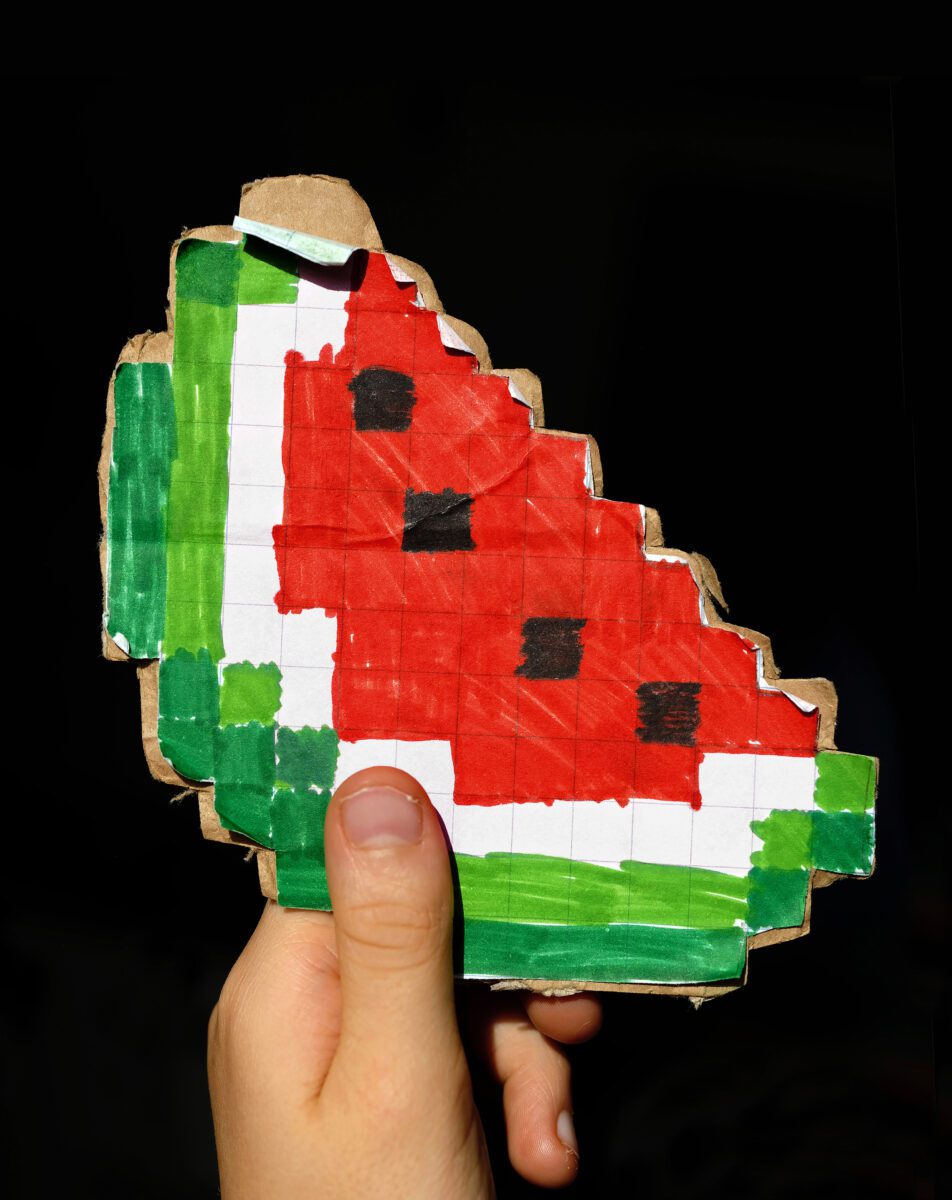
A quieter but equally significant examination of online communication appears in Viktoria Binschtok’s Digital Semiotics (2024 – 2025). Through carefully arranged still-life photographs, the artist considers the evolving role of emojis as symbols that occupy the space between language and visual expression. Once dismissed as informal additions to written communication, these signs now function as complex cultural markers, carrying political meanings, expressions of solidarity and shared forms of identity. Binschtok’s work reveals how contemporary communication increasingly depends upon visual literacy. The series reflects a broader transformation in which pictures and language are no longer separate systems but increasingly interconnected forms of exchange.
The relationship between aesthetics and ideology is pushed further in Noura Tafeche’s ongoing research project Annihilation Core Inherited Lore ٩)๏ ͡๏ ̯ ͡)۶ (2023 – ). Focusing on kawaii aesthetics, gaming imagery and internet vernacular, Tafeche explores how visual languages associated with innocence and play can be appropriated for darker purposes. The work examines the ways in which online communities transform and repurpose symbols, allowing seemingly harmless forms to become connected to propaganda, extremism or political manipulation. Rather than treating aesthetics as separate from ideology, Tafeche reveals how style itself can become a powerful carrier of meaning. Her research highlights the importance of understanding the cultural codes embedded within digital environments.
Taken together, these practices demonstrate how photography has moved beyond the traditional boundaries of the photographic object. Contemporary practice now operates within networks of data, circulation and interpretation, shaped by technological systems as much as by individual creators. Artists working today are increasingly examining not only photographs but also the infrastructures that allow them to exist – from algorithmic classification and surveillance to platform economies and artificial intelligence. This expanded field has created new possibilities for photographic practice, where critical reflection on technology becomes inseparable from questions of representation. The Lure of the Image positions photography as a medium still capable of questioning how reality is constructed.
At a moment when synthetic imagery, automated systems and algorithmic recommendation are redefining visual experience, the ability to read photographs critically has become essential. The Lure of the Imageavoids nostalgia faor an earlier photographic era, instead examining the complexities of a world in which visibility itself has become contested. Through a carefully selected group of artists and a curatorial approach attentive to circulation, C/O Berlin presents a timely reflection on the forces shaping contemporary perception. The exhibition suggests that the future of photography will not be determined only by how photographs are made, but by the networks, technologies and social structures that decide how they are encountered. Ultimately, it asks audiences to consider not simply what appears before them, but the systems that shape the conditions of seeing itself.
The Lure of the Image is at C/O Berlin until 2 September: co-berlin.org
Words: Anna Müller
Image Credits:
1&5.#Ingrid, 2022 © copyright-free picture, Zo. Aubry & Delia.
2. Viktoria Binschtok, digital semiotics (minecraft melon), 2025 © Viktoria Binschtok. Courtesy of the artist and Klemm’s, Berlin.
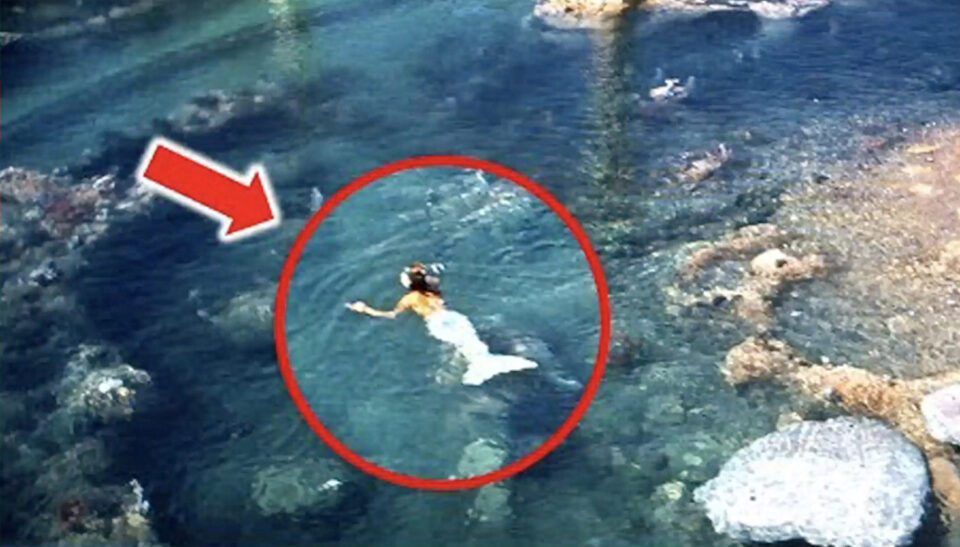
3. Ellie Wyatt, cherrypicker, 2021, video still ˝ Ellie Wyatt.
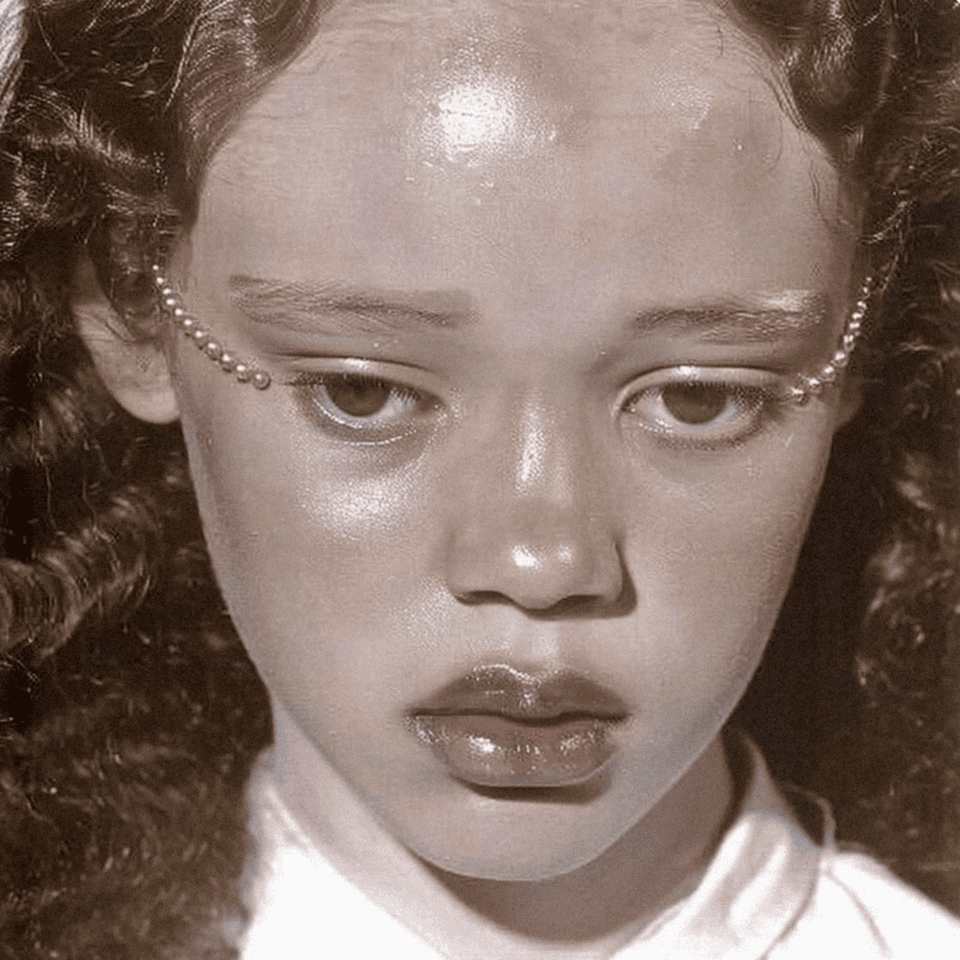
4. Éamonn Freel x Lynski, In the Future, Everything Will Be a Trend for 15 Seconds, video still, 2024 © Éamonn Freel x Lynski
6. Dina Kelberman, The Wave, 2025, video still © Dina Kelberman.