

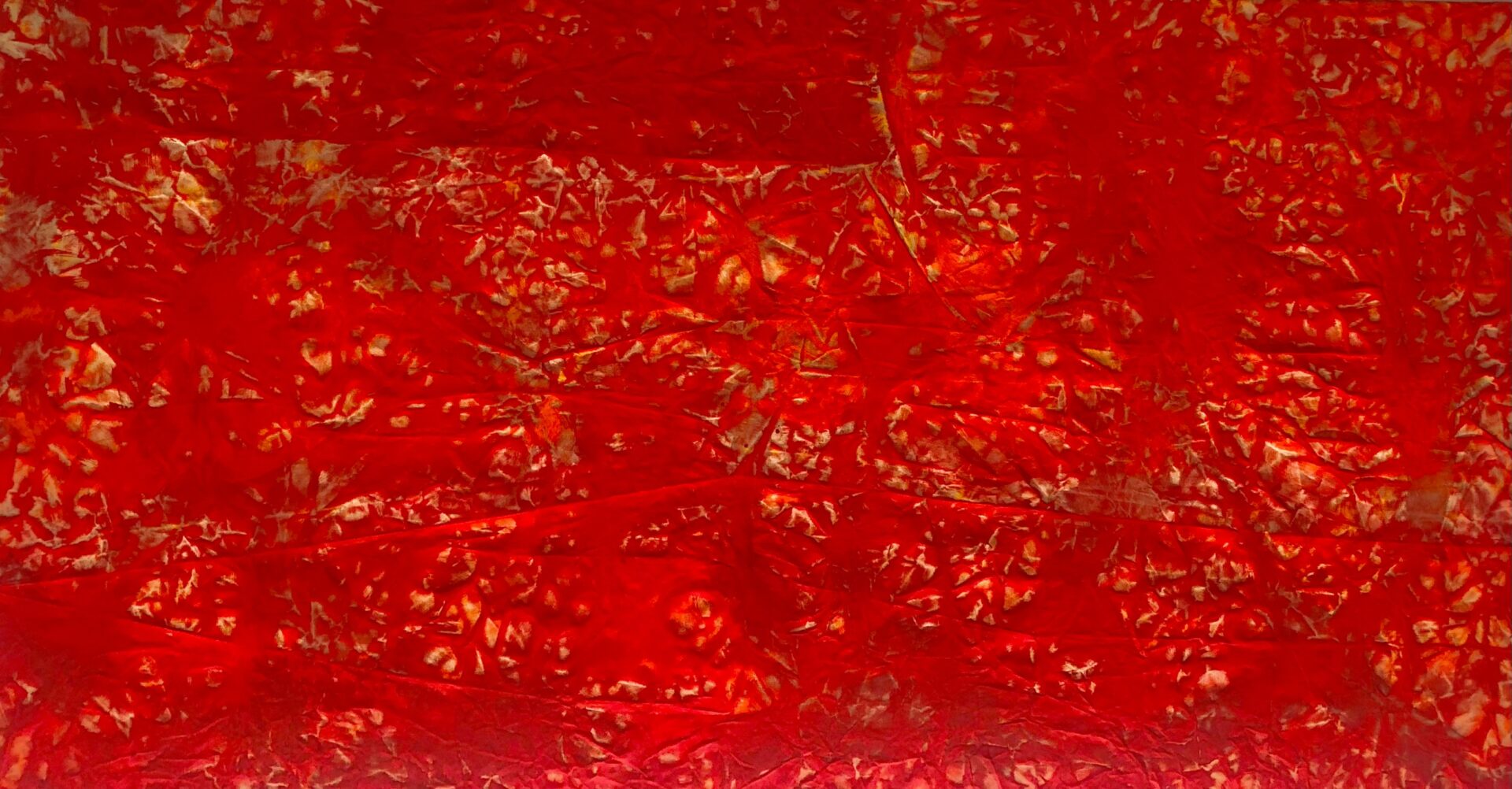
“I paint myself because I am the subject I know best.” These are the now infamous words of renowned artist Frida Kahlo. It’s a sentiment echoed across disciplines and eras, such as Jackson Pollock’s declaration that: “Every good painter paints what he is.” Or, in writing, the age-old adage that you must “write what you know.” They all boil down to the same philosophy: the work we create is fundamentally tied up with our own personal experiences. Our creative output is often shaped by our nationality, upbringing, family, friends and education. Nowhere is this truer than in the work of Eli Schläppi, an artist whose work unfolds at the intersection of painting, philosophy and lived experience.
Her paintings are rooted in her Swiss heritage and informed by her background as a Cantonally Licensed Naturopathic Doctor. They’re also enriched by years of engagement with Chinese medicine, Daoist thought and East Asian calligraphic tradition. There’s no doubt, Schläppi is an artist whose life is writ large in her practice. Her paintings emerge from an attentive observation of natural phenomena and a profound awareness of movement and perception. Rivers, volcanic landscapes, northern skies, light and ecological systems all become materials for a painterly language that acts as a record of Schläppi’s interactions with the world. Her abstract pieces are bold and confident, offering the decisive strokes of a practitioner who approaches art as a means of understanding life as something in constant motion.
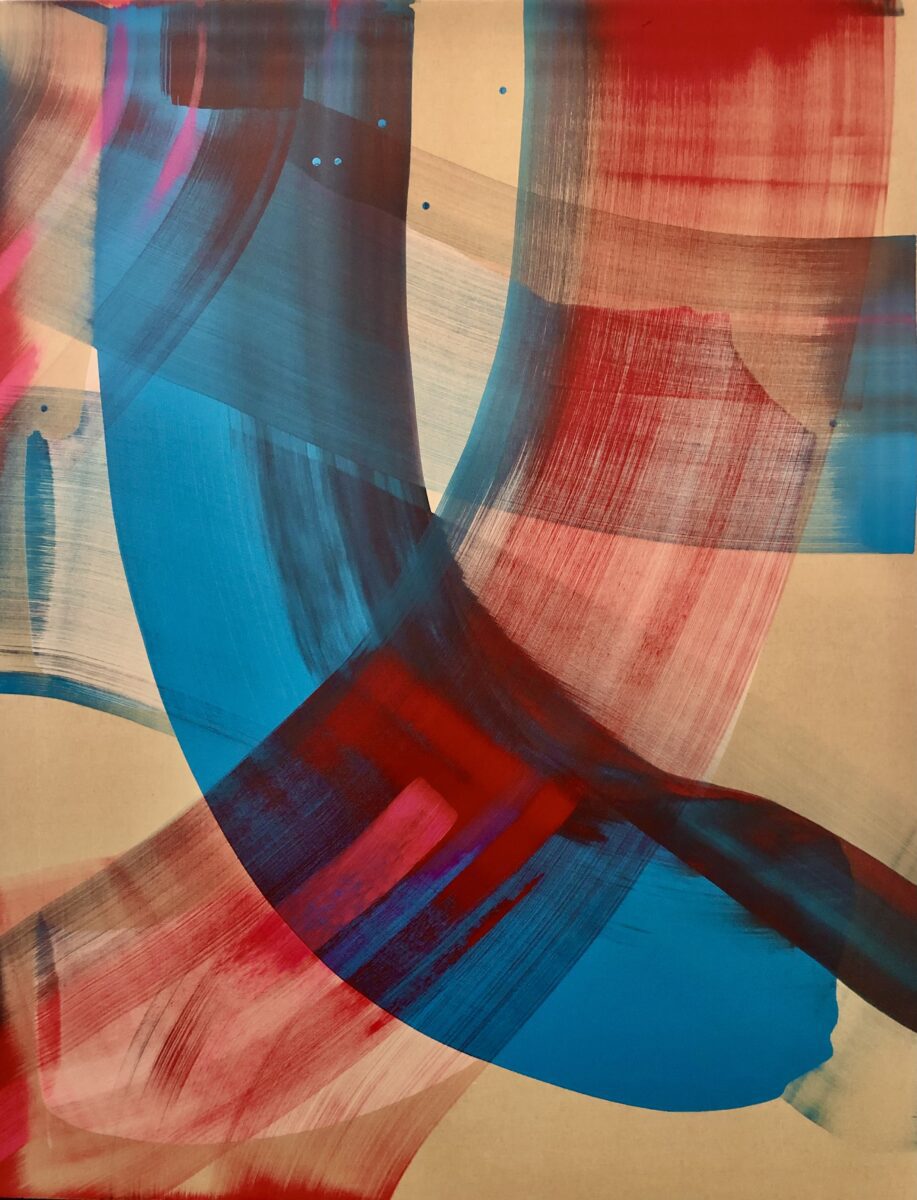
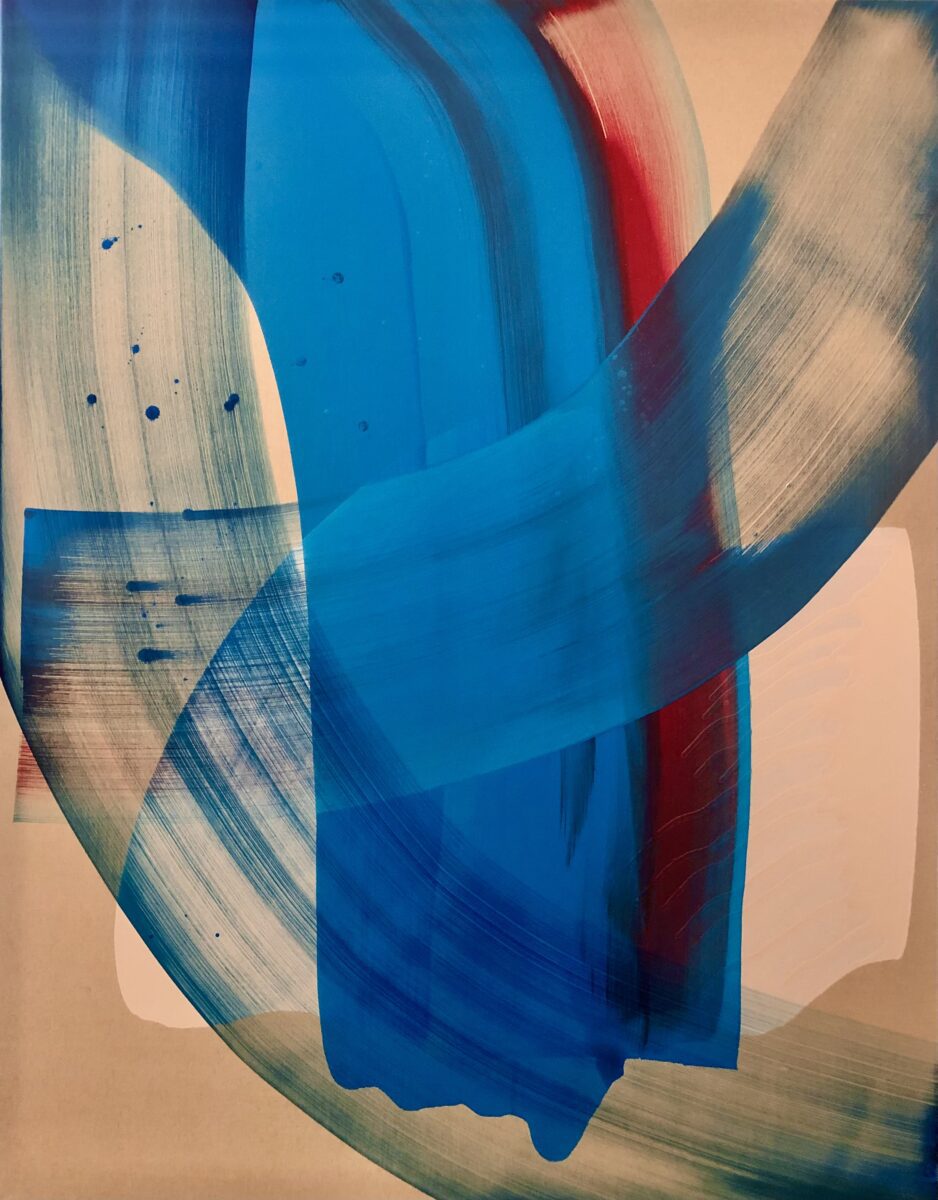
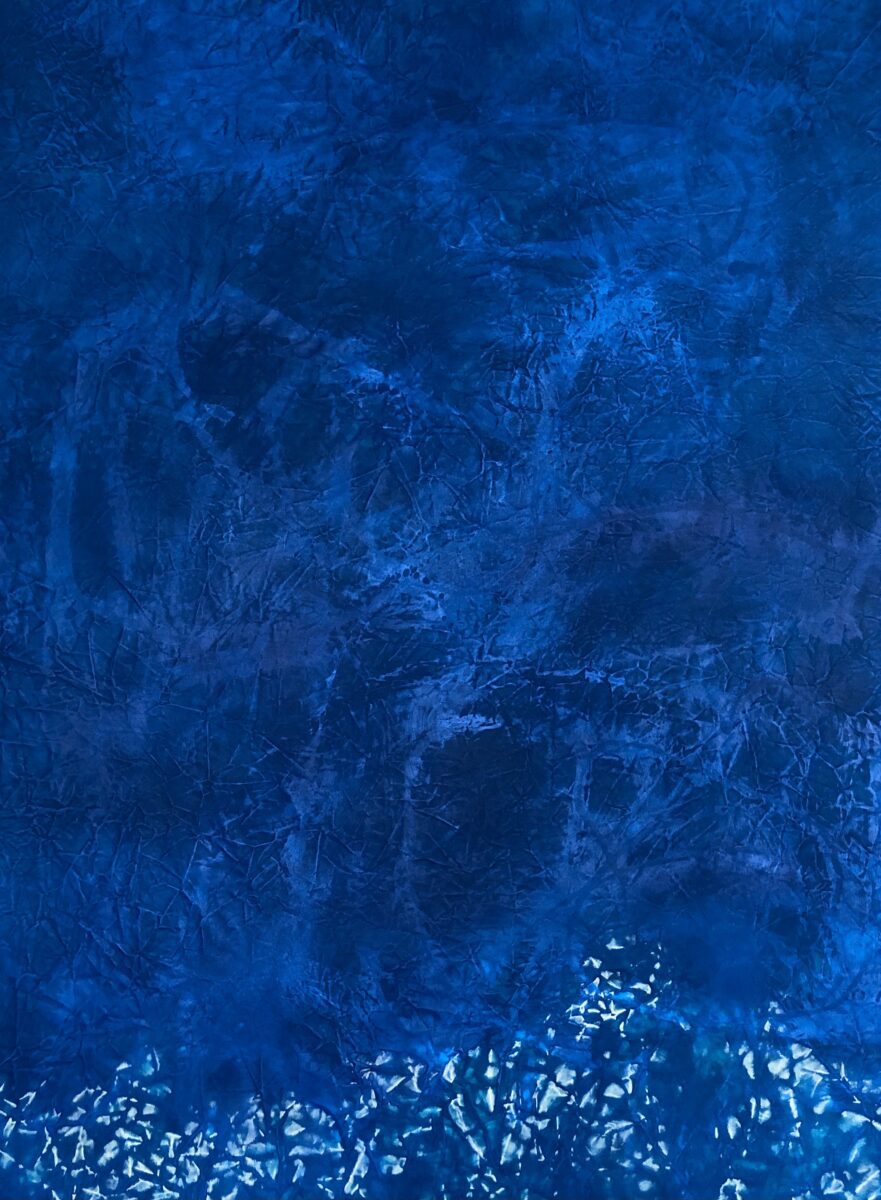
The artist has a clear message in her work: humanity is not separate from the natural world, we are an integral part of it. Her celebrated Not green but blue river series, inspired by the glacial waters of Switzerland’s Aare River, “rejects traditional landscape representation in favour of embodied gesture.” Sweeping blue lines traverse the canvas, echoing the ferocity of a flowing river and suggesting it as a life force itself, rather than an inanimate part of the landscape. Meanwhile, Sky-Elbe-Beach is also inspired by a river, the Elbe in Hamburg. Here, layers of blue dissolve distinction between sky and water, generating a sense of place that transcends the geographical and becomes something more universal.
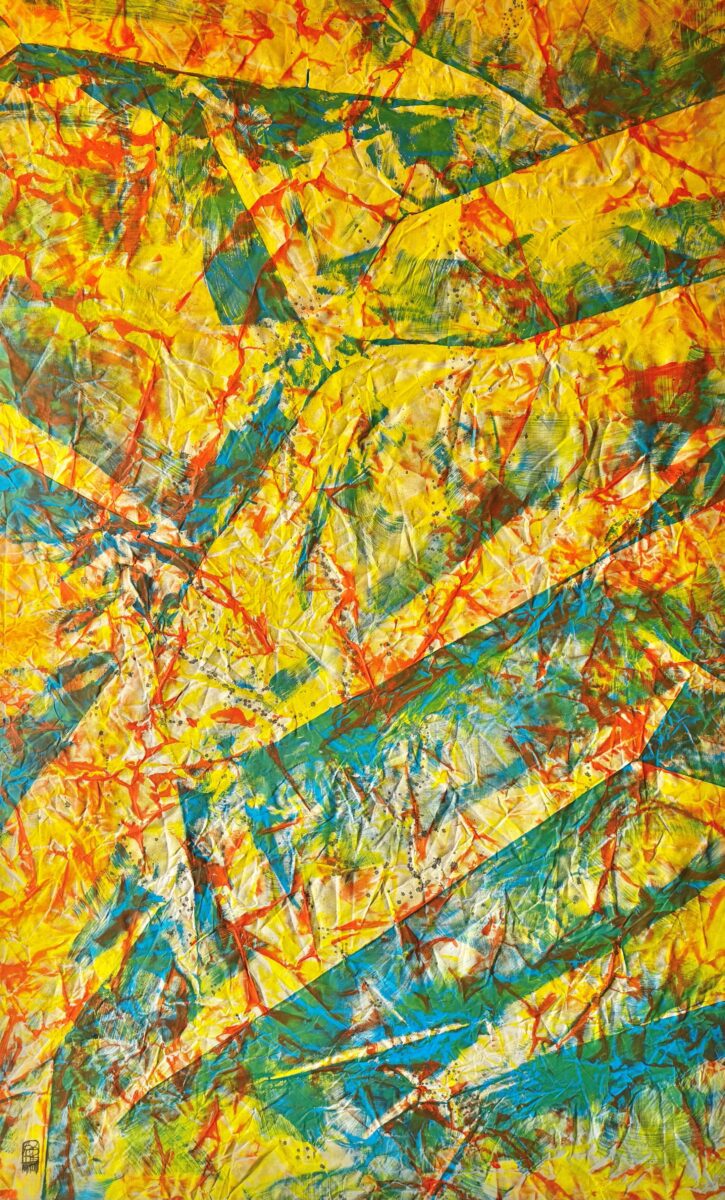
In other works, Schläppi explores a more geological side of the landscape. Lanzarote is inspired by the volcanic parts of the Canary Islands, and the paintings take on more vivid yellow and orange hues. Angular shapes move like tectonic shifts and currents of molten rock, whilst more intricate networks – a change from the artist’s usual style – represent erosion, sedimentation and renewal. Here, the works capture the perpetual activity of the world. It’s an intelligent and nuanced perspective, acknowledging and accepting that we exist in a state of constant destruction and formation, where stability and change coexist.
What sets Schläppi apart is her commitment to the authenticity of gesture and material. She prioritises direct bodily engagement over our era of digital production and technological mediation. Here, her involvement with Chinese philosophy comes to the fore, with Daoist concepts of flow, balance and transformation resonating throughout her paintings. Elsewhere, the influence of calligraphy informs her understanding of gesture as an extension of our innermost selves. Ultimately, her work is a fascinating representation of her experiences. There’s a synthesis of Western abstraction and Eastern philosophical thought, resulting in work that transcends cultural boundaries whilst remaining deeply personal.
elischlaeppi.com | pashminart-consortia.com
Words: Emma Jacob
Image Credits:
1. Lava, 170 x 90 x 2cm, Acrylic on raw canvas.
2. Not green but blue river II, 135 x 105 x 4cm, Acrylic on raw canvas.
3. Not green but blue river I, 135 x 105 x 4cm, Acrylic on raw canvas.
4. Sky-Elbe-Beach, 185 x 90 x 2cm, Acrylic on raw canvas.
5. Eli Schläppi-Lanzarote, 180 cm x 110 cm x 2 cm, Tusche, Acryl auf roher Leinwand (oberstes Bild in Gelb-, Orange- und Blautönen).


