

The 1990s was the decade of “Cool Britannia.” The term – a pun on the title of the patriotic song Rule, Britannia! – reflected a renewed optimism from a nation emerging from the economic and political hardships of the 1970s and 1980s. A new generation of creative talent emerged across music, art, cinema and fashion, whilst youth culture ruled the day. This was the era when Blur took on Oasis to top the UK charts in 1995, whilst other Britpop bands such as Pulp, Suede and Elastica led a resurgence in British rock and “Madchester” icons like the Happy Mondays and The Stone Roses drove the North’s music scene. The Euro 1996 football tournament, hosted in England, encouraged a significant surge of patriotism and spawned the now iconic anthem Three Lions. In politics, Tony Blair’s New Labour government won a landslide victory in 1997, sweeping to power with a campaign that made use of the song Things Can Only Get Better. Now, 35 years on, Tate Britain stages the first exhibition to explore the art, photography and fashion of the 1990s, a decade synonymous with possibility, optimism and an audacious spirit.
The 90s: Art and Fashion explores the period’s surge of creative energy, shaped by both opportunities and challenges. It features nearly 70 artists, photographers and designers, from the Young British Artists (YBAs) to Alexander McQueen, spotlight the emergence of this group of exciting and diverse talent that reshaped Britain’s cultural identity. Curated by Edward Enninful OBE, former editor-in-chief of British Vogue and European editorial director of Condé Nast, the exhibition draws on his experience of the 1990s, making it a uniquely personal look at the topic. Visitors are taken through more than 100 photographs, paintings, sculptures and garments to re-evaluate one of the most transformative moments in British art.
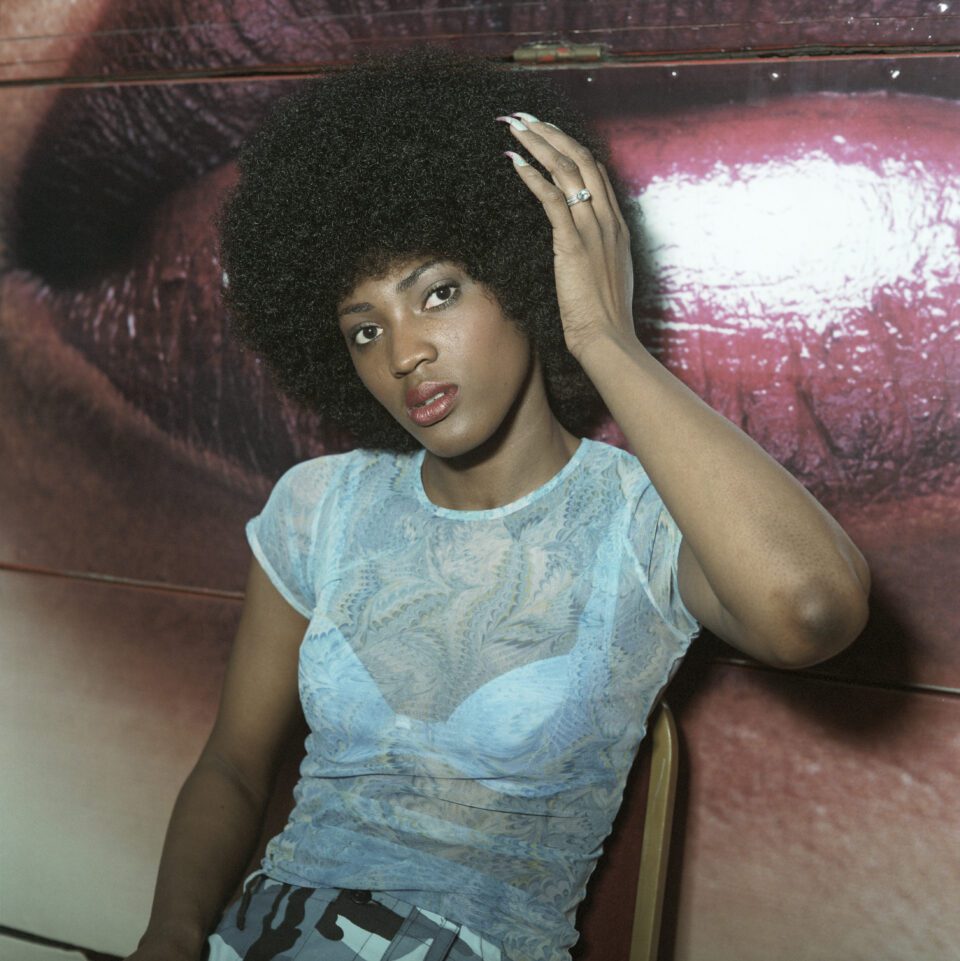
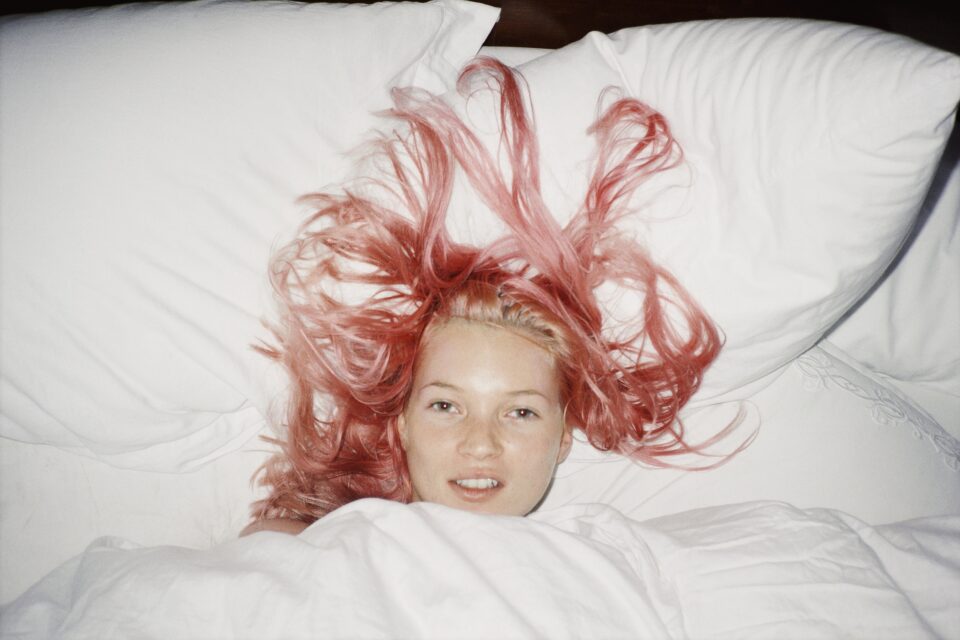
The exhibition opens by exploring those with a taste for imperfection and realness, presenting photography by Corinne Day, Nigel Shafran and Juergen Teller for influential publications like i-d and Dazed and Confused, who were at the forefront of defining a new “anti-fashion” style. The influence of print media is examined in work by Roshini Kempadoo and Eileen Perrirer, which expended mainstream beauty notions at a time when Kate Moss wearing Liza Bruce’s sheer slip dress captured tabloid interest. Tate Britain goes beyond the well-worn stereotypes of 90s fashion: from the “heroin chic” catwalk trend that demanded models to be extremely thin, to the oversized flannel shirts and ripped jeans of the grunge movement. The show spotlights how real people became artists’ muses, as reflected in the work of Barbara Walker, Jenny Saville and Gillian Wearing, whilst the likes of Tracey Emin, Sam Taylor-Johnson and Sarah Lucas captivated the public with their anarchic spirit and frank work tackling agency, identity and class.
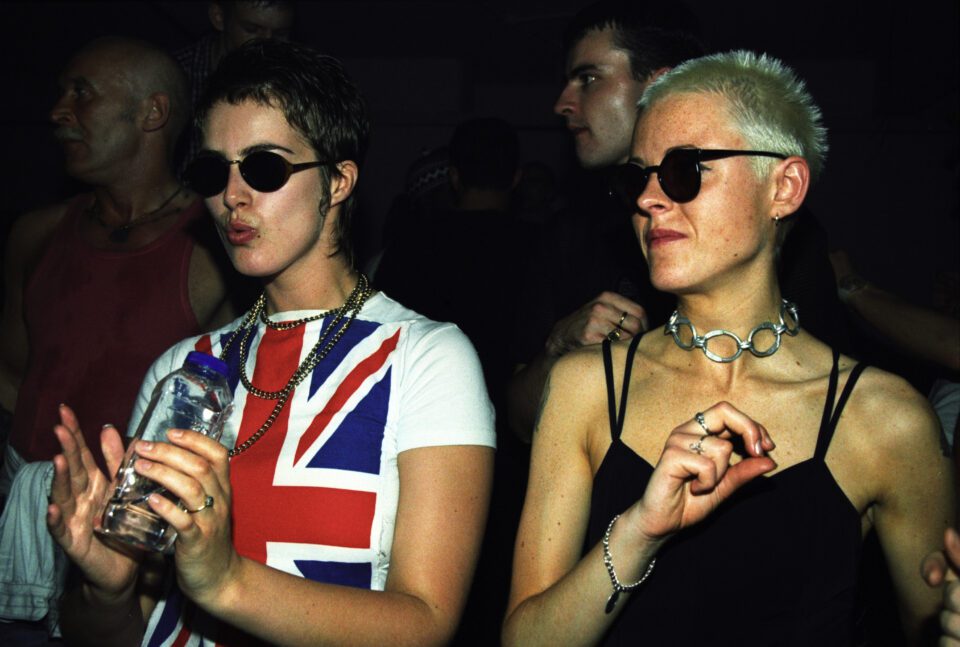
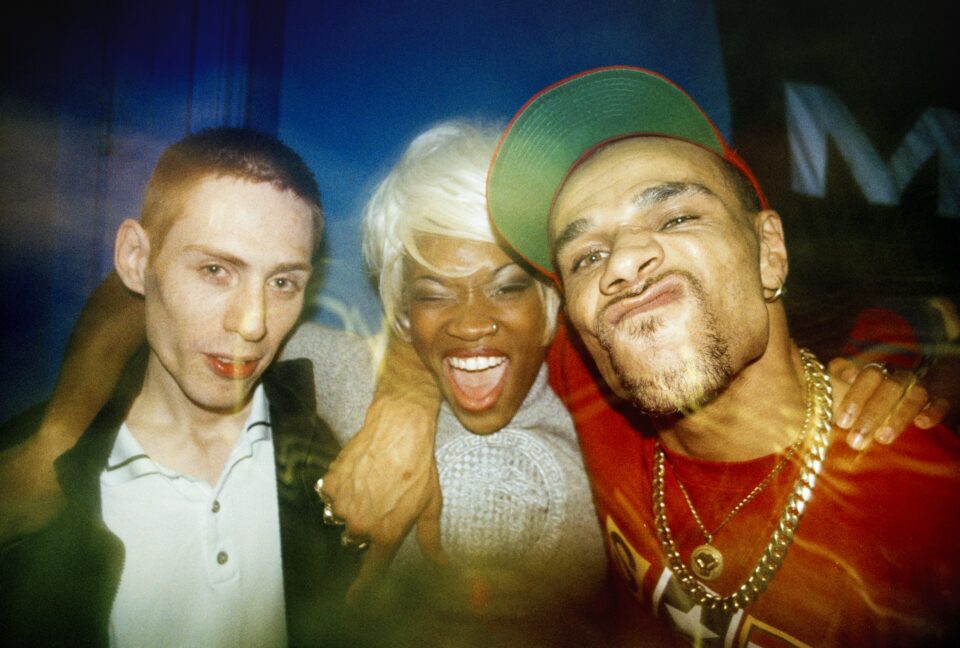
Youth culture took centre stage during the 1990s, and audiences will get a flavour of this through film and photography that engaged with nightlife and subculture. Mark Leckey’s 1999 video Fiorucci Made Me Hardcore is collaged from footage from the 1970s, 1980s and 1990s underground dance scene, described by The Guardian as “capturing the poignancy and strangeness of clubbing like nothing else.” Meanwhile, images document young people at infamous club nights including the Haçienda in Manchester and Bagley’s in London. Dave Swindells, Peter J Walsh follow the birth of acid house and Tony Davis, whilst Normski, Eddie Otchere and Ewen Spencer follow the rise of jungle, hip-hop and drum and base scenes. Joyful queer club nights are captured by Poulomi Desai, Stuart Linden Rhodes and Jon Shard. Raves photographed by Seana Gavin and Vinca Peterson illustrate a hedonistic counterculture fuelled by flyers and payphones, whilst Boy Racers are documented in Elaine Constantine’s series, Burn up Northampton.
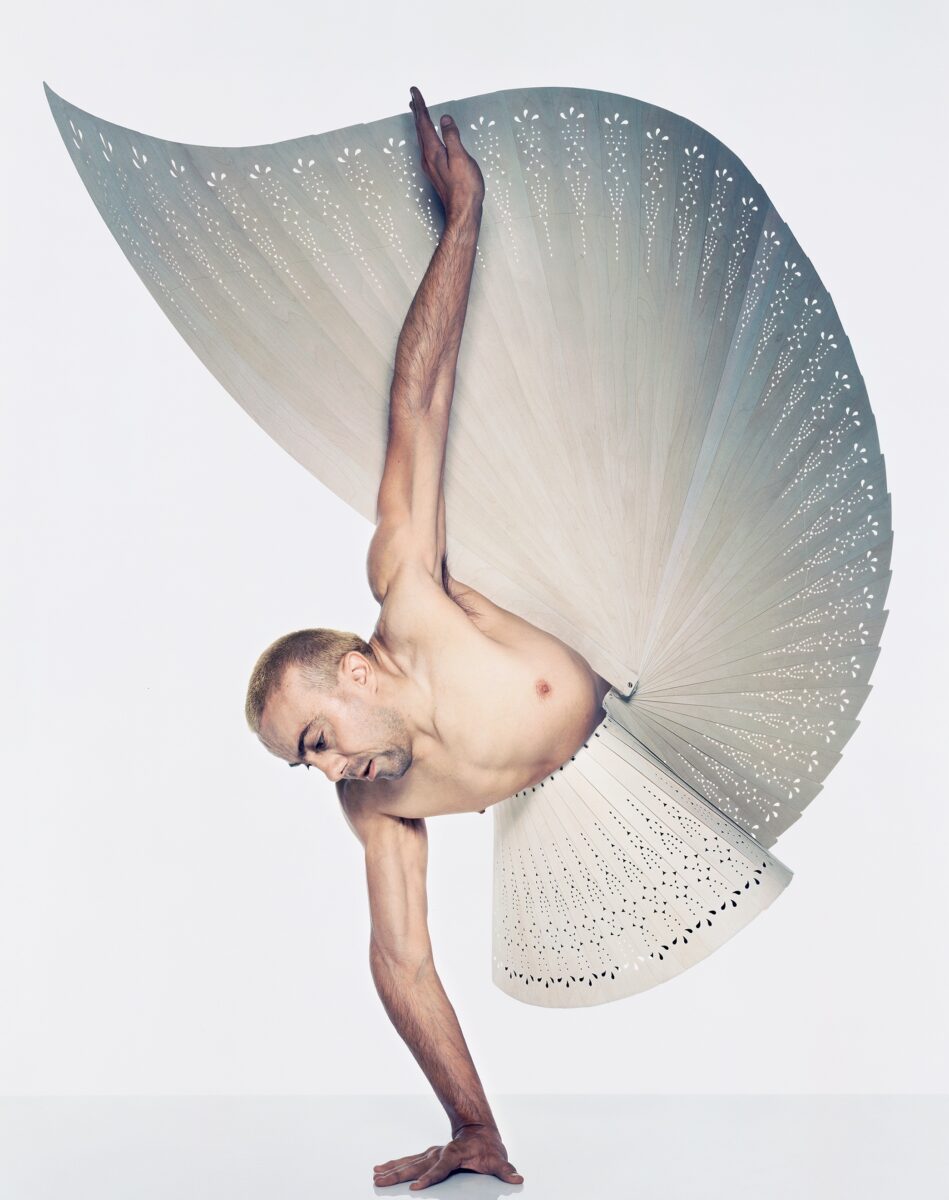
The exhibition also explores the decade’s conceptual movements, from opulent and macabre body horror to sleek and uncanny minimalism – a response to the less glossy and optimistic aspects of the era. Artists like Hamad Butt responded to the ongoing AIDS crisis, and Helen Chackwick, Jake and Dinos Chapman and Cathy de Monchaux played with a gothic interest in decay and revulsion. Cerith Wyn Evans, Rachel Whiteread and Gary Hume experimented with parred black forms, whilst Damien Hirst took this conceptual approach further, removing the artist’s hand altogether with fabricated formaldehyde filled sculptures, the antithesis to low-fi grunge. Meanwhile, visionary designers blurred the lines between fashion and art, such as Alexander McQueen’s provocative, dramatic and sometimes nightmarish presentations and Hussein Chalayan’s design-led clothing inspired by everyday objects. Nick Knight, David Sims and Craig McDean embraced starker, more conceptually driven imagery, whilst Wolfgang Tillmans reflected on the promise of past and future technology with Concorde Grid (1997), capturing the dual feelings of optimism and anxiety induced by the impending millennium.
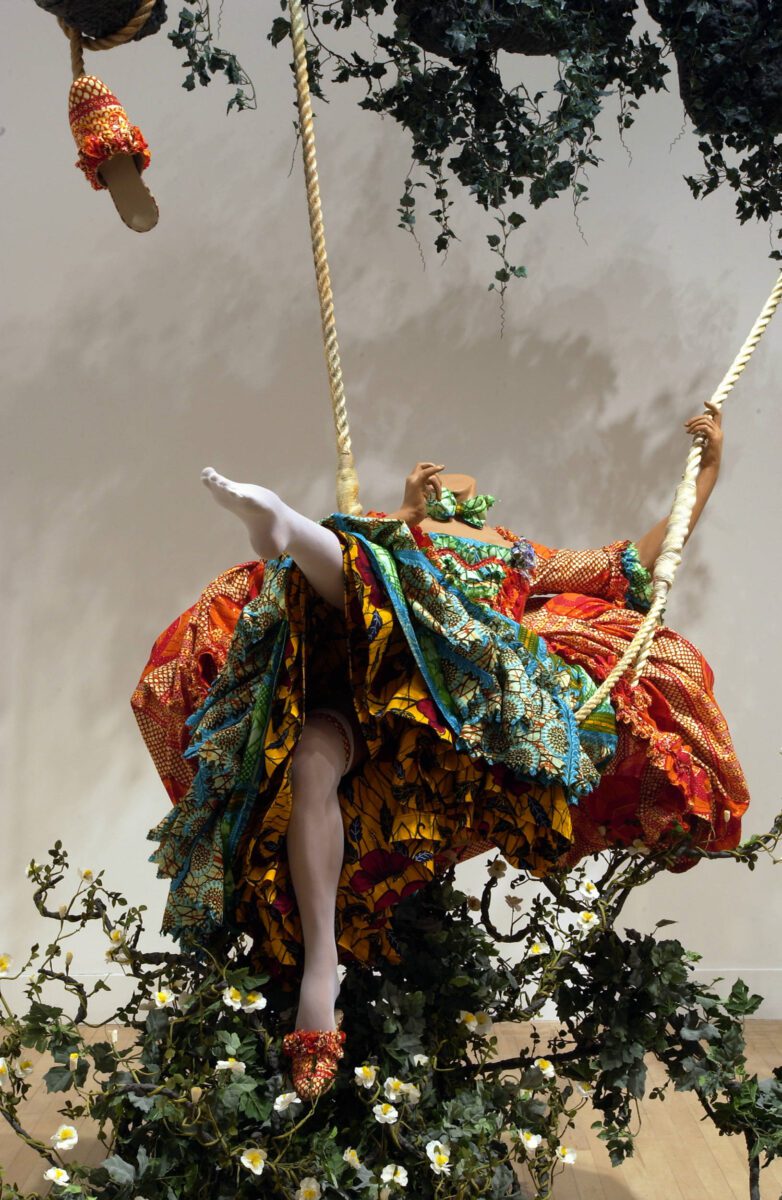
What makes this exhibition so significant is its ability to hold all facets of a 10-year period in one space, resisting the urge to simplify or streamline into a single narrative. Here, optimism meets hardship, possibility meets inequality. Nowhere is this more evident than at the show’s final chapter, which features the artists and designers who, at the close of the 20th century, reckoned with Britain’s past and dealt with questions of its future. Yinka Shonibare and Maud Sulter drew from European art history and dandyism to ask questions of diversity and representation, whilst designers such as Vivienne Westwood and John Galliano borrowed across history and cultures, interrogating style, class and national mythology with anachronistic fashion collections. Together, this closing room reflects on the 1990s as a moment poised between past and future, allowing audiences to rethink our picture of the art of the decade.
The 90s: Art and Fashion is at Tate Britain, London from 8 October – 14 February: tate.org.uk
Words: Emma Jacob
Image Credits:
1. Eileen Perrier, Untitled, Afro Hair and Beauty Show, 1998 © Eileen Perrier. All rightreserved, DACS 2026.
2. Juergen Teller, Young Pink Kate London 1998 © Juergen Teller, All Rights Reserved.
3. Yinka Shonibare, The Swing (after Fragonard), 2001 © Yinka Shonibare. Tate.
4. Jon Shard, Flesh at The Haçienda, 1996. Courtesy of British Culture Archive © Jon Shard, British Culture Archive.
5. Nick Knight, David Toole, 1998, printed 2016. Image courtesy of Nick Knight SHOW Studio.
6. Eddie Otchere, Metalheadz Sunday Sessions in the Blue Note, Hoxton Square 1995-1996 © Eddie Otchere.


