How do you remember a story that was never written down? Can you give voice to a past that hasn’t been archived, but survives through songs, symbols and myths? These are the questions at the heart of Dutch artist Michelle Piergoelam’s (b. 1997) first international solo exhibition at Foto Arsenal Wien. Across the Water is a long-term project addressing the largely overlooked history of the Surinamese diaspora in the Netherlands – a lineage that includes the artist’s own family. Piergoelam’s in depth research led her to oral traditions and other language systems, which she later turned into visuals.
Suriname was a Dutch colony from 1667 until its independence in 1975, and its history is deeply rooted in slavery. From the 17th to 19th centuries, hundreds of thousands of enslaved Africans were forced to labour on Dutch sugar, coffee and cotton plantations. Abolition finally occurred in 1863, although a mandatory, state-imposed “transition” period required formerly enslaved people to work for a further decade. The legacy of this brutal system lives on to this day.
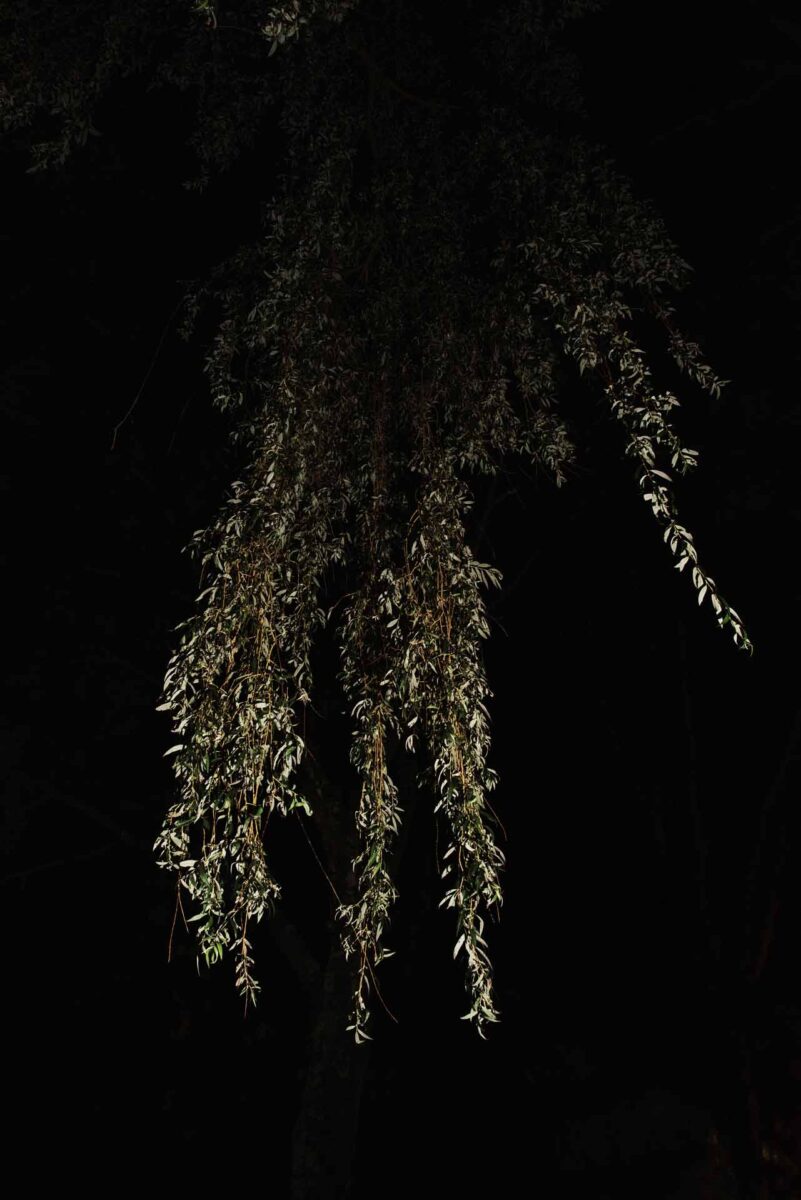
In a series of atmospheric photographs, Piergoelam examines songs that were sung during this time, as well as knowledge about plants that was passed from generation to generation. Key motifs include the spider figure, Anansi, symbolising cunning and creativity, and Angisa, an intricately folded headscarf. Nature also plays a key role, becoming a place of refuge. As curator Marit Lena Herrmann explains, these works “address the main forms of human communication and create a counternarrative of hope and resistance within the context of slavery and colonialism.” We spoke to Piergoelam about the genesis of the series, from idea to completion.
A: Across the Water traces the largely invisible history of the Surinamese diaspora in the Netherlands – which your family belongs to. How did you become interested in learning more about your cultural heritage?
MP: My parents moved from Suriname to the Netherlands at the ages of one and six – they were really young, and cannot remember anything from that period. At home, we didn’t speak about the country of Suriname. During my studies at the Royal Academy of Art, however, I thought: “wait, I have a culture – a place where my parents were born – and I don’t know anything about it.” So, I started to read lots of stories on the internet. I also reached out to people to learn more.
A: What were some of your most significant findings?
MP: I stumbled upon a Surinamese fairytale about a little girl who wanted to go to the water, but wasn’t allowed. One day, she follows a spirit underwater, and from that moment, becomes a mermaid. If you translate this to reality, she drowned – because mermaids cannot come to the surface. The story had an impact on me. I realised there are often truths hidden behind fairytales. I started researching more Surinamese stories. I found that the spider, Anansi, is a well-known figure. It’s connected to code languages that were used by enslaved people. The spider represented them, whilst another character,
like a tiger, took on the role of the plantation owner. By using this structure, people made storylines where the spider beats the tiger – which in everyday life never happened. They were able to communicate without the plantation owner knowing what they meant. This sparked The Untangled Tales.
A: Can you tell us about the structure of the body of work, what it’s about and how it began to come to life?
MP: The Untangled Tales is a three-part project. The initial two sections of my series – The Untangled Tales and Songs in a Strange Land – were taken in the Netherlands, despite being about Suriname. In fact, when I started the series, I’d never been to Suriname. This was made in 2020, so I couldn’t go due to the pandemic. Instead, I went to forests or bodies of water where it didn’t look like the Dutch landscape. It wasn’t about where the pictures were made, but the story they told. I did a lot of research, and then took it into the photographs.
A: The first of the three chapters visualises stories associated with Anansi storytellers and Angisa-folders. Could you expand on the significance of these individuals?
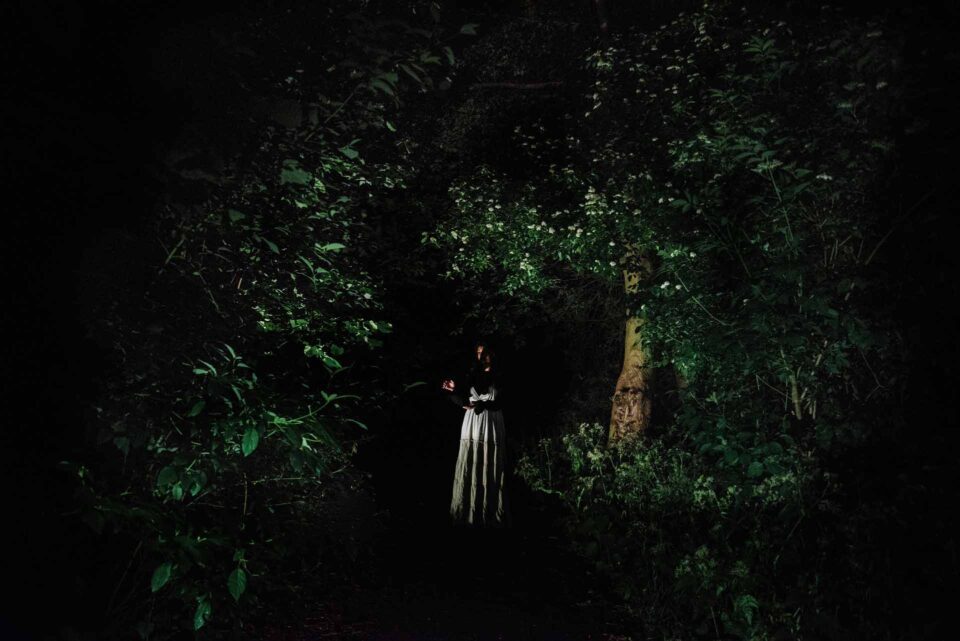
MP: I read accounts of Anansi storytellers who came together at night after a long day of work to tell tales of the mythical spider – passed down from Africa to Suriname, and from generation to generation. Together, sometimes around a campfire, they would use objects from the ground, facial expressions and hand gestures to illustrate the narrative. Angisas – intricately folded headscarves worn by women
– evolved after the period of slavery. They were not only beautiful headkerchiefs: certain configurations had meanings, their intricate folds containing messages and wisdoms that were legible only to those who had learned to read them. It was a way of communicating during a time of oppression.
A: What was next, and did you encounter any challenges?
MP: The second chapter, Songs in a Strange Land, is about work songs, which were sung by enslaved people transporting goods like coffee, cacao and tobacco by boat. By singing, they could create a rhythm to perform the movement faster. But it was also about building a moment where they were able to communicate with each other. What was difficult for me was that I only found around 10 songs. I thought: “how can I make a whole project on this topic, when I’ve only got a small number to work with?” After some reflection, I realised that this is exactly why I need to make this series. A large part of Surinamese history is not well documented. This was a way to call these unheard stories to attention – bringing oral histories to life. Moreover, work songs are not something physical that you can photograph, so they’re a challenge to document. In the end, I did so by creating multiple images.
A: How did the most recent instalment come about?
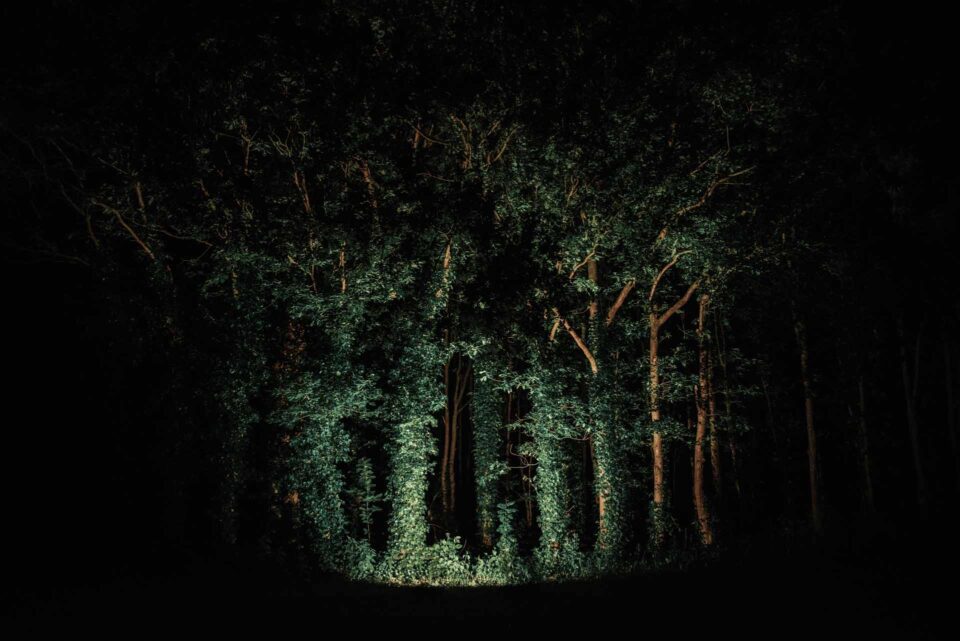
MP: In 2024, I visited Suriname for the first time and made the section of the project called Fourteen Leaves and a Cup of Water. The images are based on a diary by Daniel Rolander, a Swedish biologist who went to Suriname in the 18th century. He wrote about the properties of the country’s plants – if they were for food, or poisonous. He explained that the local inhabitants of Suriname shared their knowledge with the enslaved people, which enabled them to survive in the forests.
A: What were some of the things Rolander identified?
MP: I made a note of the species I wanted to find on my trip. I went with a guide, and we tried to locate all of them. Each has a story. For example, one is called “elephant shoe”, but there are no elephants in Suriname. This is a direct link to the knowledge of enslaved people who were taken from Africa to
Suriname. There’s also a berry from which you can make ink. After eight days in the tropical air, the ink will disappear – so it was used for secret message writing. Another species was processed for munitions. These plants were a way to survive, giving hope and resilience to the country’s enslaved people.
A: How did you find the experience of visiting Suriname?
MP: It was super to see the country myself. I met a guide who was documenting, in writing, all of the knowledge held by a shaman. He was 70 years old, but they think he is older. Everything is in his head. If he dies, then all of that information is gone. It’s as I said – we need to document this history. It was good to speak with the locals about what I can do from the Netherlands. Plus, my parents came with me on this trip. It was the first time in 51 years that they had been back there.
A: How would you describe your signature visual style, and how do you negotiate the balance of fact and fiction?
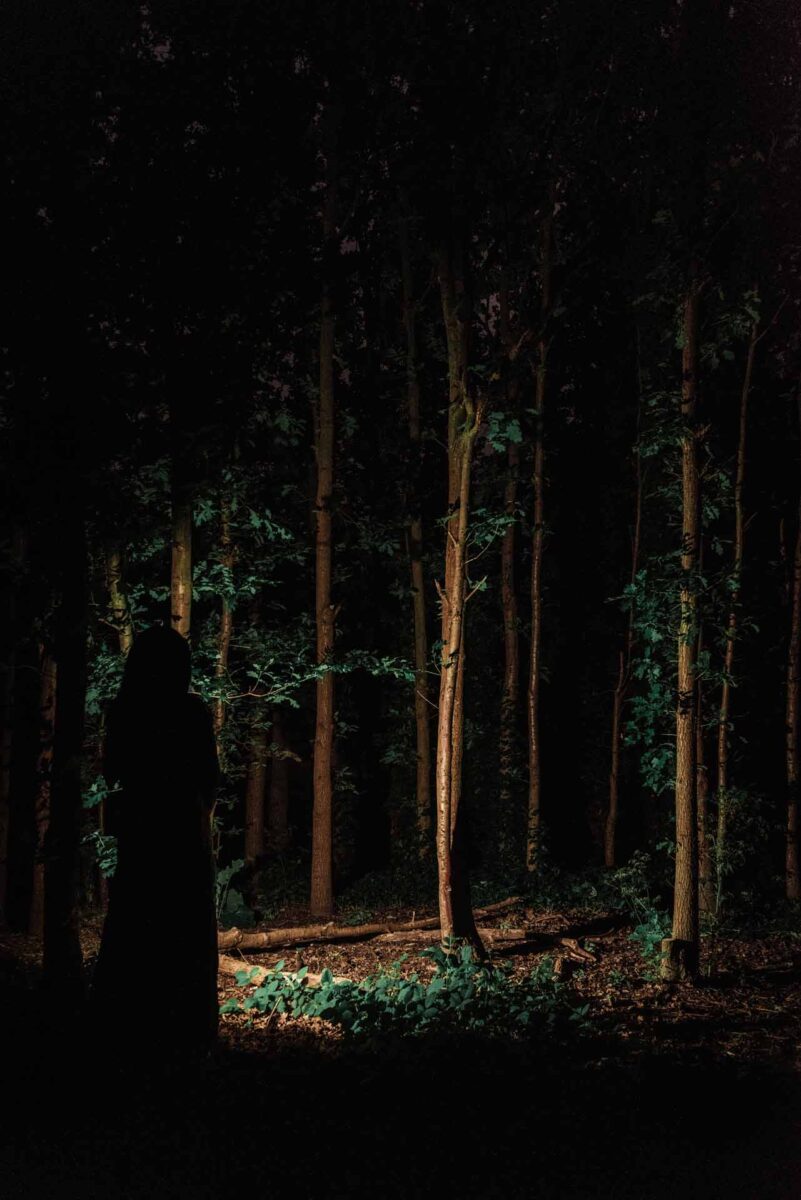
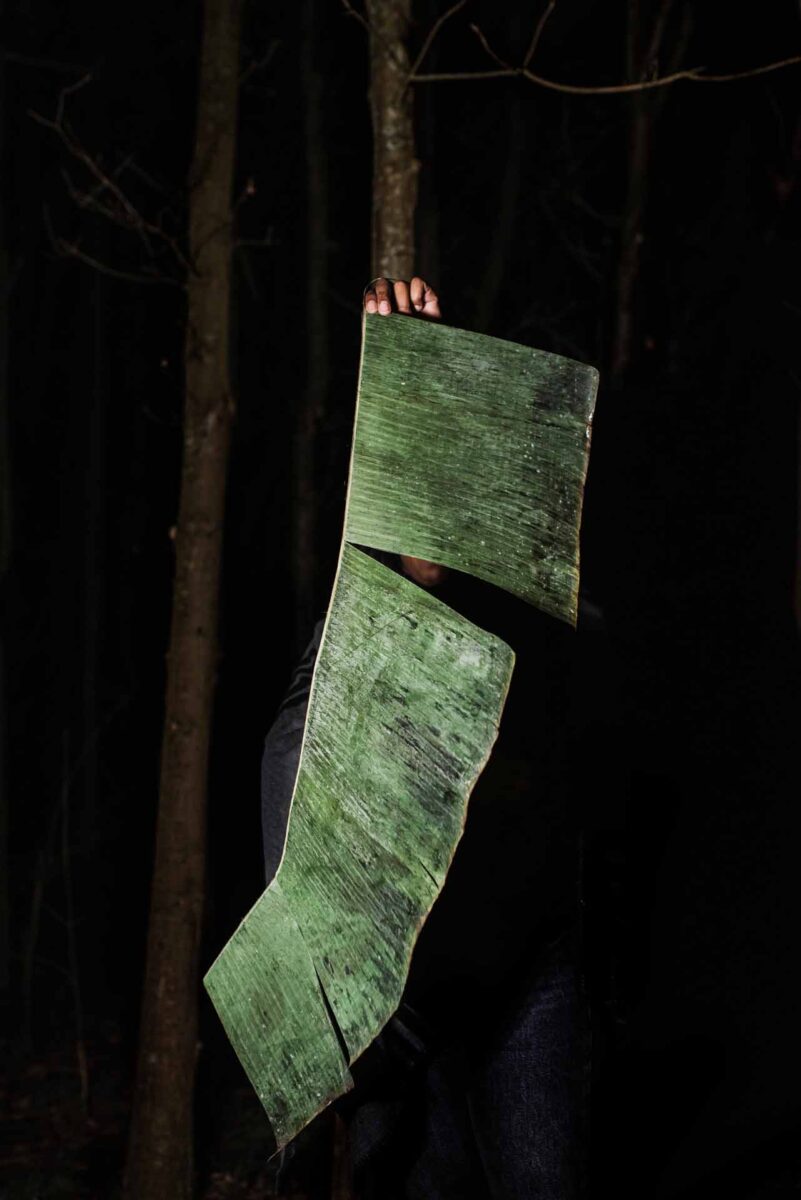
MP: I photograph nature a lot, and I love to be around it. I live in Rotterdam, where there are a lot of buildings, so the outdoors offers a happy, quiet place for me to make work. My approach to image making uses a lot of darkness to create atmosphere, which enhances the story. I always use a flash on the subject. It’s the most natural way for me to make images. In terms of the balance: I don’t make up the things I photograph. Every element of the scene comes from studies.
A: What approach did you take to making these pictures? Could you describe the practical processes behind them?
MP: Firstly, I read everything I can around the subject I’m working on. Then, I make a list of interesting things that I could use in the photographs as a way of telling the stories. I compile questions about how I can translate them into an image: where does it take place? Do I need someone in the photograph, or is it just nature in the frame? What needs to happen in the scene? Do I need props? Then, I try to prepare as best I can, before going to the location. I visit sites multiple times. I don’t photograph the whole project all at once, but take my time and come back again and again. If I think the images aren’t good enough, or not telling the story properly, I’ll go back or do something different. I do a lot of reflection.
A: Beyond prints, the exhibition also incorporates textiles and installation. How do these elements function within the gallery space, and what do they add to the story?
MP: Fabrics are an effective way to enlarge an image. I like the tactility – the way cloth feels and floats in space. I’ve tried to make an experience for visitors, so they can walk around the curtains and recreate the moment I went into the jungle. When audiences explore the space, they’ll look up high or down below. There’s so much to see, and you have to walk around multiple times to take it all in. I like to make use of the height of long curtains. It’s a different way to present artwork.
A: Finally, how do you imagine visitors will react to the Across the Water show? What kinds of reflections or conversations do you hope the display in Vienna will spark?
MP: I hope audiences will learn something new about Surinamese culture. Some people do know the Anansi stories already, but don’t know the background – or that it’s connected to slavery. The projects show that even in such difficult circumstances, creativity can be used to get through the day. Maybe they will want to go to Suriname themselves.
Across the Water Foto Arsenal Wien | Until 10 May
Words: Eleanor Sutherland
Image credits:
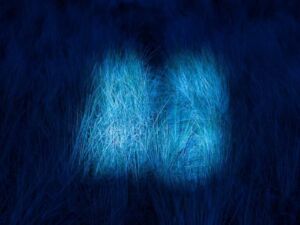
1. The Night © Michelle Piergoelam, from the series The Untangled Tales.ino, I am I am I, Anavilhanas, AM, Brazil. From Batismo (2019).
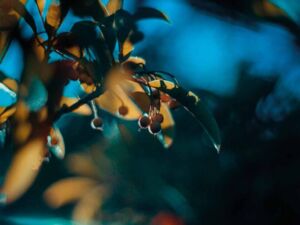
2. Storytelling © Michelle Piergoelam, from the series The Untangled Tales.
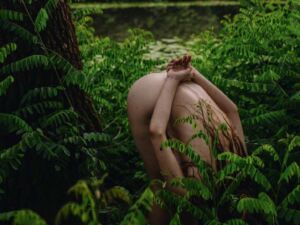
3. The Woods © Michelle Piergoelam, from the series The Untangled Tales.
4. The Untangled Night © Michelle Piergoelam, from the series The Untangled Tales.