

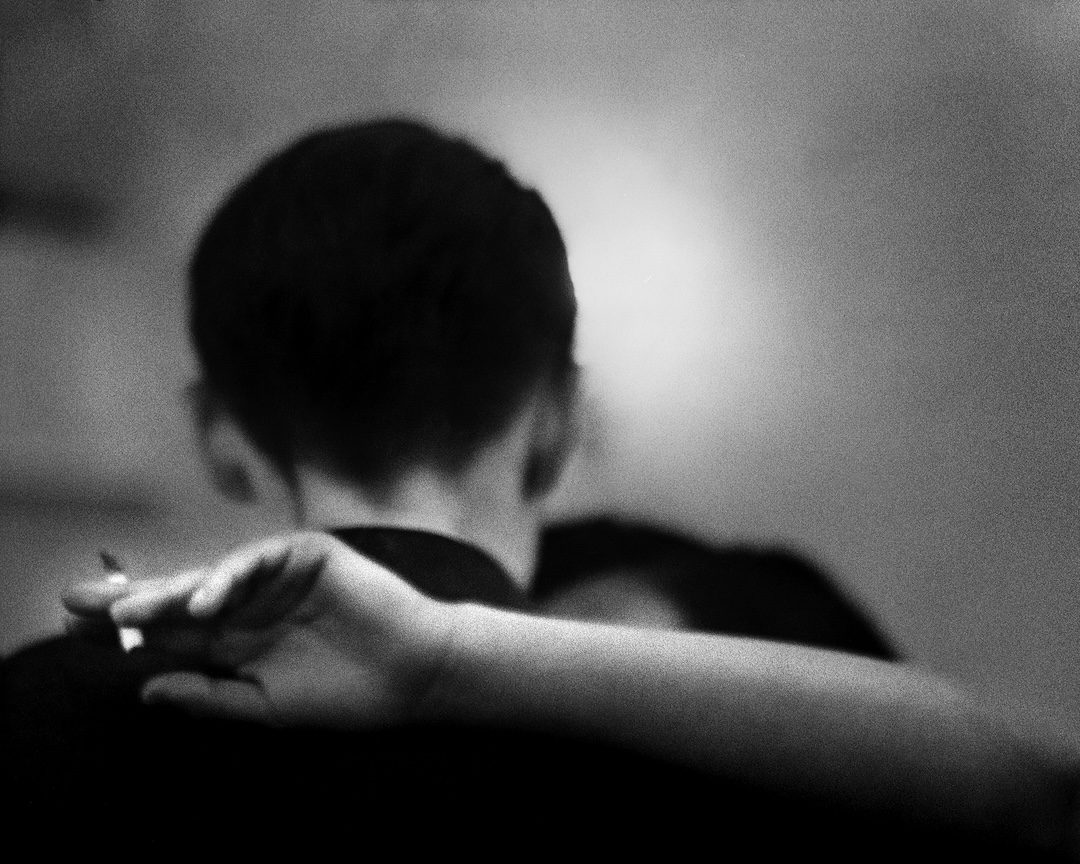
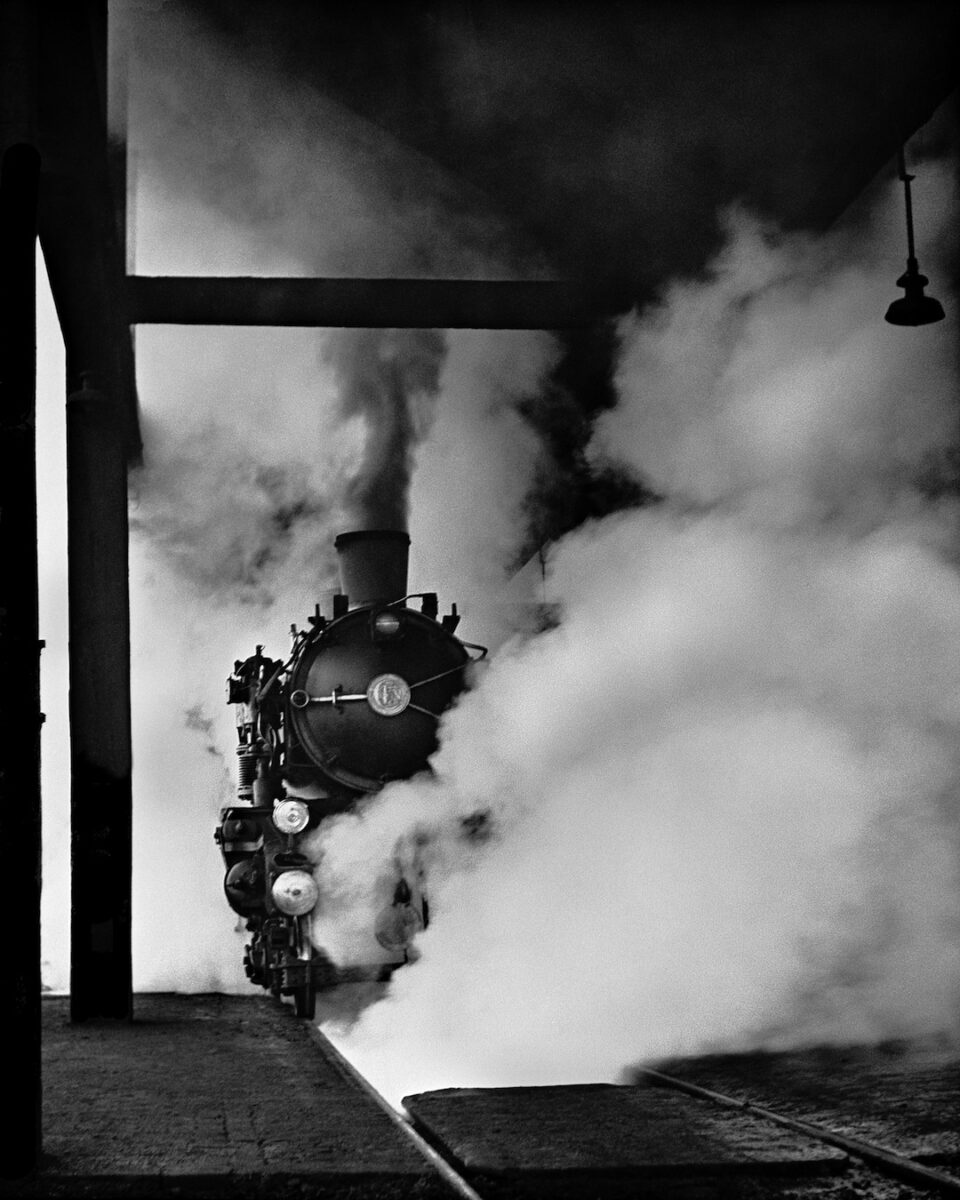
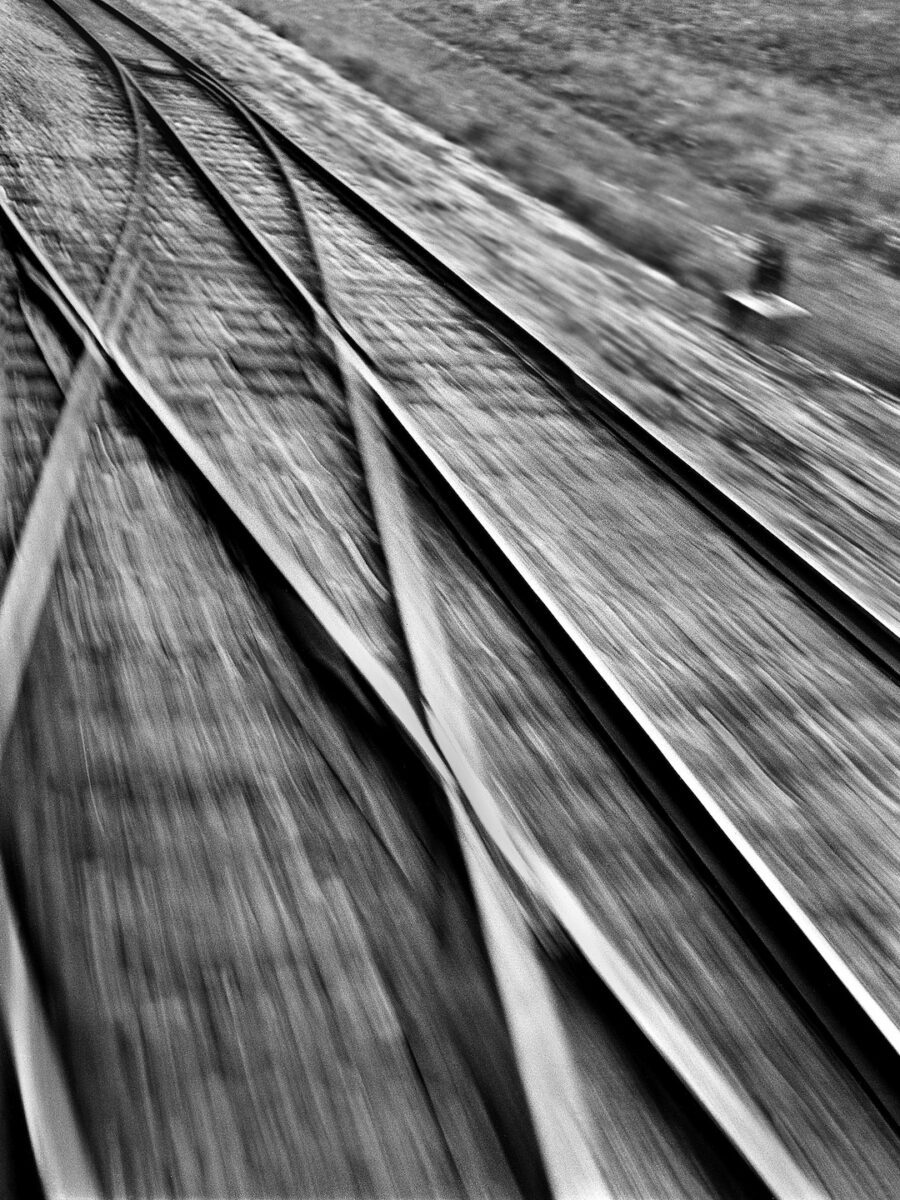
Film was René Groebli’s (1927-2026) first love. Now regarded as one of the most influential Swiss photographers of the 20th century, he initially trained as a documentary cameraman. He turned away from filmmaking, frustrated by an industry that limited his scope for personal expression. But its influence remained central to his practice. In 1949, aged 22, he published Rail Magic, a sequence of 14 pictures capturing a steam train’s journey from Paris to Basel. Smoke, motion blur and grain convey the movement and atmosphere of the railway, drawing on the visual language of cinema. The photobook, ahead of its time, attracted little public interest upon publication. Today, however, it is recognised as a landmark release.
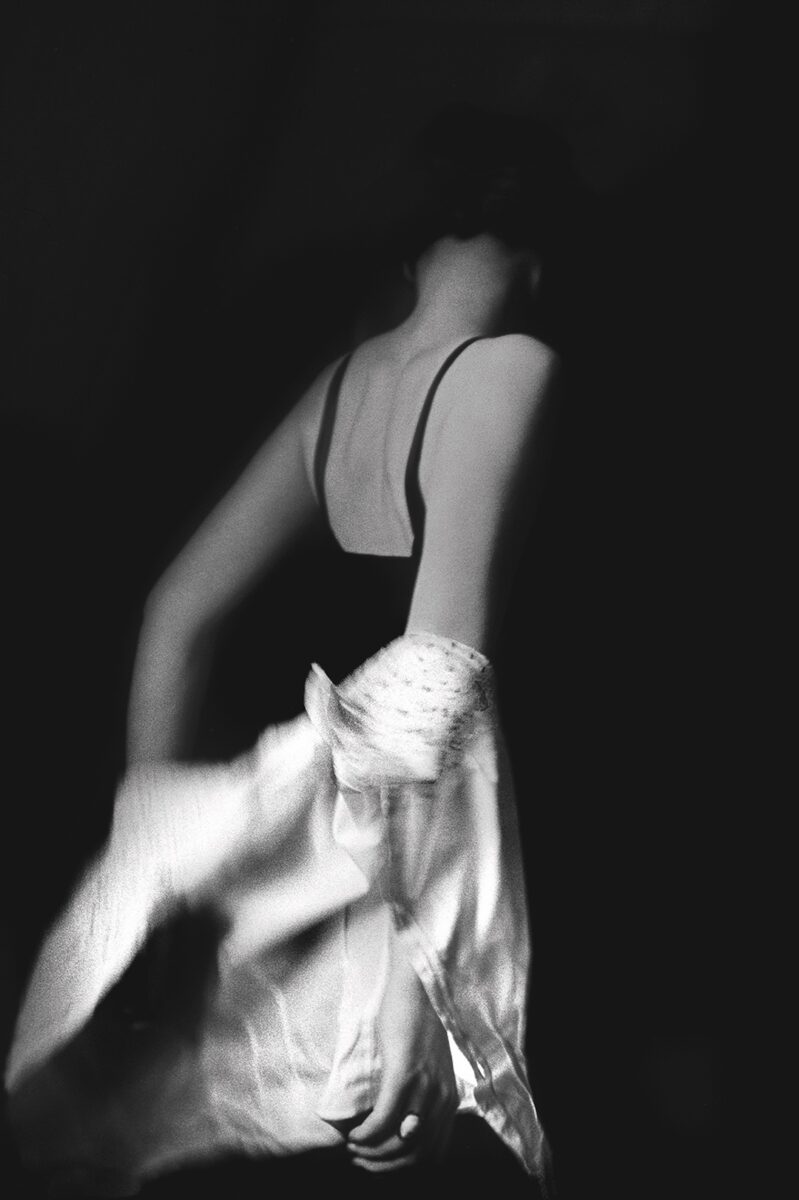
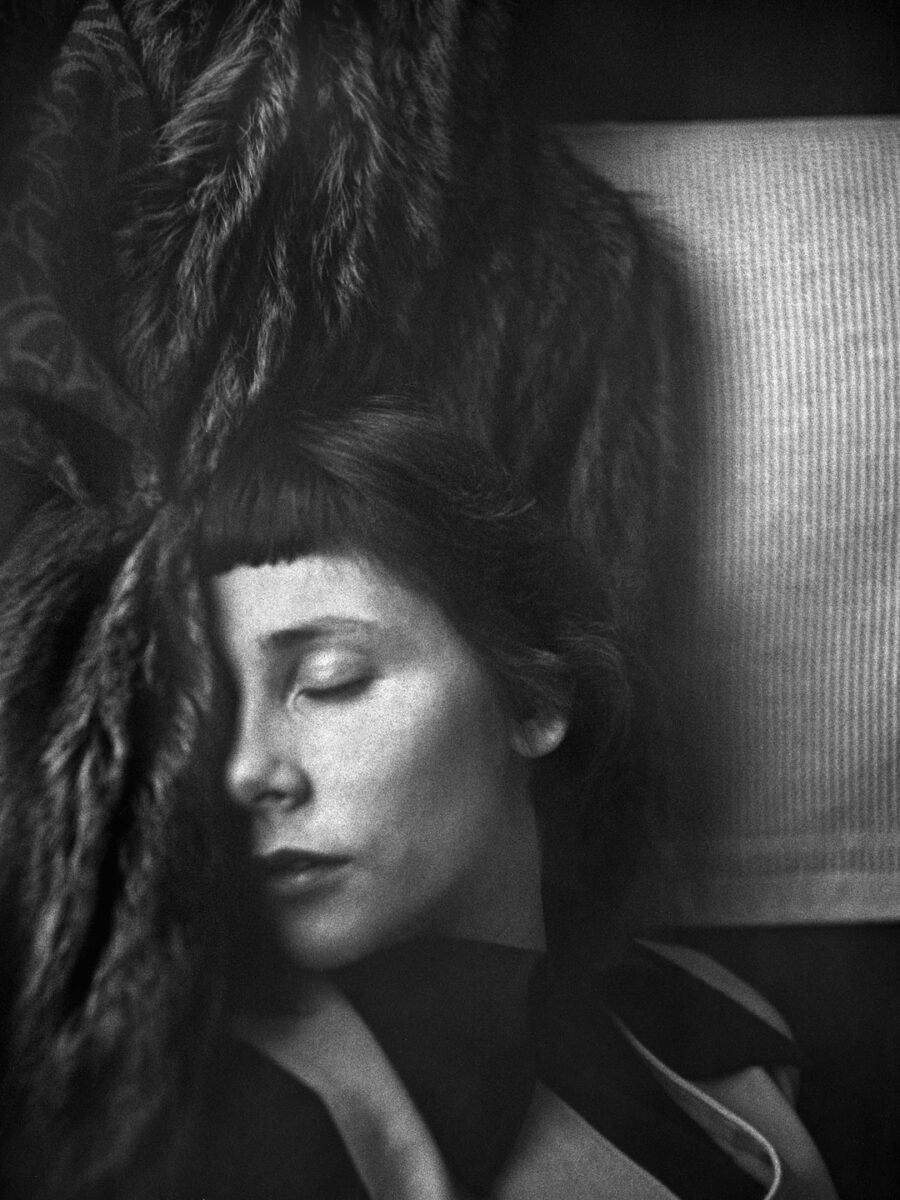
Images from Rail Magic – including one of a locomotive appearing from amidst plumes of steam, another where metal rails cross and blur, and one depicting a sleeping figure – are now included in An Artist in Motion, opening at Bildhalle in Amsterdam. The show collates works from different periods of Groebli’s remarkable career, highlighting the “extraordinary diversity” of his vision. His oeuvre encompasses advertising, reportage, industrial and experimental imagery, as well as deeply personal projects.
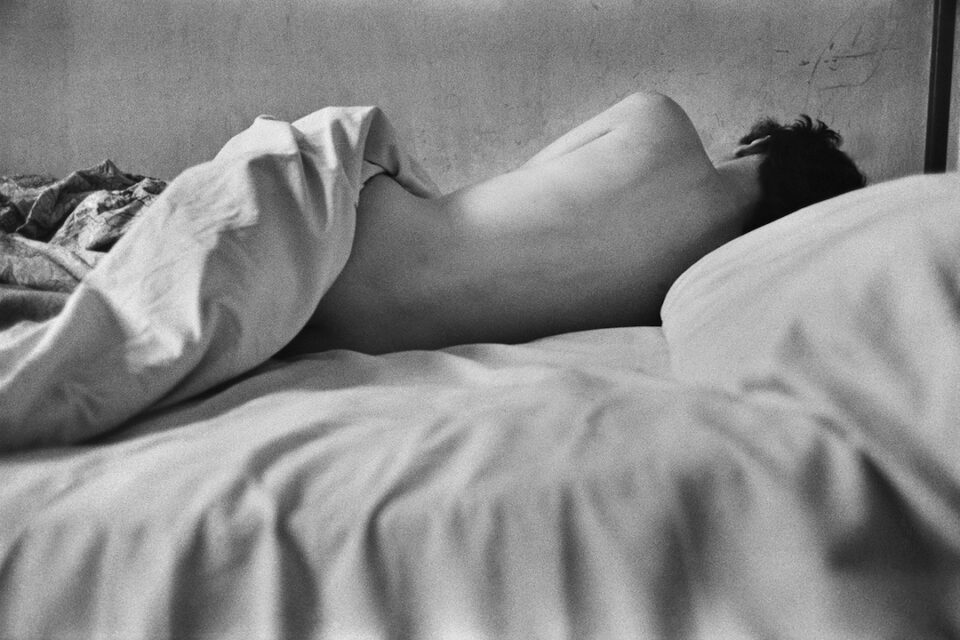
One of his most intimate – and most celebrated – series is The Eye of Love (1954). In 1951, Groebli married Rita Dürmüller, who supported him artistically throughout his life. She is the subject of the images, which grew out of photographs he took in their hotel room during a belated honeymoon in Paris. The collection is tender and atmospheric, unfolding as a “photographic love poem” to Rita. Inspired by the mood of French poetic realism (examples of the movement include L’Atalante (1934) by Jean Vigo), and designed in collaboration with Werner Zryd, the publication is now considered a milestone in the canon. One shot, The Sitting Nude, was bought by Edward Steichen for the collection of New York’s Museum of Modern Art.
Groebli’s dedication to colour is another focus of Bildhalle’s show. From 1953, at a time when colour image-making had yet to gain acceptance as an artistic medium, he focused on it and opened his own studio. By 1957, he had perfected the dye-transfer process and been named “Master of Color” by U.S. Color Annual. He embraced it in both his commercial and artistic work, producing pioneering experimental images which moved beyond realistic representation, using different hues to evoke movement, energy and atmosphere. He used techniques such as alienation, crossfading and montage, all of which he pushed to their limits. Examples include the portrait Cornelia (1961), and shots of General Motors, which capture the assembly of an Opel Rekord car. The palette is luminous – awash with reds, greens, blues and pinks – giving it a look that wouldn’t be out of place alongside today’s neon noir aesthetic: think Blade Runner or Drive.
Groebli died on 5 May 2026, aged 98, having spent more than 70 years building and refining his image archive. Although he turned away from filmmaking, its influence never left him. From the restless movement of Rail Magic to the intimate compositions of The Eye of Love and his experiments with colour, Groebli approached photography with the eye of a cinematographer. His work continues to inspire new generations of creative minds, having secured an important place in the history of photography.
An Artist in Motion is at Bildhalle, Amsterdam, from 19 November – 13 February.
Words: Eleanor Sutherland
Image Credits:
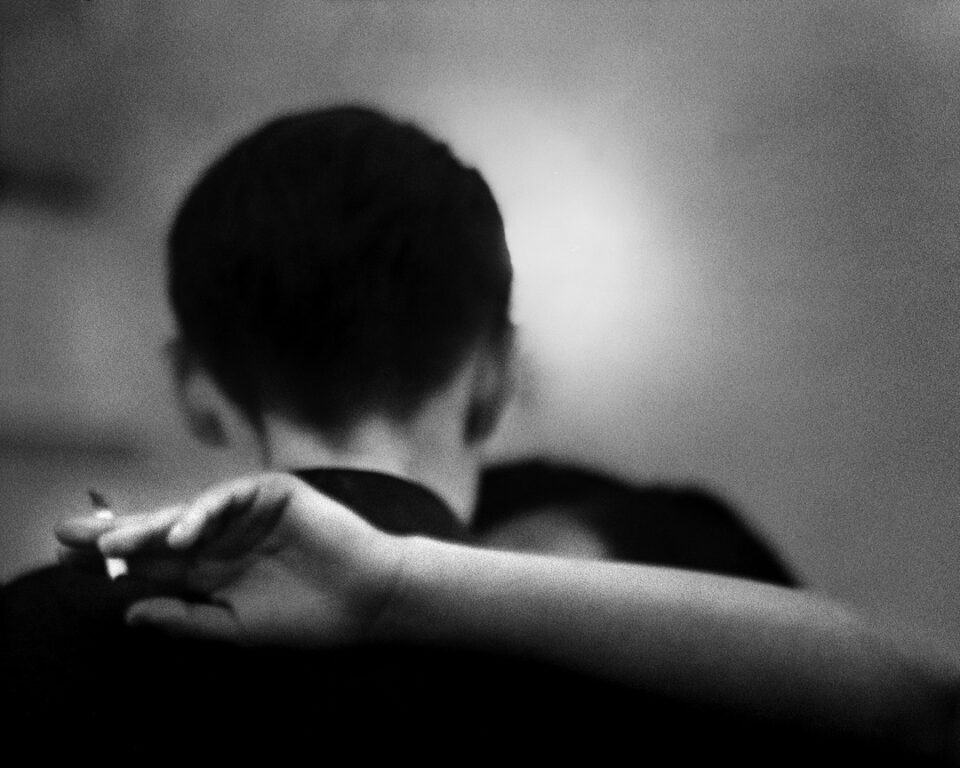
1. René Groebli, Dance with cigarette/Tanz mit Zigarette (#281), London, Beryl Chen, 1953.
2. René Groebli, Dampfende Lok (#559), Rail Magic/Magie der Schiene, 1949.
3. René Groebli, The sleeping/Die Schlafende (#582), Rail Magic/Magie der Schiene, 1949.
4. René Groebli, Lying nude/Liegender Akt (#532), Paris, Das Auge der Liebe, 1952.
5. René Groebli, Dampfende Lok (#559), Rail Magic/Magie der Schiene, 1949.
6. René Groebli, Rail Magic/Magie der Schiene (#569), 1949.
7. René Groebli, Dance with cigarette/Tanz mit Zigarette (#281), London, Beryl Chen, 1953.


