

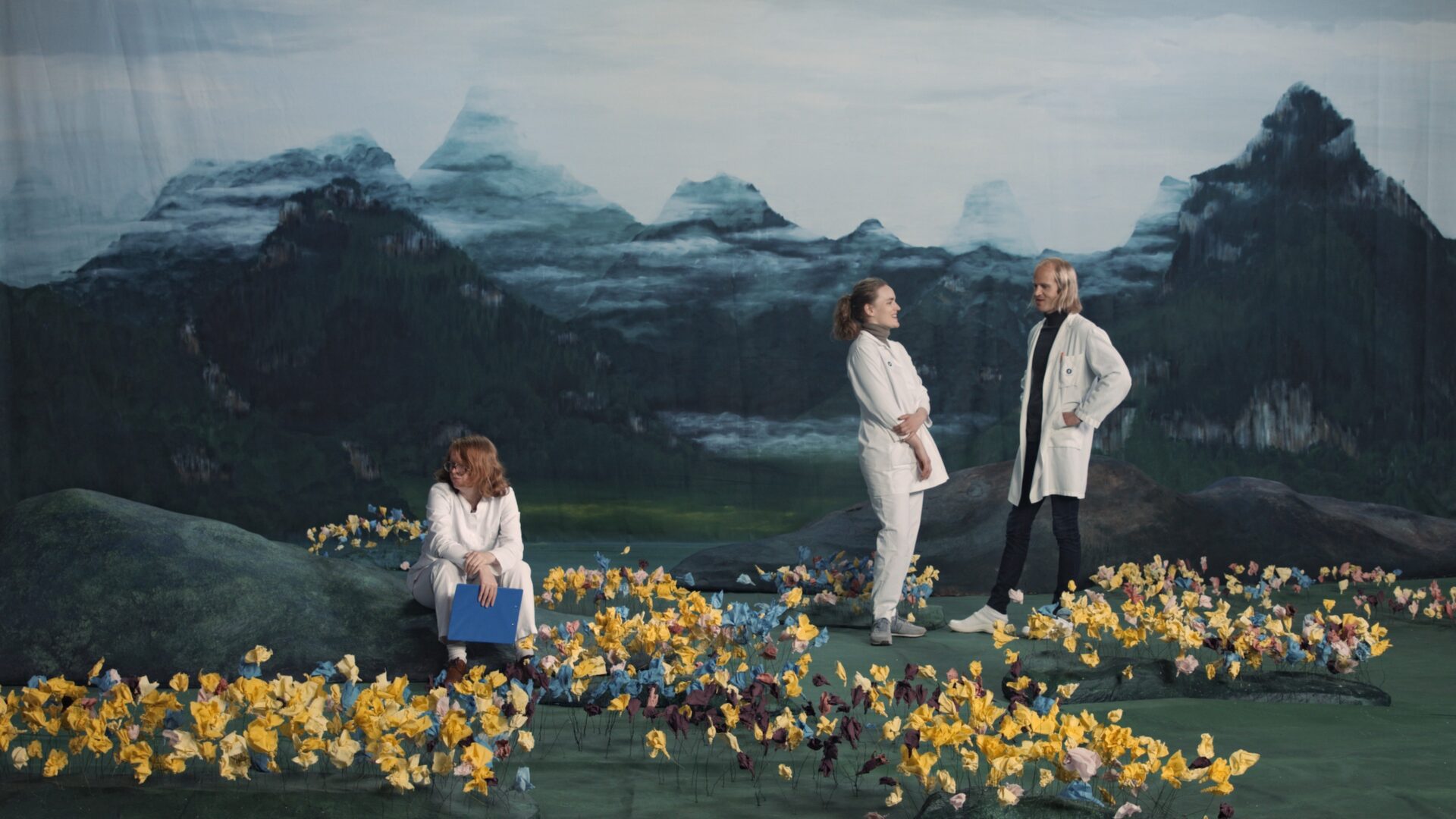
Ragnar Kjartansson has built a practice around a contradiction: the possibility that repetition can create change. His performances return obsessively to the same gestures, melodies and phrases, yet each recurrence reveals another layer of vulnerability, humour or longing. In an era shaped by accelerated consumption and constant visual renewal, his work asks what might happen when an image, action or emotion is allowed to remain. The Icelandic artist’s videos are neither straightforward recordings nor conventional narratives; they exist somewhere between theatre, cinema and lived experience. Ragnar Kjartansson: Mercyat the National Gallery of Victoria (NGV) brings together this complex body of work, examining how endurance can become a method for understanding intimacy, memory and connection.
Repetition has long carried an uneasy position within art history, often associated with mechanical reproduction or commercial circulation. Kjartansson transforms it into something more unstable, using duration to expose the emotional residue contained within ordinary gestures. A repeated action does not become empty through return; instead, it accumulates meaning as audiences become more attentive to small shifts in expression, atmosphere and tone. This relationship between persistence and transformation recalls Peggy Phelan’s writing on performance, particularly her understanding of live action as something shaped by presence, disappearance and impermanence. Kjartansson complicates this idea through moving image, preserving performances while allowing them to retain unpredictability and emotional fragility.
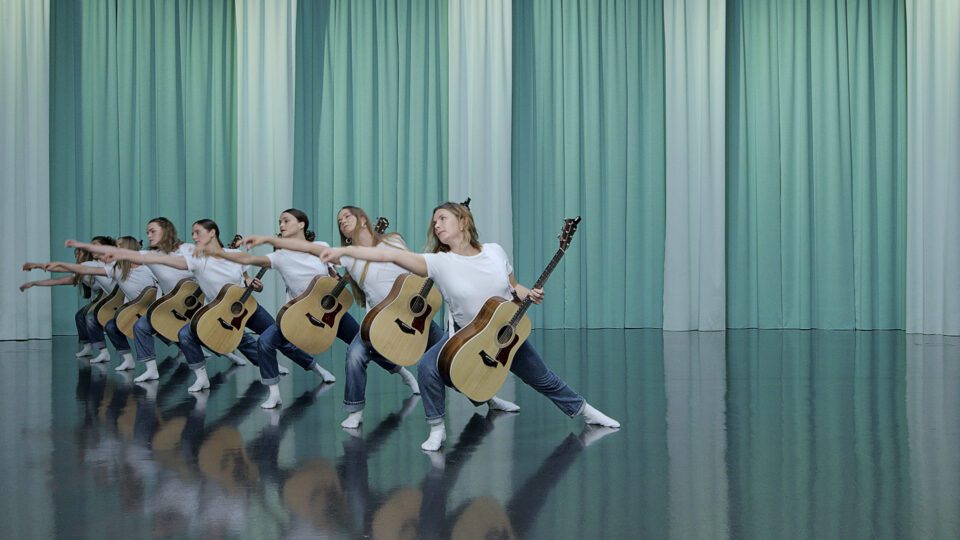
The NGV’s presentation, curated by the institution’s exhibition team, brings together eight new and recent video works that trace the artist’s ongoing fascination with music, theatricality and collective experience. Rather than arranging the exhibition as a conventional survey, the curatorial approach creates a dialogue between works that share emotional and formal concerns. Each installation becomes part of a wider landscape of gestures and repetitions, where humour can sit alongside melancholy, and spectacle can reveal vulnerability. This structure reflects the artist’s own understanding of performance as a space where contradictions are not resolved but sustained. Visitors encounter works that demand time, encouraging a slower relationship between viewer and image.
Kjartansson’s fascination with theatre stems partly from his upbringing in a family surrounded by performance, but his use of theatrical conventions extends far beyond autobiography. Costumes, scripted actions and staged environments become tools for examining the ways individuals construct identity. His work suggests that performance is not separate from everyday life, but embedded within the rituals through which relationships are maintained. This perspective connects with broader ideas around performativity, particularly the notion that identities are continuously produced through repeated acts. By exaggerating these structures, Kjartansson reveals the emotional truths that exist beneath them.
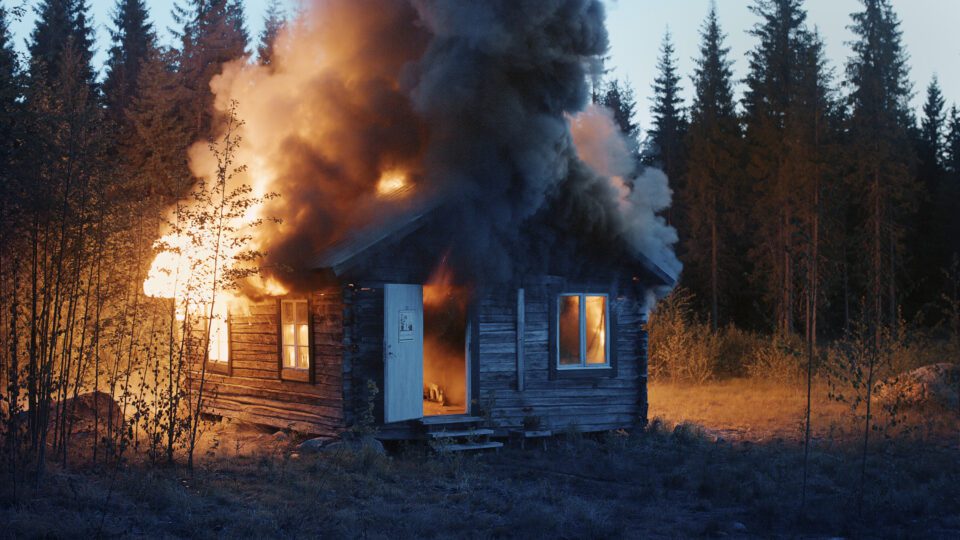
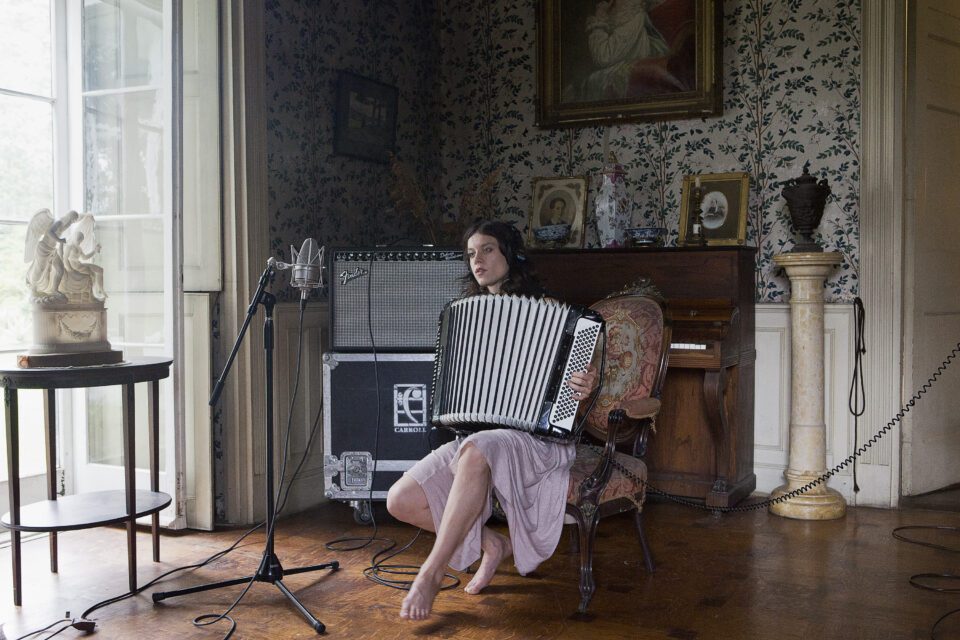
Few works demonstrate this approach more completely than The Visitors (2012), the celebrated nine-channel installation filmed at Rokeby, a 19th century mansion in upstate New York. The work brings together Kjartansson and musicians from Reykjavík’s creative community, each performing from different rooms within the decaying house. A drummer occupies the kitchen, a banjo player appears in the library and Kjartansson plays guitar alone in a bathroom, creating a portrait of connection shaped by physical separation. The musicians never gather in a single space, yet their performances merge into a shared composition that transforms isolation into intimacy. Described by Kjartansson as a “feminine nihilistic gospel song”, the work captures his ability to hold despair and beauty within the same emotional register.
Music operates as one of the artist’s most powerful methods for exploring memory and attachment. Rather than using songs to advance a narrative, Kjartansson allows melodies and lyrics to linger until they become almost psychological environments. The repeated musical structures in his work resemble the way memories return – altered by time, shaped by context and never entirely fixed. This approach places his practice alongside wider artistic investigations into effect, where emotion is understood not as a private response but as a shared and cultural experience. Within The Visitors, sound becomes a connective force, creating a sense of collective belonging despite the separation of its performers.
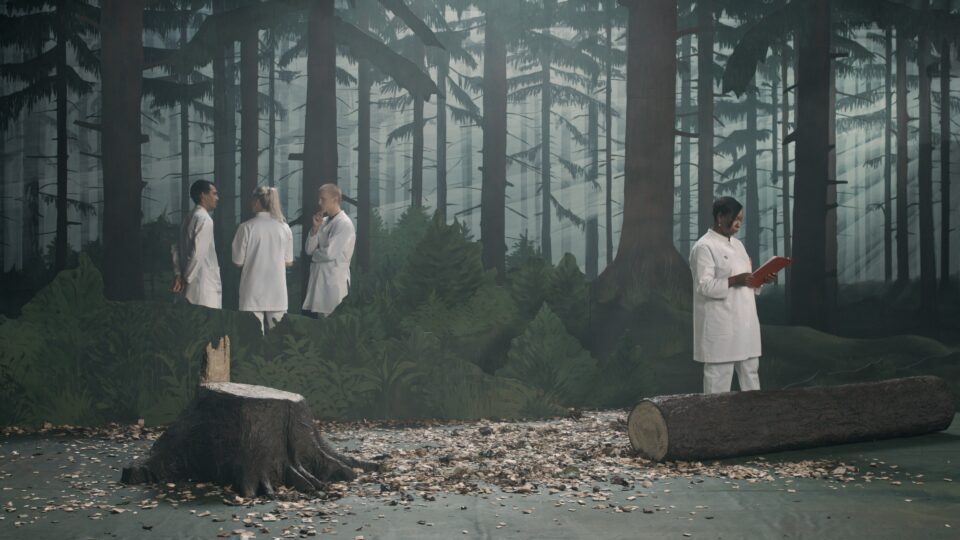
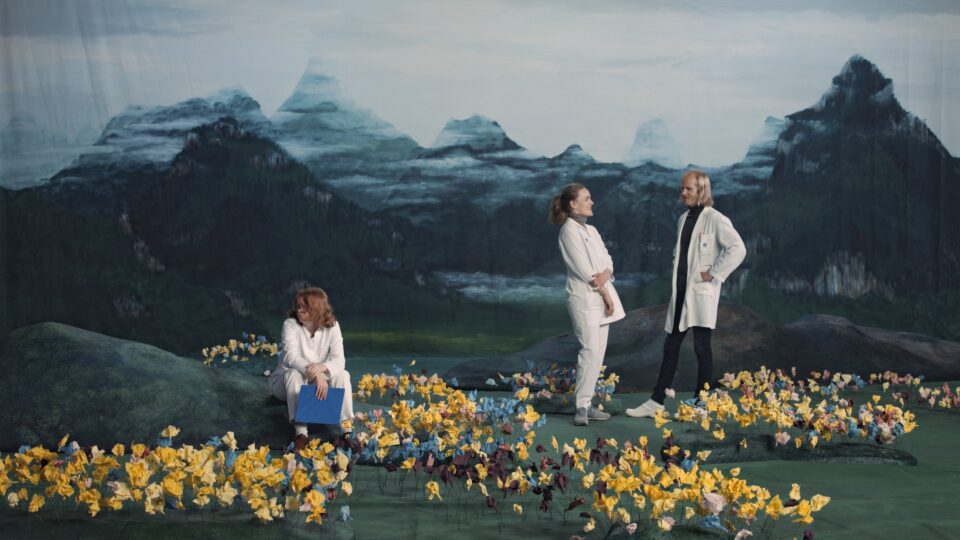
A different relationship between nostalgia and uncertainty emerges in Sunday Without Love (2025), presented at NGV as its Australian premiere. The work began with a postcard depicting figures dressed in matching folk costumes, an image that appears to promise harmony and tradition while concealing a sense of anonymity. Kjartansson responds by creating a moving-image tableau in which he and nine performers wear non-specific European folk clothing and repeatedly sing the phrase “You must learn to live without love”. The work examines how cultural symbols can preserve both comfort and loss. Its beauty is deliberately unsettled, revealing how inherited forms of nostalgia can carry emotional contradictions.
Humour provides another entry point into Kjartansson’s exploration of relationships, particularly in the ongoing video work Me and My Mother. Created with his mother, Icelandic actor Guðrún Ásmundsdóttir, the series records a recurring performance in which she spits on him every five years. The gesture initially appears absurd, even confrontational, yet repetition gradually transforms it into a deeply affecting portrait of familial connection. Rather than presenting intimacy through traditional expressions of affection, Kjartansson finds tenderness in discomfort, awkwardness and shared understanding. The work expands the possibilities of portraiture, suggesting that relationships are evolving performances.
Questions surrounding spectatorship also sit at the centre of Kjartansson’s practice. Unlike participatory artists who invite direct audience involvement, he creates situations where viewers become witnesses to constructed encounters. This distinction places his work in dialogue with debates around relational aesthetics and participation, particularly those raised by writers such as Nicolas Bourriaud and Claire Bishop. Kjartansson’s performances encourage observation, patience and emotional investment and the distance between viewer and performer becomes part of the experience.
NGV extends these ideas through Children’s Play: Ragnar Kjartansson, the artist’s first exhibition created specifically for younger audiences. Inspired by his childhood among rehearsals, scripts and backstage environments, the project transforms theatrical traditions into opportunities for creativity and experimentation. Children are invited to become performers, audiences and storytellers, blurring the distinction between making and experiencing art. The project reflects Kjartansson’s belief that performance is fundamentally social, rooted in shared participation. Its inclusion alongside Mercy reveals how the artist’s concerns extend beyond individual artworks into questions of community and learning.
Kjartansson’s international reputation, with major exhibitions at institutions including the Barbican in London, the Metropolitan Museum of Art in New York and the Louisiana Museum of Modern Art in Denmark, reflects the wide resonance of his artistic concerns. His representation of Iceland at the Venice Biennale further established his position within global contemporary practice. However, his work remains compelling because it avoids easy universality; personal, cultural and historical references are always present within his carefully constructed worlds. Love, loneliness, friendship and memory appear not as abstract themes but as lived experiences shaped by contradiction. This ability to transform the particular into something emotionally recognisable is central to his enduring impact.
Through Mercy, repetition becomes more than a formal device; it becomes a way of thinking about how people remain connected across time. Kjartansson’s performances suggest that meaning is not always discovered through progression or transformation, but through returning to what is already present and looking again. His combination of humour, theatricality and sincerity challenges the assumption that emotional depth requires seriousness or restraint. NGV’s presentation highlights an artist whose work finds complexity within ordinary gestures and beauty within unresolved feelings. In a culture increasingly defined by speed and disappearance, Kjartansson offers a slower, more attentive vision – one where repetition becomes a pathway towards recognition, intimacy and understanding.
Ragnar Kjartansson: Mercy is at National Gallery of Victoria, Melbourne until 4 October: ngv.vic.gov.au
Words: Simon Cartwright
Image Credits:
1&6. Ragnar Kjartansson, Sunday Without Love, 2025 Single-channel video with sound Duration: 19:14 minutes Music by DavíðÞór Jónsson and Ragnar Kjartansson, based on lyrics and music by Rocko Schamoni Video commissioned by Sigurður Gísli Pálmason, and original performance commissioned by TRANSART25. © Ragnar Kjartansson; Courtesy of the artist, Luhring Augustine, New York and i8 Gallery, ReykjavikRagnar Kjartansson Figures in Landscape (Sunday), 2018Single-channel videoDuration: 24 hours Commissioned by the Danish Building and Property Agency for the Faculty of Health and Medical Sciences, University of Copenhagen © Ragnar Kjartansson; Courtesy of the artist, Luhring Augustine, New York and i8 Gallery, Reykjavik.
2. Ragnar Kjartansson, Margrét Bjarnadóttir, & Bryce Dessner No Tomorrow, 2022. Six-channel video installation with sound Duration: 29:18 minutes Commissioned by Sigurður Gísli Pálmason, based on a commissionby the Iceland Dance Company © Ragnar Kjartansson, Margrét Bjarnadóttir, & Bryce Dessner; Courtesy of the artists, Luhring Augustine, New York and i8 Gallery, Reykjavik.
3. Ragnar Kjartansson, Scenes from Western Culture, Burning House, 2015. Single-channel video with sound Duration: 01:32 hours © Ragnar Kjartansson; Courtesy of the artist, Luhring Augustine, New York and i8 Gallery, Reykjavik.
4. Ragnar Kjartansson, Figures in Landscape (Sunday), 2018. Single-channel video. Duration: 24 hours. Commissioned by the Danish Building and Property Agency for the Faculty of Health and Medical Sciences, University of Copenhagen © Ragnar Kjartansson; Courtesy of the artist, Luhring Augustine, New York and i8 Gallery, Reykjavik.
5. Ragnar Kjartansson, The Visitors, 2012. Nine-channel video with sound Duration: 64 minutes Commissioned by the Migros Museum für Gegenwartskunst, Zurich © Ragnar Kjartansson; Courtesy of the artist, Luhring Augustine, New York and i8 Gallery, Reykjavik. Photos: Elísabet David.


