An artificial plant, a fragment of upholstery and a stretch of reclaimed coastline might seem unlikely subjects for a discussion about how we understand the world. However, each carries a history that extends beyond its immediate appearance. Objects are shaped by the circumstances of their production and use; landscapes bear the consequences of development. For artists Nabuqi and Karimah Ashadu, these traces provide a way of examining the relationship between physical surroundings and lived experience. Their forthcoming exhibitions, Hidden Breeze and RUSHES, approach this territory through sculpture, installation, film and painting, bringing questions of perception, labour and value into a compelling dialogue.
Although their practices emerge from different cultural and philosophical contexts, both artists pay close attention to the meanings accumulated by ordinary things. Beijing-based Nabuqi explores how objects influence perception, drawing on phenomenology and the philosophical writings of Martin Heidegger. Ashadu, a British-born Nigerian artist, investigates labour, masculinity and economic inequality through the experiences of people living and working in Nigeria. Their approaches intersect around an interest in the relationship between material form and human experience. Where Nabuqi unsettles the familiar appearance of objects, Ashadu examines the histories and social conditions that determine their use.
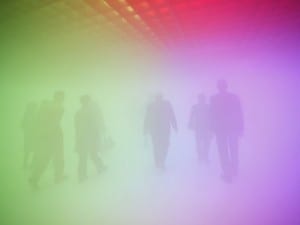
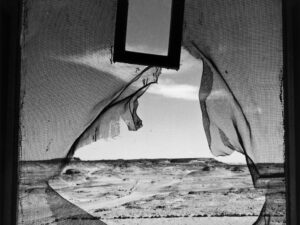
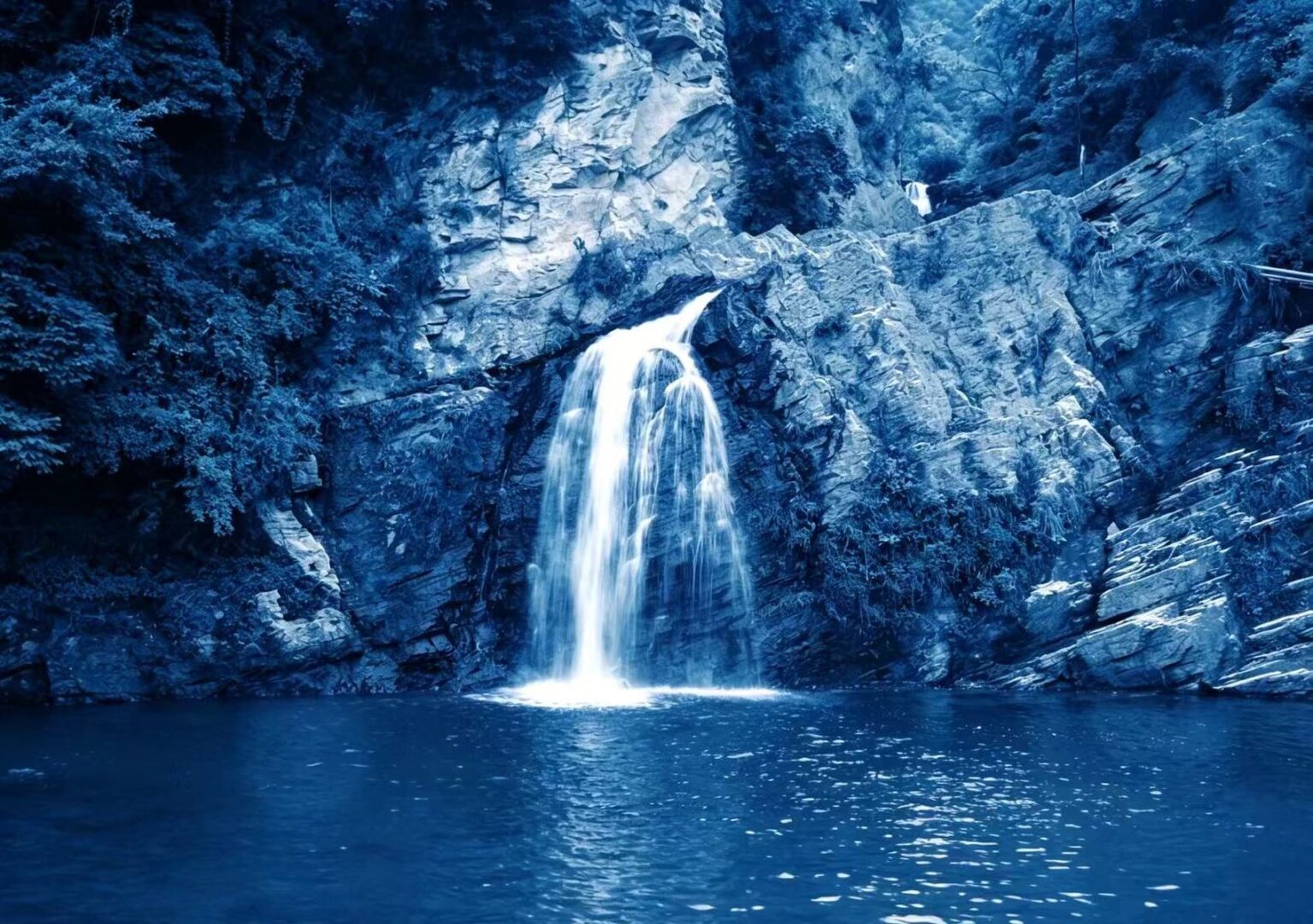
Opening on 25 November, Hidden Breeze marks Nabuqi’s first solo exhibition with Sadie Coles HQ, 10 years after her participation in Zhongguo 2185, curated by Victor Wang. Her sculptures and installations frequently draw on recognisable forms, introducing subtle alterations that challenge the assumptions attached to everyday objects. At the Kingly Street Gallery, curtains establish an environment organised around wind, water and plant life, creating a landscape through which visitors encounter artificial and organic forms. Rotating knots, titled The Motionless, suggest air currents through their suspended configurations, while a waterfall appears as a static image hanging on the wall.
Artificiality becomes particularly apparent in The Question-Posing, where familiar plastic office plants are recast as botanical specimens in aluminium, painted in vivid shades of green, red and black. Their arrangement within architectural structures recalls the presentation of objects in scientific collections, although their manufactured origins complicate the authority of such classification. Nabuqi draws attention to the ways in which appearances influence our understanding of what is natural, authentic or functional. In The Slightly Swaying, a monumental tree-like sculpture composed of stacked bronze discs can be rotated, introducing movement into a form associated with permanence. Its weight contrasts with the delicate suggestion of swaying branches, giving the sculpture a physical and conceptual tension.
Nabuqi’s investigation of objects has interesting parallels with Otobong Nkanga, whose multidisciplinary practice examines the relationships between natural resources, extraction and global trade. Nkanga frequently traces the journeys of materials through different geographical and economic systems, revealing the human histories concealed within seemingly ordinary substances. Her work offers a useful counterpoint to Nabuqi’s philosophical enquiry: both artists ask viewers to reconsider what an object represents, although Nkanga places greater emphasis on its ecological and political history. Mona Hatoum provides another perspective through sculptures that transform domestic objects into unsettling encounters, exposing the fragility of familiar environments. Together, these practices demonstrate the continuing importance of sculpture as a means of questioning how objects acquire meaning.
Labour and the histories of everyday materials take centre stage in Ashadu’s RUSHES, opening on 2 December at the gallery’s Savile Row space. The exhibition presents WAVES (2026), her latest film, in the UK for the first time, following its European premiere at Kestner Gesellschaft in Hanover. Set in Lagos’s Oniru District, the film follows men working at an informal carwash on a narrow strip of land recently reclaimed from the Atlantic Ocean. As they wash vehicles, conversations reveal their ambitions, personal histories and reasons for migrating to the city. Recounted in Hausa, a widely spoken language in Northern Nigeria, their accounts establish a portrait of individuals negotiating the demands of working life.
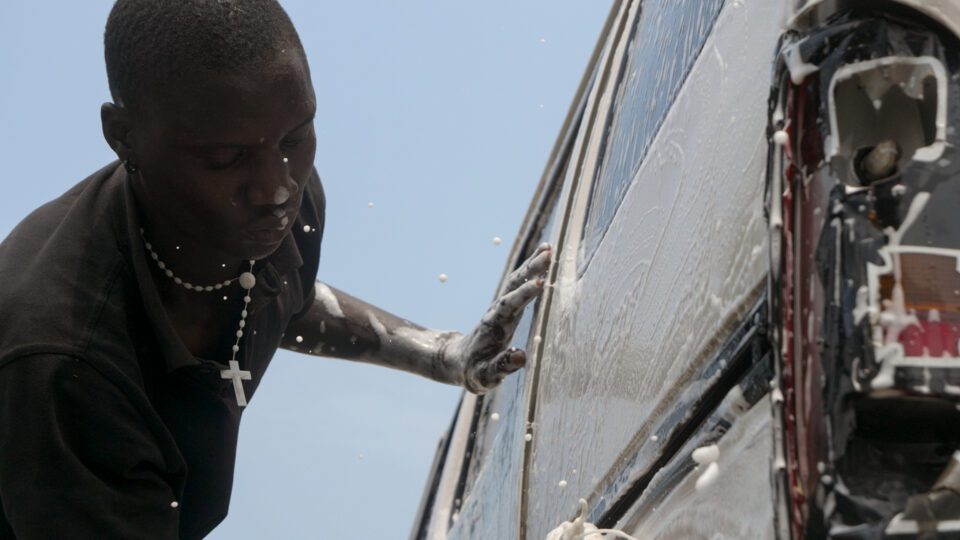
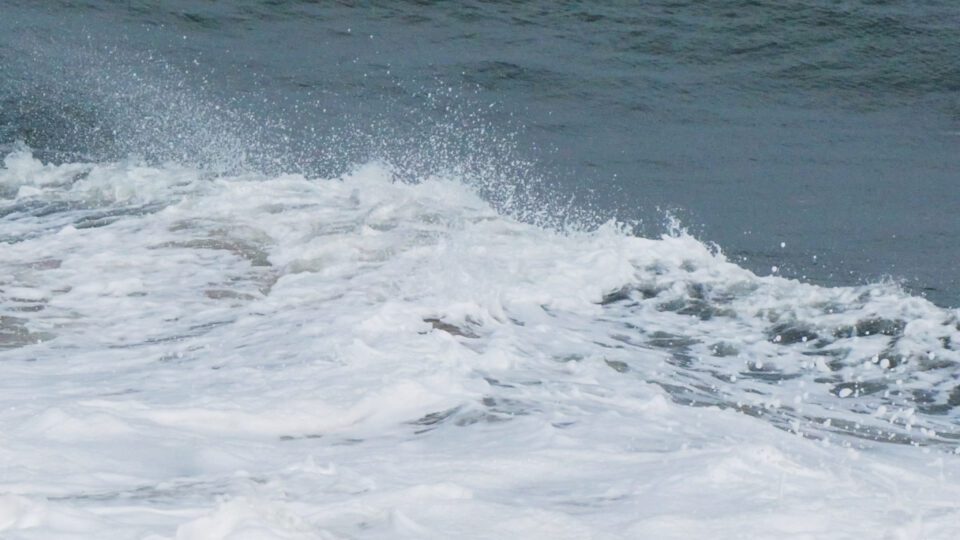
The ocean provides a striking visual counterpoint to their circumstances. Its vastness suggests abundance, yet the men have limited access to the water surrounding them, exposing an uncomfortable contradiction between natural resources and their distribution. Images of foaming waves unfold alongside the repetitive gestures of washing, while the seawall behind the workers marks a landscape shaped by reclamation and development. The film recalls the environmental concerns explored by Zina Saro-Wiwa, whose moving-image practice has examined identity, ecological change and the legacy of oil extraction in the Niger Delta. Both artists consider how economic interests transform landscapes and affect the communities that inhabit them. Ashadu, however, keeps her focus closely on individual experience, allowing the men’s voices to convey the complexity of their circumstances without reducing their lives to illustrations of inequality.
The film’s concerns extend into a series of paintings on moulded carpet panels and new works on paper presented across the gallery’s upper floor. The upholstery used in the paintings has been extracted from minivans like those appearing in WAVES, retaining the contours, marks and apertures of its previous life. Ashadu describes this circulation of materials as circular trade, a process through which objects move between contexts and acquire new forms of value. Their transformation from vehicle interiors into painted surfaces brings the history of their use into the exhibition. The material itself becomes a record of movement, connecting the film’s observations of everyday labour with the circulation of commodities.
Masculinity emerges as another significant subject in the works on paper. Men appear beneath blue skies and billowing clouds, while other compositions place them against rose-tinted sunsets, dressed in faux-designer clothing. These details reveal how fashion and consumer culture contribute to the construction of masculine identity, providing ways to express aspiration and establish social recognition. Ashadu is attentive to the emotional significance of these gestures, particularly within circumstances where economic opportunity remains unevenly distributed. Her depictions hold desire and vulnerability in close proximity, giving the men an individuality that extends beyond their working lives. The result is a nuanced examination of how appearance, labour and self-worth intersect.
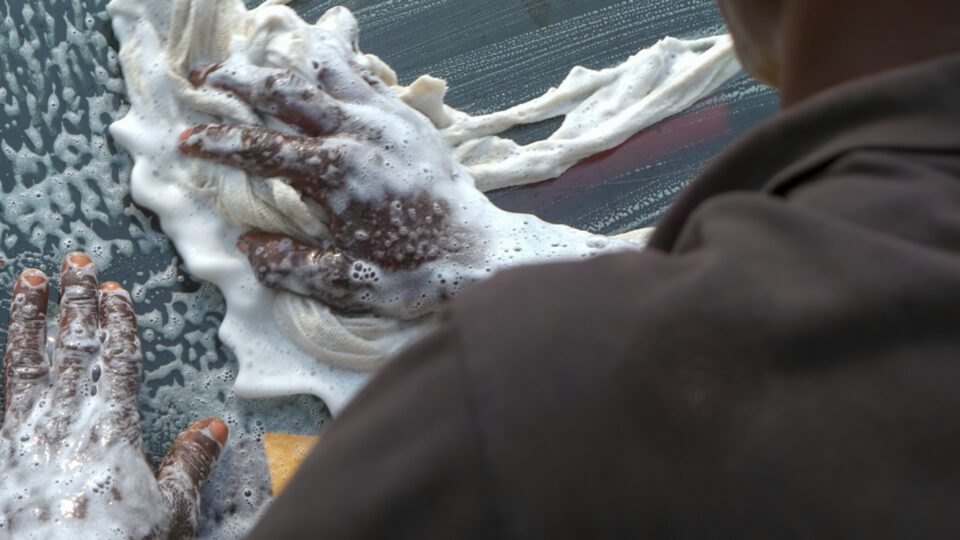
Ashadu’s movement between documentary film and physical materials raises questions about how working lives are represented and who controls the images through which they become visible. Hito Steyerl’s investigations into the circulation of images offer a broader theoretical context, particularly her examination of the political and economic systems that shape contemporary visual culture. Ashadu approaches these concerns through a more intimate engagement with particular people and places, allowing the material conditions of life to inform the work. Her paintings extend the film’s observations, giving objects a presence that carries their previous use into the gallery. Film, painting and sculpture consequently become interconnected ways of examining how images and materials acquire meaning.
Presented within the same gallery programme, Hidden Breeze and RUSHES offer distinct perspectives on the relationship between objects and the lives that surround them. Nabuqi’s installations invite visitors to question the reliability of appearances, while Ashadu traces the economic and personal histories embedded in landscapes, commodities and working bodies. Their differing approaches demonstrate the breadth of contemporary artistic enquiry, from questions about perception to investigations of labour, migration and social identity. An artificial plant and a fragment of minivan upholstery become revealing in this context: both carry meanings that exceed their original functions. What remains visible is only part of their story; the rest resides in the histories, movements and human experiences that have shaped them.
Nabuqi: Hidden Breeze is at Sadie Coles HQ, London from 25 November – 20 February.
Karimah Ashadu: RUSHES is at Sadie Coles HQ, London from 2 December – 27 February.
Find out more: sadiecoles.com
Words: Shirley Stevenson
Image Credits:
1. © Nabuqi. Courtesy the Artist and Sadie Coles HQ, London.
2. © Karimah Ashadu. Courtesy the Artist and Sadie Coles HQ, London.
3. © Karimah Ashadu. Courtesy the Artist and Sadie Coles HQ, London.
4. © Karimah Ashadu. Courtesy the Artist and Sadie Coles HQ, London.