Sunil Gupta occupies a significant position in contemporary photography, consistently returning to the question of how visibility is negotiated through the camera and its cultural frameworks. Sunil Gupta: Life with a Camera, 1970 – Now at Kettle’s Yard frames this long trajectory as a sustained engagement with photography in which activism and photographic form are closely interwoven. His photographs move across Delhi, New York, Montreal and London with an attentiveness to how queer life is both produced and constrained by geography, law and cultural memory. The exhibition’s significance lies in its refusal of linear retrospection, instead presenting five decades as a continuous present in which the politics of looking remain unresolved. Gupta’s work insists that photography is a charged encounter between subject, photographer and viewer. In doing so, it anchors a wider conversation currently shaping UK institutional programming, where photography is increasingly treated as both evidence and proposition.
The exhibition at Kettle’s Yard is structured chronologically yet resists any simple narrative, instead grouping works into thematic constellations that shift between documentary street photography, constructed tableau and intimate portraiture. This curatorial approach emphasises repetition and return, suggesting that Gupta’s central concerns – visibility, desire, migration and resistance – recur across decades in altered forms rather than evolving cleanly. Early works such as Friends and Loversand Christopher Street (1976) establish a vocabulary of queer urban life shaped by both liberation and precarity, emerging in the wake of post-Stonewall activism in New York. These images are not simply records of a social milieu but acts of self-inscription within environments that remain ambivalent or hostile to queer presence. The camera here functions as both shield and exposure, a dual condition that persists throughout the show.
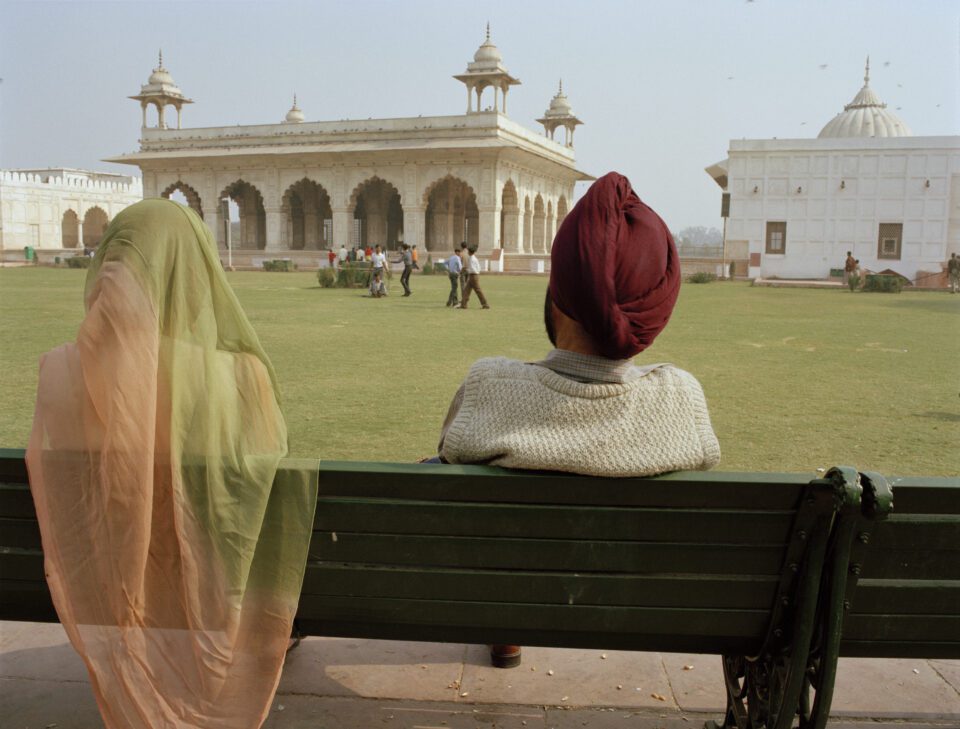
This duality intensifies in Exiles (1986–1987), where staged compositions of anonymous male figures in Delhi cruising sites articulate the pressures of illegality and surveillance under Section 377 in India. Rather than capturing events as they occur, Gupta constructs images that simulate presence while preserving anonymity, producing a visual language for desire under constraint. This strategy of constructed documentation becomes a defining feature of his practice, complicating the distinction between fact and fiction in photographic representation. The exhibition’s sequencing allows these works to resonate with later series such as Pretended Family Relationships (1985–1988), which responds directly to Section 28 in the UK. Here, domestic intimacy and protest imagery are placed in uneasy proximity, exposing the ideological structures that govern what kinds of relationships can be publicly acknowledged or denied.
The middle sections of the exhibition expand these concerns into questions of migration and transnational identity, particularly through Homelands (2001–2003). This series uses diptych structures to connect images across Delhi, London and North America, constructing visual correspondences that resist fixed geographic belonging. Rather than presenting migration as movement from one stable location to another, Gupta frames it as a continuous condition of partial attachment and dislocation. The sequencing of images becomes central to this logic, with meaning emerging through adjacency rather than singular frames.
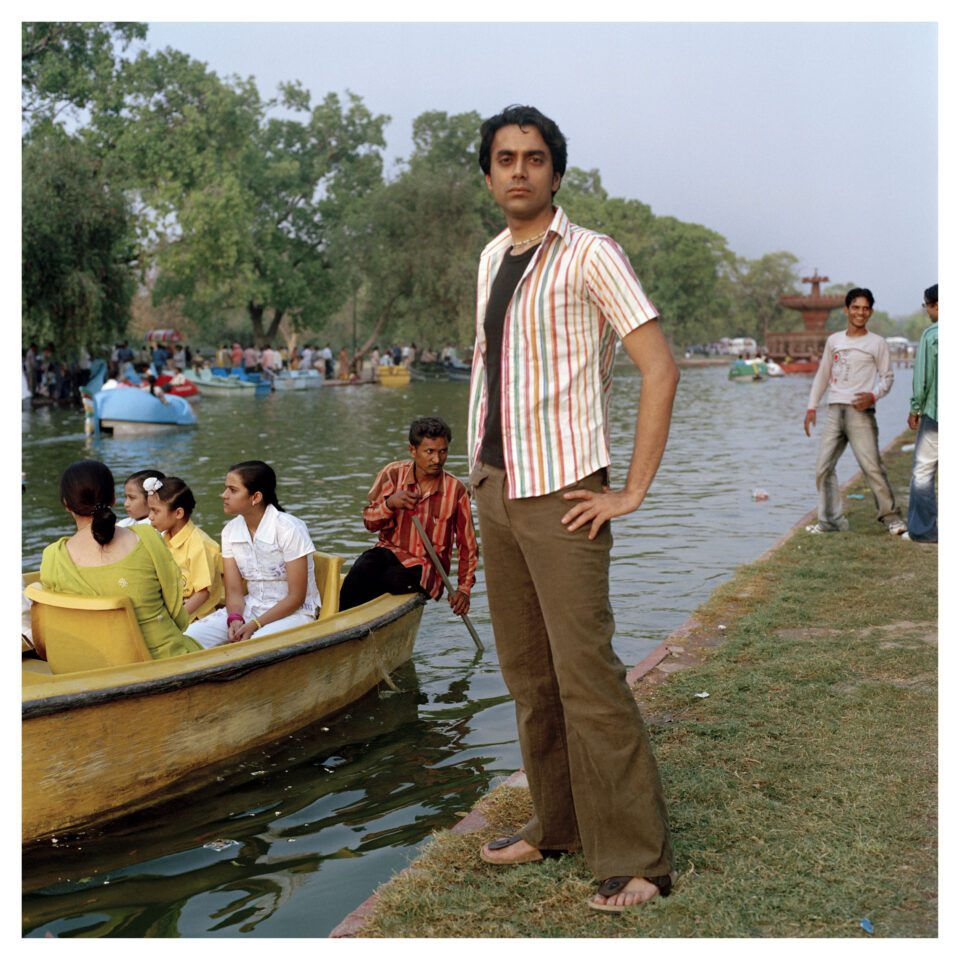
Later works such as From Here to Eternity (1999) and Mr Malhotra’s Party (2007–2012) extend this inquiry into questions of community, loss and survival, particularly in relation to the HIV/AIDS crisis and shifting legal landscapes in India. In From Here to Eternity, self-portraiture following Gupta’s HIV diagnosis is placed alongside images of closed queer venues in South London, producing a visual register of both personal and collective rupture. The exhibition resists isolating biography from wider structural conditions, instead embedding the body within networks of public space, policy and cultural erasure. Across these series, photography records not only events but the conditions under which events become visible or obscured.
The curatorial rhythm of Life with a Camera also foregrounds the evolving technical and material conditions of Gupta’s practice, from analogue street photography to digitally constructed compositions. This shift is not presented as rupture but as continuity, with each technological change absorbed into an ongoing inquiry into representation. The exhibition underscores how Gupta’s engagement with photography has always been tied to questions of access and circulation – who is seen, under what conditions, and through which systems of mediation. This becomes particularly apparent in later works that respond to contemporary protest movements, including images connected to Trans+ Pride marches in 2025, where collective visibility is both celebrated and contested within public space.
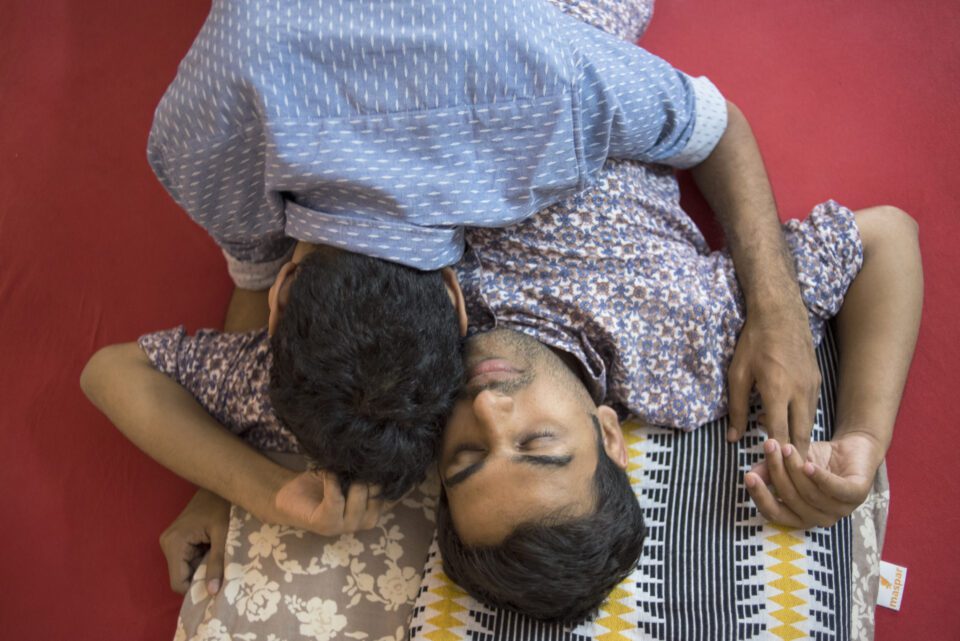
Across the UK in 2026, photography exhibitions are consolidating a renewed focus on portraiture, staging and the constructed image as central sites of inquiry. At Tate Britain, Lee Miller showed us the photographer’s wartime and surrealist practice as a sustained negotiation between document and invention, where image-making becomes both testimony and transformation. At Harewood House in partnership with the National Portrait Gallery, Cecil Beaton: Staging Icons revisits Beaton’s theatrical portraiture, in which costume, lighting and set design collapse the boundary between photographic subject and performance. The exhibition foregrounds photography as a staged environment, where identity is produced through artifice as much as observation. These institutional framings position photography less as a neutral archive than as a constructed field of cultural meaning. Within this context, Gupta’s work appears not as historical exception but as part of a broader interrogation of photographic authorship.
This shift is also visible in exhibitions that directly reframe the language of photographic representation. At Stills, Edinburgh, Åsa Johannesson’s The Queering of Photography uses studio-based portraiture, sculptural staging and collaborative image-making to destabilise the relationship between sitter, photographer and viewer. The work treats the photographic encounter as a negotiated space rather than a fixed document, where identity is formed through posing, framing and repetition. Johannesson’s practice resists the neutrality of the studio, instead foregrounding it as a site where visibility is actively constructed and contested. And at The Photographers’ Gallery, London, the 2026 programme continues institutional attention to photographic authorship through major group and solo presentations, including Japanese Women Photographers: From 1950s to Now (2026), which traces expanded histories of photographic production and challenges established narratives of visibility and canon formation. Across these contexts, photography is repositioned as a medium defined not by capture but by construction.
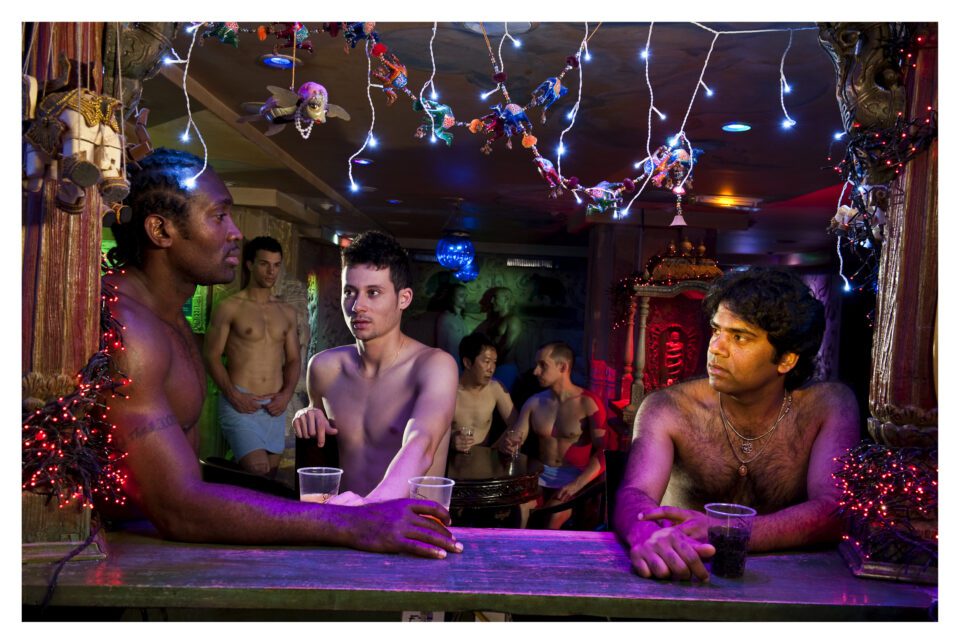
Sunil Gupta: Life with a Camera, 1970 – Now makes visible is not only the evolution of an artist but the shifting ontology of photography itself within contemporary culture. As UK institutions increasingly foreground photographic practice as a central language of exhibition-making, the medium is being asked to carry multiple and sometimes contradictory demands: documentary clarity, conceptual abstraction and affective immediacy. Exhibitions such as Johannesson’s The Queering of Photography demonstrate how photography is now understood as relational rather than solely a transparent window onto the world. Within this context, Gupta’s work resists resolution, insisting instead on visibility as a condition that is continually produced, negotiated and destabilised. Photography here is not a means of fixing identity, but a process through which identity is continually reassembled in relation to others.
Sunil Gupta: Life with a Camera, 1970 – Now is at Kettle’s Yard, Cambridge 19 September 2026 – 31 January 2027: kettlesyard.cam.ac.uk
Words: Shirley Stevenson
Image Credits:
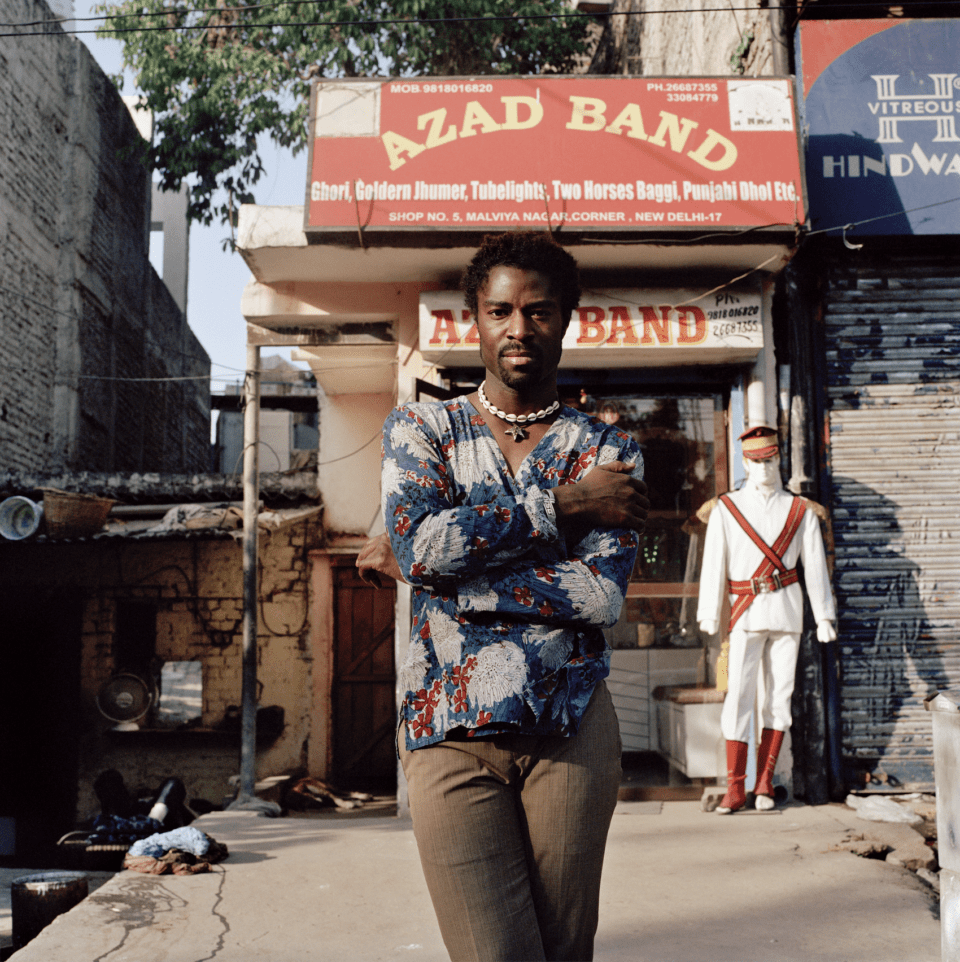
1. Sunil Gupta Diepiriye (2007). Images courtesy the artists and Hales Gallery Materià Gallery, SepiaEye, Stephen Bulger Gallery and Vadehra Art Gallery. © Sunil Gupta and Charan Singh. All Rights Reserved, DACS 2025.
2. Sunil Gupta, Red Fort –3 (2004) from Tales of a City: Delhi (2004). Images courtesy the artists and Hales Gallery, Materià Gallery, SepiaEye, Stephen Bulger Gallery and Vadehra Art Gallery. © Sunil Gupta. All Rights Reserved, DACS 2025.
3. Sunil Gupta, Images courtesy the artists and Hales Gallery Materià Gallery, SepiaEye, Stephen Bulger Gallery and Vadehra Art Gallery. © Sunil Gupta and Charan Singh. All Rights Reserved, DACS 2025.
4. Sunil Gupta, Sonal #1 (2015) from Dissent and Desire (2015). Images courtesy the artists and Hales Gallery, Materià Gallery, SepiaEye, Stephen Bulger Gallery and Vadehra Art Gallery. © Sunil Gupta and Charan Singh. All Rights Reserved, DACS 2025.
5. Sunil Gupta, 5 (2010) from Sun City (2010). Images courtesy the artists and Hales Gallery, Materià Gallery, SepiaEye, Stephen Bulger Gallery and Vadehra Art Gallery. © Sunil Gupta. All Rights Reserved, DACS 2025.