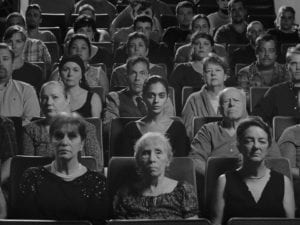
Nan Goldin, born in Washington D.C. in 1953, has spent over four decades documenting human intimacy, friendship, addiction and loss with an unflinching eye. Her work has been exhibited in institutions around the world – from MoMA, New York, to Tate Modern, London, the Centre Pompidou, Paris and Moderna Museet, Stockholm – cementing her reputation as one of the most influential photographers of her generation. However, her new exhibition at Pirelli HangarBicocca, This Will Not End Well, offers a different lens. For the first time in Europe, the focus is on Goldin as a filmmaker, introducing commissions that transform the space into a sensory village of images, sound and architecture.
“I have always wanted to be a filmmaker. My slideshows are films made up of stills,” Goldin has said. The exhibition gives these films room to breathe. Each installation occupies a structure designed by Hala Wardé, tailored to the scale and emotional tenor of the work it houses. The result is a series of interconnected spaces where memory, intimacy and trauma are explored without hierarchy, and where the boundaries between life and art, observer and observed, dissolve. The exhibition’s title, This Will Not End Well, suggests a dark and foreboding atmosphere, yet it also carries warmth and irony, echoing Goldin’s enduring vitality and her capacity to find joy in even the darkest of moments.
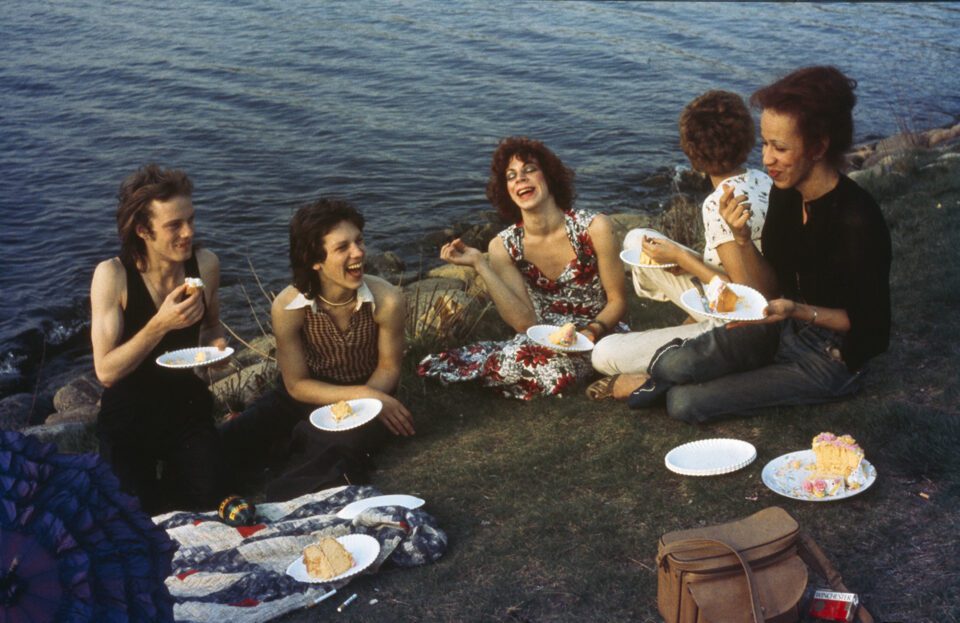
The Ballad of Sexual Dependency (1981–2022), Goldin’s defining work, charts her friends and lovers over decades, capturing moments of vulnerability, desire and fleeting joy. First shown in underground clubs and alternative venues in New York, it has evolved continuously, layering new images and sounds. Goldin’s approach to intimacy aligns her with contemporaries such as Cindy Sherman, whose self-portraits interrogate identity, and Sophie Calle, whose work investigates personal boundaries. Yet her images are distinguished by their empathy and a refusal to separate private life from the social currents shaping it.
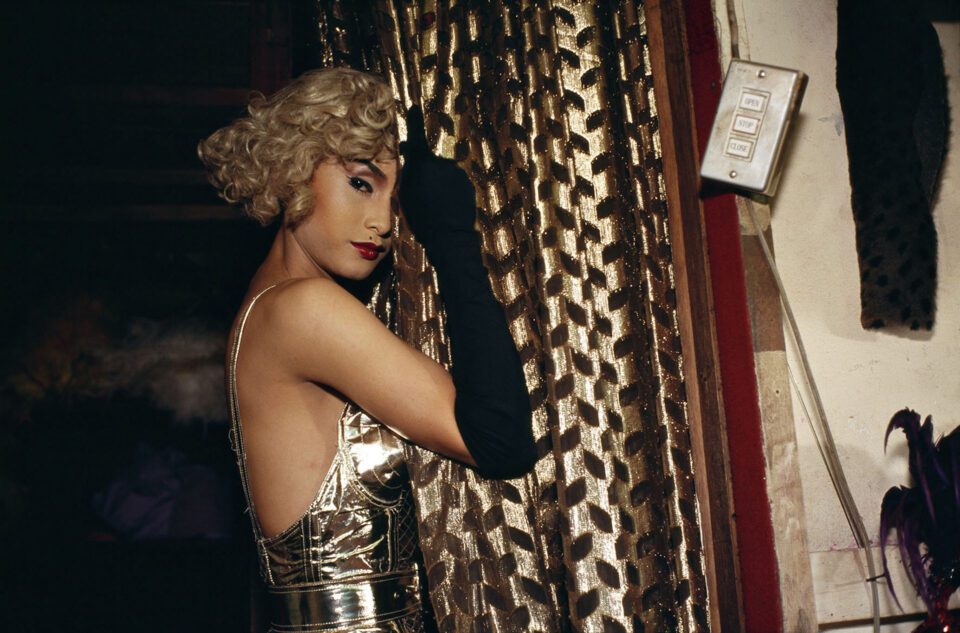
The Other Side (1992–2021) pays homage to her trans friends, documenting them across decades with sensitivity and dignity. Photography becomes both archive and witness, a means of preserving lives often excluded from mainstream history. In this sense, Goldin’s practice resonates with artists such as Carrie Mae Weems and other documentarians who insist on visibility as a political and aesthetic act. Sisters, Saints, Sibyls (2004–2022) confronts familial trauma and suicide, restaged in the “Cubo” at Pirelli HangarBicocca with its soaring 20-metre ceiling. The installation retains its original power, including two wax figures – a girl in a bed and a man on a stand—viewed from above. Elsewhere, Fire Leap (2010–2022) explores childhood, Memory Lost (2019–2021) navigates drug withdrawal, and Sirens (2019–2020) captures ecstasy and its perils. These works reveal Goldin’s unflinching attention to life’s extremes.
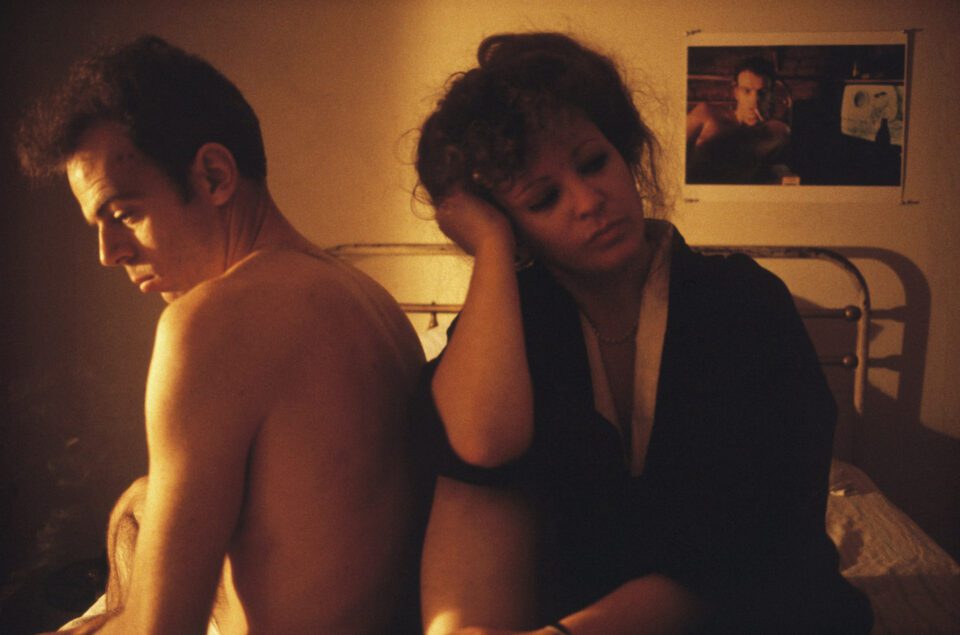
In Milan, two new slideshows debut. You Never Did Anything Wrong (2024), Goldin’s first abstract work, meditates on myth, eclipses and life cycles, while Stendhal Syndrome (2024) engages Ovid’s Metamorphosis, juxtaposing mythological narratives with portraits of friends. The result is a dialogue across time between personal experience and historical reference, underscoring Goldin’s enduring curiosity.
Sound is central to the exhibition. Visitors encounter a new installation, Bleeding (2025), by Soundwalk Collective, whose work with Goldin includes projects such as the Golden Lion-winning documentary All the Beauty and the Bloodshed (2022). Using field recordings from previous iterations of her exhibitions, the sound installation continuously recomposes through a custom instrument suspended in the space, saturating the architecture with shifting tonalities. Visitors move through a landscape of sight and sound, entering Goldin’s cinematic village and experiencing her work as a multi-sensory environment.
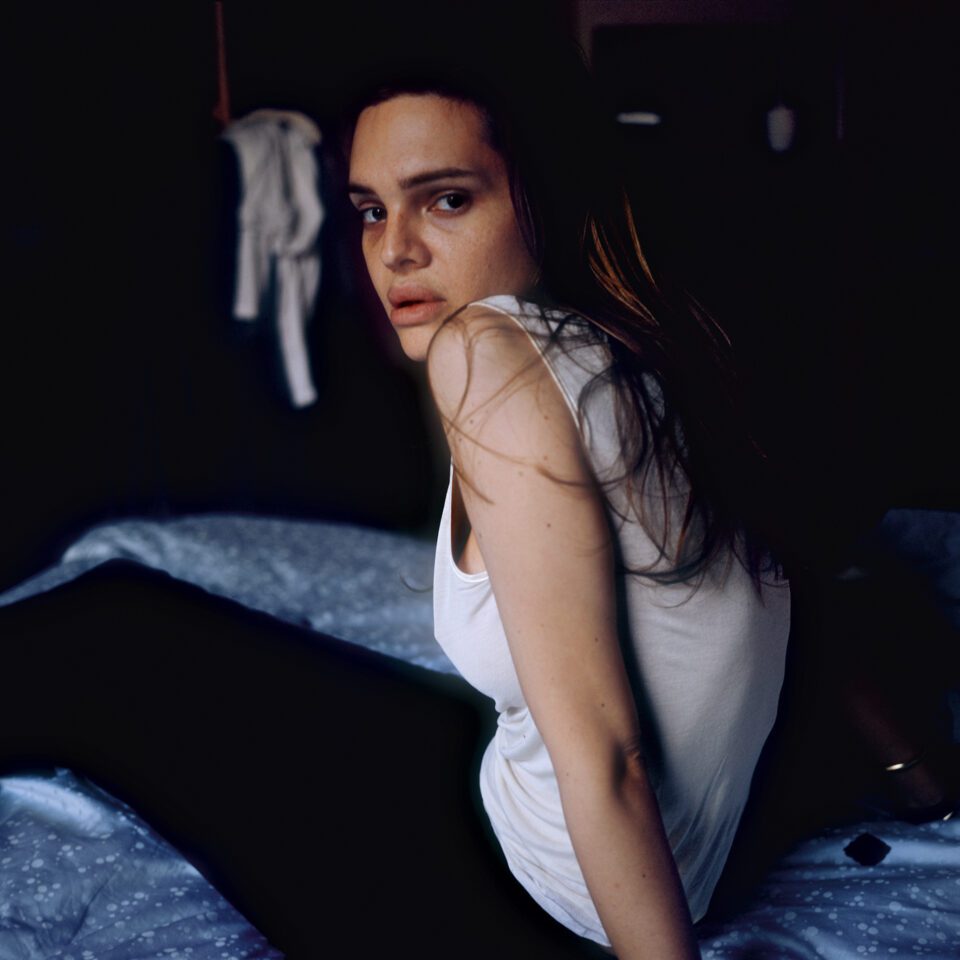
Goldin’s influence stretches beyond galleries. Her diaristic, intimate style has reshaped fashion photography and visual culture, foregrounding authenticity, vulnerability and the personal as political. Contemporary photographers such as Petra Collins and Tina Barney share this commitment to visibility and intimacy, yet Goldin’s work maintains a singular tension between revelation and restraint. Activism is inseparable from Goldin’s practice. She founded P.A.I.N. (Prescription Addiction Intervention Now) in 2017, holding the Sackler family accountable for their role in the opioid crisis. Works like Memory Lost are inseparable from this engagement, demonstrating art’s potential to effect cultural change.
In Milan, Goldin’s work is presented with unparalleled ambition. Curated by Roberta Tenconi with Lucia Aspesi, the exhibition situates the slideshows in dialogue with architecture, sculpture and sound. Spaces echo La Chapelle de la Salpêtrière, Paris, where Sisters, Saints, Sibyls was first shown, allowing visitors to move through the forty-year arc of Goldin’s career. Ceiling heights, wax figures and ambient sound all enhance the narrative, producing an experience that is contemplative, sensory and profoundly human.
This Will Not End Well is an encounter with Goldin’s life-long practice, cinematic, architectural and immersive. It positions her alongside transformative female artists while underscoring her singularity, confronting the fragility of life, the persistence of memory and the power of bearing witness. Goldin’s slideshows, films made of stills, become portals into lived experience, illustrating the fluidity of medium and the continuum of human experience. As visitors navigate the exhibition, they traverse moments of love, euphoria, trauma and addiction, punctuated by Goldin’s ironic humour and tenderness. The work refuses neat closure, instead reflecting life’s unpredictability while affirming human connection. Milan’s installation offers a space in which the personal and collective, the intimate and the monumental, coexist, making the exhibition both a culmination and a revelation. Ultimately, This Will Not End Well is ambitious, immersive and humane. Goldin appears as filmmaker, chronicler, activist and poet, inviting audiences to inhabit her world, witness her gaze and reflect on the fragility and resilience of life. For those familiar with her work, it consolidates her legacy; for newcomers, it provides an unforgettable introduction. Across four decades and multiple continents, Nan Goldin continues to stand as a defining force in contemporary art, documenting life’s extremes and subtleties with empathy, courage and clarity.
This Will Not End Well is at Pirelli HangarBicocca, Milan, until 15 February.
Words: Anna Müller
Image Credits:
1. Nan Goldin, Sunny in my room, Paris, 2009 © Nan Goldin. Courtesy Gagosian.
2. Nan Goldin, Picnic on the Esplanade, Boston, 1973 © Nan Goldin. Courtesy Gagosian.
2. Nan Goldin, Brian and Nan in Kimono, 1983 © Nan Goldin. Courtesy Gagosian.
3. Nan Goldin, Sunny in my room, Paris, 2009 © Nan Goldin. Courtesy Gagosian.
4. Nan Goldin, C as Madonna in the dressing room, Bangkok, 1992 © Nan Goldin. Courtesy Gagosian.