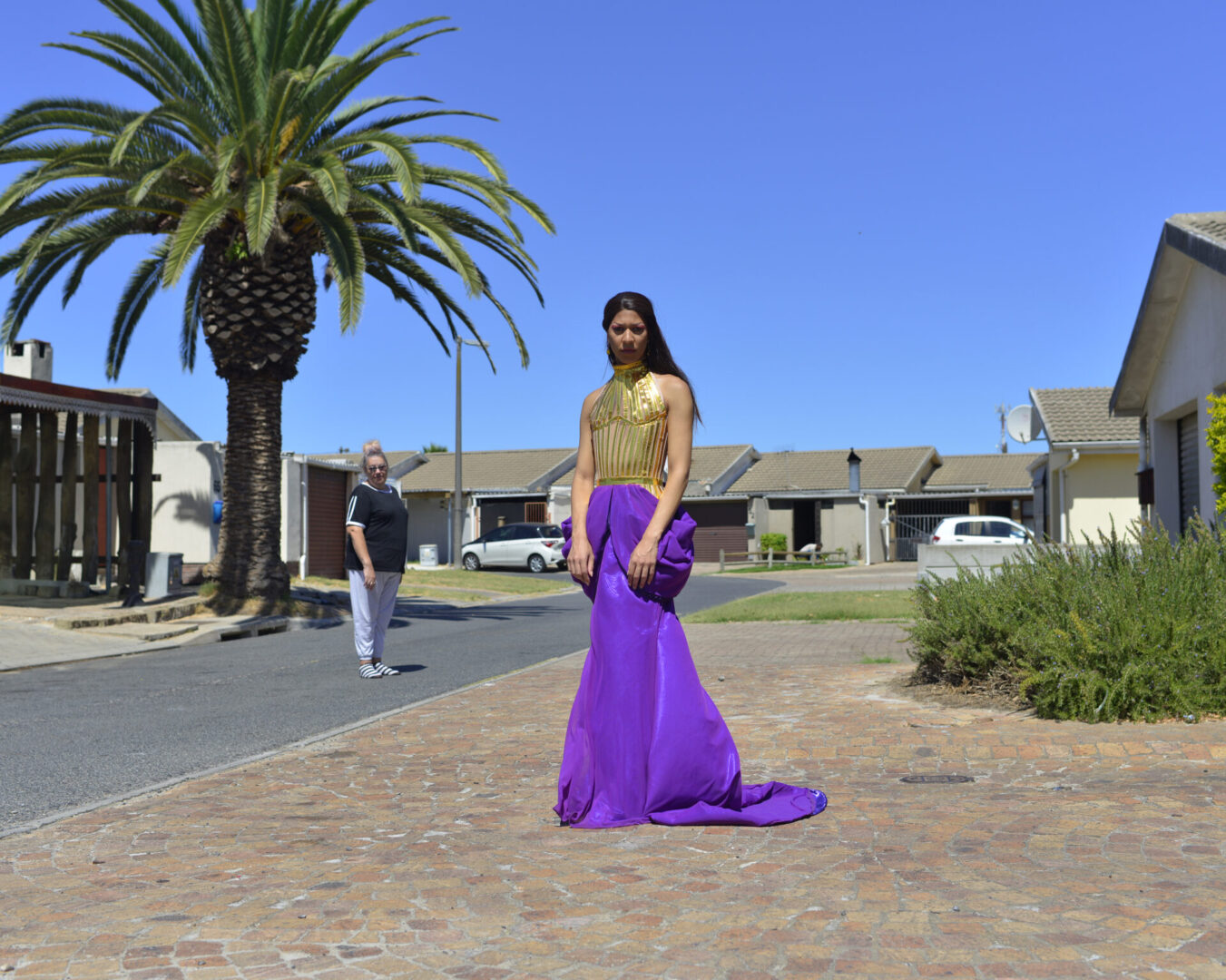
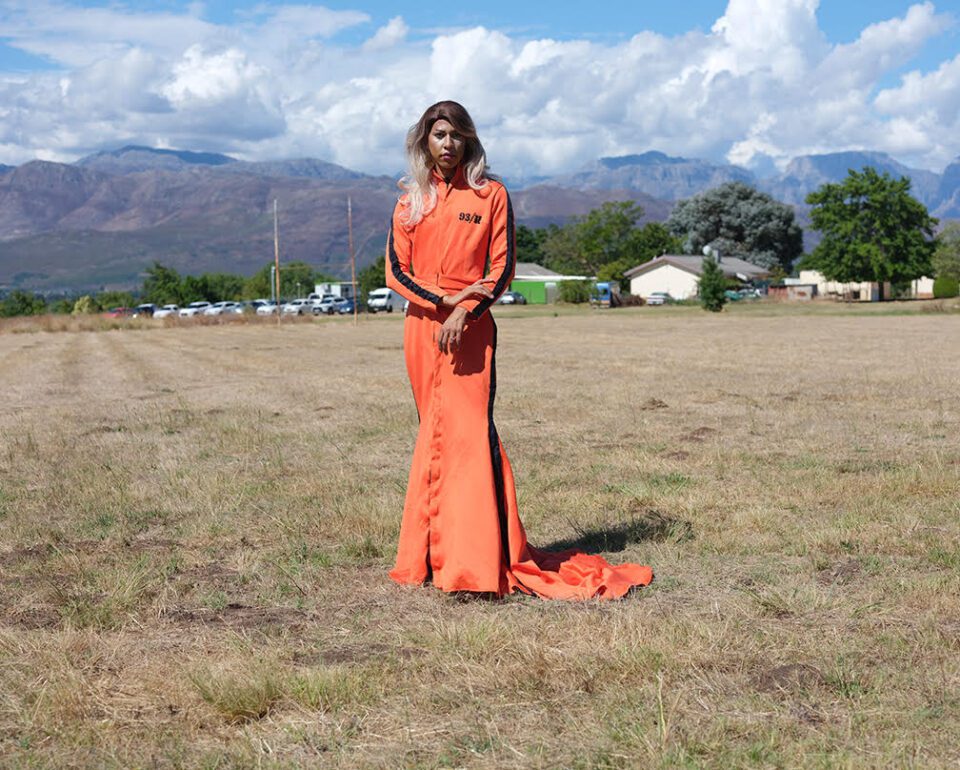
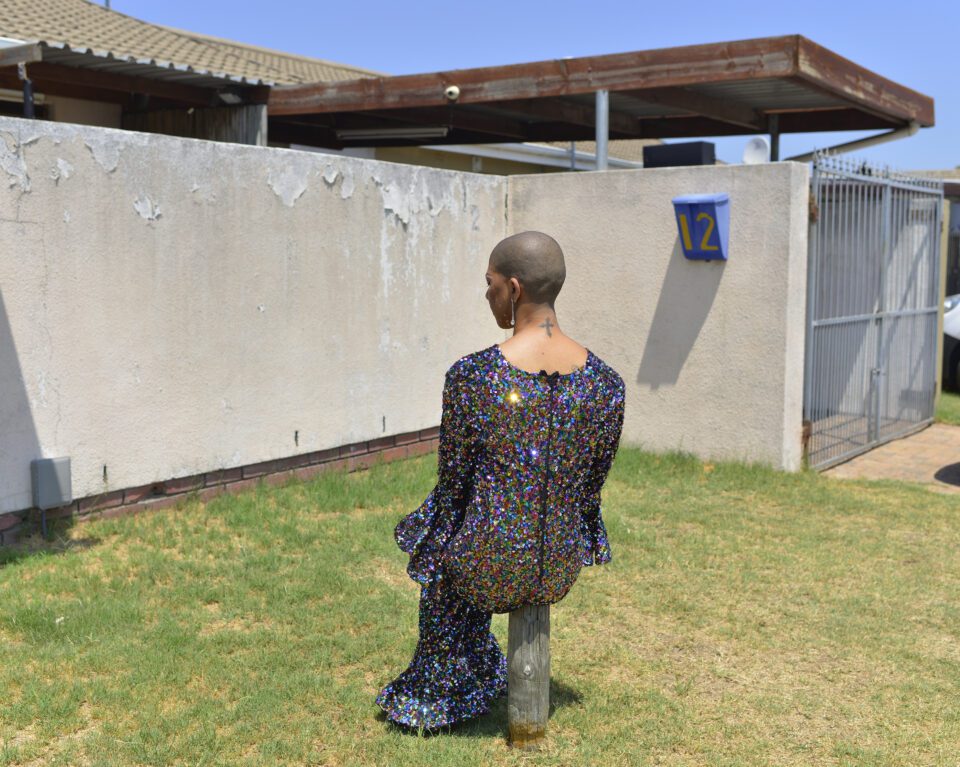
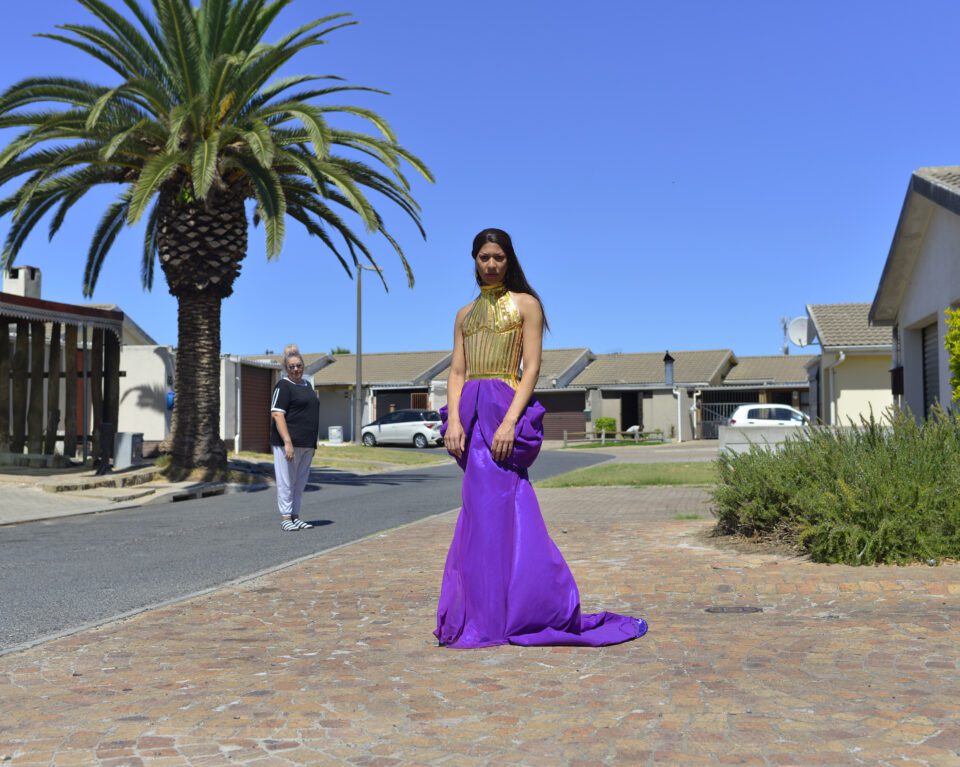
In 2022, Michelle Sank encountered a stranger on a Cape Town Promenade and spontaneously asked to take their photograph. It became the first in a powerful body of work, capturing the city’s drag queens. Drag Daughters follows six young men who grew up in townships, often facing rejection or having to hide their identities, who now strive to make a difference in their communities. Now on display at Het Zuid-Afrikahuis in Amsterdam, the series includes empowering portraits that move beyond the conventional depictions of drag in pageants or nightclubs, instead placing them in unassuming or domestic settings. In a country still navigating the legacies of Apartheid, alongside ongoing social challenges, the images speak powerfully of visibility and change. We spoke to Sank about the exhibition, why she was drawn to Cape Town’s drag scene and why it is increasingly important to capture the country’s marginalised figures.
A: Take us back to the start. How did you begin working as a photographer?
MS: My career began during my BA in Fine Art at The Michaelis School of Art in Cape Town, South Africa in the late 1970s. In the final year of my degree, I had the opportunity to study a photography module. I had little prior interest in the medium so I decided to use the course as a chance to explore something new. It proved to be a light-bulb moment, and the camera became a voice of personal expression. I found a way to visualise and interpret experiences that I had been unable to achieve through painting or sculpture.
A: What first attracted you to Cape Town’s drag culture?
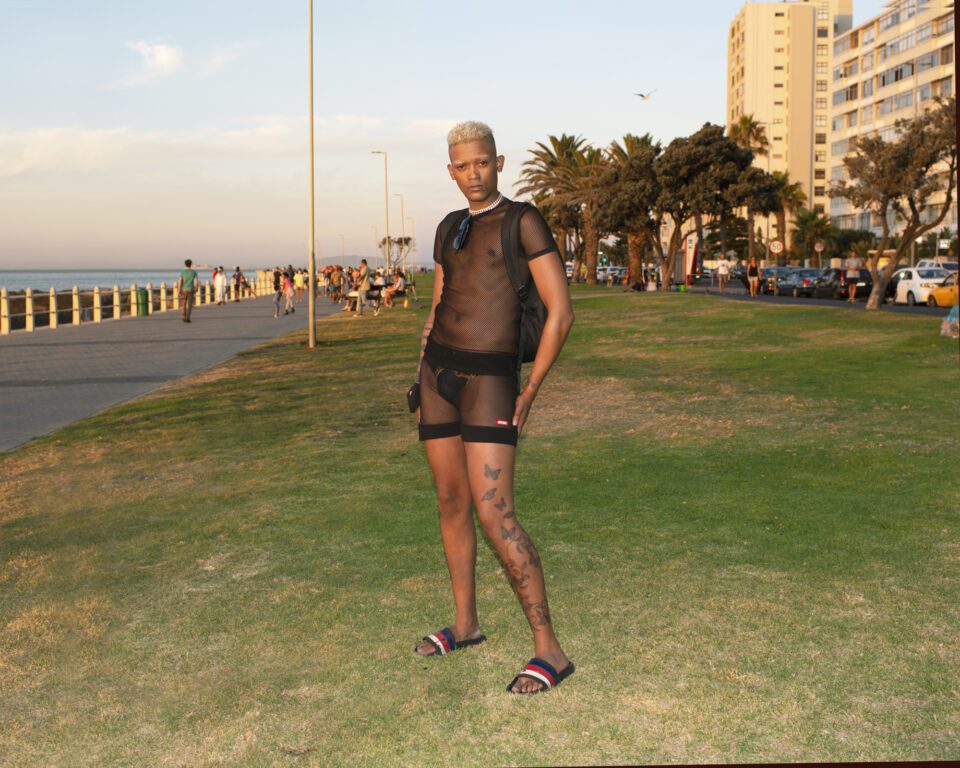
MS: In 2022, I went to see my ageing mother in Durban. I decided to spend some time in Cape Town, using the trip as a way to try and cope with the upset of her advanced dementia. For the first time, I took my camera with me. The day I landed, I stepped out with great excitement onto the Sea Point Promenade, which evoked memories of time spent there as a student. Almost immediately, I noticed this extraordinary figure dressed in fishnet clothing coming towards me. I approached him asked him if I could take his photograph. His name was Jermaine, and he responded “Yes of course you can – I have just been crowned Miss Drag South Africa.” After working with him there, we agreed to meet again at his hotel, so I could capture some images when he was wearing his performative clothing. My longstanding interest in subcultures, rituals, dress, and cultural coding was reignited through this encounter, sparking both a social research interest and a new avenue for my creative exploration.
A: Your subjects are removed from theatrical settings, captured in more domestic or neutral settings. Why did you choose these backdrops?
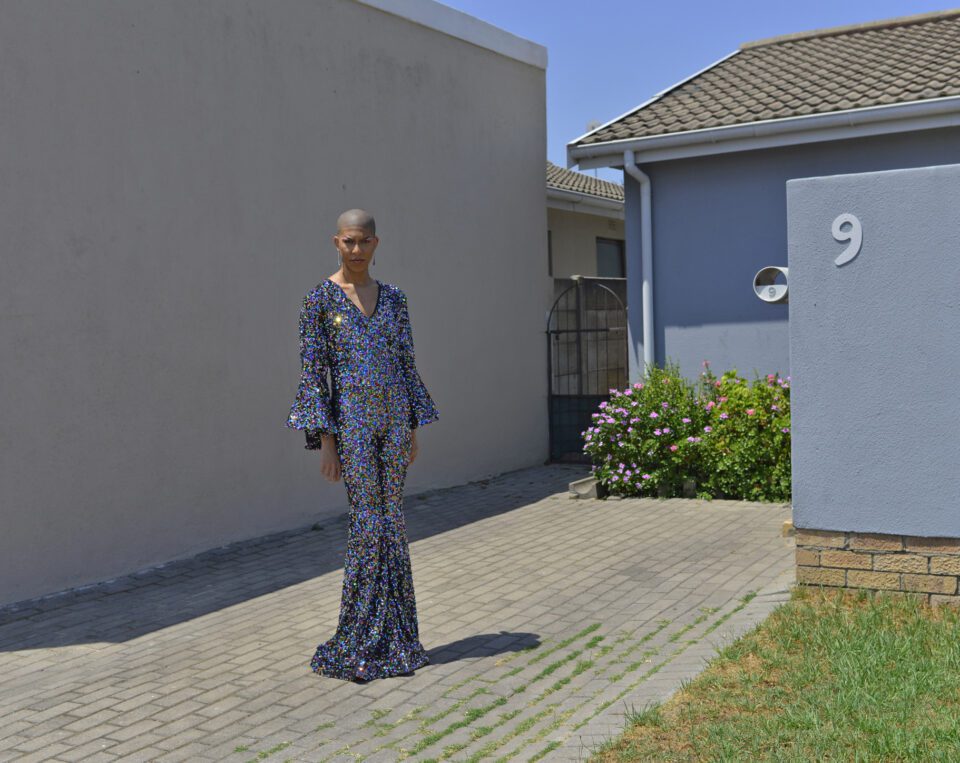
MS: This originated from my first shoot with Jermaine in his hotel room, where I enjoyed the quietness of the environment. I am interested in the tension between the extraordinary and the everyday and I wanted the settings to feel familiar rather than performative. When subjects are photographed on a stage or in a clearly theatrical environment, it can start to dictate how we read them — everything becomes heightened, symbolic or tied to spectacle. Placing them in more neutral surroundings enables the viewer to focus on smaller gestures, expressions, and vulnerabilities that might otherwise be overshadowed. It’s less like characters being constructed and more like people existing in real time. There is also an intentional flattening of hierarchy in those environments. Theatrical spaces often separate the performer from the audience, whereas more neutral settings can collapse that distance. I wanted the images to pose questions as to who these people are when there is no requirement to perform.
A: How did you collaborate with your subjects to ensure the final image captured their personality?
MS: I have always worked collaboratively with my sitters, whether on the street or in more carefully chosen settings. My approach is rooted in allowing people to behave naturally within the space, capturing the moments where they reveal aspects of their individuality or personality. The relationship is very much one of give and take; the process is symbiotic rather than voyeuristic, with mutual respect and authenticity being central throughout the process. From my perspective, the act of photographing is an expression of love – one through which I seek to convey celebration, wonderment and appreciation.
A: Was there a particular encounter or portrait that stands out as a favourite?
MS: It was meeting Laylah. There was an immediate connection between us – a genuine warmth that has led me to see him every year when I return to Cape Town. His story is one of resilience and survival. Rejected by his family, he was forced to live on a train for a time and later moved in and out of relatives’ homes – eventually finding a partner with whom he now shares his life. There is a deep, unquestioning affection and trust between us that I respect and hold very close to my heart. I have learnt so much from him in relation to humility, human kindness, generosity and a preservation of dignity.
A: Do you feel that your early life in South Africa has informed your creative trajectory?
MS: My past experiences have been the core of my practice. Raised within a family that experienced displacement and adaptation, I developed an early awareness of what it means to exist between cultures. In addition, growing up during Apartheid exposed me to a society structured by division, inequality and exclusion. Witnessing the human consequences of these political and social systems fostered a concern for social justice. The combination of my immigrant family background and my formative years under Apartheid has informed a practice that is both socially engaged and deeply human, and the sensitivity to the lives of those on the margins has remained a defining characteristic of my work. By foregrounding personal narratives, I invite the viewer to consider the relationships between identity, memory and belonging, while highlighting the dignity and strength of those living through change.
A: Many images feel celebratory, whilst carrying political weight. How conscious was that balance?
MS: My photographs often address issues such as class, identity, youth, gender expression, body image or social isolation, but I try to avoid making my subjects appear as symbols of the problem. Instead, I seek to highlight “the spectacular in the ordinary,” emphasising respect and empathy toward people. For the most part, my imagery is a celebration of empowerment, emphasised by my use of light and colour to create both a psychic and spiritual tension. This is part of the politics of my work, where I try to emphasise beauty, dignity and presence, challenging the way these marginalised communities are typically represented.
A: What responsibility does a photographer have in documenting those outside mainstream visibility?
MS: I think the importance of human interaction with one’s subjects is crucial; spending time building connections and affording people the power to be active participants. The ethics of the situation need to be carefully considered so that the vulnerabilities of the sitter are acknowledged. I see environmental portraiture as a way of melding “person and place” into sociological and psychological narratives, while remaining conscious of one’s responsibility toward participants. I am particularly mindful of where the images will be shown and deployed so that they cannot be utilised beyond their intended purpose.
A: You’ve spoken about trauma and individuality in post-apartheid South Africa. How do you see those ideas reflected in the drag scene?
MS: Historically drag pageants and underground spaces were the only places where queer people could find safety and a sense of community. They also represented a direct rebellion against the Apartheid state’s intense control of the individual, in terms of racial classification and strict binary gender roles. During the transition to a post-Apartheid democracy, drag afforded a space to for both Black and white artists to critique racial divisions. Today, performers continue to use the stage to process deep-seated scars and collective anxieties, providing vital emotional and community support as well as visual activism.
A: Why was it important to exhibit these photographs now, in this cultural moment?
MS: Today, there is increased political scrutiny and legislative pushes that target gay and transgender communities, and it is important to provide a strong humanising counter narrative. This has the potential to invite broader audiences to learn about these cultures and break down prejudices. It also provides a public forum for historically marginalised individuals to present themselves as empowered within their chosen lifestyles and to act as a counter mirror to those who wish to persecute.
Drag Daughters is at Het Zuid-Afrikahuis, Amsterdam until 7 July: elliott.gallery
Words: Emma Jacob & Michelle Sank
Image Credit:
1&6. Laylah, Cape Town from the Drag Daughters series.
2. Jermaine alias Miz Cambell from the Drag Daughters series.
3. Laylah, Cape Town from the Drag Daughters series.
4. Laylah, Cape Town from the Drag Daughters series.
5. Laylah, Cape Town from the Drag Daughters series.