Memoryscapes, the second exhibition in Louisiana’s Architecture Connecting series, brings together projects that explore memory and place, bridge heritage and future possibilities, and range from small‑scale interventions to ambitious urban visions. The show brings together two studios whose approaches, while distinct, share an engagement with historical narratives and their relevance to future design. Atelier Tsuyoshi Tane Architects, led by Tsuyoshi Tane, and DnA_Design and Architecture, founded by Xu Tiantian, explore cultural geography through rigorous fieldwork, research and attentive observation. This exhibition presents architecture as storytelling, where past narratives inform present choices and shape futures. Both studios argue that architecture is shaped by cultural memory and the physical and social environment, inviting reflection on how buildings can act as repositories of history and frameworks for change. Visitors are encouraged to see architecture as a living discourse rather than static form.
Tane’s methodology, which he calls “archaeology of the future,” treats time, memory and place as active components of design. His work begins with detailed studies of local building methods, urban patterns, rituals and geological histories, producing multi‑layered narratives that inform contemporary interventions. The architecture that emerges reinterprets historical material in ways that respond to present challenges and open possibilities for tomorrow. 388Farm in Tokyo embodies this approach, preserving existing trees while introducing orchards and gardens along a former waterway. This project creates an urban forest with ecological and cultural resonance, crafting a space that nurtures community and environment. Another project, the renovation of Tokyo’s Imperial Hotel, highlights how heritage architecture can accommodate contemporary use without erasing its origins.
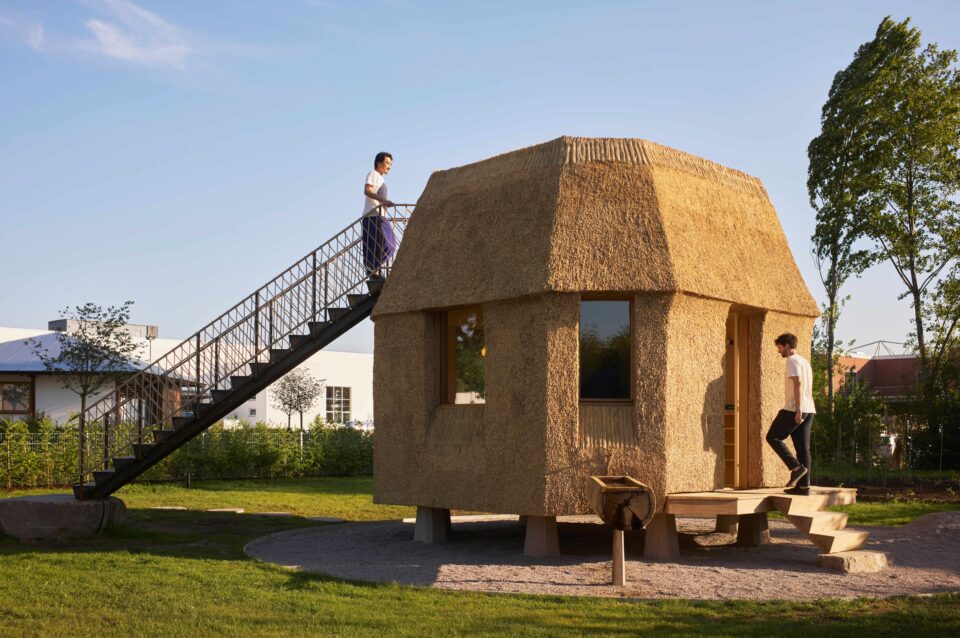
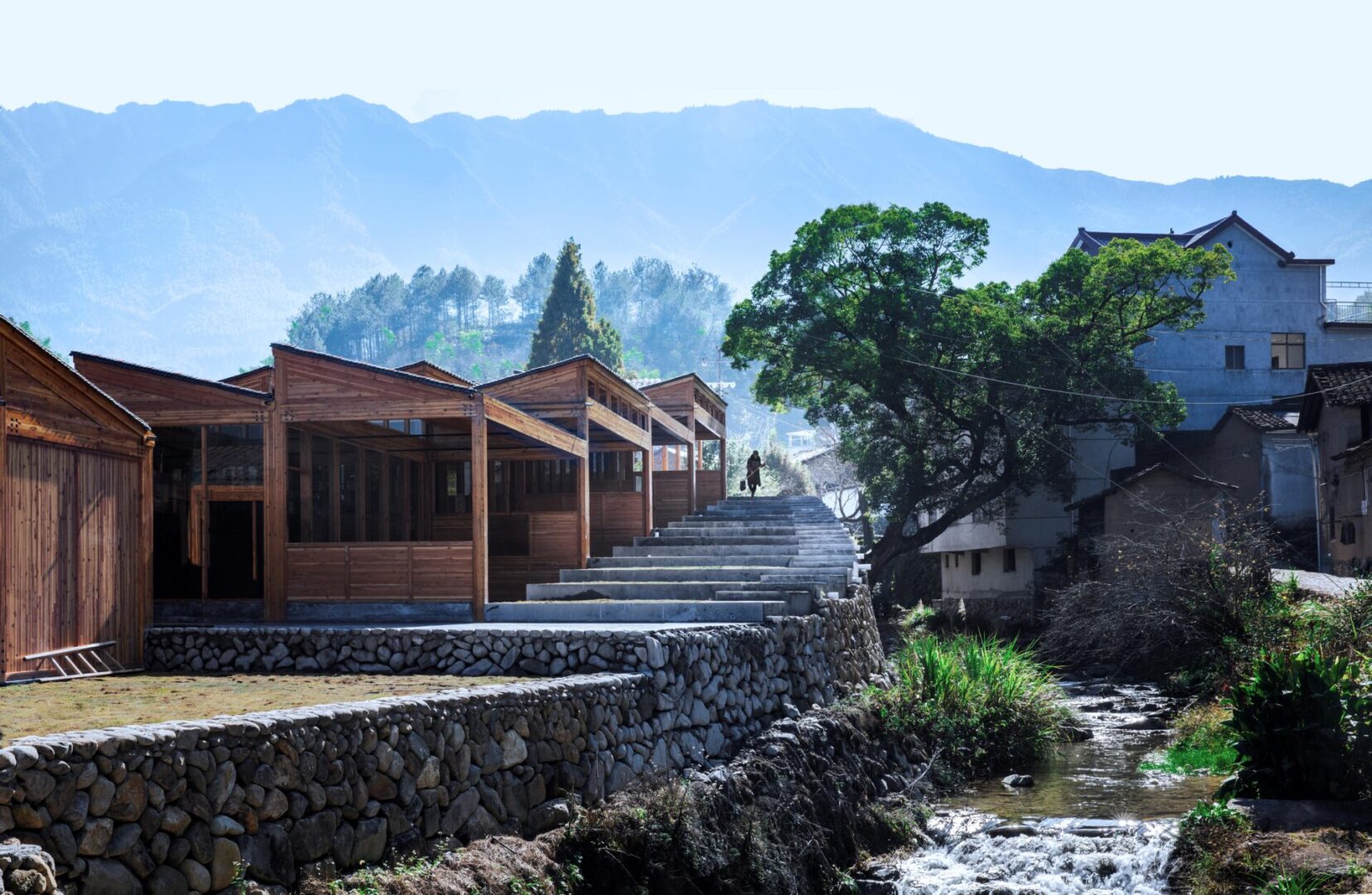
Xu Tiantian’s work engages context with different yet complementary strategies: architectural acupuncture and productionscape. Architectural acupuncture, inspired by traditional Chinese medicine, applies discreet, precise interventions to revitalise rural buildings or sites without comprehensive redevelopment. Xu succinctly explains her philosophy: “We can find many reasons to build, but to create architecture, a building isn’t always necessary.” This approach treats ruins and natural landscapes as legitimate architectural forms capable of generating cultural and spatial value without erasing accumulated histories. Productionscapes combine factories with visitor centres, transforming traditional production sites into enriched environments that support contemporary industry while inviting cultural engagement. In these hybrid spaces, architecture facilitates production processes and offers landscapes for exploration, framing factories as living, dynamic environments.
The work of both Tane and Xu aligns with broader contemporary trends in architecture where layered histories, interdisciplinary research and sensitive interventions shape design practice. Their projects recall the sensibilities of Kengo Kuma, whose tactile materiality engages deeply with place and cultural context; SANAA, whose subtle manipulation of space and light evokes reflection; and Herzog & de Meuron, whose work engages historical layers with contemporary rigor. These studios, like Tane and Xu, demonstrate that architecture can listen to context and mediate relationships rather than merely assert form. By attending to tangible and intangible qualities of place, their work bridges cultural, temporal and environmental registers. This reframes architecture as a medium for dialogue that connects across time and geography.
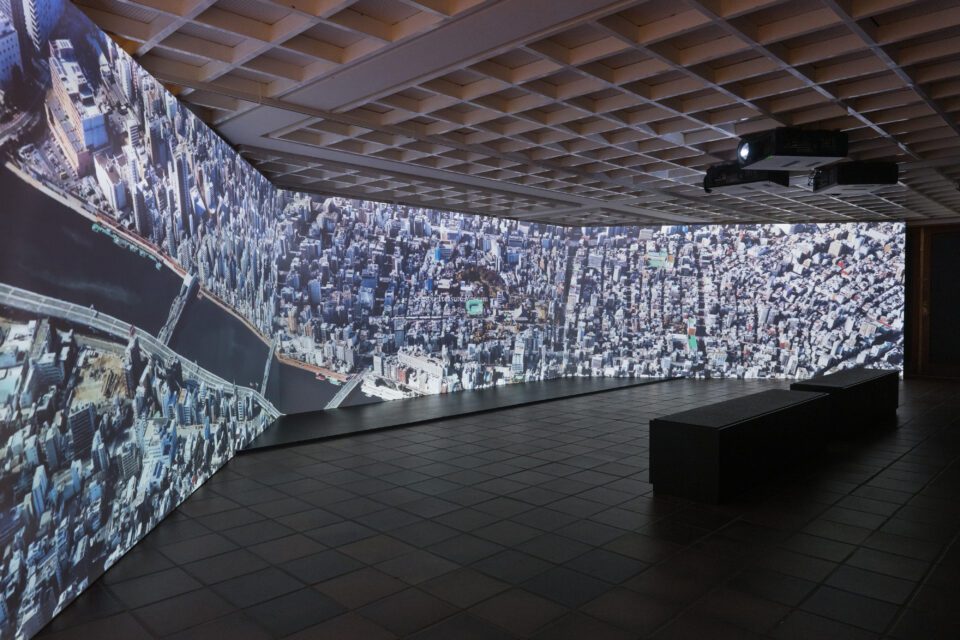
Louisiana Museum of Modern Art provides an institutional context uniquely suited to these explorations, known internationally for a programme that combines rigorous research with visual and spatial engagement. Located above the Øresund in Denmark, the museum presents a rotating series of exhibitions that engage art, architecture and cultural discourse in expansive ways. The first exhibition in the Architecture Connectingseries, Living Structures (8 November 2024 – 23 March 2025), presented three design studios exploring the intersections of biology, biochemistry and architectural practice in addressing climate and social concerns. Living Structures demonstrated how contemporary architects collaborate with natural systems and disciplinary knowledge beyond architecture to rethink sustainability and built environments. Memoryscapes builds on this trajectory by focusing on memory, cultural narratives and precise methodologies for integrating history with future design imperatives. Louisiana’s programme underscores the museum’s role as an intellectual platform for architectural inquiry.
This exhibition highlights how architecture intersects with anthropology, ecology, sociology and other fields, extending the discipline’s reach beyond conventional boundaries. Both Tane and Xu use fieldwork and research to inform interventions that respond to complex contexts, showing how innovation can coexist with attentiveness to history and place. Urban forests, revitalised production sites and considered rural interventions become spaces for ecological awareness. Memoryscapes invites visitors to explore these creative and thoughtful possibilities, demonstrating that design is informed by narrative as much as by form and function. Architecture emerges as an interpretive lens that helps shape how communities understand their past, inhabit the present and imagine the future.
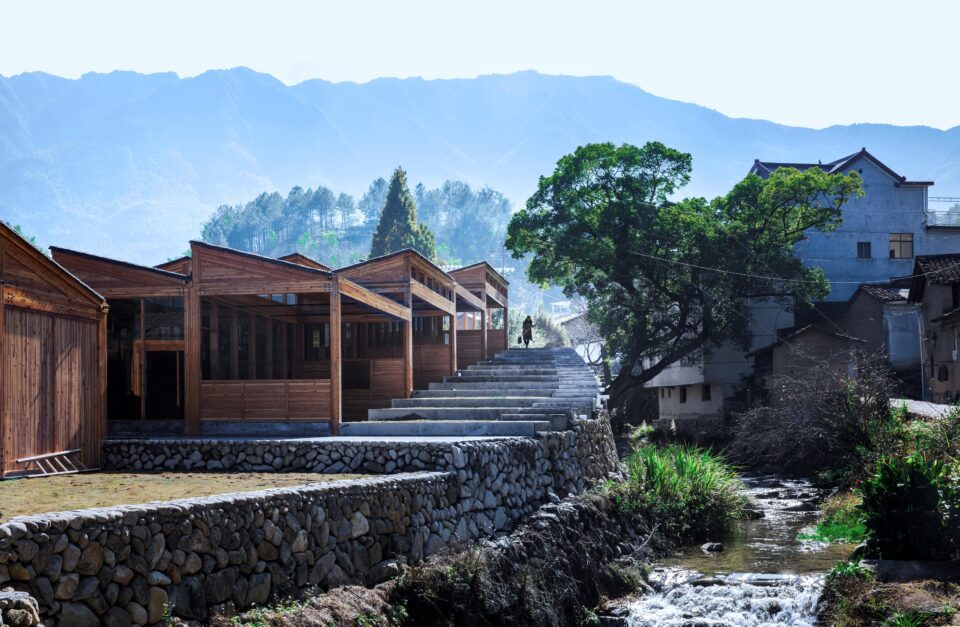
A central thread of the exhibition is the conversation between historical awareness and forward‑thinking imagination. The studios show that engaging with memory need not be conservative, nor innovation inherently disruptive. By excavating historical narratives, observing local conditions and imagining new possibilities, architecture becomes a temporal palimpsest where new stories are inscribed alongside older ones without erasing them. Projects such as 388Farm or Xu’s productionscapes reveal how interventions can maintain historical integrity while generating new social, cultural and ecological value. Louisiana’s presentation situates these works within a broader dialogue about architecture’s cultural responsibilities, encouraging viewers to reflect on how buildings mediate between past, present and future.
Ultimately Memoryscapes is an exercise in architectural empathy, bridging generations, geographies and disciplines. The exhibition reminds us that buildings can be repositories of memory, frameworks for ecological stewardship, and platforms for societal interaction and cultural insight. Tane and Xu exemplify a practice that is both analytical and imaginative, rigorous and nuanced. Their work, alongside the museum’s ambitious programme, demonstrates architecture’s capacity to weave past, present and future into cohesive experiences rooted in human and environmental narratives. Louisiana’s thoughtful curatorial approach ensures that architecture is presented not merely as physical form but as idea, process and dialogue. In doing so Memoryscapes offers a reflective meditation on how design can shape our understanding of time, place and the enduring resonance of built environments.
Memoryscapes is at Louisiana Museum of Modern Art, Copenhagen until 17 May: louisiana.dk
Words: Anna Müller
Image Credits:
1&4. Tofu Factory, DnA, Design and Architecture. Photo: Wang Ziling.
2. Installation view showing the part of the exhibtion presenting Atelier Tsuyoshi Tane Architects. Photo: Camilla Stephan / Louisiana Museum of Modern Art.
3. Vitra Tane Garden House © Courtesy of ATTA and Vitra. Photo: Julien Lanoo.