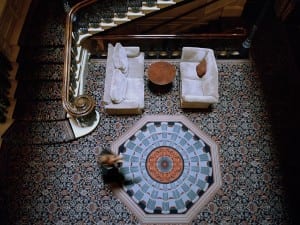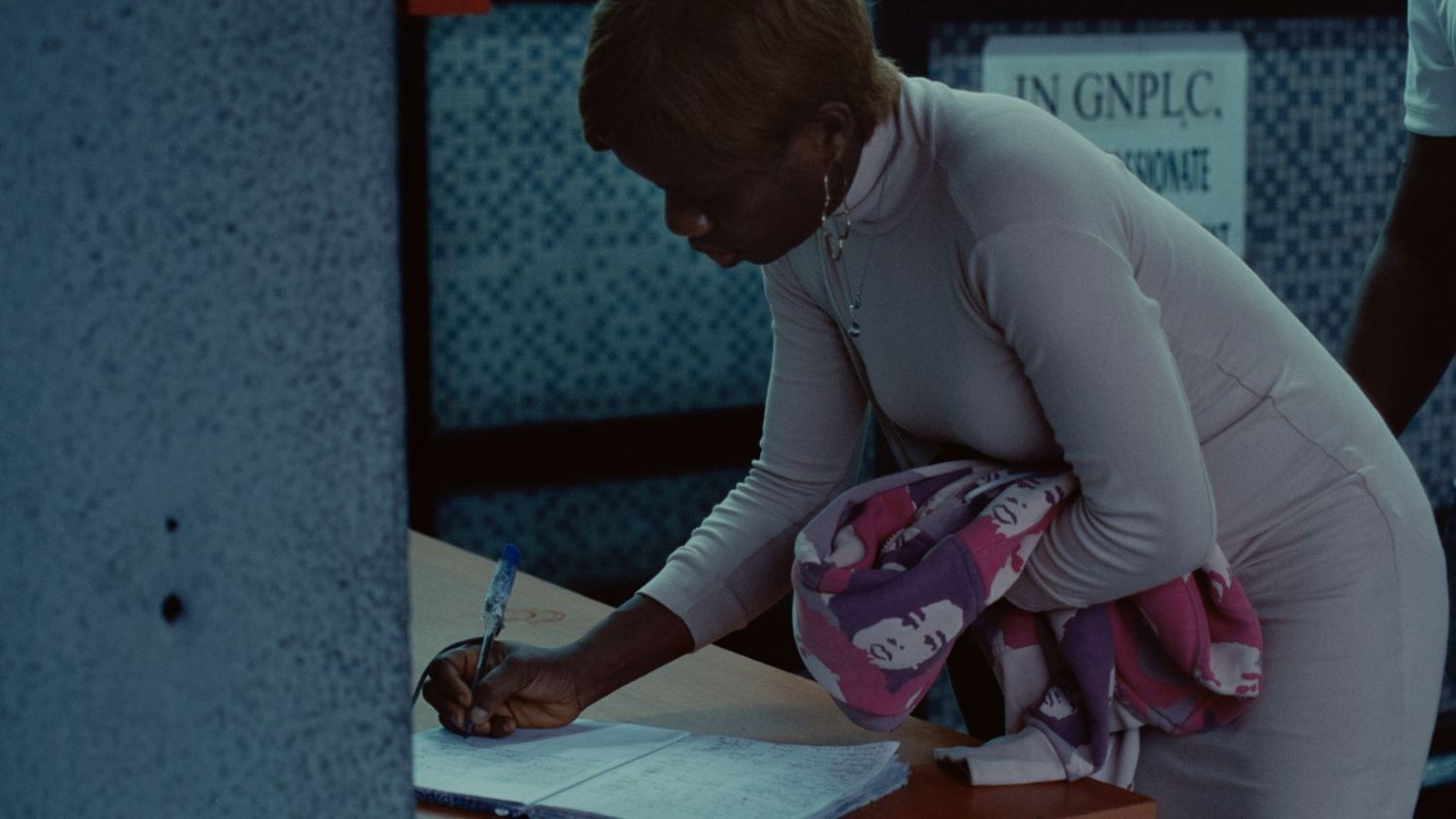
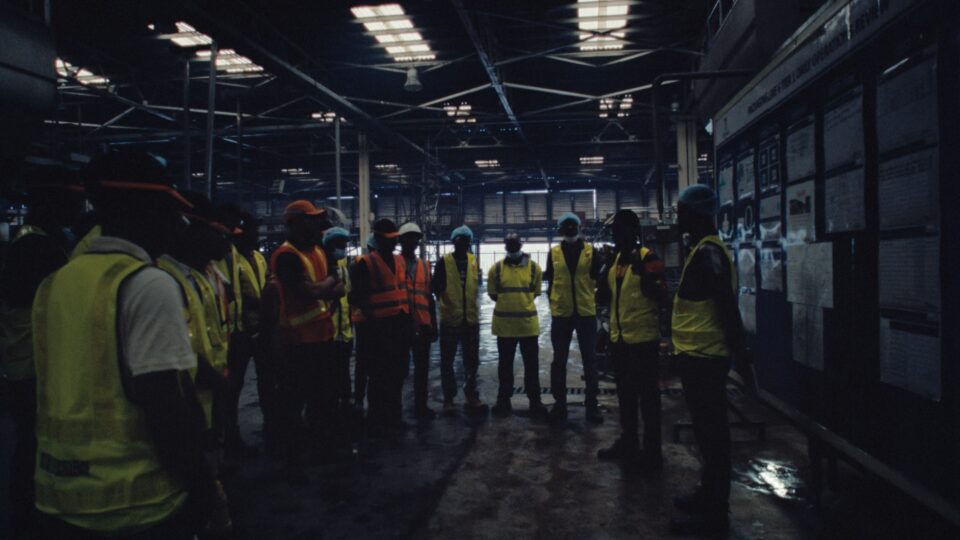
Ayo Akingbade (b. 1994) is an artist, writer and film director. Her short films explore the mundanity of urban life in London’s inner-city boroughs and industrial life in her family’s hometown in Nigeria. Aesthetica Art Prize shortlisted film, The Fist, explores intersecting narratives of legacy, labour and architecture. Akingbade focuses on the 1962 opening of the Guinness factory in Ikeja, Lagos, linking Nigeria’s post-independence era to global industrialisation. The piece observes the factory floor, where the building becomes a central character. Through documenting its inner workings, the artist reveals the quiet politics embedded in daily production and consumption. The piece reflects broader themes of power and colonial legacy. Akingbade’s practice often captures rapid social shifts, grounded in personal and cultural experience. Aesthetica caught up with the artist to chat all things film.
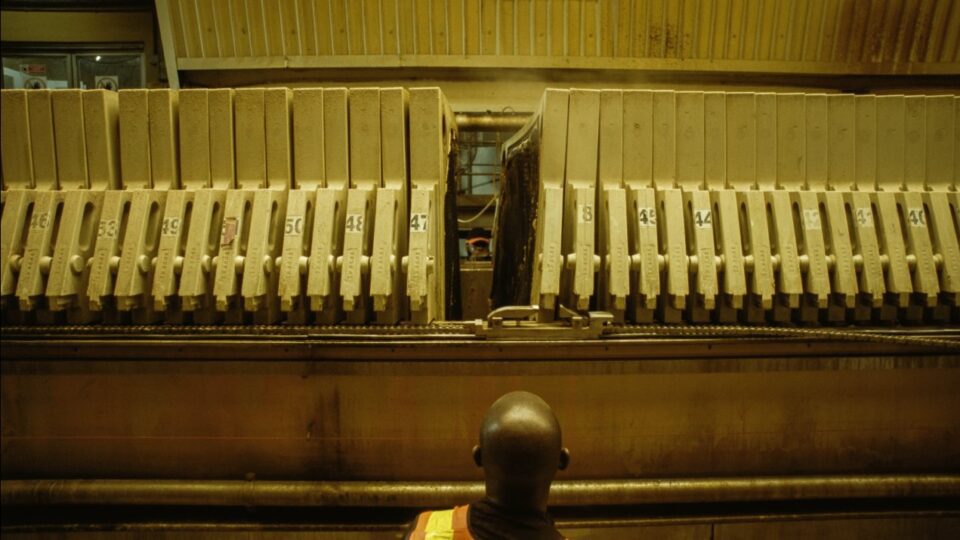
A: Take us back to the start. How did you first begin working as an artist?
AA: I would say when I made my first commissioned short film, Tower XYZ (2016). It was shot in 2015, when I was studying at film school.
A: What drew you to the Guinness factory in Ikeja as a subject?
AA: My first encounter with the building was in 2019, I went to Nigeria for a family burial. I would notice it on daily drives. I figured it was a factory due to its rusty exterior and architecture and the transportation trucks that would regularly be parked on the road side. The Guinness emblem was the thing that transported me back to home and I just wondered what this Anglo-Irish brewing company was doing here. So then I had that “voila” moment that if I was going to come back, I’d like to set it in the Guinness factory.
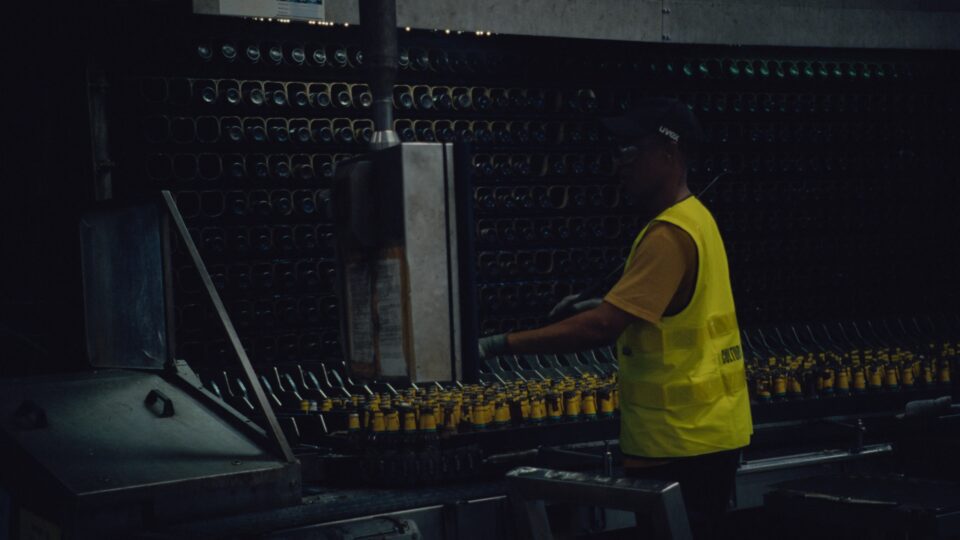
A: In The Fist, the building seems to function like a character. Can you talk about your approach to filming architecture as a living presence?
AA: I think the cinematographer, Pierce, would be better placed to answer this! My aim was to create an account of how the drinks are made and the routine of the factory workers. The building is so rich with history that it already had a dominating presence. The workers are it’s hands and legs, if that makes sense?
A: How does the film speak to broader themes of power and colonial legacy?
AA: I wanted the The Fist to be an experimental fly-on the wall account of the factory. It just happens to be that I’m also Nigerian. It’s more interesting for me that audiences try to decipher their own meaning and understanding of the film, spoon-feeding isn’t my style when it comes to creating artworks.
A: Which themes or histories are you drawn to exploring in the future?
AA: It really depends on the idea, I have been looking at my childhood and my family lineage more than usual lately. I’m interested in forming an ornate spiderweb to better understand why I’m the way I am and why things are the way they are. I find the question of legacy super interesting. I don’t come from an artistically inclined family but we do think creatively. If in my research I discover a link — fantastic! I don’t think the works I make need to reflect my identity or class, but it is easy for me to generate ideas from myself as inspiration, which is why I’m an artist.
The Aesthetica Art Prize is Open for Applications. Win £10,000 and Exhibition. Submit Here.
The Aesthetica Art Prize Exhibition 2025 is at York Art Gallery until 25 January.
ayoakingbade.com | yorkartgallery.org.uk
Words: Emma Jacob & Ayo Akingbade.
Image Credits:
All images courtesy of Ayo Akingbade.